
In short
Tokyo in 2026: average hotel rate ¥34,800 a night, metro singles ¥178–324 on an IC card, taxi flagfall ¥500. The number to know is the JR fare rise of 14 March 2026 — up 7.8%, the first in 39 years, which quietly invalidates the fare tables in most guides still online.
Fares and rates verified against operator sources, August 2026.
Tokyo is not one city. It is roughly thirteen city centres connected by the world’s busiest rail network, and the single biggest mistake visitors make is treating it as a place you can cross twice in a day. This guide is organised the way the city actually works: by district, by line, and by what things cost in August 2026.
Tokyo fares changed on 14 March 2026 for the first time in 39 years. Taxi rates rose in April. The public bathhouse price went up on 1 August. If your guidebook predates 2026, every transport number in it is wrong.
What is in this guide
- Tokyo in numbers, 2026
- Getting around Tokyo
- The districts, and what each one is for
- Things that closed, changed or are about to
- What things cost in Tokyo
- When to visit Tokyo
- Day trips from Tokyo
- Practical things nobody tells you
- A first-timer’s four days
- Frequently asked questions
- A note on our numbers
- How long to give each district
- Tokyo with limited mobility
- Tokyo with children
- Kansai: Kyoto and Osaka
Verified: 18 August 2026 · Exchange rate: ¥159.21 = 1 USD
Editor’s note
The change that matters most in 2026 is the JR fare rise. It sounds small at under eight percent and it is not, because it moves the break-even point on every rail pass. Several passes that were obvious purchases two years ago no longer pay for themselves on a normal Tokyo trip.
Tokyo in numbers, 2026
| Metric | 2026 figure |
|---|---|
| Average hotel rate (ADR) | ¥34,800 per night |
| Metro single ride (IC card) | ¥178 to ¥324 |
| JR fare rise, 14 Mar 2026 | +7.8%, first in 39 years |
| Taxi flagfall | ¥500 for first 1.096 km, then ¥100 / 232 m |
| Lodging tax | ¥100 or ¥200 per night; flat 3% from 1 Apr 2027 |
| Convenience store coffee | ¥140 |
| Public sento bath | ¥600 (from 1 Aug 2026) |
| Typical mid-range daily spend | ¥23,000 to ¥26,000 |
The JR East fare rise is worth understanding rather than just noting. The old Yamanote Line “cheap fare band,” which kept short hops inside central Tokyo artificially low, was abolished. Tokyo Station to Ikebukuro went from ¥208 to ¥253. Over a week of heavy Yamanote use, that is a few hundred yen, not a budget-breaker, but it makes the Tokyo Subway Ticket relatively better value than it used to be.
Getting around Tokyo
The three networks
Tokyo’s rail is run by three separate operators and this is why transfers sometimes cost extra.
| Network | Lines | Notes |
|---|---|---|
| JR East | Yamanote, Chuo, Sobu, Keihin-Tohoku and more | Covered by the JR Pass and Tokyo Wide Pass |
| Tokyo Metro | 9 lines including Ginza, Marunouchi, Hibiya | Covered by the Tokyo Subway Ticket |
| Toei Subway | 4 lines including Oedo, Asakusa | Also covered by the Tokyo Subway Ticket |
Changing between JR and the subway means leaving one gate and entering another, and you pay both operators. Your IC card handles this invisibly, which is exactly why so few visitors notice they are paying twice.
Which pass, honestly
| Option | Price | Break-even | Verdict |
|---|---|---|---|
| IC card, pay as you go | ¥178 to ¥324 per ride | — | Best for most 3 to 4 day visits |
| Tokyo Subway Ticket, 24h | ¥1,000 | 4 to 5 rides | Good on a heavy sightseeing day. Tourist-only, passport required |
| Tokyo Subway Ticket, 48h | ¥1,500 | ~7 rides over two days | The sweet spot for a first trip |
| Tokyo Subway Ticket, 72h | ¥2,000 | ~9 rides | Only if you are subway-heavy every day |
| JR Tokyo Wide Pass, 3 days | ¥16,000 (up from ¥15,000) | Two day trips | Worth it only if you use it for Nikko, Kawaguchiko, Karuizawa or GALA Yuzawa |
Note the Subway Ticket does not cover JR lines, so it does not cover the Yamanote loop. If your days are mostly Yamanote hops, stay on the IC card.
IC cards in 2026
Normal Suica and PASMO are back on sale after the chip shortage. Four options now:
| Card | Deposit | Validity | Refundable |
|---|---|---|---|
| Suica / PASMO | ¥500 | No expiry | Yes |
| Welcome Suica | None | 28 days | No, and no refund of remaining balance |
| Welcome Suica Mobile | None | 180 days | Tops up with foreign cards, Apple Wallet |
| Tourist PASMO | None | 28 days | New in May 2026 |
For iPhone users, Welcome Suica Mobile is the best of these by a wide margin: no queue, no deposit, six months of validity, and it accepts a foreign credit card for top-ups, which the physical cards historically did not.
From the airport
| From | Service | Fare | Time |
|---|---|---|---|
| Haneda | Keikyu Line | ¥327 | 20 to 30 min to Shinagawa |
| Haneda | Tokyo Monorail | ¥520 | 20 min to Hamamatsucho |
| Haneda | Airport Limousine Bus | ¥1,300 to ¥1,800 | 40 to 70 min, direct to hotels |
| Narita | Keisei Skyliner | ¥2,580 | 41 min to Ueno |
| Narita | Narita Express | ¥3,070 | 55 to 80 min |
| Narita | Keisei Access Express | ¥1,290 | ~60 min, no reservation |
| Narita | Limousine Bus | ¥3,600 | 85 to 120 min |
Haneda is roughly ¥2,250 cheaper and 30 minutes closer than Narita. When you are comparing flights, that difference is worth about $15 plus an hour of your life in each direction.
The districts, and what each one is for
Shinjuku
The busiest station on earth, roughly 3.5 million passengers a day, with over 200 exits. Everyone gets lost here once. Above ground: Kabukicho nightlife, Golden Gai’s alley bars, Omoide Yokocho’s yakitori smoke, the free observation decks of the Metropolitan Government Building, and Shinjuku Gyoen (¥500), the best garden in central Tokyo.
Shibuya
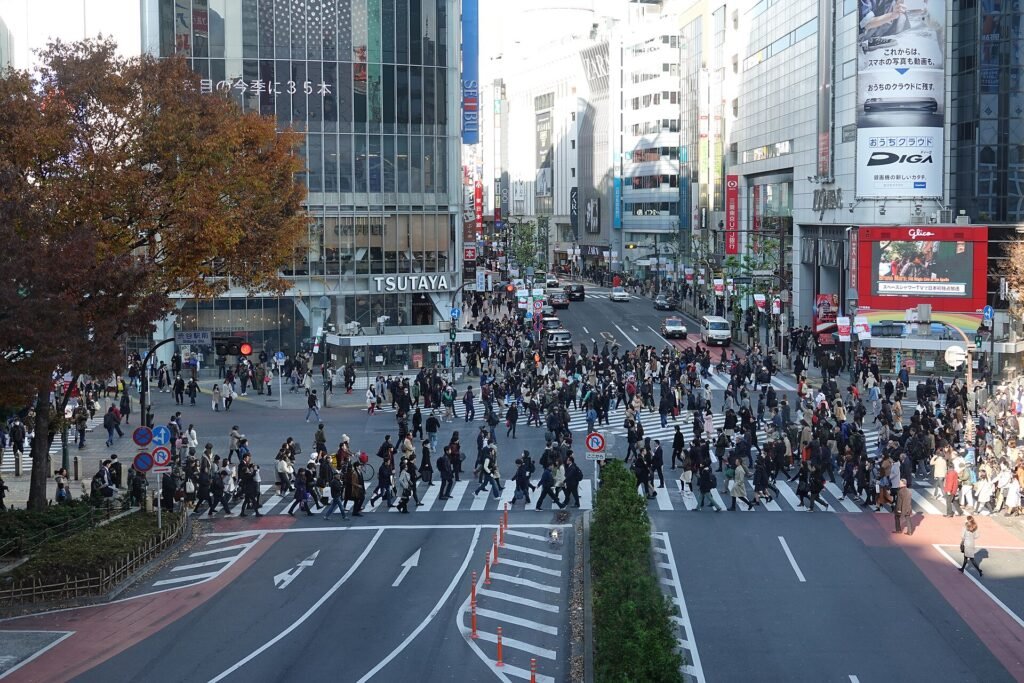
The crossing, obviously, best photographed from the second-floor Starbucks or Shibuya Sky (¥2,500, book ahead, sunset slots sell out days in advance). Beyond it: Center Gai for teenage Tokyo, Nonbei Yokocho for tiny bars, and the far quieter streets of Tomigaya and Okusawa fifteen minutes’ walk away.
Shimokitazawa
Two stops from Shibuya and a completely different city. Second-hand clothing, small live houses, independent coffee. The place to go when Shibuya has exhausted you.
Asakusa and Ueno
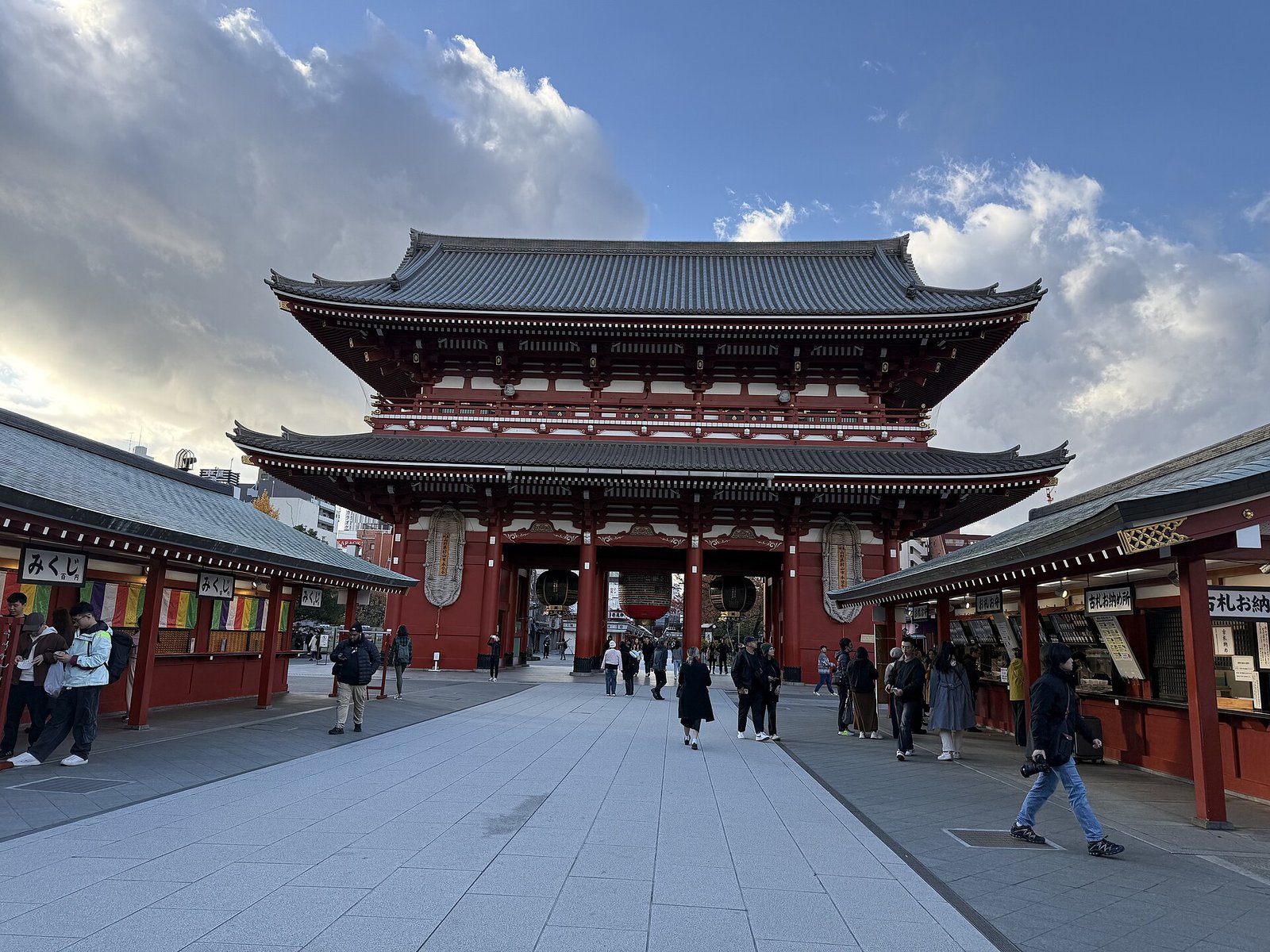
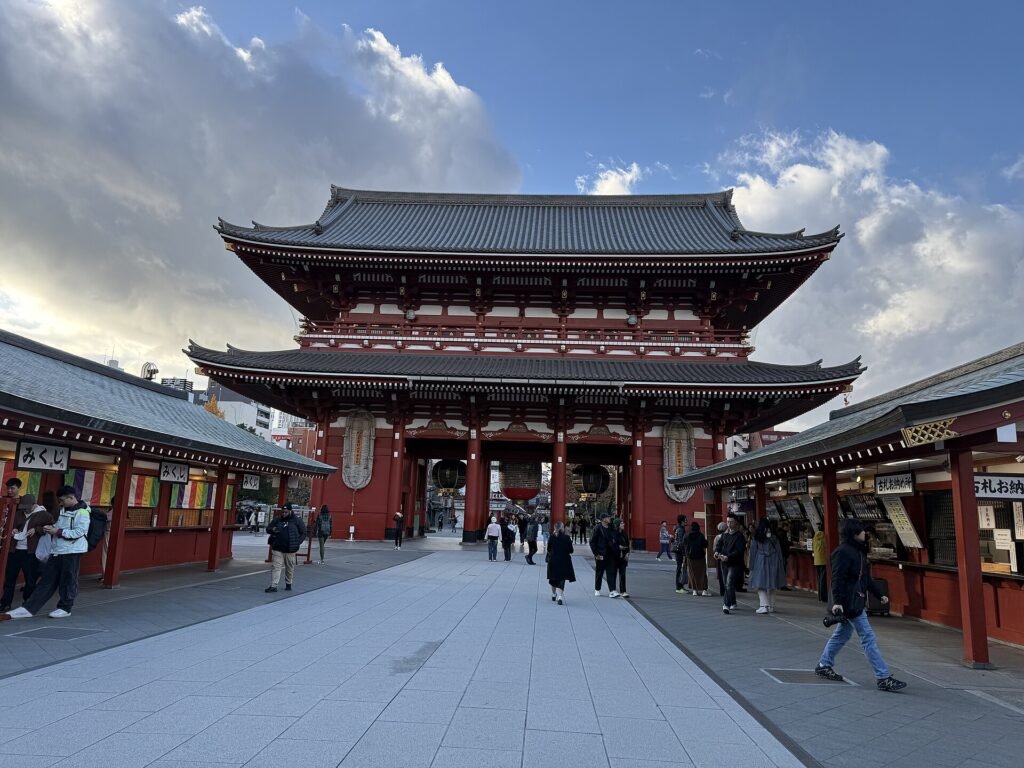
Old Tokyo. Sensoji temple is free and best before 8am or after 8pm when the shopping street shutters come down and reveal painted panels. Ueno Park holds the National Museum (¥1,000), the zoo, and Ameyoko market. Yanaka, twenty minutes’ walk north, is the low-rise, cat-heavy neighbourhood most visitors miss.
Ginza and Marunouchi
Department store food halls in the basements, which are the single best-value luxury experience in Japan: samples, perfect fruit, and bento from ¥1,000. Chuo-dori closes to traffic on weekend afternoons.
Akihabara
Electronics and anime, seven-storey buildings organised by floor. Go for the second-hand camera shops and the retro game floors rather than the maid cafés.
Odaiba
Worth knowing: Oedo-Onsen Monogatari closed permanently on 5 September 2021. Guides still list it. TeamLab has also moved; the Borderless installation is now in Azabudai Hills, not Odaiba. What remains on the island is the Gundam statue, the waterfront, and a decent view back at the skyline.
We break down where to base yourself, with price ranges per district, in Where to Stay in Tokyo.
Things that closed, changed or are about to
This is the section other Tokyo guides do not have, and it is the reason people arrive at a locked door.
| Attraction | Status |
|---|---|
| Robot Restaurant, Shinjuku | Closed. Samurai Restaurant opened in its place |
| Oedo-Onsen Monogatari, Odaiba | Permanently closed, 5 Sep 2021 |
| Yokohama Landmark Tower Sky Garden | Closed for renovation until at least 2028 |
| MariCar go-karting | Lost the Nintendo lawsuit, now trades as Street Kart, no Nintendo costumes |
| Tokyo Disney free Priority Pass | Ends 31 Aug 2026, replaced by paid Premier Access from 1 Sep |
| Tokyo DisneySea Fantasy Springs | Virtual queue and Standby Pass dropped; normal queueing since 1 Apr 2025 |
| Tsukiji inner market | Moved to Toyosu in 2018. The outer market is still there and still excellent |
What things cost in Tokyo
Admission prices, checked August 2026
| Place | Price | Booking |
|---|---|---|
| Sensoji Temple | Free | — |
| Meiji Jingu shrine | Free (inner garden ¥500) | — |
| Metropolitan Government observation decks | Free | Turn up |
| Shinjuku Gyoen | ¥500 | Turn up |
| Shibuya Sky | ¥2,500 | Book ahead, sunset slots go days early |
| Tokyo Skytree, Tembo Deck | ¥2,400 weekday / ¥2,600 weekend | Book ahead |
| Tokyo Tower main deck | ¥1,500 | Turn up |
| teamLab Borderless, Azabudai Hills | ¥3,800 | Book ahead |
| teamLab Planets, Toyosu | ¥3,800 | Book ahead |
| Tokyo National Museum | ¥1,000 | Turn up |
| Ghibli Museum, Mitaka | ¥1,000 | Lottery, months ahead |
| Tokyo Disneyland / DisneySea | ¥7,900 to ¥10,900 (dynamic) | Book ahead |
| Public sento bath | ¥600 | Turn up |
The free tier in Tokyo is unusually strong. The Metropolitan Government Building’s 202-metre decks cost nothing and are open until 10pm; if you are choosing one paid view, make it Shibuya Sky for the open-air deck, not Skytree.
Eating, by price band
| Meal | Typical cost |
|---|---|
| Convenience store breakfast | ¥400 to ¥600 |
| Standing soba at a station | ¥400 to ¥600 |
| Ramen | ¥900 to ¥1,400 |
| Conveyor-belt sushi | ¥1,500 to ¥3,000 |
| Department store basement bento | ¥1,000 to ¥2,000 |
| Izakaya dinner with drinks | ¥3,500 to ¥5,000 |
| Mid-range sushi counter | ¥8,000 to ¥15,000 |
| Michelin-starred kaiseki | ¥25,000 to ¥60,000 |
Lunch sets at high-end restaurants routinely cost a third of the same kitchen’s dinner. If you want one memorable meal, book it at midday.
Deeper food coverage, including where to eat by district, is in Savoring Tokyo.
A realistic daily budget
| Per person, per day | Budget | Mid-range | Comfortable |
|---|---|---|---|
| Bed | ¥4,000 hostel | ¥15,000 business hotel | ¥35,000+ |
| Food | ¥3,000 | ¥6,500 | ¥14,000 |
| Transport | ¥800 | ¥1,200 | ¥3,000 with taxis |
| Sights | ¥1,000 | ¥3,000 | ¥5,000 |
| Total | ¥8,800 ($55) | ¥25,700 ($161) | ¥57,000 ($358) |
Full breakdown, including a seven-day worked example, in How Much Does a Trip to Tokyo Cost?.
When to visit Tokyo
| Period | Weather | Notes |
|---|---|---|
| Mar to early Apr | 10 to 18C | Cherry blossom, roughly ten days. Highest prices |
| Late Apr to May | 18 to 24C | Excellent, but avoid Golden Week, 29 Apr to 5 May |
| Jun to mid-Jul | 22 to 28C, humid | Rainy season. Cheapest decent window. Hydrangeas |
| Mid-Jul to Aug | 30 to 36C, very humid | Festivals and fireworks. Obon peak mid-August |
| Sep to Oct | 22 to 28C | Typhoon risk in September, then superb |
| Nov | 12 to 18C | The best month. Ginkgo and maple, clear skies |
| Dec to Feb | 4 to 12C | Cold, dry, clear. Cheapest, except New Year |
November is the quiet consensus among people who live in Tokyo: dry, clear, mild, and the foliage in Rikugien and the Meiji Jingu Gaien ginkgo avenue is as good as anything in Kyoto without Kyoto’s crowds.
Day trips from Tokyo
| Destination | Time each way | Return fare | Why |
|---|---|---|---|
| Kamakura | 60 min | ¥1,940 | Great Buddha, coastal temples, beach |
| Nikko | 2 hr | ¥5,600 (free on Tokyo Wide Pass) | Toshogu shrine, waterfalls, cedar forest |
| Hakone | 90 min | ¥4,000 to ¥6,100 | Onsen, Open Air Museum, Fuji views |
| Kawaguchiko | 2 hr | ¥4,000 | The classic Mt Fuji photograph |
| Yokohama | 30 min | ¥960 | Chinatown, waterfront, Cup Noodles Museum |
| Kawagoe | 45 min | ¥1,000 | Edo-era warehouse streets, “Little Edo” |
| Enoshima | 70 min | ¥2,000 | Island shrine, sunset, Fuji on the horizon |
Costed comparisons of guided versus independent versions of each are in Best Tours and Day Trips from Tokyo.
Practical things nobody tells you
- Rush hour is 7:30 to 9:00 and 17:30 to 19:30. On the Chuo and Saikyo lines it is genuinely unpleasant with luggage. Women-only carriages operate on many lines during morning rush; they are marked in pink on the platform.
- The last train is roughly 00:00 to 00:30 and the first is around 05:00. There is no night service. Missing the last train means a taxi at ¥4,000 to ¥8,000 across town, or a capsule hotel at ¥4,000.
- Coin lockers at Tokyo, Shinjuku and Shibuya stations run ¥400 to ¥1,000 and are full by 10am on weekends. Ecbo Cloak lets you book luggage storage in shops instead.
- Google Maps is accurate for Tokyo rail, including platform numbers and which carriage to board. Trust it.
- Bins barely exist. Convenience stores and station platforms are your options.
- Tokyo is extremely safe, but Kabukicho touts steering people toward bar bills of ¥50,000 are a real and persistent scam. Do not follow anyone into a building.
- Luggage forwarding from your hotel to Kyoto costs about ¥2,000 to ¥2,500 and arrives next day. Do it.
- Free wifi is patchy and login-heavy. An eSIM at ¥2,000 to ¥4,000 for two weeks solves it.
A first-timer’s four days
If you have four days and want a defensible plan rather than a list of 40 attractions:
- Day 1, west Tokyo. Shibuya crossing, Meiji Jingu, Harajuku’s Takeshita Street, then Shinjuku for the free observatory and dinner in Omoide Yokocho.
- Day 2, east Tokyo. Sensoji at 7am, Nakamise Street as it opens, Ueno Park and the National Museum, Yanaka in the afternoon, Akihabara in the evening.
- Day 3, day trip. Kamakura or Nikko. Leave by 8am.
- Day 4, modern Tokyo. Toyosu market breakfast, teamLab Planets, Ginza department store basement, Shibuya Sky at sunset.
A full seven-day version, day by day and with times, is in our 7-day Tokyo itinerary.
Frequently asked questions
How many days do you need in Tokyo? Four is the minimum for a first visit: three for the city and one day trip. Seven lets you add Hakone or Kamakura overnight and see the quieter districts. Anything under three days means you will spend most of your time on trains.
Is Tokyo expensive? Mid-range travellers spend about ¥25,700 per day including a business hotel. Hotel rates are the pressure point, averaging ¥34,800 in 2026, but food and transport are cheaper than London, Paris or New York. A ramen lunch at ¥1,100 and a metro ride at ¥200 are not expensive by any comparable-city standard.
Which pass should I buy for Tokyo? For most three to four day visits, none. Use an IC card. If you have one subway-heavy sightseeing day, the 24-hour Tokyo Subway Ticket at ¥1,000 pays for itself in four or five rides. The ¥16,000 Tokyo Wide Pass only makes sense if you are taking two day trips it covers.
Haneda or Narita? Haneda, if the price difference is under about $60. The transfer is ¥327 versus ¥2,580 and around 30 minutes shorter.
Do I need to book attractions in advance? Shibuya Sky, teamLab, Tokyo Skytree and the Ghibli Museum, yes. The Ghibli Museum runs a lottery months ahead. Temples, shrines, parks and observation decks at the Metropolitan Government Building need no booking at all.
Is Tokyo walkable? Individual districts are very walkable. The city is not. Plan one or two districts per day and use the train between them rather than trying to walk from Shibuya to Asakusa, which is about 12 kilometres.
Can I get by with English? Yes. Station signage, announcements and most restaurant menus in visited areas are bilingual. Ticket machines have an English button. A translation app covers the rest.
When is the cheapest time to visit Tokyo? January and February excluding New Year, and the June rainy season. Avoid cherry blossom season, Golden Week and mid-August Obon.
A note on our numbers
Fares, admission prices and tax rates here were checked against operator and city sources in August 2026, with the effective date noted where a change is recent or upcoming. Tokyo’s transport fares moved on 14 March 2026 and its lodging tax changes on 1 April 2027; both are reflected above. If you find a figure that has moved since, tell us and we will fix it.
Keep reading: How Much Does a Trip to Tokyo Cost? · Where to Stay in Tokyo · Best Tours and Day Trips from Tokyo · Japan Travel Guide 2026
How long to give each district
The most common Tokyo planning error is allocating equal time to everything. These are realistic figures.
| District | Time it deserves | What eats the time |
|---|---|---|
| Shinjuku | Half a day plus one evening | The station itself, and Golden Gai after dark |
| Shibuya | 2 to 3 hours | The crossing takes ten minutes. The shops take the rest |
| Harajuku and Omotesando | 2 to 3 hours | Takeshita Street is 400 metres and takes an hour in crowds |
| Asakusa | Half a day, starting at 07:00 | Nakamise, the temple, and the riverside walk |
| Ueno | Half a day | The park holds a zoo and four museums |
| Yanaka | 2 to 3 hours | It is a walking neighbourhood, not a sight |
| Akihabara | 2 to 4 hours | Buildings are seven storeys, organised by floor |
| Ginza | 2 to 3 hours | Longer if you commit to a department store basement |
| Odaiba | Half a day | The Yurikamome ride is part of it |
| Shimokitazawa | 3 hours | Second-hand shops, coffee, curry |
| Toyosu | 3 hours, from 05:30 | The auction and a sushi breakfast |
Adding these up gives roughly four full days for the city itself, which is why a first Tokyo trip should be four days minimum and a week is comfortable rather than excessive.
Tokyo with limited mobility
Better than its reputation for step-free access, worse for space.
| Reality | |
|---|---|
| JR and Metro stations | Nearly all central stations have lifts and step-free routes |
| Platform gaps | Staff bring a portable ramp on request, and radio ahead to your destination |
| Shinkansen | Wheelchair spaces exist, book in advance |
| Temples and shrines | Frequently gravel and steps with no ramp. Sensoji’s main hall has a lift |
| Hotels | Standard rooms are small. Accessible rooms exist but are limited; book early |
| Taxis | The JPN Taxi fleet is wheelchair-accessible and is now most of Tokyo’s taxis |
Asking at the station gate is the single most effective move. Staff will escort you to the platform and arrange assistance at the other end, without being asked twice.
Tokyo with children
| Notes | |
|---|---|
| Train fares | Free under 6, half fare 6 to 11 |
| Nappy changing | Reliable at department stores, stations and convenience stores |
| Prams | Difficult in rush hour, fine otherwise. Lifts are often at the far end of the platform |
| Family restaurants | Saizeriya, Gusto and Jonathan’s have kids’ menus and high chairs |
| Best-value attractions | Ueno Zoo ¥600, the Railway Museum in Omiya ¥1,600, Odaiba’s Gundam statue free |
| Worth the money | Tokyo Disney, though the free Priority Pass ends 31 August 2026 |
Kansai: Kyoto and Osaka
Tokyo is only half a first trip to Japan. Two hours and fifteen minutes west, the Golden Route continues.
- Kyoto Travel Guide 2026 — the lodging tax that now reaches ¥10,000 a night, and the bus pass that no longer exists
- The Perfect 3-Day Kyoto Itinerary — built around two dawn starts
- Where to Stay in Kyoto — now the most expensive bed in Japan
- How Much Does a Trip to Kyoto Cost?
- The Best Things to Do in Kyoto — including the temples that are closed for restoration
- Osaka Travel Guide 2026 — why the Expo site is shut and the Amazing Pass still wins
- The Perfect 2-Day Osaka Itinerary
- Where to Stay in Osaka — Umeda or Namba, decided
- The Best Things to Do in Osaka
- Best Day Trips from Osaka and Kyoto — Nara, Kobe, Himeji, Koyasan