
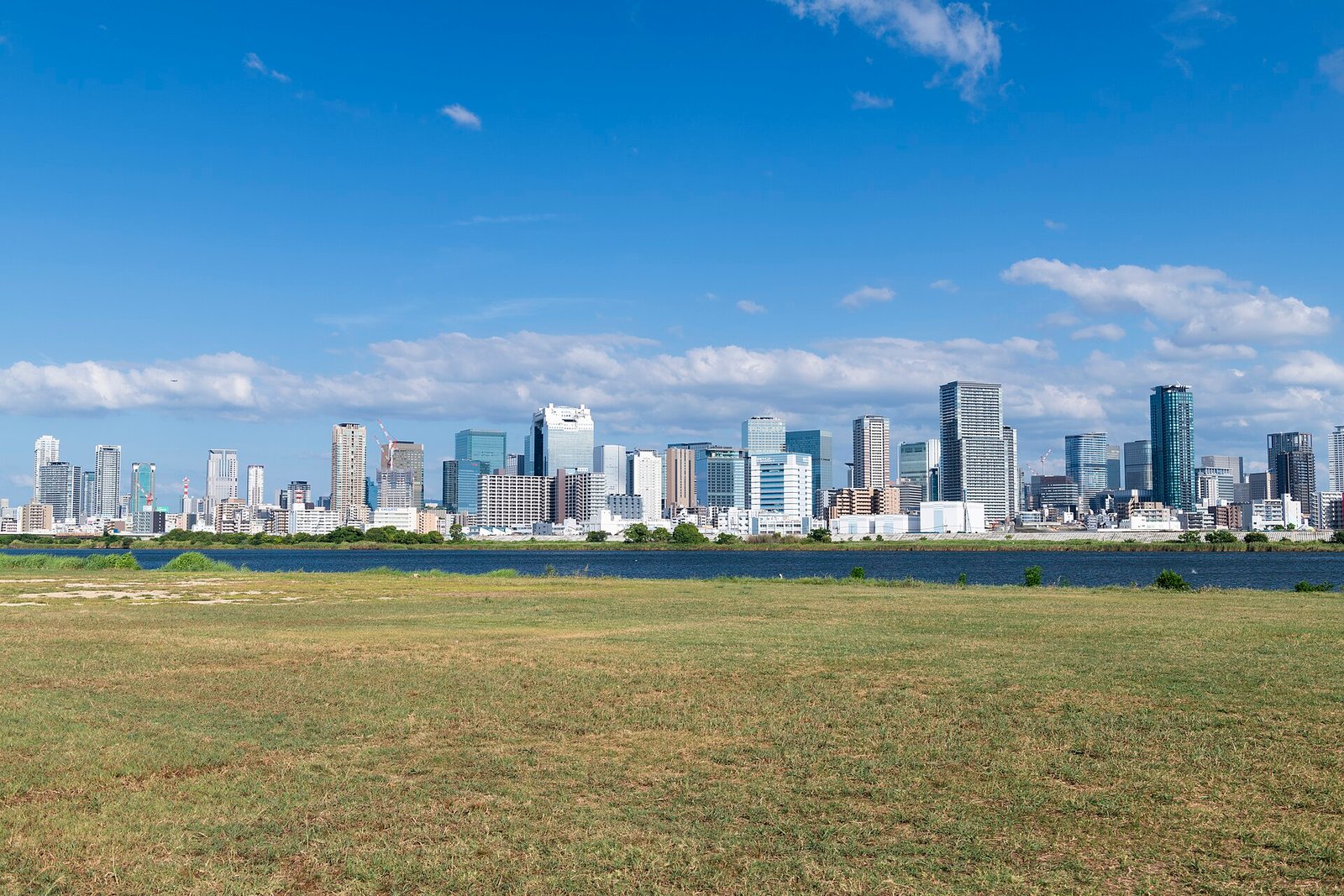
In short
For most week-long trips the answer is not Umeda or Namba but both cities: three nights in Kyoto, three or four in Osaka. You get the dawn temples and the cheaper bed, and the transfer between them costs ¥410. If you are booking around a peak, lead times matter more than the neighbourhood: three to four months for cherry blossom, six months for Golden Week.
Rates and lead times checked August 2026.
Disclosure: some links in this guide are affiliate links. If you book through one, we earn a small commission and you pay exactly the same price. We only link to services we would use ourselves, no brand pays for placement or for a favourable write-up, and every price in this article was researched independently.
Osaka is where you stay when you have done the arithmetic. Rooms here run roughly 40 per cent below Kyoto and 25 per cent below Tokyo, the lodging tax tops out at ¥500 a night against Kyoto’s ¥10,000, and you are still 29 minutes from Kyoto Station and 35 from Nara.
What is in this guide
- The tax, first, because it is good news
- North or south: the actual decision
- Neighbourhood by neighbourhood
- What it costs
- Using Osaka as a Kansai base
- Booking
- Frequently asked questions
- A note on our numbers
- Booking checklist by area
- What you get at each price point
- Practical things about staying in Osaka
- Getting from Kansai to the neighbourhood you just chose
- Before you book
The trade-off is that Osaka has no single obvious neighbourhood to recommend. It has two centres, north and south, that feel like different cities. Picking between them is most of the decision.
Verified: August 2026 · Exchange rate: ¥159.21 = 1 USD
Editor’s note
The premium on rooms right by Namba buys you exactly one thing: the walk home. If your nights end around ten, take a room two stops up the Midosuji line and put the difference into dinner. If they end at two in the morning, pay it, because the metro stops around midnight and taxis are not cheap.
The tax, first, because it is good news
Levied by Osaka Prefecture, per person, per night, charged at check-out. Raised on 1 September 2025.
| Room price per person per night | Tax |
|---|---|
| Under ¥5,000 | ¥0 |
| ¥5,000 to ¥14,999 | ¥200 |
| ¥15,000 to ¥19,999 | ¥400 |
| ¥20,000 and above | ¥500 |
Two things worth saying plainly. It was not abolished — you will find sources claiming it was, and they are wrong. And anything under ¥5,000 per person pays nothing, which puts every hostel and capsule in the city outside the tax entirely.
Set against Kyoto, where a couple in a good ryokan can pay ¥20,000 in tax for a single night, this is close to a rounding error.
North or south: the actual decision
| Kita (Umeda) | Minami (Namba) | |
|---|---|---|
| Character | Business, department stores, vertical, orderly | Neon, food, canal, loud |
| Best for | Day trips, first visits, calmer evenings | Nightlife, eating, being in the middle of it |
| Rail | JR Osaka, Hankyu, Hanshin, three subway lines | Nankai (airport, Koyasan), Kintetsu (Nara), three subway lines |
| To Kyoto | Hankyu ¥410 / JR ¥580, direct | One transfer |
| To Nara | One transfer | Kintetsu direct, ¥680 |
| To Kansai Airport | JR ¥1,180, 67 min | Nankai ¥970, 44 min |
| At night | Restaurants run late, feels safe and bright | Busy past midnight, some streets seedy after 23:00 |
Short version: Umeda if your trip involves Kyoto and Kobe and you want to sleep. Namba if you came for the food and the noise, and if you are flying in and out of Kansai Airport.
Neighbourhood by neighbourhood
Namba and Minami
Dotonbori, Kuromon Market, Shinsaibashi’s arcade and Amerikamura are all within a fifteen-minute walk. So is the Nankai line to the airport.
Who it suits: anyone whose Osaka is primarily about eating. First-timers who want to be in the middle of the postcard.
At night: the loudest and latest in the city. Dotonbori is busy past midnight. Some streets north of the canal get seedy after 23:00 in the way entertainment districts do — not dangerous, just tiring if your hotel is on one.
Named: Swissôtel Nankai Osaka sits directly above Namba Station and is the convenience pick; Cross Hotel Osaka is the design-conscious mid-range; there is a dense supply of business hotels and capsules on the streets east of the station.
Umeda and Kita
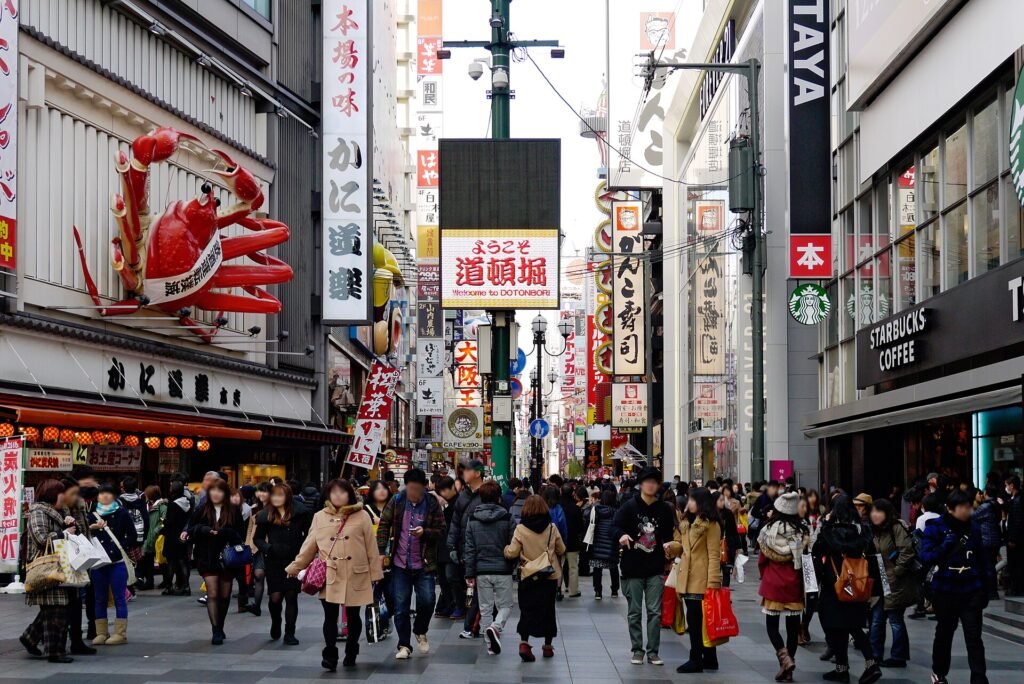
Osaka’s business heart, and its best transport node. Osaka Station, Hankyu Umeda, Hanshin Umeda and three subway stations, all connected underground.
Who it suits: anyone using Osaka as a base for Kyoto, Kobe, Nara and Himeji. Travellers who want a calm evening after a loud day.
At night: big, bright and corporate. Department stores shut around 20:00 but Kita-Shinchi, the upmarket dining and drinking quarter, runs late. Safer-feeling and considerably less rowdy than Minami.
The warning: Umeda is four stations with four different names joined by a large underground maze. Allow fifteen extra minutes on your first attempt and follow the signs rather than your instincts.
Named: Conrad Osaka, Hilton Osaka and InterContinental Osaka at the top; a very deep supply of business hotels around the station.
Shinsaibashi
Between the two, one subway stop from Namba, walkable to both Namba and Amerikamura. The 600-metre covered shopping arcade is the spine.
Who it suits: shoppers who still want to walk to dinner, and anyone who finds Namba slightly too much.
At night: the arcade empties after 21:00, Amerikamura stays lively. Quieter than Namba by a useful margin without being far from it.
Named: W Osaka is the landmark luxury property here.
Tennoji and Shinsekai
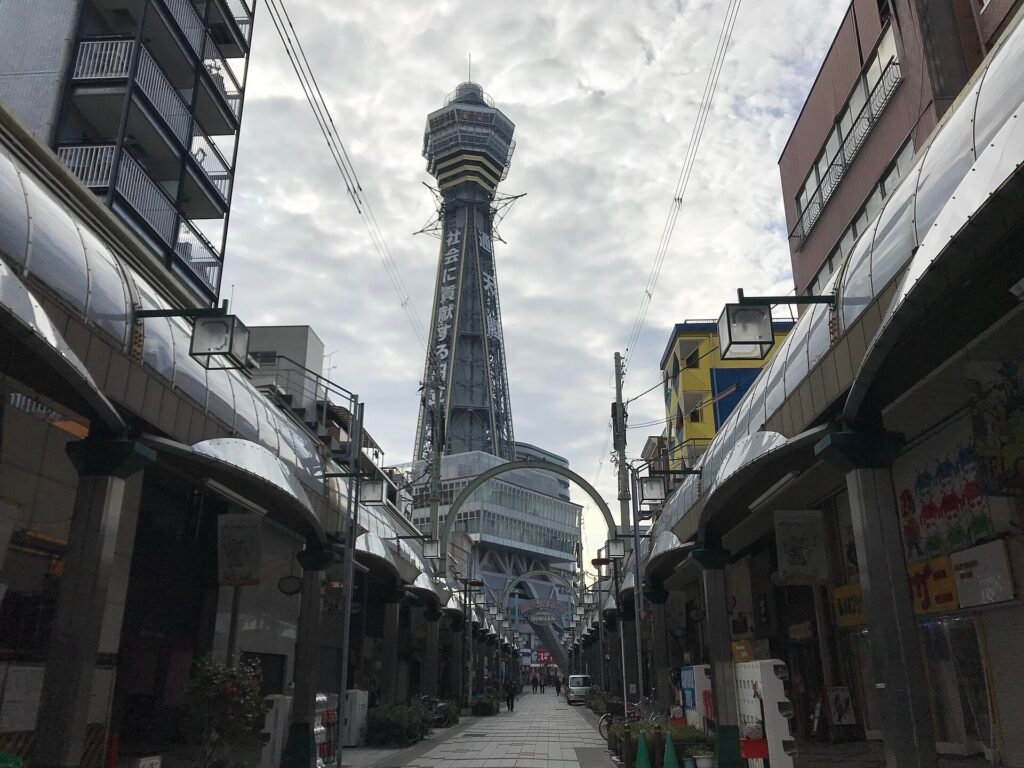
The southern hub: Abeno Harukas, Shitennoji, Tennoji Zoo, and Shinsekai’s retro streets. Good value, and JR’s Hanwa Line runs to Kansai Airport from here.
Who it suits: value hunters, families wanting more space per yen, anyone doing Nara via Kintetsu Abenobashi.
At night: Tennoji itself is unremarkable and family-ish. Shinsekai and Janjan Yokocho are characterful, cheap and distinctly gritty after dark — safe enough, but worth knowing before you book a room there expecting polish.
Named: Osaka Marriott Miyako occupies the upper floors of Abeno Harukas, which is a genuinely spectacular place to wake up.
Shin-Osaka
The Shinkansen station, four minutes from Umeda on the Midosuji Line.
Who it suits: one-night stops, early Shinkansen departures, business travellers.
At night: functionally dead. Chain izakaya and convenience stores. Convenient, entirely without atmosphere. Stay here for a night at the start or end of a trip, not for three.
Kyobashi
East of the castle, on the JR Loop plus the Tozai and Katamachi lines, and — the useful part — the Keihan line straight to Kyoto.
Who it suits: budget-minded repeat visitors, and anyone treating Osaka as a Kyoto commuting base.
At night: a dense old-school drinking quarter under the railway arches. Cheap, boisterous, authentically Osakan, and scruffy. Generally safe. If Shinsekai appeals to you, so will this.
Osaka Bay and Universal City
Who it suits: families doing Universal Studios and Kaiyukan, and essentially nobody else.
At night: very quiet outside the park gates, with almost no independent dining after 21:00. It is a resort bubble, which is fine for two nights with children and dull otherwise.
Named: Hotel Universal Port and The Park Front Hotel are the two obvious official-partner options, both a short walk from the USJ gates.
What it costs
| Type | Per person, per night |
|---|---|
| Hostel dorm | ¥2,800–4,500 — no lodging tax |
| Capsule hotel | ¥3,500–6,000 |
| Budget business hotel | ¥5,000–8,000 |
| Mid business hotel | ¥7,000–11,000 |
| Mid-range hotel | ¥13,000–22,000 |
| Upper / boutique | ¥25,000–40,000 |
| Luxury | ¥35,000–150,000 |
City comparison, mid-range: Osaka ¥13,000–22,000 · Tokyo ¥18,000–30,000 · Kyoto ¥20,000–35,000.
We could not source a citable 2026 Osaka ADR figure, so we are not printing one. What we can say from the tax structure is that Osaka Prefecture set its bands at ¥5,000, ¥15,000 and ¥20,000 per person per night, and those thresholds map neatly onto budget, mid and upper-mid in this market.
Using Osaka as a Kansai base
This is the strongest argument for staying here, and the numbers make it themselves.
| Destination | From Osaka | Fare | Time |
|---|---|---|---|
| Kyoto | Hankyu Umeda → Kawaramachi | ¥410 | 43 min |
| Kyoto | JR Osaka → Kyoto, Special Rapid | ¥580 | 29 min |
| Nara | Kintetsu Namba → Kintetsu-Nara | ¥680 | 35–40 min |
| Kobe | Hankyu or Hanshin → Sannomiya | ¥330 | 27–31 min |
| Himeji | JR Special Rapid | ¥1,460 | 63 min |
| Kansai Airport | Nankai Airport Express → Namba | ¥970 | 44 min |
| Koyasan | Nankai from Namba | — | ~2 hr |
Note that the Hankyu line to Kyoto drops you at Kawaramachi, in downtown Kyoto, rather than at Kyoto Station two kilometres south. For sightseeing, that 43 minutes often beats JR’s 29 minutes plus a transfer.
The honest case against
If Kyoto is the reason you came to Japan, base yourself in Kyoto. Day-tripping means arriving at 10:00 into peak crowding and leaving at 18:00 exactly as the lanes empty and the lanterns come on. Fushimi Inari at 6:30 and Higashiyama after dark are the two best hours in Kyoto, and a commute removes both.
The split is the answer for most week-long trips: three nights Kyoto, three or four Osaka. You get the dawn temples and the cheaper bed, and the transfer costs ¥410.
Booking
| Period | Lead time |
|---|---|
| Cherry blossom, late Mar to mid-Apr | 3 to 4 months |
| Golden Week, 29 Apr to 5 May | 6 months |
| Tenjin Matsuri, 24–25 July | 2 to 3 months |
| Obon, mid-August | 3 months |
| Autumn, Oct to Nov | 2 to 3 months |
| Normal periods | 2 to 4 weeks |
Osaka is a considerably more forgiving booking market than Kyoto. Outside the peaks you can book a fortnight out and be fine, which is not true of Kyoto in any month.
Frequently asked questions
Where should I stay in Osaka for the first time? Namba or Shinsaibashi if food and nightlife are the point, Umeda if you are day-tripping to Kyoto, Kobe and Nara and want a calmer evening. Both are on the Midosuji Line, which connects everything.
Is Osaka cheaper than Kyoto? Considerably — roughly 40 per cent less for comparable accommodation, and the lodging tax tops out at ¥500 per person per night against Kyoto’s ¥10,000.
Does Osaka have a tourist tax? Yes. Osaka Prefecture charges ¥0 under ¥5,000, then ¥200, ¥400 and ¥500 per person per night in three bands. It was raised on 1 September 2025 and reports of its abolition are wrong.
Should I stay in Osaka and day-trip to Kyoto? It saves real money and works well for a longer trip, but you lose Kyoto’s early mornings and evenings, which are its best hours. For a week, split your nights between the two cities.
Umeda or Namba? Umeda for transport, calm and day trips. Namba for food, nightlife and the Nankai line to Kansai Airport. They are eight minutes apart on the subway, so neither is a mistake.
Is Shinsekai a safe area to stay? Yes, though it is visibly rough around the edges after dark. It is cheap and full of character. If you want polish, stay in Tennoji proper a few minutes north.
How far in advance should I book Osaka? Two to four weeks outside peak periods, three to four months for cherry blossom, six for Golden Week. Osaka is far more forgiving than Kyoto.
Where should I stay for Universal Studios? The Universal City area, at Hotel Universal Port or The Park Front Hotel, if you are doing two park days with children. Otherwise stay in the city — USJ is twelve minutes and ¥200 from Osaka Station.
A note on our numbers
The lodging tax bands come from Osaka Prefecture and were verified in August 2026, including confirmation that the tax was raised rather than abolished. Transport fares are from operator sources. The accommodation price bands are indicative market ranges rather than published data — no source publishes per-district ADR for Osaka, and we would rather tell you that than invent precision.
Keep reading: Osaka Travel Guide 2026 · The Perfect 2-Day Osaka Itinerary · Best Things to Do in Osaka · Where to Stay in Kyoto · Best Day Trips from Osaka and Kyoto
Booking checklist by area
| Area | Book this far ahead, normal periods | Peak (sakura, autumn) |
|---|---|---|
| Namba / Minami | 3 to 4 weeks | 3 to 4 months |
| Umeda / Kita | 2 to 3 weeks | 3 months |
| Shinsaibashi | 3 weeks | 3 months |
| Tennoji | 2 weeks | 2 months |
| Shin-Osaka | 1 to 2 weeks | 6 weeks |
| Kyobashi | 1 to 2 weeks | 6 weeks |
| Universal City | 2 to 3 months | 4 to 6 months |
Universal City is the outlier and it is not close. The two official-partner hotels next to the gates sell out far earlier than anything else in Osaka, because families book them alongside park tickets months in advance.
What you get at each price point
| Per person, per night | What that actually buys in Osaka |
|---|---|
| Under ¥5,000 | Hostel dorm or capsule. Clean, safe, tiny. No lodging tax at all |
| ¥5,000 to ¥8,000 | Business hotel single. Bed, desk, unit bathroom, no view. Perfectly good |
| ¥8,000 to ¥12,000 | Better business hotel, often with a communal bath. The value sweet spot |
| ¥13,000 to ¥22,000 | Proper hotel room, space to open a suitcase, decent breakfast |
| ¥25,000 to ¥40,000 | Boutique or upper-mid. Design, a view, a bar |
| ¥35,000+ | International luxury. Conrad, Hilton, InterContinental, W, St. Regis |
The Japanese business hotel is the best value in the country and Osaka has the deepest supply of them. Chains worth knowing: Dormy Inn (communal baths, free late-night ramen), Richmond, Daiwa Roynet, Sotetsu Fresa Inn, Via Inn, Super Hotel, APA, Toyoko Inn. None of them are exciting. All of them are clean, quiet and 200 metres from a subway station.
Practical things about staying in Osaka
- Check-in is usually 15:00, check-out 10:00 or 11:00 — earlier than European norms. Every hotel will hold your bags either side.
- Coin lockers at Namba and Umeda run ¥400 to ¥800 and fill by mid-morning at weekends.
- Business hotel rooms are small. A twin room is often genuinely too tight for two large suitcases opened at once.
- Communal baths (daiyokujo) are common in Japanese chains and are the single best reason to pick one. Tattoos may be an issue; ask.
- Smoking rooms still exist in Japanese hotels and are sometimes the cheaper option shown to you. Check what you are booking.
- Luggage forwarding from your Osaka hotel to Kyoto, Tokyo or the airport costs ¥2,000 to ¥2,500 and arrives next day.
Getting from Kansai to the neighbourhood you just chose
Osaka is the easy one. Both airport trains land in the middle of the two areas most people book.
Namba, Shinsaibashi or anywhere in Minami: take the Nankai Rapi:t. Thirty-eight minutes, about 1,490 yen, straight into Namba Station. There is no scenario in which a car beats this during operating hours.
Umeda, Shin-Osaka or the north: take the Haruka to Shin-Osaka, roughly 50 minutes, then one stop on the Midosuji line. Slightly slower than the Rapi:t but it drops you closer.
Bay area and USJ hotels: the JR Yumesaki line from Nishikujo is the only sensible route, and it is included in most passes.
Because of all that, a pre-booked transfer is genuinely hard to justify in Osaka. Two cases where it stops being silly: a flight landing after 23:00 when both trains have stopped, or a group of four with luggage heading to a bay-area hotel, where one car costs less than four train fares plus the taxi at the end. Compare a transfer against those two cases here rather than booking one by default.
On check-in times. Osaka’s business hotels, which are most of the good value in this list, usually open reception at 15:00 and will hold luggage from morning without fuss. Apartment rentals in Minami are the opposite: many are keybox-only with instructions sent by message an hour before arrival. If you have booked one of those, an eSIM that is live before you clear customs is the difference between walking to your door and standing outside a konbini hunting for wifi.
One money note. Rooms near Namba cost roughly 20-30 percent more than equivalent rooms two stops away on the Midosuji line, and the metro runs until around midnight. If you are going out late every night, pay it. If you are not, do not.
Before you book
Osaka business hotels will almost always hold luggage from the morning without charge, so ask before you pay for anything. Apartment rentals in Minami are the opposite, and often have no reception at all. If you have booked one of those and land early, a luggage drop near Namba is the difference between a wasted first afternoon and a usable one.