
In short
Kyoto’s lodging tax changed on 1 March 2026 and now runs in five bands: ¥200 under ¥6,000, ¥400 to ¥19,999, ¥1,000 to ¥49,999, ¥4,000 to ¥99,999 and ¥10,000 at ¥100,000 and above — per person, per night. Two mechanics almost everyone gets wrong: the band is set by the room-only price, and it is charged per person, not per room.
Verified against Kyoto City’s own tax pages, August 2026.
Disclosure: some links in this guide are affiliate links. If you book through one, we earn a small commission and you pay exactly the same price. We only link to services we would use ourselves, no brand pays for placement or for a favourable write-up, and every price in this article was researched independently.
Kyoto has quietly become the most expensive city in Japan to sleep in — more expensive than Tokyo — and in March 2026 it added a lodging tax that reaches ¥10,000 per person per night. Choosing where to stay here is now a financial decision as much as a geographical one.
What is in this guide
- First, the tax nobody shows you
- What Kyoto actually costs in 2026
- The neighbourhoods
- Ryokan, machiya and hostels
- A warning about Airbnb in Kyoto
- How far ahead to book
- Should you just stay in Osaka?
- Frequently asked questions
- A note on our numbers
- Getting from Kansai to the neighbourhood you just chose
- Before you book
So let us do both properly: what each neighbourhood is actually like, what it costs, and where the tax will ambush you.
Verified: August 2026 · Exchange rate: ¥159.21 = 1 USD
Editor’s note
One thing worth checking before you book: whether a car can actually reach your door. Several of the prettiest machiya rentals sit down lanes too narrow for a taxi, which is charming at three in the afternoon with a daypack and considerably less charming at eleven at night with two suitcases.
First, the tax nobody shows you
This is charged per person, per night, at check-out. It is not in the price you booked.
| Room price per person per night | Tax per person per night |
|---|---|
| Under ¥6,000 | ¥200 |
| ¥6,000 to ¥19,999 | ¥400 |
| ¥20,000 to ¥49,999 | ¥1,000 |
| ¥50,000 to ¥99,999 | ¥4,000 |
| ¥100,000 and above | ¥10,000 |
Two mechanics almost everyone gets wrong:
- The band is set by the room-only price, excluding meals. A ryokan charging ¥60,000 per person with kaiseki dinner and breakfast is banded on its room component, not on ¥60,000. If you are near a threshold, ask the property directly.
- A shared room divides by headcount. A ¥120,000 room for two is ¥60,000 each → ¥4,000 each, ¥8,000 for the night. A ¥200,000 room for two crosses into the top band → ¥10,000 each, ¥20,000 for one night.
At the budget end this is noise: a ¥5,000 hostel bed pays ¥200. At the top end it is the price of an extra night somewhere else. Kyoto expects roughly ¥12.6 billion a year from this.
What Kyoto actually costs in 2026
Two datasets, measuring different things, both worth knowing.
| Source | Figure | What it measures |
|---|---|---|
| Kyoto City Tourism Association, full-year 2025 | ADR ¥21,286, occupancy 80.6% | ~105 hotels, room revenue only |
| Same, April 2026 | ADR ¥31,296 — a record — with occupancy down 4.8 points | The city is pushing price into softening demand |
| MetroEngine, May 2026 | Kyoto ¥45,700 vs Tokyo ¥37,700 vs Osaka ¥27,900 | OTA-listed rates, all plan types including meals |
The honest read: Kyoto runs roughly 20 to 25 per cent above Tokyo and 60 per cent above Osaka, and it is rising faster than either. Part of the gap is mix — Kyoto’s stock is heavy on ryokan and meal-inclusive plans while Tokyo’s is business-hotel-heavy — but the direction is not in doubt.
The April 2026 signal is the interesting one. Record rate, falling occupancy. In peak week you will find a room. You will not like the price.
The neighbourhoods
| Area | Budget | Mid | Luxury | Best for |
|---|---|---|---|---|
| Downtown (Kawaramachi, Pontocho) | ¥5,000–10,000 | ¥15,000–30,000 | ¥70,000+ | First visits |
| Kyoto Station | ¥4,000–9,000 | ¥12,000–25,000 | ¥45,000+ | Day trips, families, luggage |
| Gion / S. Higashiyama | ¥6,000–12,000 | ¥20,000–40,000 | ¥90,000+ | Atmosphere, second visits |
| N. Higashiyama (Okazaki) | ¥5,000–10,000 | ¥15,000–30,000 | ¥60,000+ | Gardens, autumn |
| Arashiyama | ¥6,000–12,000 | ¥18,000–35,000 | ¥80,000+ | A deliberate escape |
| Nishijin | ¥4,000–9,000 | ¥12,000–25,000 | ¥50,000+ | Machiya, repeat visitors |
| Kita (Kinkakuji) | ¥4,500–9,000 | ¥13,000–26,000 | ¥150,000+ | Luxury retreats |
| Fushimi | ¥3,500–7,000 | ¥9,000–18,000 | Limited | Budget, dawn at Inari |
These are indicative shoulder-season double-occupancy rates, room only. Peak sakura and autumn add 50 to 100 per cent. No source publishes per-district ADR for Kyoto, so treat these as bands rather than quotes.
Downtown — Kawaramachi, Shijo, Pontocho
This is the right answer for most first visits. Two subway lines, Hankyu straight to Osaka, Keihan along the river, and Gion is a ten-minute walk across the Kamo. You can eat anywhere and walk home.
At night it is the liveliest part of the city: Nishiki Market by day, Pontocho’s riverside alley and Kiyamachi’s bar strip after dark. Also the noisiest — if you sleep lightly, book away from Kiyamachi.
Named: The Ritz-Carlton Kyoto on the river at the top end; Tawaraya, Hiiragiya and Sumiya — the *Gosanke*, Kyoto’s three legendary ryokan — nearby; Solaria Nishitetsu Kyoto Premier, Cross Hotel Kyoto, The Gate Hotel Kyoto Takasegawa and Hotel Resol Trinity in the middle; Piece Hostel Sanjo and Len Kyoto at the budget end.
Kyoto Station
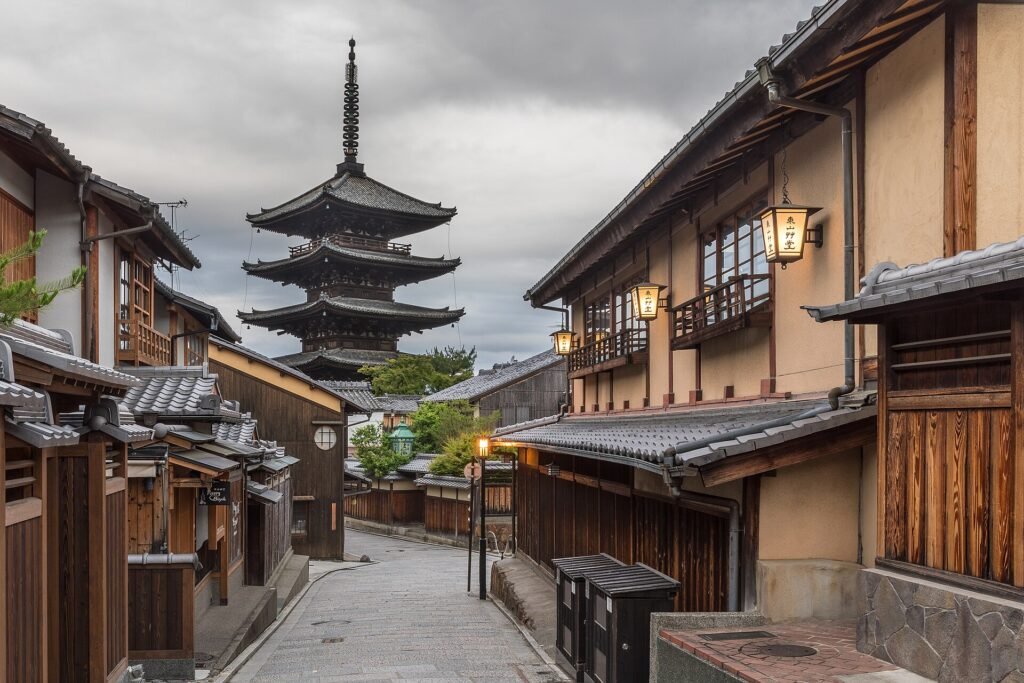
Suits first trips with day trips built in, families juggling suitcases, anyone with an early Shinkansen or an airport bus. Transport here is unbeatable: Shinkansen, Karasuma subway, the Nara Line to Fushimi Inari and Nara, and every airport bus.
At night it is functional. Restaurants are inside the station complex and in Porta and Isetan; the streets south are dull. You will not stumble into atmosphere. Worth saying plainly: Kyoto Station is not the city centre, it is two kilometres south of it.
Named: Hotel Granvia Kyoto (inside the station), The Thousand Kyoto and Dusit Thani Kyoto (upper), Hotel Vischio, Sakura Terrace and Hotel Keihan Kyoto Grande (mid), Piece Hostel Kyoto and APA Kyoto Ekimae (budget). Onyado Nono Kyoto Shichijo and Dormy Inn Premium Kyoto Ekimae are the value picks — business hotels with large communal baths.
Gion and Southern Higashiyama
Suits returning visitors and couples, and anyone whose priority is atmosphere over convenience. Two or three nights, not seven.
Connected: adequately, not well. Keihan at Gion-Shijo and Kiyomizu-Gojo, otherwise buses that crawl in season and taxis that crawl with them. This is a walking district and you should treat it as one.
At night it is the best argument for staying here. Once the coaches leave around 18:00, Ninenzaka, Sannenzaka and Hanamikoji are extraordinary. But very few restaurants stay open late and the area enforces quiet hours from 22:00 — plan dinner downtown and walk back through empty lanes.
Named: Four Seasons Kyoto, Park Hyatt Kyoto and Hyatt Regency Kyoto (luxury); Hotel The Celestine Kyoto Gion, OMO5 Kyoto Gion and Nohga Hotel Kiyomizu (mid); Seikoro Ryokan and Ryokan Motonago (ryokan); Rinn Gion Shirakawa (budget).
Northern Higashiyama — Okazaki, Nanzenji, Philosopher’s Path
Suits slower second visits, garden people, and anyone here for the November colour. Tozai subway at Higashiyama, otherwise buses or a bicycle.
At night it is near-silent and residential, with almost nothing serving food after 21:00. That is either the appeal or the problem, depending on you.
Named: The Westin Miyako Kyoto and Hotel Okura Kyoto Okazaki Bettei (luxury), The Hotel Higashiyama by Kyoto Tokyu (mid), Ryokan Yachiyo.
Note: Nanzen-in, the aqueduct-side sub-temple, is closed for roof works until spring 2027.
Arashiyama
Suits honeymoons and one or two deliberate nights. The real argument is that staying here lets you walk into the bamboo grove and Tenryu-ji before 08:00, which is now genuinely the only way to experience them well.
Connected: the weakest of the major bases. JR Sagano Line to Saga-Arashiyama (15 min from Kyoto Station), the Randen tram, Hankyu via Katsura. Fine to the station, awkward to Gion.
At night it closes completely. The riverside is beautiful and empty and there is essentially nothing open after 20:00 outside your hotel. Book a place that serves dinner.
Named: Suiran (Luxury Collection) and Hoshinoya Kyoto, which you reach by boat; The GrandWest Arashiyama (mid); Arashiyama Benkei (ryokan).
Nishijin
Suits second and third visits, families wanting space, and machiya renters. This is the weaving district — residential Kyoto that still has neighbours in it.
Connected: mediocre. Karasuma subway at Imadegawa on the eastern edge, otherwise buses. Budget for taxis.
At night: quiet, genuinely local, a scattering of small izakaya and old *kissaten* coffee houses. Not a destination, but not dead.
Named: THE JUNEI HOTEL Kyoto (mid), Nazuna Kyoto Gosho and Kyo no Ondokoro Nishijin Bettei (machiya), KéFU stay & lounge (budget).
Kita — Kinkakuji and the northern hills
Suits the luxury-retreat traveller and the repeat visitor. A poor first-trip choice: there is no subway in the northwest, so you are on the 205 bus or in a hotel shuttle.
At night the northern reaches are effectively rural. Dine where you sleep.
Named: Aman Kyoto and ROKU KYOTO (LXR), both destination resorts; Genji Kyoto (boutique, more central).
Fushimi
Suits budget travellers and anyone determined to be at Fushimi Inari at dawn. Also the sake district — the Gekkeikan and Kizakura breweries are here.
Connected southward: JR Nara Line and Keihan, 20 to 45 minutes from the centre. Good for Nara and Uji, poor for Gion.
At night: residential and quiet. Notably, the major English guides do not treat Fushimi as a lodging area at all, which is itself a signal — it is cheap because it is not central.
Ryokan, machiya and hostels
Ryokan
| Tier | Per person, per night, with two meals |
|---|---|
| Budget (no meals) | ¥3,500–7,000 |
| Mid | ¥8,000–15,000 pp room only; ¥18,000–40,000 with meals |
| Luxury | From ¥25,000 pp with two meals |
| The Gosanke (Tawaraya, Hiiragiya, Sumiya) | ¥80,000–191,000 pp with meals |
Two things to know before you book one. Most central Kyoto ryokan are not onsen — there are almost no natural hot springs in the city, so expect a beautiful bath, not a hot spring. And dinner is usually served in your room at a fixed time, typically 18:00 or 18:30, which locks up your evening. In a city whose best hours are after dark, that is a real cost.
Machiya townhouses
¥35,000 to ¥90,000 per night for a whole house sleeping two to four, plus a cleaning fee of ¥10,000 to ¥20,000 and the lodging tax.
Reputable operators: Iori Machiya Stay (Alex Kerr’s restored portfolio), Kyo no Ondokoro (run by Wacoal, from ¥66,340 for two), Machiya Residence Inn, Mitasec (¥36,300 to ¥150,000 by category), Stay SAKURA Kyoto.
Before you book: check-in is self-service via a key safe in a 15:00–20:00 window with no front desk. Minimum stays of two nights are standard, three in peak season. And the original staircases are near-ladder steep with bedrooms upstairs — a genuine problem with big suitcases, toddlers or dodgy knees.
Hostels and budget
| Type | Per person per night |
|---|---|
| Hostel dorm | ¥2,700–4,500 |
| Hostel private room | ¥9,000–18,000 |
| Guesthouse | ¥2,000–5,000 |
| Budget business hotel | ¥4,000–8,000 |
Best regarded: Piece Hostel Kyoto (two minutes from the station), Piece Hostel Sanjo (downtown), Len Kyoto (Kawaramachi, with a ground-floor café-bar and the most sociable atmosphere), Hostel Kyoto KIZUNA.
A warning about Airbnb in Kyoto
Kyoto runs Japan’s strictest private-lodging regime and it is getting stricter.
- The national cap is 180 days a year, but Kyoto’s residential-only zones restrict operation to roughly 60 days — essentially the January-to-mid-March window. Licensed machiya are exempted and may run the full 180.
- An operator or manager must be stationed within about 800 metres to respond to problems.
- Enforcement tightened on 1 February 2026, and Kyoto City is drafting a further ordinance revision expected within the 2026 fiscal year that will restrict operating days and permitted locations again.
Practical advice: book Kyoto private lodging only where the listing shows a registration number, and understand that a cancellation caused by delicensing is a live risk here in a way it is not in Tokyo or Osaka.
How far ahead to book
| Period | Lead time |
|---|---|
| Cherry blossom, late Mar to early Apr | 6 months minimum, 10 to 12 preferred |
| Golden Week, 29 Apr to 5 May | 8+ months |
| Gion Matsuri, July | 4 to 6 months |
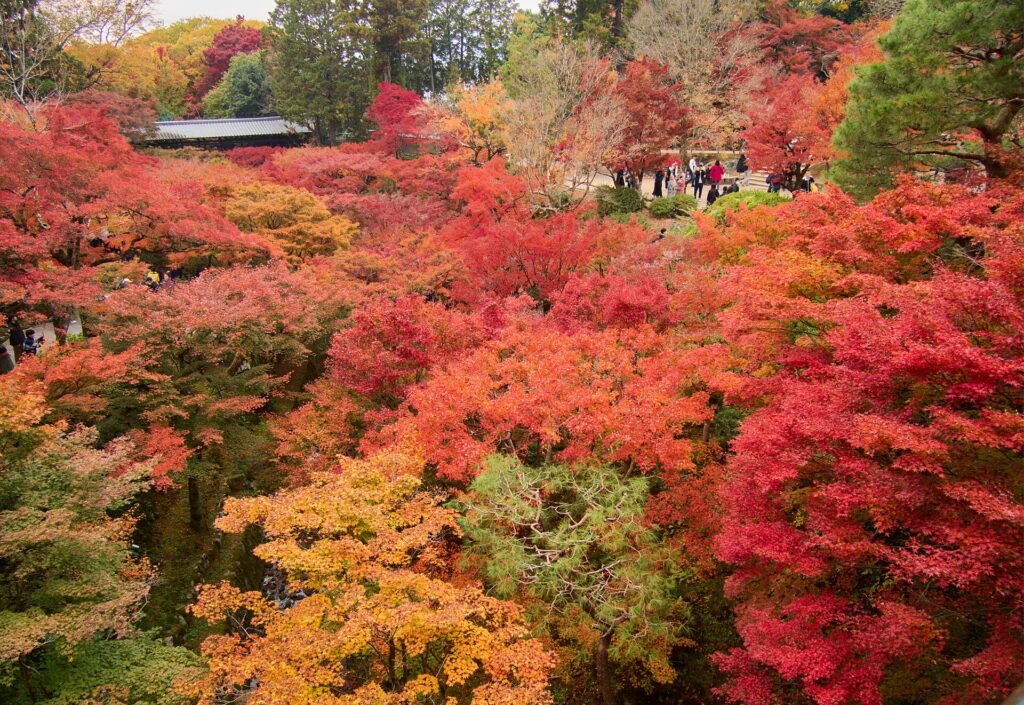
| Autumn foliage, mid to late Nov | 4 to 6 months |
| New Year | 6 to 8 months |
| Normal periods | 2 to 3 months |
| January to February, June | 2 to 3 weeks. The genuine slack |
Should you just stay in Osaka?
A fair question, and the honest answer has two halves.
| Kyoto, 4 nights, 2 people, mid-range | Osaka + day trips | |
|---|---|---|
| Room | ~¥100,000 | ~¥62,000 |
| Lodging tax | ¥3,200 | ~¥1,600 (Osaka’s is far lower) |
| Trains | ¥0 | ~¥4,920 (Hankyu return × 3 days × 2) |
| Total | ~¥103,200 | ~¥68,500 |
What you save: roughly ¥35,000 on four nights for two, plus better and cheaper food, and a stronger base for Nara, Kobe and Himeji.
What you lose: the early morning and the late evening — which are the entire point of Kyoto. A day-tripper arrives at 10:00 into peak crowding and leaves at 18:00 just as the lanes empty and the lanterns come on. You also spend up to two hours a day in transit and cannot retreat to your room in the July heat or the November crush.
Our recommendation: if the trip is three nights or fewer in Kansai, or if Kyoto is the reason you came, stay in Kyoto and absorb the cost. If it is seven nights or more, split the base — three in Kyoto, three or four in Osaka. Day-tripping to Kyoto for a whole trip is a defensible budget decision and a poor experiential one, and anyone who tells you otherwise has not stood in Fushimi Inari at 6:30.
Frequently asked questions
Where should I stay in Kyoto for the first time? Downtown, around Kawaramachi and Shijo. Two subway lines, direct trains to Osaka and Arashiyama, the best food, and Gion within a ten-minute walk.
How much is the Kyoto tourist tax? Per person per night, charged at check-out: ¥200 under ¥6,000; ¥400 to ¥19,999; ¥1,000 to ¥49,999; ¥4,000 to ¥99,999; and ¥10,000 above ¥100,000. It is banded on the room-only price and divided by headcount in a shared room.
Is Kyoto more expensive than Tokyo? Yes, for accommodation — roughly 20 to 25 per cent higher on like-for-like rates, and rising faster. Food, transport and temple entries remain cheap.
Is it better to stay near Kyoto Station or downtown? Downtown for atmosphere and walkability; Kyoto Station for day trips, early departures and heavy luggage. The station is convenient but it is not the centre of the city.
Are machiya townhouses worth it? For two to four people staying three nights or more, yes — you get a whole restored house for roughly the price of two hotel rooms. Not if anyone in your group struggles with very steep stairs.
Can I use Airbnb in Kyoto? Legally, only in limited windows and locations. Most residential-zone properties can operate around 60 days a year, essentially in winter. Book only listings showing a registration number.
How far in advance should I book Kyoto? Six months for cherry blossom, four to six for autumn, two to three for normal periods. January, February and June you can book a fortnight out.
Should I stay in Osaka instead? Only if the trip is long enough to split the base, or if budget genuinely decides it. You save around ¥35,000 on four nights for two, and you lose Kyoto’s two best hours of the day.
A note on our numbers
The tax bands, the ADR figures and the booking-window advice come from Kyoto City, the Kyoto City Tourism Association and industry data, checked in August 2026. The per-neighbourhood price bands are our own estimates built from city-wide category data — no source publishes district-level rates for Kyoto, and we would rather tell you that than pretend otherwise.
Keep reading: Kyoto Travel Guide 2026 · How Much Does a Trip to Kyoto Cost? · The Perfect 3-Day Kyoto Itinerary · Best Things to Do in Kyoto · Where to Stay in Osaka
Getting from Kansai to the neighbourhood you just chose
Where you stay changes how you should arrive, and this is the part most Kyoto accommodation guides leave out.
If you picked Kyoto Station or Shimogyo, you have made arrival trivial. The Haruka limited express runs Kansai to Kyoto Station in about 80 minutes for roughly 3,600 yen and stops a few minutes from your door. Do not book a car. You would be paying several times the fare to sit in Osaka traffic.
If you picked Gion, Higashiyama, Arashiyama or anywhere in the north, the Haruka still makes sense, but budget another 20-40 minutes and a taxi or bus at the far end. With two suitcases and a machiya address down a lane that a car cannot enter, the taxi is not optional, so factor 1,500-2,500 yen into the arithmetic.
If you land after 22:00, the last Haruka has gone. This is the case where a pre-booked Kansai transfer is worth its price, particularly for a lane address in Gion where a late-night taxi driver may need a phone call with your host to find the door.
A note on ryokan and machiya check-in. Both often close reception around 18:00 or 19:00, and machiya rentals frequently have no reception at all, only a keybox and a set of instructions sent by message. That combination is the strongest practical argument for an eSIM that works from the moment you land: a keybox code sitting in an email you cannot open is a bad way to start a trip.
Luggage. Kyoto’s coin lockers at the station fill by 10:00 in peak season. If your room is not ready, the station’s luggage forwarding desk can send bags to your hotel same-day for around 1,000 yen, which is usually a better answer than dragging them around Higashiyama for four hours.
Before you book
One practical thing that catches people out in Kyoto: check-in is usually 15:00 and Kyoto Station coin lockers are commonly full by ten in the morning during sakura and autumn. If you arrive early, book a luggage drop near the station rather than dragging cases around Higashiyama, or use the station forwarding desk to send bags to your hotel the same day.