
In short
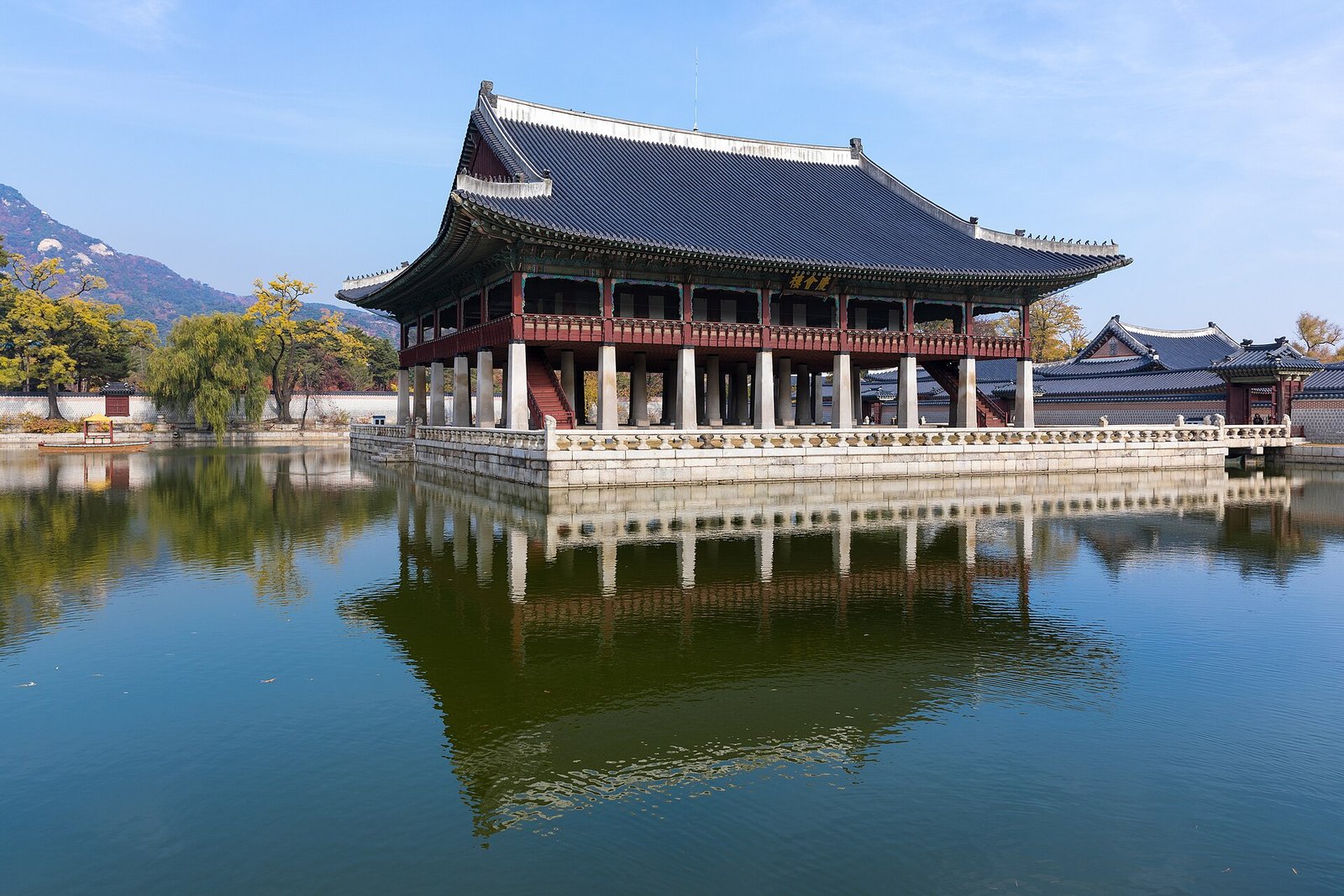
Seoul’s palaces cost almost nothing: Gyeongbokgung and Changdeokgung 3,000 won each, Changgyeonggung, Deoksugung and Jongmyo Shrine 1,000 won each, or a combined ticket covering all five for 6,000 won. Gyeongbokgung and Jongmyo close on Tuesdays. Entry is free for anyone wearing hanbok, which is why the rental shops cluster at the gates.
Fees verified against the Cultural Heritage Administration, August 2026.
Seoul is one of the cheapest major capitals in the world to look at and one of the more expensive to eat in. A ticket covering four palaces and a royal shrine costs 6,000 won — under four pounds. The National Museum of Korea is free. Bulguksa and Seokguram, down in Gyeongju, stopped charging admission entirely in 2023.
Then you sit down for Korean barbecue and two people spend 42,000 won before drinks.
What is in this guide
That inversion is the useful frame for planning a trip here, and it is the opposite of how most cities work. What follows is built from figures read off Korean government, city and heritage-service pages on 20 August 2026. Two things changed recently enough that most English guides have not caught up, and one of them now carries a fine.
The palaces
| Adult | Notes | |
|---|---|---|
| Gyeongbokgung | 3,000 won | Closed Tuesdays |
| Changdeokgung | 3,000 won | Huwon extra, see below |
| Changgyeonggung | 1,000 won | |
| Deoksugung | 1,000 won | |
| Jongmyo Shrine | 1,000 won | Closed Tuesdays |
| Combined ticket | 6,000 won | Four palaces plus Jongmyo |
Bought separately those come to 9,000 won, so the combined ticket saves 3,000 — and more usefully, it removes the decision from each gate.
How long the combined ticket lasts is genuinely disputed. Korea’s Heritage Service, which runs the palaces, states on its own English admission page that it is valid within three months. Seoul city’s media hub says six. We are going with the Heritage Service because it is the issuing authority, but if you are planning around it, three months is the safe assumption.
Seasonal opening hours at Gyeongbokgung and Changdeokgung:
- January and February: 09:00 to 17:00, last entry 16:00
- March to May: 09:00 to 18:00, last entry 17:00
- June to August: 09:00 to 18:30, last entry 17:30
- September and October: 09:00 to 18:00, last entry 17:00
- November and December: 09:00 to 17:00, last entry 16:00
Free entry for anyone 18 and under, anyone 65 and over, anyone wearing hanbok, and everybody on Culture Day, the last Wednesday of each month.
Gyeongbokgung runs free English guided tours at 11:00, 13:30 and 15:30, Wednesday to Monday, lasting an hour to ninety minutes. There are Japanese, Chinese, Spanish and French tours too. For a 3,000 won ticket that is an unusually good deal and almost nobody takes it up.
The hanbok rule, correctly
Wearing hanbok gets you into all four palaces, Jongmyo and the forty Joseon royal tombs for nothing. The rental shops outside Gyeongbokgung exist entirely because of this.
What you will read is that fusion hanbok has been banned. That is not what the rule says. Korea’s National Heritage Service guideline is about cut, not modernity:
- It must be two pieces — a top (jeogori) and a bottom (chima or baji).
- The jeogori must keep its wrapped-collar form. Ties are optional.
- Lifestyle hanbok qualifies. Modern fabrics and modern colours are fine.
- What fails: a one-piece hanbok dress, a durumagi worn alone as a robe, and ceremonial outer garments worn without the proper layers underneath.
So a contemporary two-piece hanbok is admitted and a one-piece hanbok-style dress is not. Also worth knowing: wearing the hanbok of the opposite gender has been explicitly permitted since July 2019, following a human rights recommendation. And there is no age restriction.
Changdeokgung’s Secret Garden is a separate ticket, and the booking advice you have read is wrong
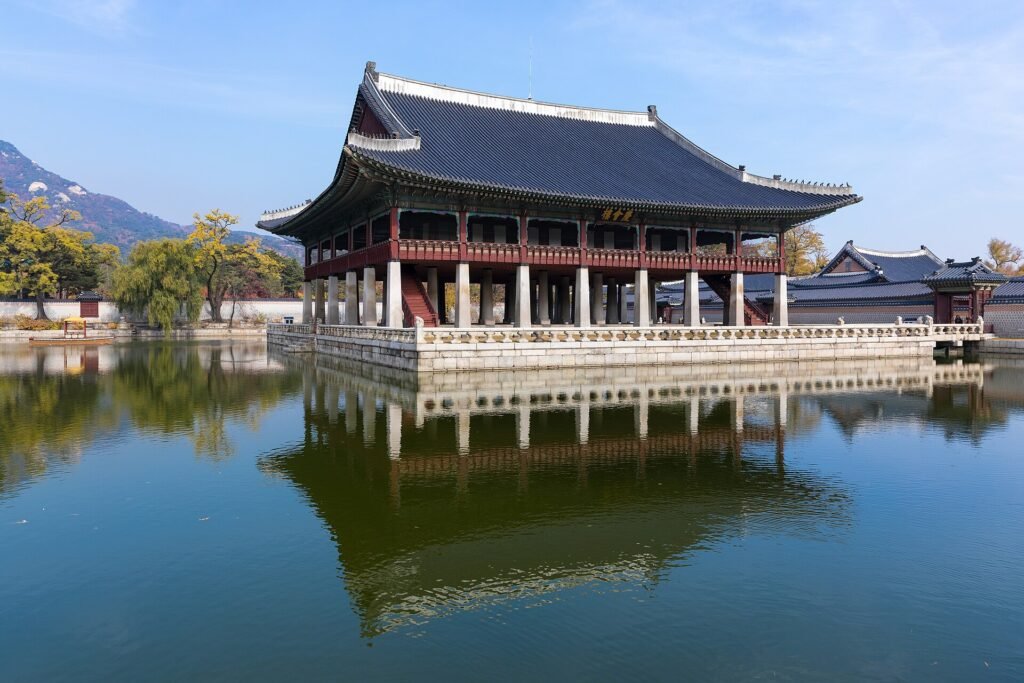
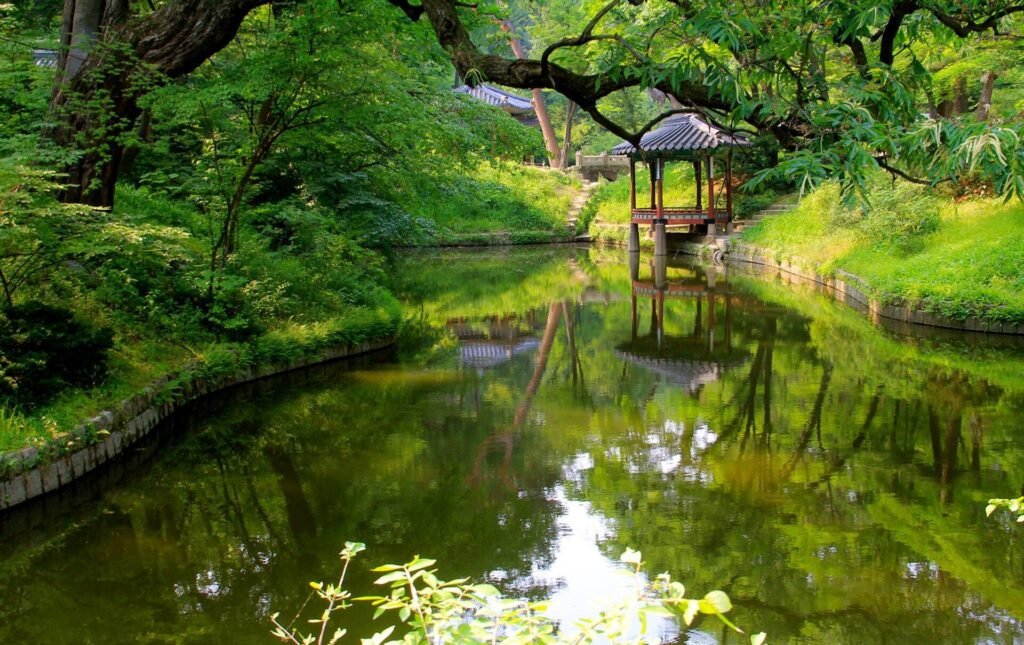
The Huwon — the wooded garden behind Changdeokgung, and the best thing in any Seoul palace — is a separately ticketed, timed, capacity-capped guided tour.
- 5,000 won on top of the 3,000 won palace ticket. 8,000 won all in.
- 100 people per slot: 50 sold online, 50 sold at the gate on the day.
- Online booking opens exactly six days before your visit date, at 10:00 Korean time, first come first served, and closes the day before.
- The tour runs 70 to 90 minutes. There are several English slots a day; up to two non-Korean speakers can join a Korean-language slot.
Which makes the usual advice — book well in advance or you will not get in — wrong twice over. You cannot book well in advance; the window is six days. And online is not the only route, because half of every slot is held back for people who turn up.
Jongmyo is not always guided
Widely reported as guided-tour-only. The actual rule:
- Weekdays: timed guided group tours only, hourly from 09:20 to 16:20, eight sessions a day, about an hour each, in several languages.
- Weekends and public holidays: free viewing, no time restriction.
If you want to wander Jongmyo at your own pace, go on a Saturday.
The changing of the guard
At Deoksugung’s Daehanmun gate, twice a day at 11:00 and 14:00, about thirty minutes, free to watch, not on Mondays, and cancelled in bad weather. We could not verify the Gyeongbokgung ceremony times from an official page, so we are not printing them.
One thing with a known expiry
Palace admissions have not changed since 2005. Korea’s heritage service is reported to be announcing revised pricing in November 2026 to take effect on 1 January 2027, possibly with different rates for residents and foreign visitors. That is trade press rather than an official notice, so treat it as a warning rather than a fact — but every price above has a shelf life, and it may be shorter than you think.
Bukchon now has legally enforced visiting hours
This is the single most important thing that has changed in Seoul for visitors, and English coverage of it is close to non-existent.
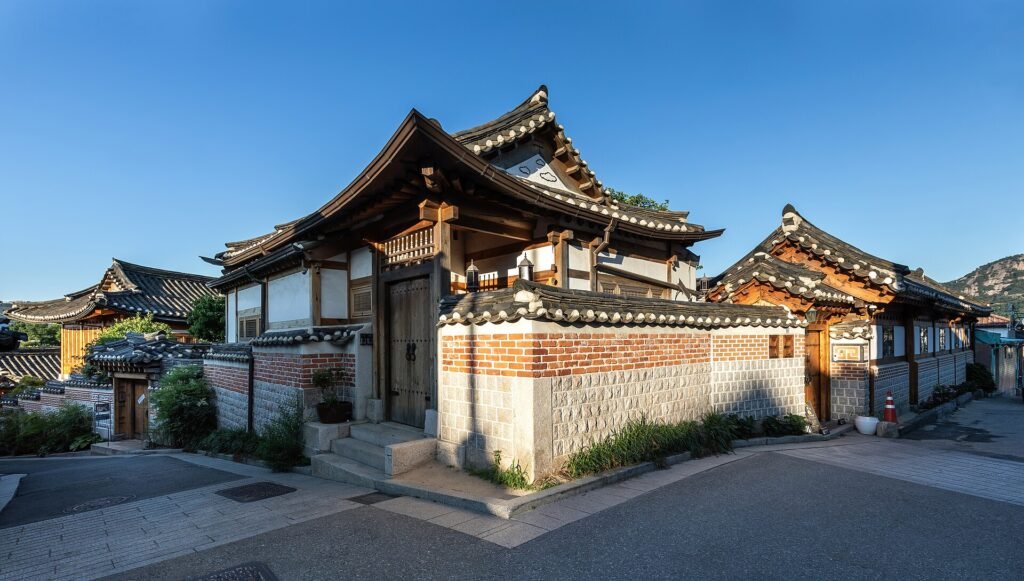
Bukchon Hanok Village is a residential neighbourhood. People live in those houses. After years of complaints about tour groups filming through windows at seven in the morning, Jongno District Office divided it into zones and started fining people.
The Red Zone, around Bukchon-ro 11-gil — roughly 34,000 square metres, and the postcard street:
- Tourists may enter between 10:00 and 17:00 only. Entry is prohibited from 17:00 until 10:00 the next morning.
- The fine is 100,000 won.
- It was advisory from November 2024 and has been enforced since 1 March 2025.
- The prohibited conduct is defined as tourism: photographing, filming, lingering to look around, wandering the streets. Officials issue a warning before fining.
- Exempt: residents, their families and guests, customers of shops, traders, guests at accommodation in the zone, and anyone simply passing through who is not doing tourist things.
The Yellow Zone, on Bukchon-ro 12-gil, is monitored but carries no fine. Visitors are encouraged to keep to the same hours.
There is no Orange Zone, despite English articles referring to one.
Separately, tour coaches have been banned from Bukchon-ro and three connecting streets — about 2.3 km — all year round, advisory from July 2025 and enforced since 1 January 2026. Fines run 300,000, 400,000 and 500,000 won for a first, second and third offence.
The practical version: go to Bukchon between ten and five, keep your voice down, and do not point a camera into anybody’s front room. That was always the decent thing to do. It is now the law.
What a day of sightseeing actually costs
Very little, and this is the part worth planning around.
- Combined palace ticket: 6,000 won
- Changdeokgung Huwon: 5,000 won on top
- National Museum of Korea: free for the permanent galleries. Open 10:00 to 18:00, and until 21:00 on Wednesdays and Saturdays
- Leeum Museum of Art: the traditional art permanent collection is free; special exhibitions are ticketed. Closed Mondays. Booking opens 14 days ahead
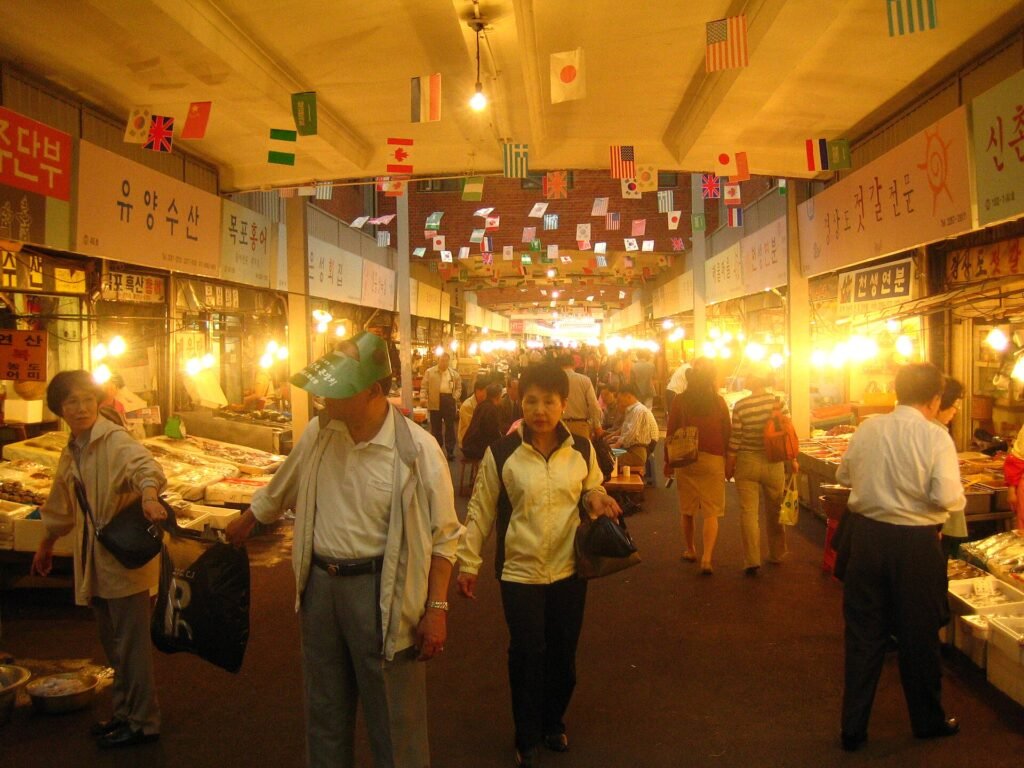
- Cheonggyecheon, Gwangjang Market, Namdaemun, Dongdaemun Design Plaza, Seoullo 7017: no admission
A full day of headline sightseeing in Seoul can cost under 10,000 won. Then you eat.
What food actually costs
Korea’s Consumer Agency publishes monthly average prices for eight representative dishes in Seoul. This is government statistics, not somebody’s guess, and it is the best data of its kind we have found for any city we cover.
Seoul averages, April 2026:
| Dish | Average | Year on year |
|---|---|---|
| Samgyeopsal (200 g) | 21,321 won | +4.3% |
| Samgyetang | 18,154 won | +3.7% |
| Naengmyeon | 12,615 won | +4.1% |
| Kalguksu | 10,038 won | +4.4% |
| Kimchi-jjigae set meal | 8,654 won | +1.8% |
| Jjajangmyeon | 7,731 won | +3.1% |
| Kimbap | 3,800 won | +4.9% |
By June kimbap had reached 3,838 won, up 5.9 per cent on the year and the fastest riser of the eight — rice was up 13.2 per cent and eggs 9.0. And kalguksu crossed 10,000 won for the first time in 2026, from 9,923 at the start of the year.
The Korean barbecue arithmetic, honestly
Meat is priced per portion — one inbun, nominally 200 g — and each diner is generally expected to order at least one. Side dishes are free and refillable. Rice, stews and noodles are extra.
At the official average, two people ordering one portion each is about 42,600 won before anything else lands on the table. Add rice, a stew and two bottles of soju and you are past 60,000.
There is a catch that the headline price hides. A portion is usually no longer 200 g. A survey of twenty grill restaurants in Seoul’s Jongno district found only two still serving a full 200 g; most served 150 to 160 g and some 120 to 130 g, at unchanged prices. Korean press calls it shrinkflation and it is not a secret. Restaurants that genuinely serve 200 g tend to charge above 21,000 won for it.
So if you want to price a barbecue dinner properly, assume you will order more portions than you expect to.
Drinks
Restaurants buy soju wholesale at roughly 1,530 to 1,560 won a bottle and sell it at 4,000 to 5,000 won, up to 6,000 in smarter places. Anything above 7,000 is considered gouging. Before the pandemic the norm was 3,000 won, so it has roughly doubled in three years.
Tipping: there is not any, and it is the law
You will read that tipping is not customary in Korea. The real reason is stronger than custom.
Under Korea’s final-payment-price display rule, food service businesses may not list VAT or a service charge separately. The price on the menu must be the final price the customer pays. Non-compliance escalates from an order to comply, to a seven-day closure, to a fifteen-day closure.
The number on the menu is the number you pay. There is nothing to add.
Getting around, and a change you need to know about
Seoul’s metro base fare is 1,550 won with a transport card and 1,650 cash, which covers the first 10 km. Beyond that it is plus 100 won per 5 km up to 50 km, then plus 100 won per 8 km. The base fare rose from 1,400 won on 28 June 2025. There is a 20 per cent discount on the base fare if your first tap is before 06:30.
Buses: 1,500 won for a blue trunk or green branch bus, 1,200 for a village bus, 3,000 for a red wide-area bus, 2,500 late at night.
Transfers are genuinely free, up to five consecutive ones, provided the next boarding is within 30 minutes of tapping off — extended to 60 minutes between 21:00 and 07:00. Metro to bus is charged as a single integrated distance-based fare, capped so it never exceeds the sum of the separate fares.
The Climate Card is gone. Seoul’s flat-rate unlimited transit pass, introduced in 2024 and recommended by every English guide to the city, was withdrawn on 1 October 2026. Seoul’s own page on it is titled, in Korean, the Climate Card termination FAQ. The 3,000 won physical card fee is not refundable.
It has been replaced by the Climate Companion Pass, which folds Seoul’s benefits into Korea’s national K-Pass reimbursement scheme, and the short-term visitor passes of 1, 2, 3, 5 and 7 days continue. We are not printing prices for the replacement because we have not been able to verify them from Seoul’s own pages yet. We will, and this page will say so when we do.
One more thing English guides get wrong even about the old card: it never covered the Shinbundang Line, the GTX, the airport railway to Incheon, buses licensed outside Seoul, or metro sections beyond the city boundary. Alighting outside the covered zone triggered a separate charge at the gate.
Foreign contactless credit cards cannot yet be tapped on Seoul’s metro gates or buses. Seoul has committed to open-loop acceptance but its own published schedule puts gate replacement on Lines 1 to 8 in 2027, with completion across the network targeted for 2030. What does work today, since September 2025, is that ticket machines at 25 major stations accept foreign cards to buy and top up a transit card. That is card acceptance at the machine, not at the gate — a distinction worth understanding before you land.
About the DMZ
If you book a DMZ tour from Seoul, you are almost certainly booking a Paju area tour — the Third Tunnel, the Dora Observatory, Dorasan Station. It is operated by Paju City and it is a genuine, worthwhile half-day.
What you are not booking is the JSA. Panmunjom tours for the general public have not been running since 2023, suspended after an American soldier crossed the line in July 2023 and formally halted that December. Limited special tours resumed in May 2025 for Unification Education Institute trainees and mid-level officials only — not bookable by tourists — and even those run at half the old capacity and no longer enter the conference building that straddles the border. Visitors view Panmunjom from the roof of Freedom House.
We could not confirm the position as of August 2026 because Korea’s Ministry of Unification booking site was unreachable to us. Nothing suggests it has changed since May 2025. If a tour operator sells you the JSA, ask them to name the building you will enter.
When to go
Seoul has a properly continental climate and the numbers make that obvious. Korea Meteorological Administration normals:
- Annual mean 12.8 C
- Coldest month January at minus 1.9 C; warmest month August at 26.1 C — an annual range of 28 degrees
- Annual precipitation 1,417.9 mm
- Wettest month July at 414.4 mm; driest month January at 16.8 mm — a twenty-five-fold swing
- Summer, June to August, accounts for 892.1 mm, about 63 per cent of the year’s rain
The monsoon is a defined window, and most summer rain falls outside it
The jangma has published normals. For central Korea, which includes Seoul, it runs 25 June to 26 July, averaging 31.5 days and 378.3 mm across the region.
Set that against Seoul’s 892.1 mm of June-to-August rain and the useful conclusion appears: most of Seoul’s summer rain does not fall during the monsoon. August sits outside the jangma window and is nearly as wet. Avoid the monsoon is not the same as avoid the wet season.
Fine dust season is a legal period, and it overlaps cherry blossom
Korea operates a statutory Fine Dust Seasonal Management System from 1 December to 31 March every year. The government’s own justification figure: PM2.5 averages 29 micrograms per cubic metre in that window against 20 the rest of the year — about 45 per cent higher.
March is inside that period. Seoul’s cherry blossom normally flowers around 8 April; in 2026 it came on 3 April with full bloom around the 10th.
So the honest version of the spring advice is that the tail of the worst air quality overlaps the start of the best blossom. Check the daily index at airkorea.or.kr, or cleanair.seoul.go.kr for Seoul specifically, and be prepared for a grey week in late March.
There is no tourist tax, Korea pays you instead
South Korea levies no lodging tax and no tourist tax, nationally or in any city we could find, Seoul included.
What it has instead is a VAT refund on hotel stays for foreign visitors at certified hotels: you must be a non-Korean without a residence or work visa, in Korea under six months, staying under 30 days, paying the hotel directly, and leaving Korea within three months of checking out. Breakfast counts if it is in the room rate.
Two warnings. The certified-hotel list is stamped as last updated in July 2020, so confirm your hotel participates. And on 7 August 2026 Korea’s finance ministry proposed ending the scheme on 30 June 2027 — a bill, not yet law. The full detail is in our guide to Korea’s entry rules.
We could not verify the refund rate and sources disagree on the statutory end date, so we are not printing either.
Editor’s note. Every figure on this page was read off a Korean government, city, heritage-service or consumer-agency page on 20 August 2026, and is printed with that date on purpose. We verify on the day we write and then leave figures alone rather than editing quietly later, so you can always tell how old a number is. Two items here have a known expiry: palace admissions are reported to change on 1 January 2027, and the hotel VAT refund is the subject of a bill. Where a source would not load — the Gyeongbokgung guard times, the JSA booking site, the replacement transit pass — we have said so rather than filling the gap from somewhere less reliable.