
In short
The deer are wild animals under legal protection, not a petting attraction — that is the correction most guidebooks miss. On money: Todai-ji Great Buddha Hall ¥800, hall plus museum ¥1,200, Kofuku-ji National Treasure Museum ¥900, Kofuku-ji three-hall combined ¥1,600. Several of the best things in Nara Park cost nothing at all.
Fees verified against temple pages, August 2026.
Almost everything written in English about Nara’s deer is wrong in one of two directions. Half of it treats them as a petting zoo — tame, bowing, essentially furniture. The other half, usually written after somebody got butted, treats them as a menace. Neither survives contact with the prefecture’s own data, which is published, detailed, and almost never read.
Here is what the numbers actually say, followed by the practical things that will save you money and a wasted morning.
What is in this guide
The deer belong to nobody
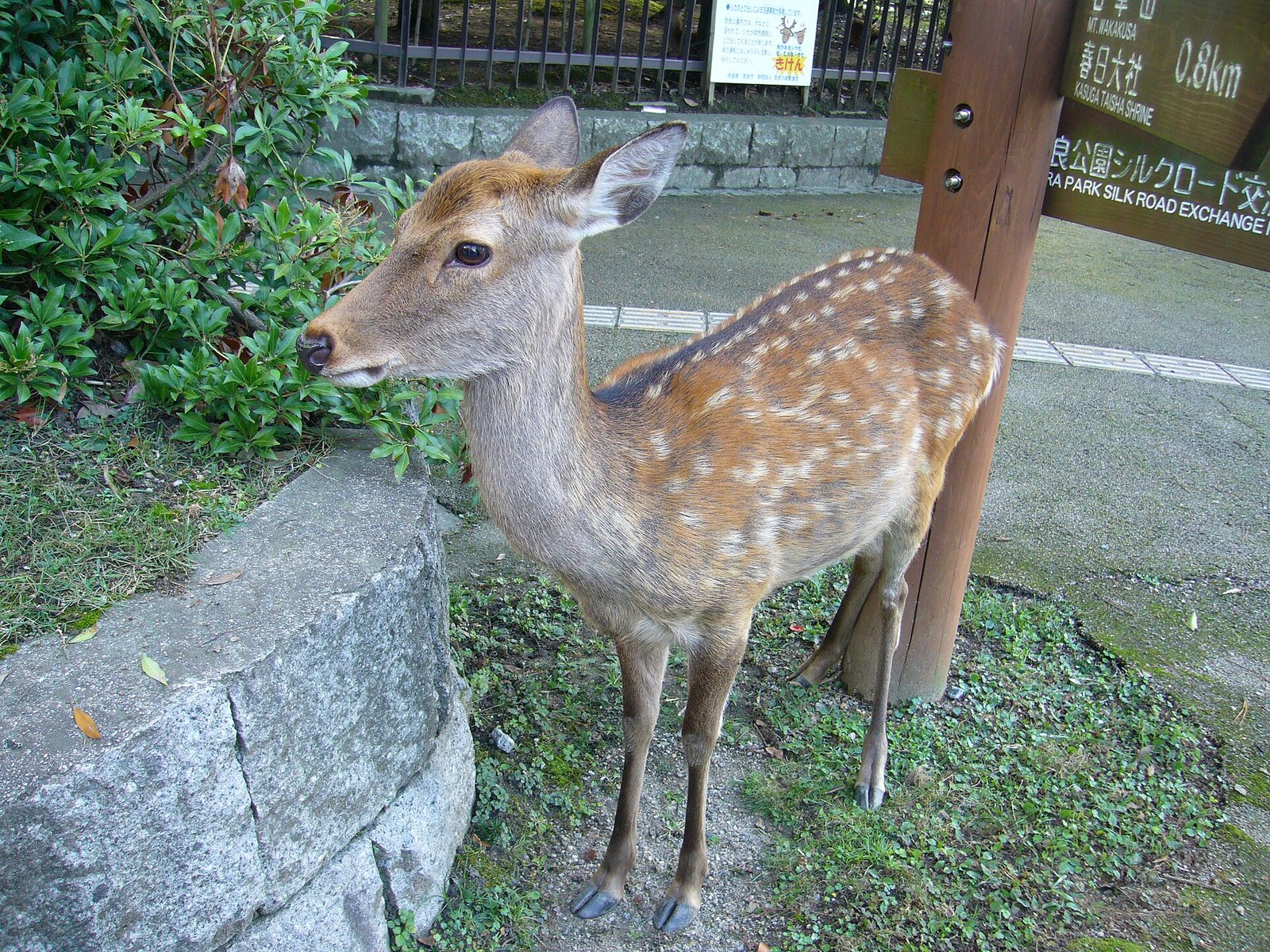
This is the fact everything else follows from. Nara’s deer are legally wild, ownerless animals with the status of a national natural monument. They are not owned by Kasuga Taisha, they are not managed as livestock, and nobody feeds them. Harming one is a criminal offence, but that is a protection statute, not a sign of domestication.
The population in July 2024 was 1,325 — 313 males, 798 females and 214 fawns, per Nara Prefecture’s own count.
They live in a public park in the middle of a city and they have learned that humans carry food. That is the whole of the relationship. It is not affection and it is not training.
The injury numbers, both directions
Nara Prefecture publishes an annual paper on deer-related incidents for its management committee. The most recent figure we can stand behind is the 2023 financial year: 100 incidents, measured to the end of February 2024. For scale, the figure in 2018 was 47.
So the number has roughly doubled in five years, which is the line that gets picked up. What does not get picked up is the severity breakdown in the same document. Of the incidents where severity was recorded:
- Hospitalisations: zero.
- Fractures not requiring hospitalisation: two, about 2.8 per cent.
- Injuries needing only basic first aid: 70.4 per cent.
A hundred incidents a year among roughly thirteen million annual visitors, none of which put anybody in a hospital bed. That is not a menace. It is also not nothing, and the useful part is where they happen.
72.5 per cent of incidents occurred while buying deer crackers, while feeding them, or immediately afterwards.
That single number changes how you should behave. The risk in Nara Park is not ambient. You are not in danger walking to Todai-ji. You are in a specific, brief, self-selected situation the moment you hold food, and you leave it the moment your hands are empty.
One caveat we will not paper over: the 100-incident headline and the severity table appear to cover slightly different windows inside the same document. We are giving you the count and the severity profile as two separate facts rather than welding them into one sentence.
The two months nobody warns you about
Incidents peak in September, then May, then March. Set that against the animals’ calendar:
- The rut runs September to November. Males are territorial, short-tempered, and occasionally aggressive. Their antlers are cut in an annual ceremony each October precisely because of this, and cut antlers are still blunt clubs on a two-hundred-pound animal.
- Fawning runs mid-May to July, peaking in mid-June. Females defending a fawn will charge, and a fawn lying in grass is very easy to walk towards without seeing it.
The two aggression seasons map almost exactly onto the two injury peaks. We have not seen a single English-language guide make this connection, and it is the most actionable thing in the whole dataset. If you are in Nara in October with a bag of crackers, you are combining the two highest-risk factors available.
About the bowing
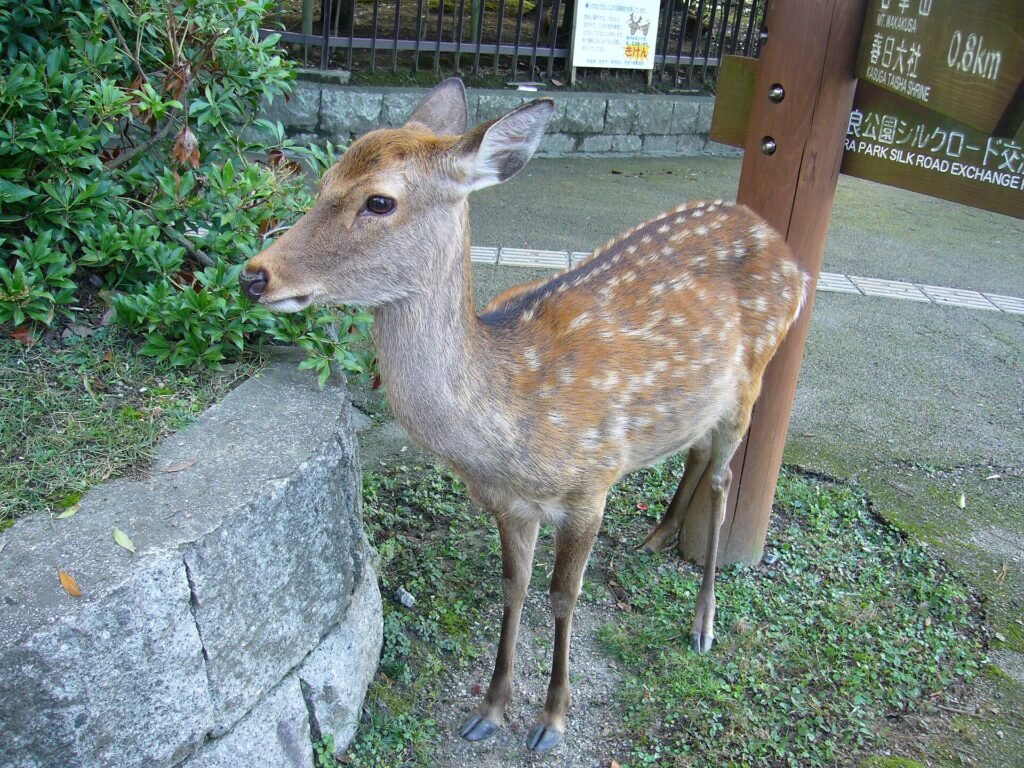
You will read that Nara’s deer bow to ask for food, and that they have somehow been taught this over centuries of proximity to a shrine.
We could not find a single official or foundation source that describes bowing as taught, ceremonial, or a courtesy. What is documented is that head-lowering is ordinary deer behaviour, and that nearly three-quarters of injuries cluster around the exact moment a person is holding a cracker.
A lowered head immediately before contact is as likely to precede a butt as a request. The charming version of this story is doing real work in getting people injured, because it teaches you to relax at precisely the wrong second.
The crackers, and the one absolute rule
The shika senbei sold in the park contain only rice bran and wheat flour. No sugar, no salt, nothing else. Part of the revenue funds deer protection, which is the stated reason the prefecture permits selling food to animals it otherwise forbids you to feed.
The rule is absolute and it is not fussiness: give them nothing except deer crackers. Not bread, not sweets, not vegetables, not the end of your lunch. Other food makes them ill and kills some of them.
The under-reported version of the same problem is packaging. Deer take paper and plastic bags out of hands and pockets, and plastic in a deer’s stomach causes fatal obstruction. Secure your bag before you get near them, not after one is already in it.
We are not printing a cracker price. It is not published on any official prefectural, municipal or foundation page we can reach, and the figure circulating in English traces to blogs. Bring coins and buy from a licensed seller — the stalls are obvious and they are the only legal source.
The practical half
Get off at the right station
Nara has two stations and they are not interchangeable. Kintetsu-Nara puts you a few minutes’ walk from the park. JR Nara is further west, through the town. If you are coming from Kyoto or Osaka to see the park, Kintetsu is the station you want.
From Kyoto, Kintetsu is 760 yen and about 51 minutes on an ordinary express with one change at Yamato-Saidaiji. The limited express adds 520 yen and saves roughly fifteen minutes. JR from Kyoto is 720 yen and 47 minutes direct on the Miyakoji Rapid, which is genuinely competitive — but it lands you at the wrong end of town.
A correction worth having: the JR fare revision of 14 March 2026 was JR East, in the Tokyo region. It does not touch Kansai. JR West’s relevant change was the Keihanshin restructure of 1 April 2025. Any article updating Kyoto to Nara fares for the March 2026 rise has updated nothing.
Do the bus-pass arithmetic before you buy one
A single bus ride in central Nara is 250 yen (it went up from 220 in February 2024). The Nara Park and Nishinokyo World Heritage 1-Day Pass is 600 yen and covers Todai-ji, Kasuga Taisha, Kofuku-ji, Heijo Palace, Toshodai-ji and Yakushi-ji.
That pass pays for itself on the third boarding. Most people visiting the park make two rides, or none, because the walking distances are short and pleasant. Buy it if you are going out to Nishinokyo; skip it if you are staying around the park.
The 1-Day Pass Wide is 1,100 yen and adds Horyu-ji, which is in Ikaruga, not Nara city. The 2-Day Pass is 1,650 yen and reaches Asuka, Muro and the Yamanobe-no-michi — the right ticket if you are going beyond the obvious.
The Kintetsu Rail Pass 5-day is 4,900 yen and never includes limited express charges. Note that Kintetsu’s own English pass index page is still serving a 2016 cache quoting 3,600 yen, which is where that number in circulation comes from.
What things actually cost in 2026
| Adult | |
|---|---|
| Todai-ji Great Buddha Hall | 800 yen |
| Todai-ji hall + museum | 1,200 yen |
| Kofuku-ji National Treasure Museum | 900 yen |
| Kofuku-ji three-hall combined ticket | 1,600 yen |
| Kasuga Taisha grounds | free |
| Kasuga Taisha special worship (inner sanctuary) | 700 yen |
| Kasuga Taisha Kokuhoden museum | 700 yen |
| Isuien garden, including the Neiraku Museum | 1,200 yen |
| Yoshikien garden | free |
| Nara National Museum, permanent exhibition | 700 yen |
| Mount Wakakusa | 150 yen |
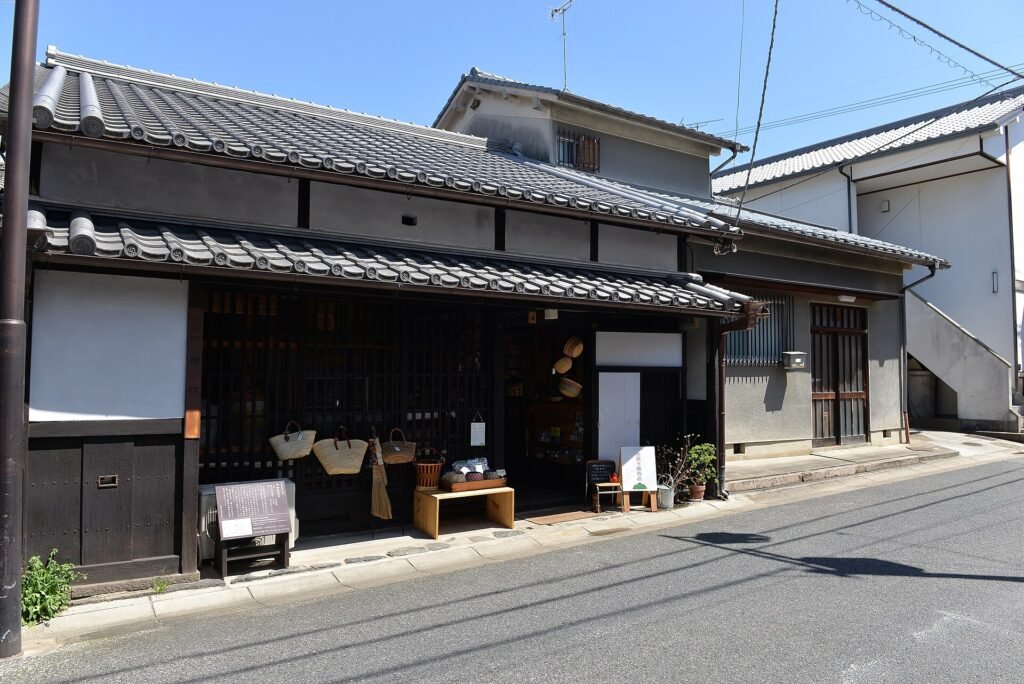
| Naramachi Koshi-no-Ie and Nigiwai-no-Ie | free |
Two of those need flagging.
Kofuku-ji’s prices rose in April 2025. The 700 and 300 yen figures still printed almost everywhere in English are stale by more than a year.
Yoshikien has been free to everyone since April 2020. The line you will read — that it is free for foreign visitors on production of a passport — describes a policy that no longer exists. The concession was not withdrawn; it was extended to everybody, including Japanese visitors. Nobody needs to show a passport and nobody pays.
Bring cash
Todai-ji is cash only. So are several of the smaller admissions, and some of Yakushi-ji’s discounts. Nara is not a card city in the way Tokyo is.
The closing days that will ruin your afternoon
- Isuien: closed every Tuesday, plus late September and a stretch from late December to mid-January.
- Nara National Museum: closed Mondays.
- Naramachi Koshi-no-Ie closes Mondays; Nigiwai-no-Ie closes Wednesdays. Which usefully means there is no single day on which both are shut.
- Todai-ji never closes. Not one day a year.
Arrive earlier than you think
Todai-ji opens at 07:30 from April to October (08:00 the rest of the year). Nara National Museum opens at 09:30 and Kofuku-ji’s halls at 09:00.
That gives you a window of ninety minutes to two hours in which the most-visited building in Nara is open and almost nothing else is. It is the single best structural fact about planning a day here, and it costs you nothing but an early train.
We are deliberately not repeating the claim, common in English writing, that the coaches arrive at ten. We could not source it. The opening times are published; use those.
Nara charges no lodging tax
Neither the city nor the prefecture levies one, and Nara appears nowhere in the national register of non-statutory local taxes. Kyoto now charges between 200 and 10,000 yen a night per person depending on your room rate, and Osaka charges up to 500.
On a mid-range room that is a real, checkable saving, and it is the strongest argument for staying the night in Nara rather than day-tripping in — which is also how you get the park at seven in the morning.
The mayor expressed interest in introducing a lodging tax in January 2025. Nothing has been enacted.
The corrections, in one place
- Yoshikien is free for everyone, not just foreigners, and has been since April 2020.
- Kofuku-ji’s prices rose in April 2025: 900 / 500 / 500 yen, with a 1,600 yen three-hall ticket.
- The deer belong to nobody. Legally ownerless wild animals with national natural monument status.
- Zero hospitalisations among roughly a hundred incidents in the 2023 financial year; 70.4 per cent needed only first aid.
- 72.5 per cent of incidents happen during cracker feeding. The risk is one activity, not the park.
- The bowing story is unsupported by any official source.
- The Kintetsu Rail Pass is 4,900 yen, not the 3,600 still on Kintetsu’s own English index page.
- Kintetsu-Nara, not JR Nara, is the station for the park.
- Nara levies no lodging tax, unlike Kyoto and Osaka.
- The March 2026 JR fare revision was JR East and does not apply to Nara.
Editor’s note. Every price and fare above was read off the operator’s, temple’s, city’s or prefecture’s own page on 20 August 2026 and is printed with that date deliberately. We check figures on the day we write and then leave them alone rather than editing them quietly later, so you always know how old a number is. The deer statistics come from Nara Prefecture’s own management-committee paper; where its own reporting periods do not line up, we have said so rather than smoothing it over.