
In short
Yoshikien has been free to everyone since April 2020 — the “free for foreign visitors with a passport” line everywhere online describes a superseded policy. Isuien’s ¥1,200 includes the Neiraku Museum, one ticket not two. And Mount Miwa has been closed to climbers since 21 July 2026 because of extreme heat, with the Sakurai Station bus discontinued in March.
Checked against each site’s own pages and Nara Prefecture; the Mount Miwa suspension re-checked 25 August 2026.
What is in this guide
Nara’s quieter corners are unusually cheap — several are free — and the errors in English writing about them are not small ones. One garden’s admission policy is described wrongly almost everywhere. One mountain is closed to climbers right now. And one famous temple is not in Nara at all.
Start with the free ones
Yoshikien — free to everyone, and this is a correction
Yoshikien has been free to all visitors since April 2020. 09:00–17:00, last entry 16:30, closed 24–28 February.
Almost every English page still says it is “free for foreign visitors on production of a passport.” That describes a superseded policy. The concession was not withdrawn — it was extended to everybody. You do not need your passport, and neither does anyone else.
It sits beside Isuien, and the two are usually visited together, which brings us to the second correction.
Isuien — one ticket, not two
¥1,200 for adults, ¥500 university and high school, ¥300 junior high and primary, ¥1,000 for groups of fifteen or more. That price includes the Neiraku Museum — it is one ticket covering both, not two separate admissions.
09:30–16:30, last entry 16:00. Closed every Tuesday, plus late December to mid-January and a period in late September. About fifteen minutes’ walk from Kintetsu-Nara.
The two Naramachi houses — both free
| Hours | Closed | |
|---|---|---|
| Kōshi-no-Ie | 09:00–17:00 | Mondays, the day after public holidays, 26 Dec – 5 Jan |
| Nigiwai-no-Ie | 09:00–17:00 | Wednesdays (open if a holiday), 29 Dec – 3 Jan |
A useful planning detail: the closing days do not overlap, so there is no single day of the week on which both are shut. Restored merchant townhouses, free, ten minutes from the deer.
Heijō Palace Site Historical Park — free
09:00–16:30, last entry 16:00. Most facilities close Mondays and 29 December to 3 January; some also close the second Monday of February, April, July and November.
Worth knowing because it postdates most English writing: the Daigokumon gate was completed in 2022, after the Suzakumon and the 2010 Daigokuden. The East Tower is currently under construction. If your guidebook describes an empty field with one gate, it is describing the site as it was two reconstructions ago.
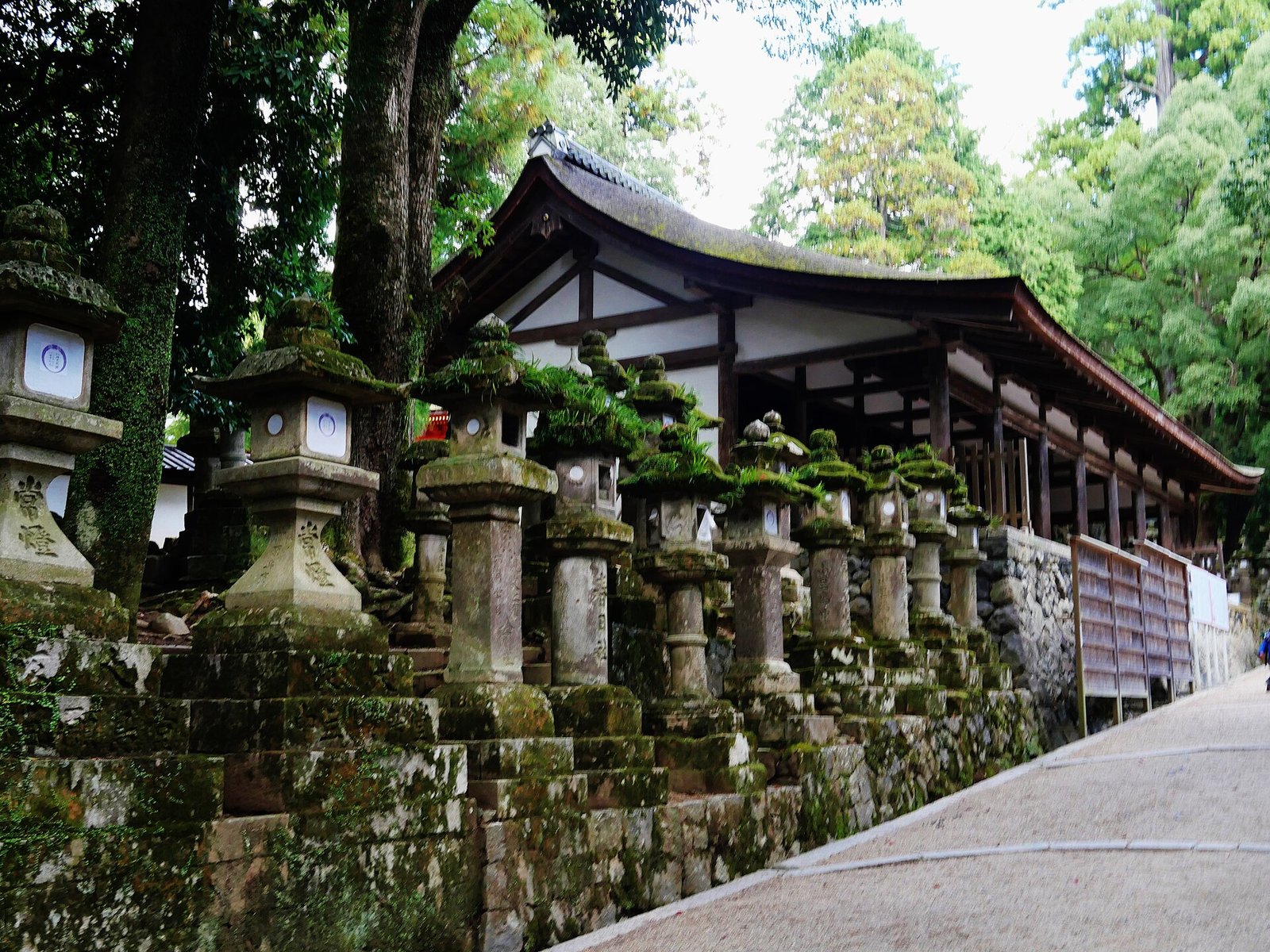
Kasugayama Primeval Forest — free, with real rules
The 9.4 km Kasugayama walking trail is open and free, including the stone-paved Takizaka section, a former samurai road running toward Yagyū.
The restrictions are not decorative. Entering the forest itself is prohibited, as are fires and collecting plants or animals — access is confined to the designated path. It is a Special Natural Monument, and it is inscribed in the World Heritage listing as cultural heritage, not natural heritage, because of its association with Japanese ideas about nature. That distinction is the whole reason the path is fenced by rule rather than by fence.
About fifteen minutes on foot from the Harieshōchō bus stop, or ten from the Kasuga Taisha main shrine stop.
The cheap ones
Mount Wakakusa — ¥150
¥150 for adults, ¥80 for children over three, with a group rate for thirty or more. 09:00–17:00.
The catch is the season: it opens on the third Saturday of March and closes on the second Sunday of December. Outside that window there is no access.
The Yamayaki, when the hillside is burned, was 24 January 2026. No 2027 date has been announced, and we are not going to infer one — the date moves and inferring it is exactly how travel writing goes wrong.
Murō-ji — ¥600
¥600 adult, ¥400 child. 08:30–17:00, dropping to 09:00–16:00 from 1 December to 31 March. The treasure hall runs 09:00–16:30, and 09:30–15:30 in winter.
Why it stays quiet: Kintetsu to Muroguchi-Ōno, then a bus to the terminus, then five minutes on foot. It is a genuine mountain temple and the journey is the reason it is empty.
Tōshōdai-ji — ¥1,000, plus two extras
¥1,000 adult and university, ¥400 high and junior high, ¥200 primary. 08:30–17:00, reception to 16:30.
Two things are charged separately and both are worth knowing: the Shin-hōzō treasure house is ¥200, and the special viewing of the National Treasure seated Ganjin statue is ¥1,000 — but it opens only a few days a year. That is a date-dependent extra, not something you can decide to do on the morning.
One thing that is suspended right now
Mount Miwa is closed to climbers. Ōmiwa Shrine suspended climbing registration indefinitely from 21 July 2026 because of extreme heat, and it was still suspended when we checked on 25 August 2026.
There is a second change on the same trip: the scheduled bus between Ōmiwa Shrine and Sakurai Station was discontinued at the end of March. Access is now by JR Miwa station on the Man’yō Mahoroba line.
Do not plan a Mount Miwa day without ringing the shrine first, on 0744-42-6633.
Two corrections to places people pair with these
Yakushi-ji’s ¥1,000 does not cover everything. It covers the Kondō, Daikōdō and Tōindō — not the Genjō-sanzōin precinct. Some discounts are cash only.
Hōryū-ji is not in Nara city. It is in Ikaruga, and it is covered by the Nara Kōtsū 1-Day Pass Wide at ¥1,100. Its admission was reported raised to ¥2,000 for high-school age and above, effective March 2025, up from ¥1,500 — but see below.
What we could not verify
- Hōryū-ji’s current admission, from the temple’s own site. The site returned a TLS failure. The ¥2,000 figure is strongly indicated by a national newspaper report but is not confirmed from the temple, so treat it as indicative and ring ahead.
- The 2027 Yamayaki date. Not announced.
- Kasuga Taisha’s Kokuhōden fee as a guaranteed figure. It is ¥700 normally, but 2026 is the shrine’s 1250th anniversary year and special exhibitions are priced separately. Do not budget ¥700 as certain.
- Nara National Museum’s special exhibitions. The permanent display is ¥700 general and free for high-school students and under-18s, but special exhibitions are priced and scheduled separately. There is no single “museum entry” price to quote.
Prices, hours and access were checked against each temple’s, shrine’s or garden’s own pages and Nara Prefecture in August 2026, and the Mount Miwa suspension was re-checked on 25 August 2026.
More Nara: the travel guide for the trains and fees, one day built around the 07:30 opening, what the guidebooks get wrong about the deer, and the food, with the registry entries.