
In short
Nara is a day trip, and the train you pick decides how much of the day you keep. Kyoto to Nara: JR Miyakoji Rapid ¥720, 47 minutes direct; Kintetsu ordinary ¥760, about 51 minutes with a change; Kintetsu limited express ¥760 + ¥520, about 35 minutes direct. Entry fees are modest and mostly cash — Todai-ji’s Great Buddha Hall is ¥800.
Fares and fees verified against operator and temple pages, August 2026.
Nara is treated as an afternoon. Get the train from Kyoto, look at the big Buddha, feed a deer, get the train back. It is one of the few places in Japan where the standard advice is not just incomplete but actively costs you money — because Nara charges no lodging tax, and Kyoto and Osaka both do.
That is not a rounding error. A couple sharing a 30,000 yen room in Kyoto now pays 800 yen a night in tax; in Osaka up to 1,000. In Nara they pay nothing, because neither the city nor the prefecture levies one and Nara appears nowhere in the national register of local taxes. Stay two nights and the saving buys you dinner.
What is in this guide
It also buys you the thing day-trippers never get: Todai-ji opens at 07:30 from April to October, and nothing else in Nara opens before nine.
This guide is built from figures read off temple, city, prefecture and operator pages on 20 August 2026. Where a number could not be verified from an official source, it is not here.
Getting there
From Kyoto
| Fare | Time | |
|---|---|---|
| Kintetsu, Kyoto to Kintetsu-Nara, ordinary | 760 yen | about 51 min, one change at Yamato-Saidaiji |
| Kintetsu limited express | 760 + 520 yen | about 35 min, direct |
| JR, Kyoto to Nara, Miyakoji Rapid | 720 yen | 47 min, direct |
From Osaka
Kintetsu Osaka-Namba to Kintetsu-Nara is 680 yen, plus 520 if you take the limited express.
Which station
This matters more than the fare. Kintetsu-Nara is a few minutes’ walk from the park and Naramachi. JR Nara is further west, through the town, and adds fifteen minutes on foot or a bus ride to everything you came for.
Unless you are using a Japan Rail Pass, Kintetsu is the right station.
One correction: the JR fare revision of 14 March 2026 was JR East, covering the Tokyo region. It does not apply in Kansai at all. JR West’s relevant change was the Keihanshin restructure of 1 April 2025. Any 2026 article claiming to have updated Kyoto to Nara fares for the March rise has updated nothing.
Buses and passes
A single ride in central Nara is 250 yen, up from 220 in February 2024.
| Pass | Price | Covers |
|---|---|---|
| Nara Park and Nishinokyo World Heritage 1-Day | 600 yen | Todai-ji, Kasuga Taisha, Kofuku-ji, Heijo Palace, Toshodai-ji, Yakushi-ji |
| 1-Day Pass Wide | 1,100 yen | The above plus Horyu-ji |
| 2-Day Pass | 1,650 yen | Plus Asuka, Muro and the Yamanobe-no-michi |
At 250 yen a ride the 600 yen pass breaks even on the third boarding. Most visitors staying around the park make two rides or none — the distances are short and the walking is the good part. Buy it if you are going out to Nishinokyo; otherwise it is a small, avoidable loss.
The Kintetsu Rail Pass 5-day is 4,900 yen and never includes limited express surcharges. Kintetsu’s own English index page still serves a 2016 cache quoting 3,600 yen — that is where the wrong figure in circulation comes from.
What things cost
| Adult | Hours | |
|---|---|---|
| Todai-ji Great Buddha Hall | 800 yen | Apr to Oct 07:30 to 17:30; Nov to Mar 08:00 to 17:00 |
| Todai-ji hall + museum combined | 1,200 yen | Museum 09:30 to 17:30 |
| Kofuku-ji National Treasure Museum | 900 yen | 09:00 to 17:00 |
| Kofuku-ji Eastern Golden Hall | 500 yen | |
| Kofuku-ji Central Golden Hall | 500 yen | |
| Kofuku-ji three-hall combined | 1,600 yen | |
| Kasuga Taisha grounds | free | Mar to Oct 06:30 to 17:30; Nov to Feb 07:00 to 17:00 |
| Kasuga Taisha special worship | 700 yen | 09:00 to 16:00 |
| Kasuga Taisha Kokuhoden museum | 700 yen | 10:00 to 17:00 |
| Man’yo Botanical Garden | 500 yen | 09:00 to 16:30 |
| Isuien, including the Neiraku Museum | 1,200 yen | 09:30 to 16:30, closed Tuesdays |
| Yoshikien | free | 09:00 to 17:00 |
| Nara National Museum, permanent | 700 yen | 09:30 to 17:00, to 20:00 Fri and Sat, closed Mondays |
| Yakushi-ji | 1,000 yen | 09:00 to 17:00 |
| Toshodai-ji | 1,000 yen | 08:30 to 17:00 |
| Heijo Palace Site Historical Park | free | 09:00 to 16:30, most facilities closed Mondays |
| Mount Wakakusa | 150 yen | 09:00 to 17:00, mid-March to mid-December |
| Naramachi Koshi-no-Ie and Nigiwai-no-Ie | free | 09:00 to 17:00 |
Three of these need explaining.
Yoshikien is free to everyone and has been since April 2020. The advice you will read almost everywhere — free for foreign visitors on production of a passport — describes a superseded policy. The concession was not withdrawn; it was extended to everybody. Nobody shows a passport and nobody pays.
Kofuku-ji’s prices rose in April 2025. The 700 and 300 yen figures still printed in most English guides are more than a year stale.
Isuien’s 1,200 yen includes the Neiraku Museum. It is one ticket, not two, which makes it better value than it first looks.
Horyu-ji, out in Ikaruga, was raised to 2,000 yen in March 2025 according to Nikkei’s reporting. The temple’s own site would not serve us a page, so we are flagging that rather than printing it as confirmed. Ring ahead if the budget matters.
Todai-ji is cash only, as are several smaller admissions.
What is actually worth your time
Todai-ji
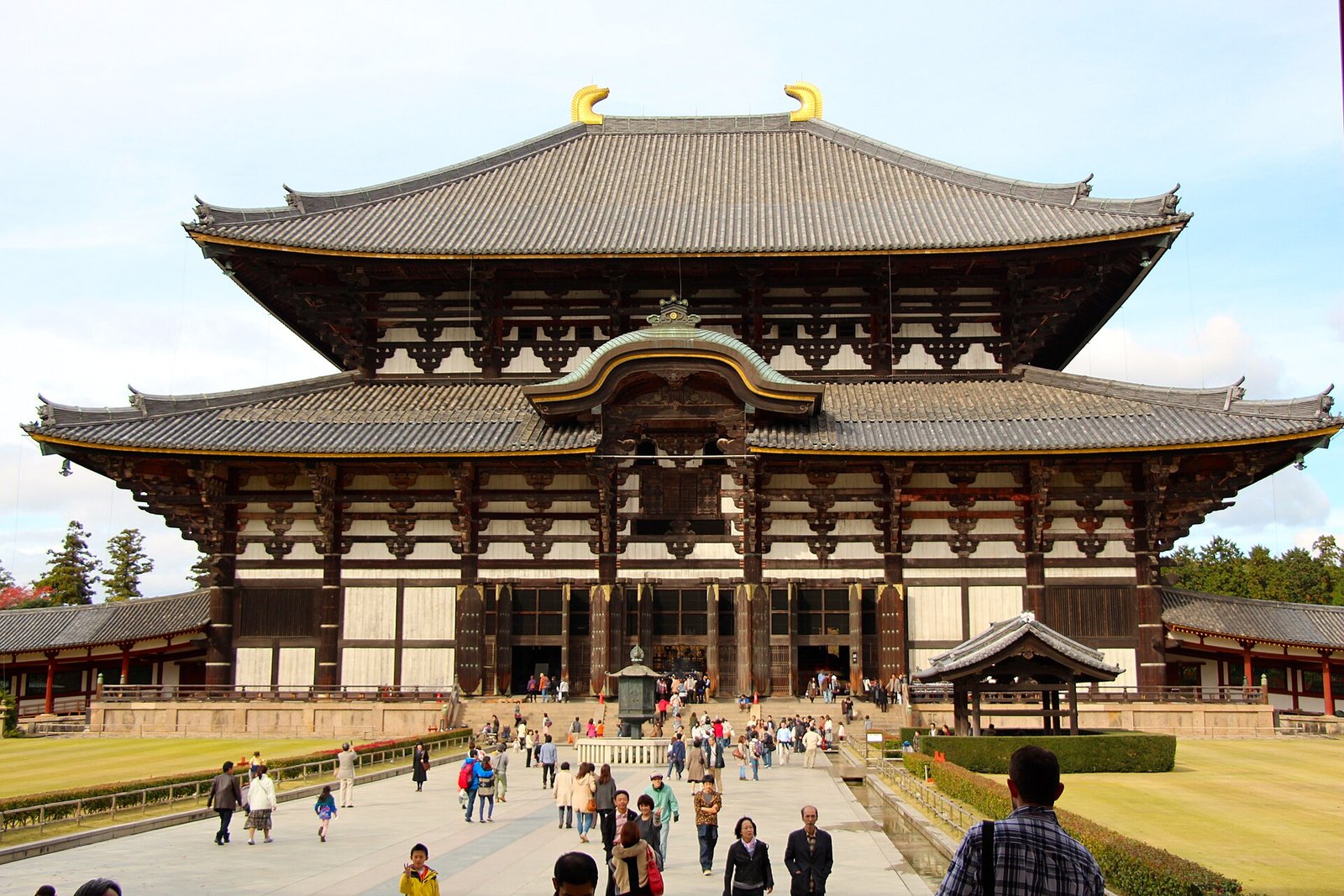
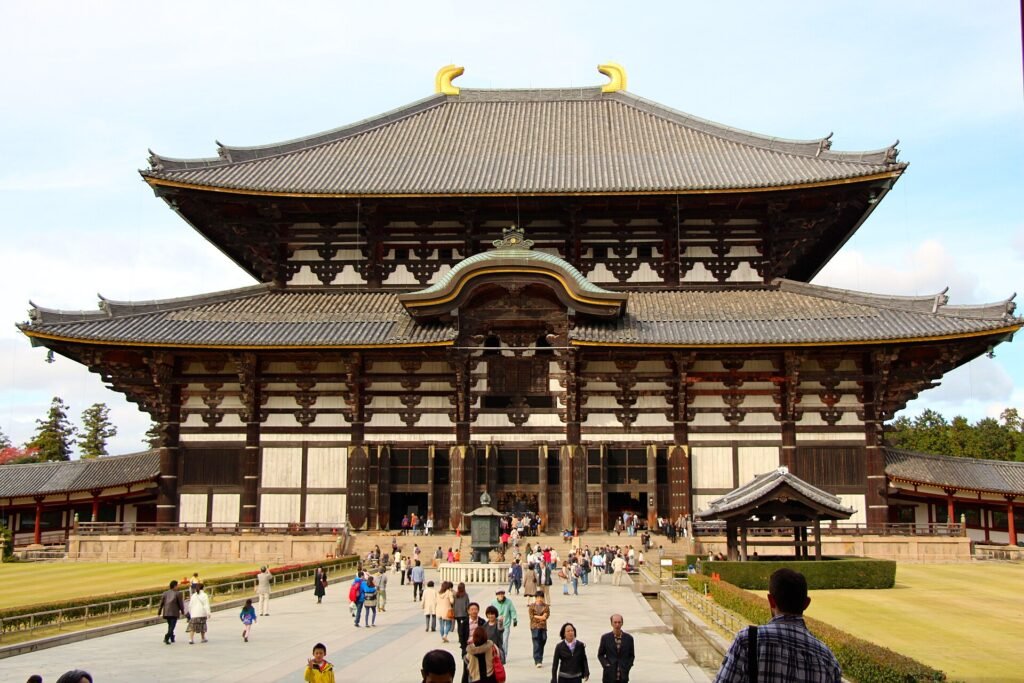
The Great Buddha Hall is the largest wooden building most people will ever stand in, and the bronze Buddha inside is fifteen metres of eighth-century casting. It deserves the crowd it gets.
It is also the reason to be here at half past seven. The hall opens ninety minutes before the museum and an hour before Kofuku-ji, which means there is a real window in which the busiest building in Nara is open and nothing else is. Nobody has to fight for it; they just have to get up.
Beyond the hall, Hokke-do and Kaidan-do are open 08:30 to 16:00 and are almost always empty.
Kasuga Taisha
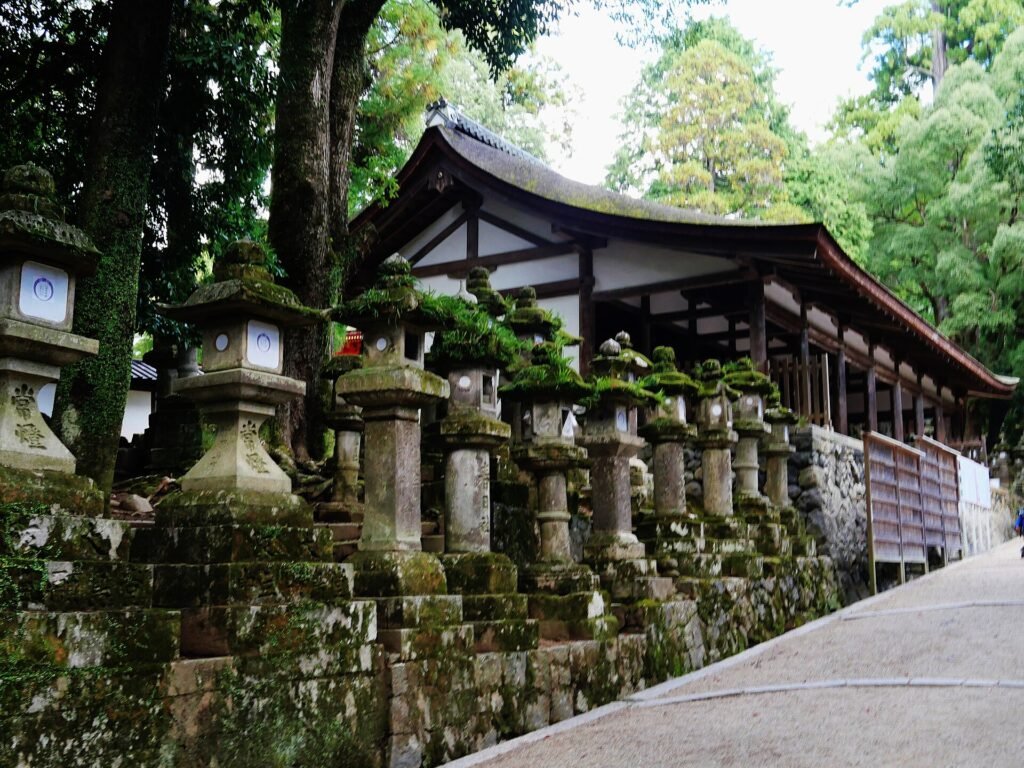
Three thousand stone and bronze lanterns along an approach through forest. The grounds are free; the 700 yen special worship takes you inside the middle gate to see the hanging lanterns in the corridor, which is the photograph you have seen.
Two practical notes. Special worship availability varies by date and certain festival days restrict access. And 2026 is the shrine’s 1250th anniversary year — the museum’s own page reserves the right to change its fee for special exhibitions, so treat 700 yen as indicative there rather than fixed.
The Man’yo Botanical Garden closes on Tuesdays from June to March but has no closures in April and May, which is exactly wisteria season and the entire reason it exists.
Kofuku-ji
The National Treasure Museum holds the Ashura statue, which is the single most reproduced object in Japanese Buddhist art and considerably smaller and stranger in person than the posters suggest. At 900 yen it is the best-value ticket in Nara. The three-hall combined at 1,600 is worth it only if you want the architecture as well.
Naramachi
The old merchant quarter south of Sarusawa Pond: lattice-fronted townhouses, narrow lanes, and two restored houses you can walk into for nothing. Koshi-no-Ie closes Mondays and Nigiwai-no-Ie closes Wednesdays, which conveniently means there is no day on which both are shut.
This is where Nara stops being a monument circuit and becomes a town. It is also where you will find lunch that is not aimed at coaches.
Nishinokyo
Yakushi-ji and Toshodai-ji are two stops out and are the part of Nara most day-trippers never reach. Both are 1,000 yen. Toshodai-ji has two published extras: a 200 yen treasure house, and a 1,000 yen special viewing of the seated statue of Ganjin that is open only a few days a year — a date-dependent bonus, not a standing option.
Yakushi-ji’s 1,000 yen covers the Kondo, Daikodo and Toindo only. It does not include the Genjo-sanzoin precinct, and the add-on price is not published on the temple’s admission page.
Heijo Palace
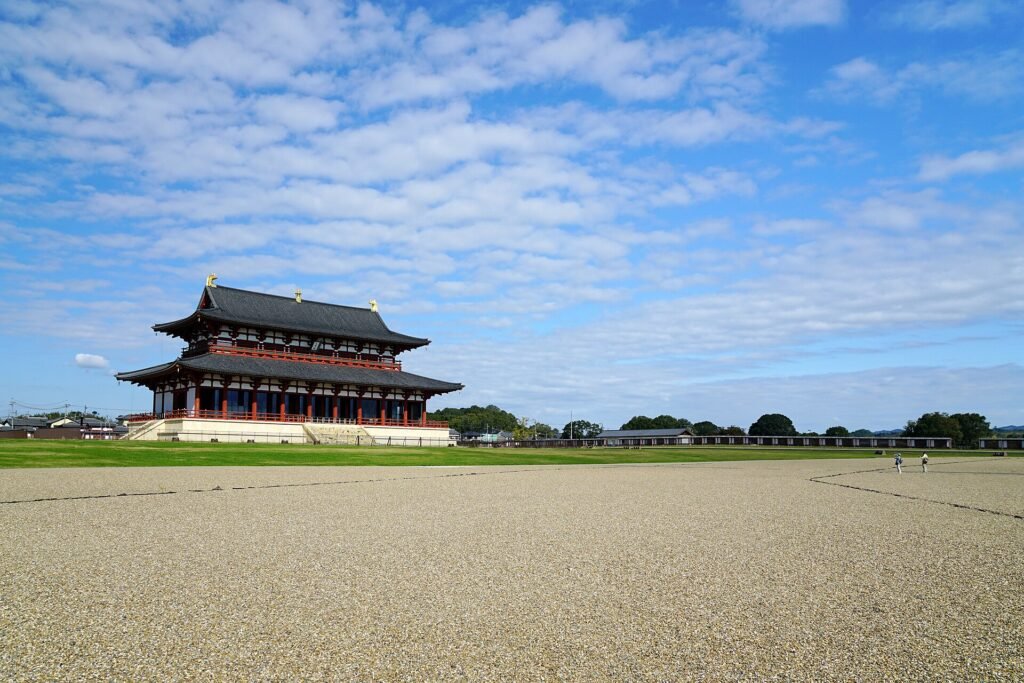
Free, enormous, and almost empty. This was the imperial capital before Kyoto, and what stands now is reconstruction: the Suzakumon gate, the Daigokuden hall rebuilt in 2010, and the Daigokumon great audience gate completed in 2022 — recent enough that most English writing predates it. The East Tower is under construction now.
It is a strange, flat, windy site with a railway line running straight through it, and it gives you a better sense of the scale of eighth-century Nara than any temple does.
The deer, briefly
They are legally wild, ownerless animals with national natural monument status. They are not owned by Kasuga Taisha and they are not tame. Nara Prefecture counted 1,325 of them in July 2024.
Roughly a hundred incidents were recorded in the 2023 financial year, none of which required hospitalisation and 70.4 per cent of which needed only basic first aid. And 72.5 per cent happened while buying, giving or having just given crackers — the risk is one activity, not the park.
Give them nothing except the licensed shika senbei, which contain only rice bran and wheat flour. Secure your bag: they take paper and plastic, and plastic kills them.
We have written the full version of this, including the two aggression seasons that line up exactly with the two injury peaks, in our Nara travel tips.
When to go
JMA normals for Nara station, 1991 to 2020:
| Month | Mean C | Rain mm | Days at or above 30 C |
|---|---|---|---|
| Jan | 4.5 | 52 | 0 |
| Feb | 5.1 | 63 | 0 |
| Mar | 8.5 | 105 | 0 |
| Apr | 14.0 | 99 | 0 |
| May | 19.0 | 139 | 1.9 |
| Jun | 22.9 | 184 | 9.0 |
| Jul | 26.8 | 174 | 22.2 |
| Aug | 27.8 | 128 | 27.2 |
| Sep | 23.8 | 159 | 12.0 |
| Oct | 17.7 | 135 | 0.3 |
| Nov | 11.8 | 71 | 0 |
| Dec | 6.8 | 57 | 0 |
August averages 27.2 days at or above 30 C out of 31. Nearly the entire month. July is not much better and September is still hot into its second half. Nara is a walking city with long open approaches and very little shade between the sites; this is the one factor most likely to ruin a visit.
April, May, late October and November are the months. Cherry blossom in 2026 flowered on 24 March and reached full bloom on 31 March, four days ahead of the published normals of 28 March and 4 April.
The Yamayaki, when the grass on Mount Wakakusa is set alight, was 24 January in 2026. No 2027 date has been announced.
Where to stay, and why to stay
Nara has no lodging tax. Kyoto’s runs from 200 to 10,000 yen per person per night depending on the room rate, and Osaka’s up to 500. On any stay longer than a night that is a genuine, checkable saving.
The better argument is the seven-thirty one. Staying overnight is the only way to have Todai-ji before the day-trippers arrive, and to see the Kasuga approach in the last hour of light rather than the middle of the afternoon. Nara is a small city that empties out at five and becomes a completely different place.
Editor’s note. Every figure in this guide was read off the operator’s, temple’s, city’s or prefecture’s own page on 20 August 2026 and is printed with that date on purpose. We verify prices on the day we write and then leave them alone rather than quietly editing them later, so you can always see how old a number is. Where an official source would not load — Horyū-ji’s admission page, for one — we have said so rather than filling the gap with a figure from somewhere else.