
In short
Six places we could verify, rather than six we liked the sound of. The Maya View Line is the clearest: ¥900 one way, ¥1,560 return for the full line (¥450 / ¥780 for either segment alone), about ten minutes end to end — and it closes every Tuesday, which is how most itineraries lose it.
Fares and closing days verified against the operators, August 2026.
“Hidden gems” articles usually list places that are neither hidden nor gems: the Chinatown, the harbour, the famous ropeway. This one is ordered by a different rule. Every entry below is somewhere we could verify from the operator’s or the institution’s own page on 20 August 2026, and they are ranked by how confident we are in the detail — not by how photogenic they are.
Three of the six are free. One of them is free only on one day a month, and we will tell you which day.
What is in this guide
- 1. Mount Maya and Kikuseidai, not Mount Rokko
- 2. The Nada sake district: three free brewery museums in an afternoon
- 3. The Hyogo Prefectural Museum of Art: Tadao Ando, and almost empty
- 4. The earthquake museum, free on the 17th
- 5. Suma, on a ¥1,590 ticket
- 6. Awaji Island and the Nojima Fault
- Also on the list, and not verified
- Frequently asked questions
1. Mount Maya and Kikuseidai, not Mount Rokko
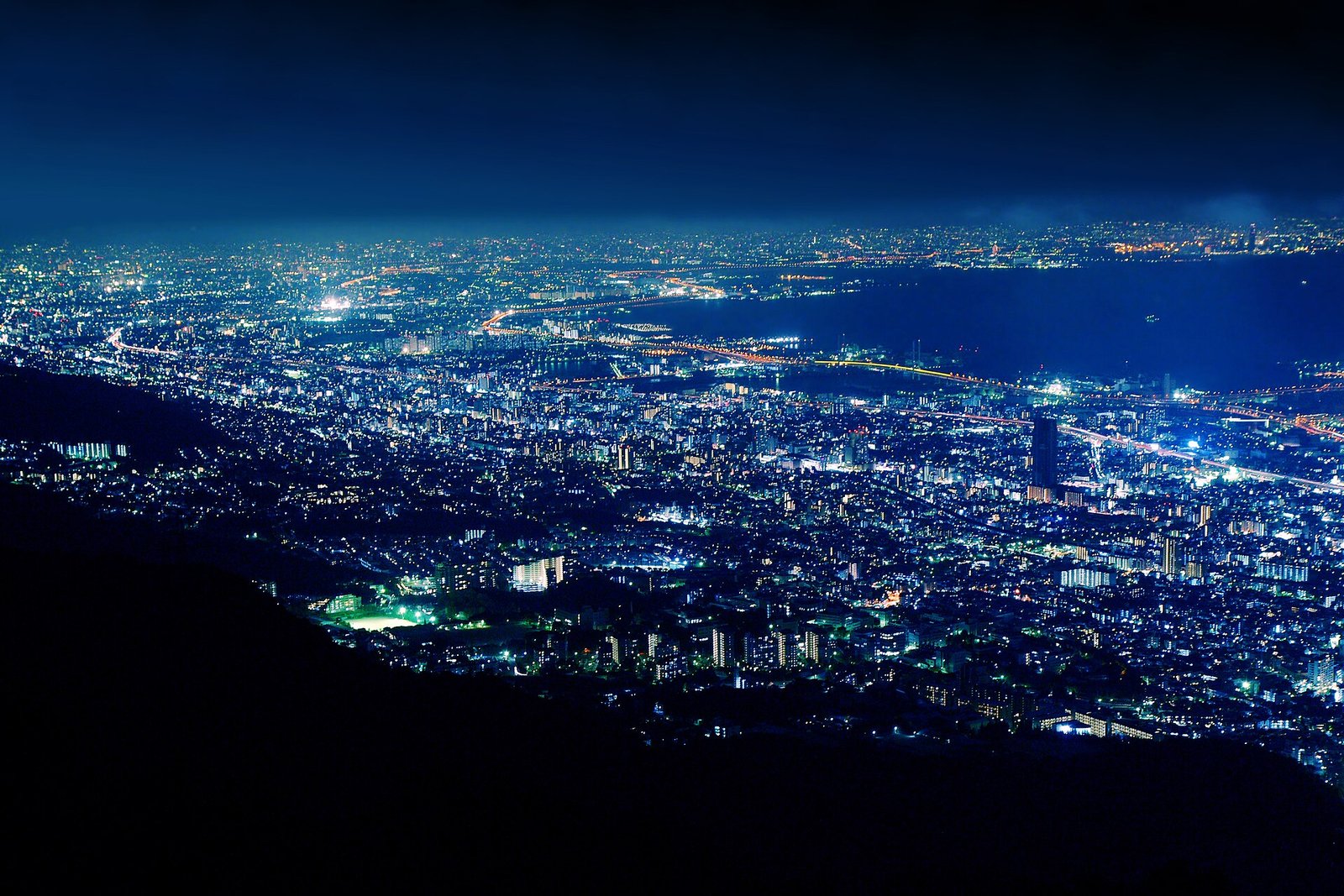
Start with a correction, because it is the most useful thing here. Kobe’s famous night panorama is photographed from Mount Maya, not Mount Rokko, and specifically from the Kikuseidai terrace. Rokko is the taller, better-known mountain and it gets the visitors. Maya gets the picture.
The Maya View Line is a cable car followed by a ropeway.
| One way | Return | |
|---|---|---|
| Full line, adult | ¥900 | ¥1,560 |
| Full line, child | ¥450 | ¥780 |
| Either segment alone, adult | ¥450 | ¥780 |
| Either segment alone, child | ¥230 | ¥390 |
End to end is about ten minutes. Hours are seasonal and long in summer: on 20 August 2026 the cable car was running until 21:00 and the ropeway until 20:50.
It is closed every Tuesday, moving to the following weekday when Tuesday falls on a public holiday. This catches out more visitors than anything else in Kobe, because the night view is the reason many of them came.
The Rokko and Maya Leisure Ticket at ¥3,350 covers it — return Hanshin rail, Kobe City Bus, and either the Rokko Cable Car or the Maya View Line return, plus two mountain bus routes. Sold and valid 11 April to 30 November 2026. It is one of the few Hanshin tickets still sold as paper, cash only, at Osaka-Umeda, Amagasaki, Koshien, Mikage and Kobe-Sannomiya stations and at the Hanshin Service Center at Kobe-Sannomiya.
2. The Nada sake district: three free brewery museums in an afternoon
Twenty minutes east of Sannomiya, in Nada and Higashinada, three working sake houses run visitor museums that are all free to enter and all within a short walk of a station. They are essentially untouristed, and they are the best-value half-day in Kobe.
| Museum | Hours | Closed | Getting there |
|---|---|---|---|
| Hakutsuru Sake Brewery Museum | 09:30 to 16:30, last entry 16:00 | 5 to 18 Aug 2026 for Obon; 28 Dec 2026 to 4 Jan 2027 | Hanshin Sumiyoshi, about 5 min walk |
| Kiku-Masamune Sake Brewery Museum | 09:30 to 16:30 | Every Tuesday from April 2026; New Year | JR Sumiyoshi, then Rokko Liner 2 stops to Minami-Uozaki, 2 min walk |
| Sawanotsuru Museum | 10:00 to 16:00 | Every Wednesday except public holidays; 8 to 16 Aug in 2026 | Hanshin Oishi, about 10 min walk |
Watch those closing days or your reader finds three locked doors. Sawanotsuru shuts Wednesdays, Kiku-Masamune shuts Tuesdays — a change new from April 2026 that older guides will not carry — and Hakutsuru shuts for a fortnight in August.
Hakutsuru occupies a Taisho-era brewery and is self-guided; its shop was refurbished in 2026. Kiku-Masamune runs its site in Japanese, English, both Chinese scripts and Korean, unusually thorough for a brewery museum. Sawanotsuru is in a late-Edo stone warehouse and preserves the underground sake-pressing chamber and the original tools across three hundred years of the company’s history; its shop offers tastings, including sake sold only at the brewery.
Whether tastings at Hakutsuru and Kiku-Masamune are free or paid is not stated on their own pages, so budget for the possibility rather than assuming.
Groups of ten or more need to book at all three. Under ten, walk in.
3. The Hyogo Prefectural Museum of Art: Tadao Ando, and almost empty
A Tadao Ando building holding around ten thousand works, on the waterfront at HAT Kobe, and it is quiet in a way that a museum of this quality has no business being.
| Ticket, collection exhibition | Price |
|---|---|
| Adult | ¥550 |
| University | ¥400 |
| High school and under | Free |
| Over 70 | ¥250 |
| Disability certificate | ¥100 |
Groups of twenty or more: ¥400, ¥300, ¥200 and ¥50 respectively. Open 10:00 to 18:00, last entry 17:30. Closed Mondays, moving to the next day when Monday is a public holiday, plus New Year and maintenance periods. Special exhibitions are priced separately.
The Ando Gallery on the second floor is free, which means you can see the architecture — which for many visitors is the actual draw — without paying anything at all.
And here is the pairing nobody makes: it is a five-minute walk from the Disaster Reduction and Human Renovation Institution. Two major institutions, five minutes apart, and we could find no English itinerary that puts them in the same afternoon.
4. The earthquake museum, free on the 17th
The Disaster Reduction and Human Renovation Institution (人と防災未来センター) at HAT Kobe is the most substantial thing to do in Kobe that has nothing to do with beef or ropeways. It is also the one that will change how you read the rest of the city.
| Ticket | Adult | University | High school and under |
|---|---|---|---|
| Both buildings | ¥650 | ¥450 | Free |
| East building only | ¥300 | ¥200 | Free |
| Over 70 | ¥300 both, ¥150 east |
Group rates for twenty or more: ¥500 and ¥350.
Open 09:30 to 17:30, last entry 16:30. Closed Mondays and over New Year. A temporary closure is scheduled for 20 and 21 February 2027.
It is free for everyone on the 17th of every month. That is the date the earthquake struck, and it is a genuinely good detail that almost no English article carries. If your dates are flexible at all, be there on a 17th.
The figures the museum deals with, from the Fire and Disaster Management Agency’s final report of 19 May 2006: at 05:46 on 17 January 1995, the Hyogo-ken Nanbu Earthquake, magnitude 7.3, killed 6,434 people, left 3 missing and injured 43,792. 104,906 buildings were completely destroyed and 293 fires broke out. The magnitude was revised from 7.2 to 7.3 in 2001, which is why both figures still circulate. The event is the Hyogo-ken Nanbu Earthquake; the disaster is the Great Hanshin-Awaji Earthquake Disaster.
Getting there: about ten minutes’ walk from Hanshin Iwaya or Kasuganomichi, twelve from JR Nada, twenty from Hankyu Ojikoen.
5. Suma, on a ¥1,590 ticket
West along the coast, Suma is where Kobe residents go to the beach, and it is bundled into a ticket most visitors never look at.
The Sannomiya and Himeji QR 1-Day Ticket, ¥1,590, covers the Kobe Kosoku Line, all of Sanyo Electric Railway, the Shin-Kobe to Sannomiya subway hop — and a return trip on Sumaura Yuen’s B course, which is the ropeway, the so-called car escalator, and the revolving observation deck. Sold 1 April 2026 to 31 March 2027.
That means the same ticket that gets you to Himeji also gets you a cable car ride and a viewing platform on the way, at no extra cost. It is the best-hidden value in Kobe’s ticket range.
Kobe Suma Sea World is reachable at Tsukimiyama station, and Hanshin sells a combined return-travel-plus-admission digital ticket at ¥4,100 adult, ¥2,930 junior high, ¥2,290 child, sold 1 April 2026 to 31 March 2027. The aquarium’s standalone admission we could not verify — its own domain would not resolve on 20 August 2026 — so compare before you buy the bundle.
6. Awaji Island and the Nojima Fault
This one is a half-day out of the city and it is the physical counterpart to the DRI’s human account.
The Hokudan Earthquake Memorial Park, home of the Nojima Fault Preservation Museum, preserves the surface rupture that broke the ground in 1995 — the actual displaced earth, roofed over and left as it was found. It runs kataribe storyteller sessions led by earthquake survivors, and tablet-based exhibits at ten points across the site.
We could not verify its admission price, its opening hours, or the bus access from Sannomiya from the museum’s own site, which publishes no fee or hours anywhere in its text. The site is confirmed operating and the exhibits are confirmed. Check the practicalities directly before you set out — this is the one entry here where we would rather you phone ahead than trust a figure we cannot source.
Also on the list, and not verified
We would rather leave these as leads than dress them up as recommendations. We ran out of primary sources before reaching any of them, and none should be planned around without checking:
- The Hyogo Daibutsu at Nofukuji, the great bronze Buddha in the west of the city
- The Takarazuka Revue, the all-female musical theatre company, north of Kobe in Takarazuka
- The independent shops of Kobe Sakaemachi
- Nunobiki Falls — whether it is free, and how long the walk up from Shin-Kobe takes
- Ikuta Shrine hours and access
- Uroko House, Yamate Hachiban-kan and the Kitano Foreign Club, along with the tiered multi-house ijinkan passes, which is exactly the part older guides get wrong
- Maiko Marine Promenade admission and hours
- The Bridge World tower-top tour price at the Akashi Kaikyo Bridge. Everything else about it is confirmed: designated days from April to November 2026 and in March 2027, two sessions daily, about 2 hours 50 minutes, maximum 48 people and a minimum of 12, ages 12 to 15 accompanied, and online-only booking. The fee table is published as an image, which is why we cannot quote it.
Frequently asked questions
What is the best free thing to do in Kobe?
The three Nada brewery museums, taken together as an afternoon. Failing that, the Ando Gallery at the Hyogo Prefectural Museum of Art, and Rhine House in Kitano — both free, both indoors.
When is the earthquake museum free?
The 17th of every month, for everyone. High-school students and under are free every day.
What is the best night view in Kobe?
Kikuseidai on Mount Maya, reached by the Maya View Line — ¥1,560 return for the full line. Remember it is closed every Tuesday.
Are the Nada sake museums really free?
Yes, all three, for admission. Tastings are a separate question: Sawanotsuru’s own page mentions shop tastings, while Hakutsuru and Kiku-Masamune do not state whether theirs are free or charged.
For the whole city, see our Kobe travel guide; for a plan built around Kobe’s awkward closing days, the two-day itinerary; and for the certification rules behind the city’s most famous export, our guide to Kobe beef.
Photo: “View of Kikuseidai from Mount Maya Kobe” by 663highland, via Wikimedia Commons, licensed CC BY 2.5.