
In short
The Landmark Tower Sky Garden closed on 31 December 2025 and is not expected to reopen before 2028 — most English guides still list it as Yokohama’s main observation deck. Yokohama and Kanagawa charge no accommodation tax. JR East raised fares on 14 March 2026, putting Tokyo–Yokohama at ¥528. The Kanagawa Shimbun fireworks festival has not run since 2016.
Verified against operator and prefectural sources, August 2026.
Almost every English-language guide to Yokohama still tells you to go up the Landmark Tower Sky Garden. It closed on 31 December 2025 and is not expected to reopen before 2028.
That is not a small error. It is the attraction most articles lead with, and readers are being sent to a building where the lift no longer goes to the observation deck. It is also symptomatic: Yokohama’s fares changed in March 2026, its bus fares change again in January 2027, its ferry costs roughly double what guides say, and one of its best-known summer events has not been held since 2016.
What is in this guide
So this guide is built around what is actually true in August 2026. Every figure below was checked against the operator’s, the city’s or the prefecture’s own page on 20 August 2026, and the things we could not confirm are listed at the end rather than papered over.
What changed, and what is simply wrong
- Landmark Tower Sky Garden is closed. Since 31 December 2025, for large-scale refurbishment of the tower. The operator’s release says operations resume “after 2028.”
- Landmark Tower is not Japan’s tallest building. It was, from 1993. Abeno Harukas passed it in 2014 and Azabudai Hills Mori JP Tower took the title in 2023.
- Tokyo to Yokohama is not ¥480. JR East revised fares on 14 March 2026. It is now ¥528 with an IC card, ¥530 on paper.
- The Sea Bass water bus does not cost about ¥700. It is ¥1,000 to ¥1,500 per segment.
- Sankeien Garden is ¥700, not the ¥900 that circulates.
- The Yamate Western houses are free — all seven of them.
- The Yokohama Museum of Art is open. It reopened partially in March 2024 and fully in February 2025.
- The Kanagawa Shimbun Fireworks Festival has not been held since 2016. Stop planning trips around it.
- The Yokohama Triennale is not on in 2026. The next edition runs 23 April to 12 September 2027.
- Yokohama levies no lodging tax, and neither does Kanagawa Prefecture.
Getting to Yokohama
From Tokyo
Yokohama is close enough to Tokyo that many visitors treat it as a day trip, and cheap enough that some should treat it as a base instead.
| Route | Fare | Time |
|---|---|---|
| JR Tokaido Line, Tokyo to Yokohama | ¥528 IC / ¥530 paper | 27 min, no change |
| JR Yokosuka Line, Tokyo to Yokohama | ¥528 / ¥530 | 31 min, no change |
| JR Keihin-Tohoku Line, Tokyo to Yokohama | ¥528 / ¥530 | 40 min, all stations |
| JR Shonan-Shinjuku Line, Shibuya to Yokohama | ¥440 IC | 28 min, no change |
| JR Tokaido, Shinagawa to Yokohama | ¥350 IC | 18 min |
| Tokyu Toyoko Line, Shibuya to Yokohama | ¥310 | about 33 min by Express |
| Keikyu, Shinagawa to Yokohama | ¥320 | 24 min by Kaitoku |
About that fare rise. JR East revised its fares on 14 March 2026 at an overall rate of 7.1%, with 7.8% on ordinary fares. Short Tokyo-area hops rose by more than the headline percentage, because the revision abolished the historic cheap Tokyo-area and Yamanote fare bands and folded them into the standard trunk-line table. JR East’s own worked examples include Shimbashi to Yokohama going ¥410 to ¥440 and Shinagawa to Yokohama ¥310 to ¥350.
This matters beyond Yokohama: any JR figure in an article written before March 2026 is wrong for the Tokyo area. Note that this is a JR East revision — the Kansai fare changes were a separate JR West event on 1 April 2025, and the two get conflated constantly.
The honest summary for a visitor: a train every few minutes, about half an hour, under ¥550. And if you are counting yen, Tokyu at ¥310 or Keikyu at ¥320 undercut JR by roughly two hundred yen, which over a few trips is a meal.
Trains are frequent: on a weekday midday the Tokaido Line runs 11 to 14 departures an hour southbound from Tokyo Station. The Keihin-Tohoku runs twelve an hour, but several terminate at Kamata, short of Yokohama — check the destination board.
Shin-Yokohama is not Yokohama
This trips people up constantly. Shin-Yokohama is the shinkansen station, about 8 km inland, and you must change to reach the city.
- Tokyo to Shin-Yokohama by Tokaido Shinkansen: ¥1,380 unreserved, 17 to 19 minutes.
- Shin-Yokohama to Yokohama Station: the Yokohama Municipal Subway Blue Line runs direct, ¥250 paper or ¥242 IC, 11 minutes. Or JR via Higashi-Kanagawa, ¥210, 15 to 18 minutes with a change.
- Shin-Yokohama to Sakuragicho, for Minato Mirai: Blue Line direct, ¥280 paper or ¥272 IC, 16 minutes.
Since 18 March 2023 the Tokyu Shin-Yokohama Line has connected Shin-Yokohama directly into the Tokyu network — Shibuya to Shin-Yokohama in about 23 minutes, Meguro in about 16 — with through-running onto the Sotetsu network. This is genuinely new infrastructure that pre-2023 guides do not mention at all.
From the airports
Haneda is the easy one. Keikyu rail from Haneda Terminal 1 and 2 to Yokohama: ¥397 IC or ¥400 paper, about 28 minutes. Keikyu’s Haneda access surcharge is only ¥50, reduced from ¥170 back in 2019.
The airport bus from Haneda to YCAT, the terminal at Yokohama Station East, is ¥800 adult and ¥400 child — raised from ¥650 on 1 February 2026. Note also that QR payments such as PayPay were discontinued on 31 January 2026; it is IC card or contactless credit card only now.
We could not verify the Keikyu fare from Haneda Terminal 3, only Terminals 1 and 2, so check at the machine if you arrive at T3.
Narita is the expensive one.
- Narita Express, direct with no change: ¥4,480 total — ¥2,090 fare plus a ¥2,390 reserved limited-express charge — 1 hour 34 minutes.
- The N’EX Tokyo Round Trip Ticket is ¥5,200 adult, ¥2,600 child, valid for a return journey within 14 days, and Yokohama is inside the coverage area. A regular return costs ¥8,960. If you are going Narita to Yokohama and back, this is the obvious buy and it saves ¥3,760.
- Limousine bus, Narita to YCAT: ¥4,000 adult, ¥2,000 child.
Getting around Yokohama
The passes, and which one to buy
| Pass | Price | Covers |
|---|---|---|
| Yokohama Minatomirai Pass (JR East) | ¥560 adult / ¥280 child | JR Keihin-Tohoku and Negishi Line, Yokohama to Shin-Sugita, plus the entire Minatomirai Line |
| Minatomirai Line One-Day Pass | ¥460 / ¥230 | The Minatomirai Line only |
| Minato Burari Ticket (Yokohama City) | ¥700 / ¥350; Wide version ¥750 / ¥380 | City subway, municipal buses, Akai Kutsu and BAYSIDE BLUE. The Wide version adds the subway out to Shin-Yokohama |
| Tokyu Line Minatomirai Pass | from ¥920 from Shibuya | Return Tokyu travel plus unlimited Minatomirai Line |
| Tokyu Line + Minatomirai One Day Pass | ¥1,220 (¥1,190 digital) | All Tokyu lines plus the whole Minatomirai Line |
The Yokohama Minatomirai Pass at ¥560 is the one to buy. For ¥100 more than the Minatomirai-only pass, you also get the JR line serving Kannai, Ishikawacho — which is your stop for Chinatown and Yamate — and Sakuragicho. Note it is sold at designated JR machines inside the free area and on Mobile Suica for same-day use only, and is not sold at Midori-no-Madoguchi.
Skip the Minatomirai Line One-Day Pass unless you are riding a lot. The maximum single fare on the line is ¥230, so it only breaks even on the third ride.
If you are coming from Shibuya, the Tokyu pass at ¥920 beats buying separately: a Toyoko return is ¥620 plus a ¥460 day pass equals ¥1,080, so the pass saves ¥160.
Buses, gondolas and the ferry
Minatomirai Line fares from Yokohama Station: ¥200 to Shin-Takashima, Minatomirai or Bashamichi; ¥230 to Nihon-odori or Motomachi-Chukagai. The line is only 4.1 km and six stations, and it through-runs with the Tokyu Toyoko Line.
The Akai Kutsu loop bus and BAYSIDE BLUE, the articulated bus, are both ¥220 adult, ¥110 child per ride — the flat city bus fare. Akai Kutsu runs roughly every 20 minutes on weekdays and every 15 at weekends.
Plan for a rise: Yokohama City Bus fares, and therefore both of those, go from ¥220 to ¥240 in January 2027.
YOKOHAMA AIR CABIN, the urban gondola between Sakuragicho Station and Unga Park, opened on 22 April 2021 and is missing entirely from older guides. One way ¥1,000 adult, ¥500 child; round trip ¥1,800 / ¥900. Under-3s free. Hours 10:00 to 22:00, weather permitting. The ride is about 630 m and takes roughly five minutes at a maximum height of about 40 m. Combination tickets with Cosmo Clock 21 run ¥1,300 to ¥2,500.
The Sea Bass water bus is the single most out-of-date fact in English guides.
| Segment | Adult | Child |
|---|---|---|
| Yokohama Station East to Hammerhead or Red Brick | ¥1,300 | ¥650 |
| Yokohama Station East to Yamashita Park | ¥1,500 | ¥750 |
| Hammerhead to Red Brick | ¥1,000 | ¥500 |
| Hammerhead to Yamashita Park | ¥1,300 | ¥650 |
Four piers, roughly 10:00 to 19:00, no regular closing day, and no day pass. It is a pleasant way to cross the harbour, but at ¥1,500 it is a sightseeing cruise priced as transport, not a cheap hop.
What to see, and what it costs
| Attraction | Adult admission | Hours and closures |
|---|---|---|
| Landmark Tower Sky Garden | CLOSED since 31 Dec 2025 | Not expected to reopen before 2028 |
| Yamate Western houses, all seven | Free | 09:30 to 17:00. Closed 2nd or 4th Wednesday depending on the house |
| Yokohama Red Brick Warehouse | Free | Building 1 10:00 to 19:00; Building 2 11:00 to 20:00 |
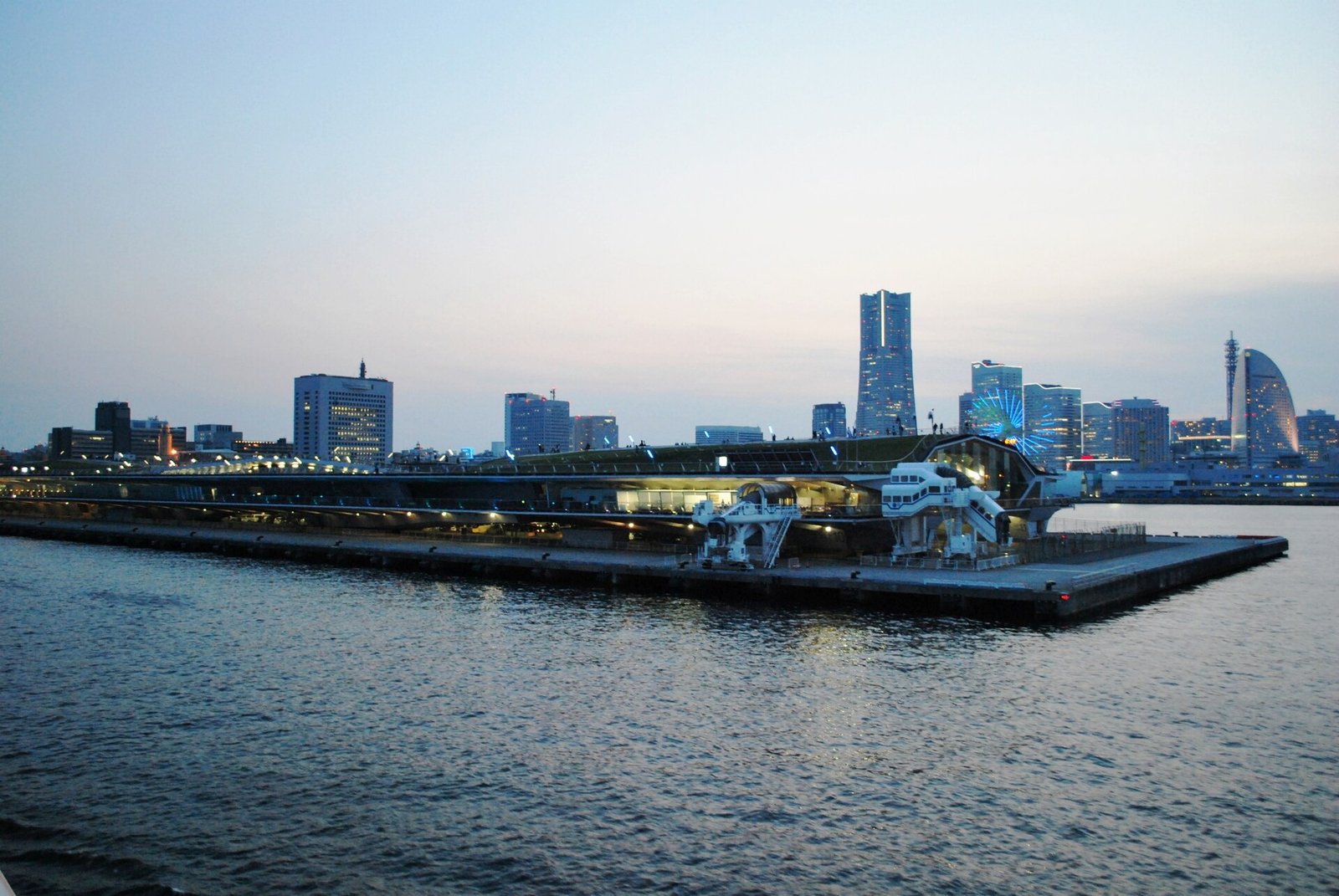
| Osanbashi terminal | Free | Rooftop plaza open 24 hours; hall 09:00 to 21:30 |
| Yokohama Chinatown | Free | Public streets; no district closing day |
| Kanteibyo temple | Grounds free; ¥500 incense to enter the main hall | 09:00 to 19:00 |
| Yokohama Museum of Art, collection | ¥500 | 10:00 to 18:00. Closed Thursdays. Closed entirely 24 Nov to 10 Dec 2026 |
| Sankeien Garden | ¥700 | 09:00 to 17:00, last entry 16:30. Closed 29 to 31 Dec |
| Nippon Maru and Port Museum, combined | ¥800 | 10:00 to 17:00. Closed Mondays |
| Shin-Yokohama Ramen Museum | ¥450 | Weekdays 11:00 to 21:00; weekends from 10:30. Closed only 31 Dec and 1 Jan |
| CUPNOODLES Museum, admission | ¥500; high school age and under free | 10:00 to 18:00, last admission 17:00. Closed Tuesdays |
| Cosmo Clock 21 ride | ¥1,000 | 11:00 to 21:00, later at weekends. Closed Thursdays |
| YOKOHAMA AIR CABIN | ¥1,000 one way / ¥1,800 return | 10:00 to 22:00 |
| Yokohama Marine Tower, day ticket | ¥1,000 weekday / ¥1,200 weekend | Day 10:00 to 17:30; night ticket ¥1,200 to ¥1,400 |
| Hara Model Railway Museum | ¥1,500 | Closed Tuesdays and Wednesdays. Timed advance tickets required |
| Zoorasia | ¥800 | 09:30 to 16:30. Closed Tuesdays. Free Saturdays for students with ID |
| Kirin Beer Yokohama factory tour | ¥500, rising to ¥1,000 from 1 October | 90 min, booking required. Closed Mondays |
| Anpanman Children’s Museum | ¥2,200 to ¥2,800 by date | 1F shops free. Timed web tickets required |
The Cup Noodles Museum, which everyone gets wrong
The museum is genuinely good and its pricing is genuinely confusing. Admission does not include any of the noodle activities. There are four separate charges.
| Item | Price |
|---|---|
| Museum admission | ¥500 for university age and above; high school age and under free |
| Chicken Ramen Factory, making noodles from scratch | ¥1,200 junior high and above, ¥600 elementary — advance reservation required |
| My CUPNOODLES Factory, designing your own cup | ¥500 per cup |
| CUPNOODLES Park, the play attraction | ¥500 per 30-minute session |
| NOODLES BAZAAR food hall | ¥500 regular, ¥250 mini per dish |
The Chicken Ramen Factory rose from ¥1,000 to ¥1,200 on 31 January 2026. Admission stayed at ¥500. Sessions run 90 minutes and must be booked ahead — this is the one thing at the museum you cannot decide on the day.
Closed Tuesdays, moving to the following day when Tuesday is a public holiday.
The free half of Yokohama
It is worth saying plainly, because guides bury it: a good day in Yokohama can cost almost nothing.
All seven Yamate Western houses are free — Yokohama British House, Yamate No. 111, Yamate No. 234, the Ehrismann Residence, Berrick Hall, the Diplomat’s House and Bluff No. 18 — open 09:30 to 17:00 and grouped in three parks on the Bluff. The closure pattern is the catch: Yamate 111, Ehrismann, Berrick Hall and Bluff 18 close on the second Wednesday of the month; British House, Yamate 234 and the Diplomat’s House close on the fourth.
Chinatown is a public street district and costs nothing to walk through. The Red Brick Warehouse and Osanbashi are free, and Osanbashi’s rooftop plaza — the “whale’s back” — is open 24 hours, which makes it the best free night view in the city now that Sky Garden has gone.
One warning: the Red Brick Warehouse Christmas Market is no longer free. Recent editions have been ticketed at ¥500 to ¥1,000 or more depending on date and ticket type. The 2026 dates had not been published as of 20 August 2026.
Where to stay, and the tax advantage
Here is a concrete reason to consider Yokohama as a base rather than a day trip.
Yokohama levies no lodging tax. Neither does Kanagawa Prefecture. We confirmed this against the Ministry of Internal Affairs and Communications register of non-statutory local taxes, which lists every lodging tax in force in Japan. Neither Kanagawa Prefecture nor Yokohama City appears on it.
Tokyo does levy one. So do Kyoto and Osaka. A traveller sleeping in Yokohama and commuting into Tokyo in about half an hour for ¥528 pays no accommodation tax at all.
The one exception in the prefecture is Yugawara Town, which introduced Kanagawa’s first lodging tax on 1 April 2026 at ¥300 per person per night below ¥50,000, and ¥500 at ¥50,000 and above, with under-12s exempt. It applies only within Yugawara, which is an onsen town an hour and a half away, not anywhere in Yokohama.
Do not repeat the claim that Yokohama is “planning” a lodging tax. We looked. There is a 2024 council question on the record referring to it as a possible revenue source, but no city announcement, ordinance or committee report. That is not a plan.
If you are working out accommodation costs across a Japanese trip, our Japan lodging tax calculator handles the cities that do charge.
When to go
Japan Meteorological Agency normals for Yokohama, 1991 to 2020. Annual mean 16.2°C, annual precipitation 1,730.8 mm, annual sunshine 2,018.3 hours.
| Month | Mean temp | Rainfall | Sunshine |
|---|---|---|---|
| January | 6.1°C | 64.7 mm | 192.7 h |
| February | 6.7°C | 64.7 mm | 167.2 h |
| March | 9.7°C | 139.5 mm | 168.8 h |
| April | 14.5°C | 143.1 mm | 181.2 h |
| May | 18.8°C | 152.6 mm | 187.4 h |
| June | 21.8°C | 188.8 mm | 135.9 h |
| July | 25.6°C | 182.5 mm | 170.9 h |
| August | 27.0°C | 139.0 mm | 206.4 h |
| September | 23.7°C | 241.5 mm | 141.2 h |
| October | 18.5°C | 240.4 mm | 137.3 h |
| November | 13.4°C | 107.6 mm | 151.1 h |
| December | 8.7°C | 66.4 mm | 178.1 h |
The finding that contradicts the standard advice: September and October are Yokohama’s wettest months, at 241.5 mm and 240.4 mm — heavier than the June rainy season at 188.8 mm. That is typhoon season, and it catches out visitors who have been told autumn is the safe bet.
August is the hottest month and also the sunniest, at 206.4 hours. The most comfortable months by these normals are April, May, October and November — with the caveat that October is wet.
Cherry blossom: JMA recorded flowering in Yokohama on 22 March 2026 and full bloom on 1 April 2026, against normals of 25 March and 1 April. Recent full-bloom dates have ranged from 25 March in 2023 to 7 April in 2024, so plan a window rather than a date.
We could not verify the number of days at or above 30°C. JMA does not publish that count in its Yokohama normals table, and one fetch returned figures that were clearly a column-alignment artefact. We would rather say so than print a number that is wrong.
Events: what is real and what is not
- The Kanagawa Shimbun Fireworks Festival is not an annual event. It ran from 1986, and the 31st edition in 2016 was the last. We found no source indicating a revival. Guides still listing it are years out of date.
- “Yokohama Sparkling Twilight” no longer exists under that name. From 2025 it became Yokohama Night Flowers, and the format changed completely: not a summer festival but a series of roughly five-minute firework displays on selected dates through the year, launched from Shinko Pier or Osanbashi, free, with no reserved seating. Published 2026 dates run through 5 September, 20 September, 11 and 24 October, 14 November and three December dates, continuing to March 2027.
- The big summer display does still happen, now called the Minato Mirai Festival: Monday 24 August 2026, 18:00 to 20:00, with gates from 16:30 at Rinko Park. A fire broke out on a launch barge during the 2025 event and the display was terminated; one person suffered minor injuries and all five technicians were evacuated. For 2026 the organisers reduced the shell count and added inspection protocols, remote water suppression, wider tube spacing and a faster cancellation chain, and moved the date off the traditional first Monday of August to allow preparation time.
- The Yokohama Triennale is not on in 2026. The 8th ran March to June 2024. The 9th runs 23 April to 12 September 2027, main venue the Yokohama Museum of Art.
- Planning ahead for 2027: GREEN×EXPO 2027, the International Horticultural Exposition, runs 19 March to 26 September 2027 at Kamiseya in Yokohama. Expect the city to be busier and more expensive through that spring and summer.
What we could not verify
- Yokohama Hakkeijima Sea Paradise standard ticket prices. They are published only inside images. Confirmed: prices changed on 1 August 2026, and the summer Active Pass combination runs ¥6,800 adult for the One Day Pass plus pool.
- Cosmo Clock 21’s ride price from the operator itself. The ¥1,000 figure comes from Yokohama’s official tourism channels; Cosmo World’s own site blocks automated access.
- Yokohama Marine Tower’s prices from its own site, which is also blocked. The figures above are as listed by the prefectural and city tourism bodies.
- The year of the Kirin tour price change. The brewery’s pages say “through September ¥500” and “from 1 October ¥1,000” without stating a year. We read it as 2026; confirm when you book.
- Whether the Yokohama Air Cabin has scheduled 2026 maintenance closures. The operator’s schedule page returned empty.
- The Keikyu fare from Haneda Terminal 3. Verified only for Terminals 1 and 2.
- “Japan’s largest Chinatown” as a sourced claim. Yokohama City’s official page says only “of world-class scale” with over 600 establishments, and the Chinatown association makes no size claim at all. The defensible phrasing is what they actually publish.
- 2026 dates for the Red Brick Warehouse Christmas Market, unpublished as of 20 August 2026.
Frequently asked questions
Is Yokohama worth visiting?
Yes, and for a more specific reason than most guides give. It is thirty minutes and about ¥530 from Tokyo, it has no lodging tax, and it holds a Chinatown, a preserved Western hillside district, a serious art museum and a working harbour within a compact area. It is a genuinely good base for a Tokyo trip, not merely a day trip from one.
Can you visit the Landmark Tower observation deck?
No. The Sky Garden closed on 31 December 2025 and the operator does not expect to resume before 2028. The alternatives are the Yokohama Air Cabin at ¥1,000 one way, Cosmo Clock 21 at ¥1,000, Marine Tower from ¥1,000, and the free 24-hour rooftop at Osanbashi.
How much does it cost to get from Tokyo to Yokohama?
¥528 with an IC card on JR, since the 14 March 2026 fare revision. Tokyu from Shibuya is ¥310 and Keikyu from Shinagawa is ¥320, both cheaper than JR.
Does Yokohama have a tourist tax?
No. Neither Yokohama City nor Kanagawa Prefecture levies a lodging tax. The only one in the prefecture is in Yugawara Town, from 1 April 2026, and it applies only there.
How many days do you need in Yokohama?
One full day covers Minato Mirai, Chinatown and Yamate. Two lets you add Sankeien, the Ramen Museum or the Cup Noodles Museum without rushing. Our two-day Yokohama itinerary plans it around the closing days.
Is Yokohama Chinatown bigger than Kobe’s?
By shop count, yes — Yokohama’s has over 600 establishments. But note that neither the city nor the Chinatown association claims it is “the largest in Asia,” despite how often that appears in English. For the comparison, see our Kobe travel guide.
Photo: “Osanbashi Pier from Sea” by Captain76, via Wikimedia Commons, licensed CC BY-SA 3.0.