
In short
Dostuk is the crossing to use between Osh and Andijan — open to foreigners, effectively 24 hours, and just 10 km from central Osh (15 som by marshrutka). A direct Andijan–Osh minibus runs every 40 minutes through a green corridor. Sulaiman-Too costs 20 som, its cave museum 150 som, closed Mondays. Osh needs one full day.
Checked 26 August 2026 against Kyrgyz border service announcements, UNESCO, and UK and US travel advice updated June 2026.
On this page
Osh sits four hours from Samarkand’s world by road and a world away from Bishkek. It is Kyrgyzstan’s second city, the capital of the south, and the natural place to join a Kyrgyzstan trip to an Uzbekistan one — the Dostuk crossing to Andijan is barely ten kilometres from the centre.
This is the practical guide to the city and to getting across the border, checked on 26 August 2026.
Crossing from Uzbekistan at Dostuk
Dostuk — Do’stlik on the Uzbek side — is open to third-country nationals and is the crossing to use. It is listed as an international checkpoint operating around the clock, roughly 45 km from Andijan and 10 km from central Osh.
Foreigners often move faster than the queue: travellers consistently report being waved through a separate lane rather than joining the local crowds.
Getting to and from the border:
| Leg | Cost |
|---|---|
| Osh centre ↔ Dostuk, marshrutka 138 / 137 / 116 | 15 som |
| Osh centre ↔ Dostuk, taxi | 200–350 som, 10–15 min |
| Border → Andijan, shared taxi | About 50,000–60,000 UZS |
| Border → Fergana, shared taxi | 80,000–100,000 UZS |
| Border → Tashkent, shared taxi | About 200,000 UZS |
There is also a direct cross-border bus, which is under-reported and much the easiest option. A through Andijan–Osh minibus service launched in 2019 and still runs, departing from each city’s bus station roughly every 40 minutes, using a green corridor so passengers do not change vehicles at the border. Route 777 is the one to ask for.
The other crossings, and one to ignore
| Crossing | Status |
|---|---|
| Dostuk / Do’stlik (Osh–Andijan) | Open, international, the main one for foreigners |
| Uchkurgan / Kensay (Namangan–Jalal-Abad) | Listed international, 24/7, generally accessible |
| Izboskan / Madaniyat | Open 09:00–18:00, arrive by 16:00 — pedestrians and cyclists only, no vehicles |
| Batken-region crossings | 24-hour from 20 May 2026 — but Kyrgyz and Uzbek citizens only |
That last row matters. The story that three Batken checkpoints moved to round-the-clock operation circulated widely in travel media in 2026, but the Kyrgyz border service’s own announcement says it is a bilateral measure for the two countries’ own citizens. Third-country nationals should not plan on Batken.
Also: a new border post called Sogment opened in Batken in May 2026. It is a military installation guarding the frontier line, not a passenger crossing, and several English-language sites have miscast it. Do not go there.
What about the Tajik border, and the Pamir Highway?
This changed, and for the better.
After serious armed conflict in 2021 and again in September 2022 — the second episode killed well over a hundred people on both sides — the presidents of Kyrgyzstan and Tajikistan signed a delimitation treaty in Bishkek on 13 March 2025, settling the remaining 487 km of frontier. The border reopened the same day, after nearly four years closed. A trilateral treaty covering the Kyrgyz–Tajik–Uzbek tripoint followed on 31 March 2025.
Crossings now reported operational: Guliston–Qizil-Bel and Madaniyat–Kayragach since March 2025, Tojvaron–Karamyk since July 2025, and Kyzyl-Art / Bor-Döbö — the Pamir Highway crossing south of Sary-Tash — under its own regime.
UK advice, updated June 2026, states there have been no further clashes since the 2025 agreement, while flagging a residual risk of unexploded ordnance and mines in the Batken border areas and warning that movement restrictions can appear at short notice. US advice says the same in different words: exercise increased caution within 30 km of the Tajik border, but there are no restrictions on Americans crossing.
So a Pamir Highway onward route from Osh is possible again. Confirm the crossing you intend to use before you commit, because these things change.
Sulaiman-Too
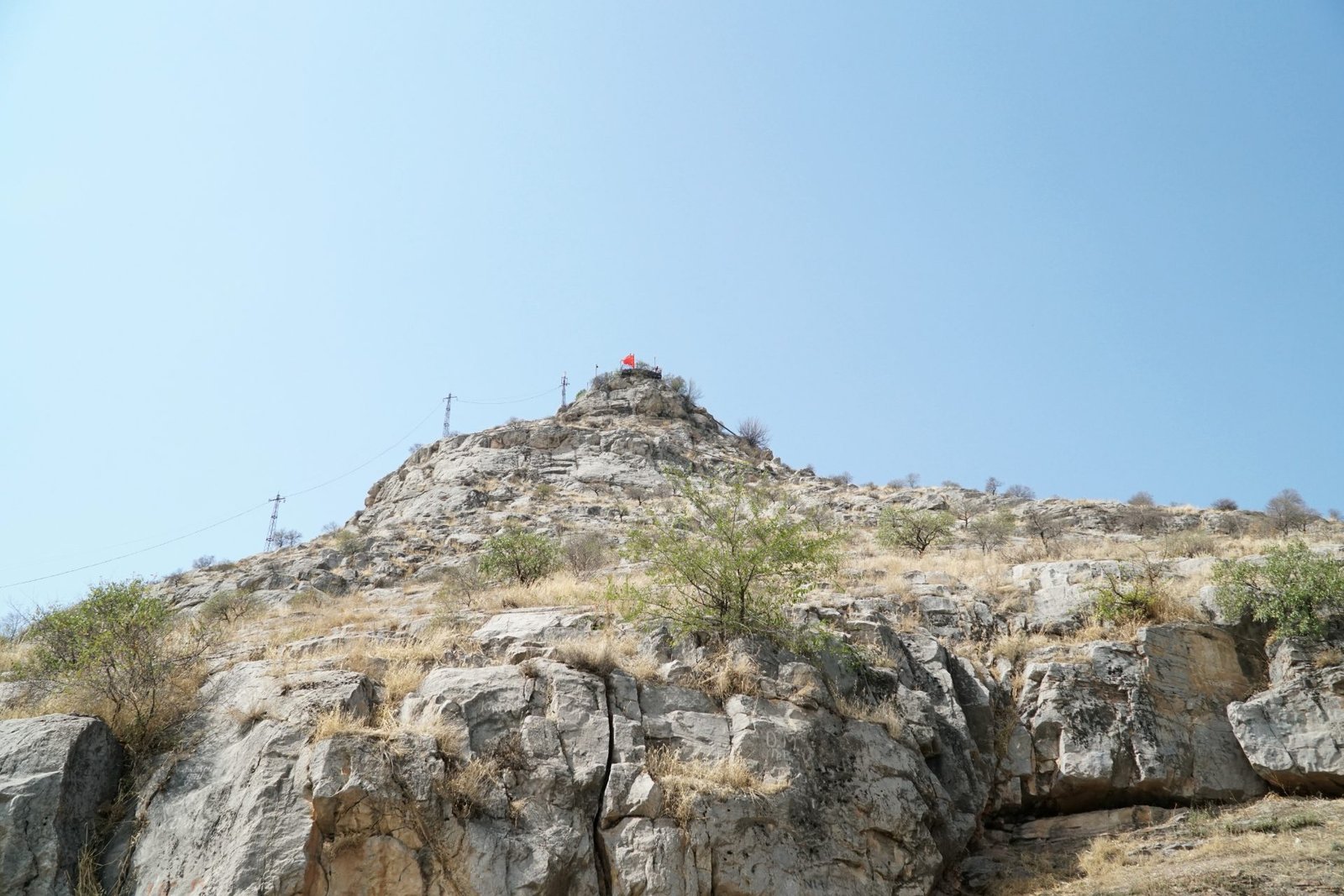
Kyrgyzstan’s first UNESCO World Heritage site, inscribed in 2009 under criteria (iii) and (vi). It is a five-peaked limestone ridge rising straight out of the city, and what got it listed is the density of evidence for continuous worship — 101 separate petroglyph sites, caves, ancient shrines, and two reconstructed sixteenth-century mosques. UNESCO’s own assessment describes it as the most complete picture of a sacred mountain anywhere in Central Asia.
| Price | Hours | |
|---|---|---|
| Mountain entry | 20 som | Roughly sunrise to sunset; one source says 08:30–18:00 |
| Cave museum | 150 som | 09:00–12:00, 13:00–18:00 |
| Guided tour | 500 som per person, minimum three | — |
The cave museum is the strange and wonderful part. It was made by enlarging a natural cave into thirteen rooms on two levels — a lower man-made level and an upper natural one whose façade opens onto a panorama over the city. It holds more than 33,000 objects, and the exhibition traces religious practice in the region from shamanism and animism through to the world religions. The concrete modernist frontage set into the cliff is the visual signature of Osh.
Note it is closed on Mondays for maintenance.
The Rabat Abdullah Khan Mosque was built in 1580, on the site of an earlier mosque recorded by Babur. “Rabat” mosques doubled as frontier fortifications. It is brick, faced with ganch plaster, with vaulted iwans on two sides; it was restored between 1988 and 1990 and is an active Friday mosque today. Open 06:00–20:00 except during prayers, free, and women should cover their heads. The city describes it as Osh’s oldest surviving mosque, standing on eleventh- or twelfth-century foundations — which dates the foundations, not the building above them.
Jayma Bazaar
Not “Osh Bazaar” — that is the name of a large market in Bishkek, and at least one guide published in 2026 confuses the two.
Jayma runs for around two kilometres along the bank of the Ak-Buura river and is among Central Asia’s largest markets by turnover, with traders from Kyrgyzstan, China, Uzbekistan and Tajikistan. Open seven days, early morning to around 17:00 or 18:00. Busiest on Sunday, quietest on Monday.
The city says the market has occupied this site for about three thousand years, which brings us to the other claim.
About those 3,000 years
Osh celebrated its 3,000th anniversary with a five-day state event in October 2000, and has kept counting — its 3,023rd anniversary fell in October 2023.
The popular basis for the figure was the discovery of a human skull carbon-dated to roughly three thousand years old. Contemporary reporting noted at the time that the claim was questioned, and that it is not really possible to know how old Osh is. It is a state-adopted anniversary rather than an established archaeological date, and it is worth saying so, because almost every travel article repeats it as fact.
How long Osh needs
One full day covers Sulaiman-Too, the cave museum and Jayma Bazaar at a reasonable pace. Two gives you a calmer version and time for the Museum of Fine Arts, the Asaf ibn Burkhiya mausoleum and the Soviet-era architecture.
Beyond that, Osh is a logistics hub rather than a destination — the place you organise the south from.
Osh as a base for the Alay and Peak Lenin
Sary-Mogol is the gateway to Peak Lenin, at 7,134 m. A daily marshrutka leaves Osh’s New Bus Station at 14:00 for 300 som, taking four to five hours and departing when full; a shared taxi seat is around 400 som.
Guesthouses in Sary-Mogol run US$15–20 per person with breakfast. From there, the Peak Lenin base camp at Achik-Tash / Tulpar-Kul is 45 minutes by hired 4WD from about 1,500 som, four to five hours on horseback, or eight to nine hours on foot. Yurt stays at Tulpar-Kul start around 1,000 som a night with dinner and breakfast. The standard day walk from base camp is Traveller’s Pass at 4,150 m, about 7 km each way.
A border-zone permit is required for the Peak Lenin base camp area, and processing takes ten to twenty days. That is the single thing most likely to derail a southern trip planned on arrival — see our guide to Kyrgyz border-zone permits.
There is a Peak Lenin festival on the third weekend of July.
Getting to Osh from Bishkek
Fly. It is about 45 minutes for US$35–67 on TezJet or Asman, and Osh is by far the busiest route out of Bishkek.
The road is 670–685 km and takes 10 to 14 hours, crossing the Too-Ashuu pass at 3,586 m — open year-round only because a 2.8 km tunnel bores through at 3,120 m — and the Ala-Bel pass. A shared taxi is US$30–40 and leaves when full. It is a spectacular drive and a very long day.
What we could not verify
Whether the Uchkurgan and Khanabad crossings are genuinely usable by third-country nationals right now — one guide lists them as international while advising you confirm before relying on them. Current Uzbek-side shared-taxi fares, which date from 2024–25. And the precise operating hours of Sulaiman-Too, where two sources disagree.
We should also note that the best independent source on Central Asian border crossings was unreachable throughout this research, so anything above about a specific checkpoint is worth a second check close to your travel date.
For the country as a whole, see our Kyrgyzstan travel guide; for the Uzbek side of that border, our Fergana Valley guide.
Photo: Sulayman Mountain, Osh by Adam Harangozó, via Wikimedia Commons, CC BY-SA 4.0.