
In short
A border-zone permit is required for Kel-Suu, Peak Lenin base camp, Inylchek, Khan Tengri, Torugart and Irkeshtam — but not for Song-Köl, Ala-Kul, Altyn-Arashan or Ala-Archa. Kyrgyzstan publishes no official price, lead time or application form; agencies quote US$30–120 and 2–15 working days. Going through CBT Naryn is the cheapest and fastest documented route. Carry the original printed permit — screenshots are refused.
Checked 26 August 2026. The legal basis is Resolution No. 172 of 2016; every price and lead time below is an agency quotation, because no government tariff is published.
On this page
- The thing to understand first
- Where you need one
- What it costs, and how long — the honest mess
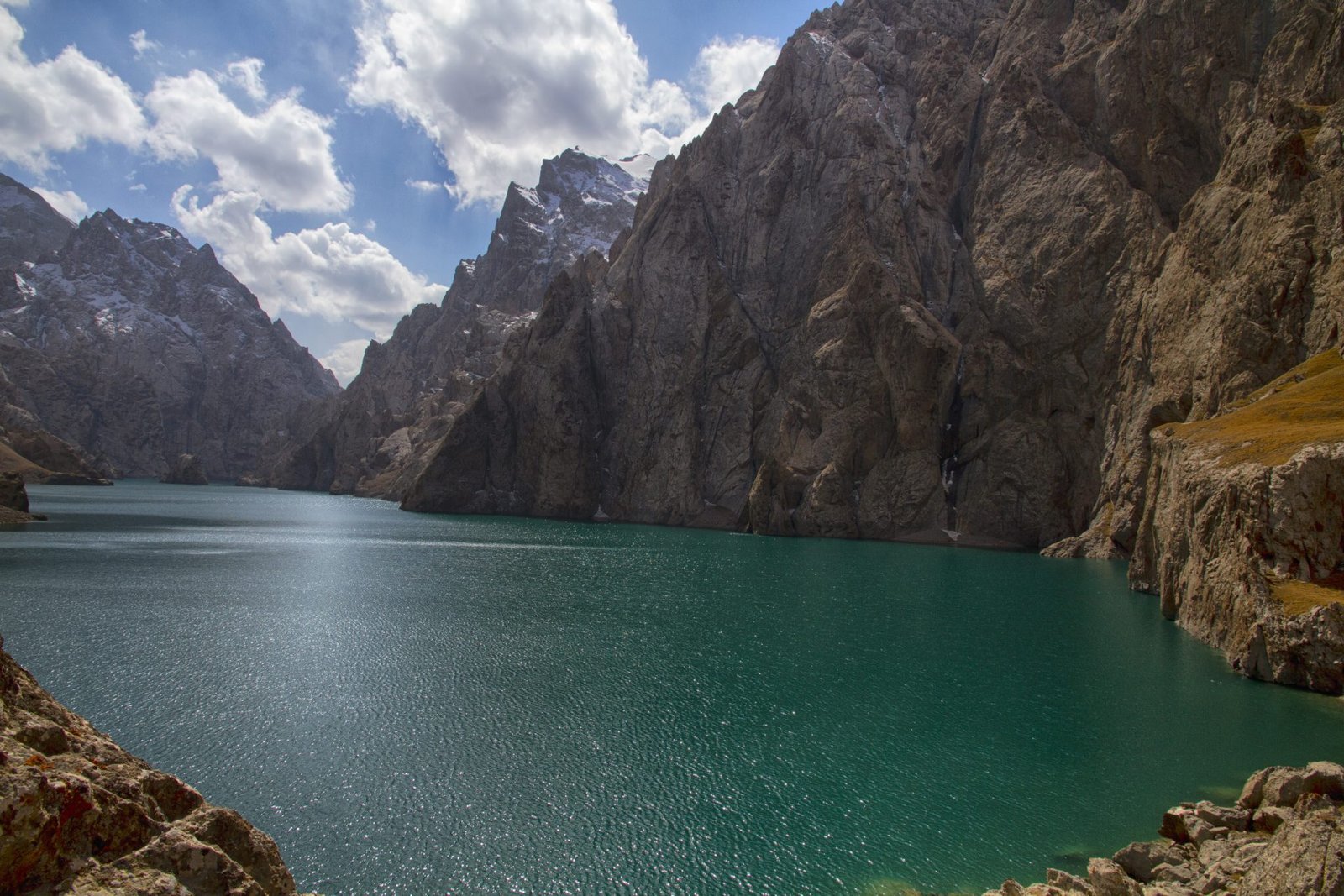
- Kel-Suu, which is where people get caught
- Peak Lenin: two different documents
- Torugart and Irkeshtam, to China
- National park fees, while we’re here
- Drones: don’t
- One planning consequence nobody mentions
- What we could not verify
Turn up at the Kyndy checkpoint on the road to Kel-Suu without a printed, stamped border-zone permit and you will be turned around. Not fined, not argued with — turned around, after five to eight hours of driving.
This is the piece of Kyrgyz bureaucracy most likely to wreck a trip, and it is remarkably badly documented. Here is what we could establish, and — just as importantly — what nobody publishes.
The thing to understand first
Kyrgyzstan’s government publishes that the permit exists. It does not publish what it costs, how long it takes, or how to apply for one.
We found the legal basis: Government Resolution No. 172 of 4 April 2016, which approves the rules of the border regime, explicitly covers foreign citizens, and defines the restricted zones in an annex organised by province. We found the permit listed in the state permissions registry. What we could not find, anywhere on a government domain, is a tariff, a stated processing deadline, or an application form.
We also checked Kyrgyzstan’s e-services portal, which lists 213 government services. Not one of them is from the State Border Service. There is no online government channel. Every documented route to a permit runs through a commercial agency or a local CBT office.
That absence is why the numbers below disagree so wildly.
Where you need one
Composite of five agency sources, which overlap consistently:
| Province | Areas |
|---|---|
| Naryn | Kel-Suu, Chatyr-Kul, Ak-Sai valley, Arpa valley, Kok-Kiya, Torugart pass |
| Issyk-Kul | Inylchek town and glacier, Khan Tengri and Pobeda base camps, Sary-Jaz, Merzbacher Lake, Sarychat-Ertash reserve, Ak-Shyirak |
| Osh | Peak Lenin / Achik-Tash, the Irkeshtam corridor |
| Batken | Karavshin gorge, Kadamjay, Kara-Bulak, Aidarken |
| Chuy | Eastern Chon-Kemin valley |
Where you do not need one: Song-Köl, Ala-Kul, Altyn-Arashan, Jeti-Ögüz, Ala-Archa and Tash Rabat itself. The main Karakol treks are all outside the zones. Note that Sary-Tash and Sary-Mogol are not permit areas — it is specifically the Peak Lenin base camp at Achik-Tash that is.
What it costs, and how long — the honest mess
Every figure below is advertised by a commercial agency. None is official.
| Provider type | Price | Standard lead time |
|---|---|---|
| Bishkek agency A | 3,000 som, all zones | 7 working days; advises 14+ |
| CBT Naryn | €30 Naryn only, €35 multi-zone, €50 express | 1 week; express 2 business days |
| Bishkek agency B | US$45, all regions | 10 working days; advises a month |
| Bishkek agency C | US$50 | 8–12 business days |
| Bishkek agency D | US$70 standard, $100 expedited, $120 urgent | 10+ calendar days |
| Karakol DMO | Not published | 10–15 days |
So the advertised price spans roughly US$30 to US$120, and the advertised lead time spans two working days to fifteen. For the same document.
The pattern we would draw from that: the local offices — CBT Naryn in particular — are both cheaper and faster than the Bishkek agencies. If you are heading to Kel-Suu or Tash Rabat, go through Naryn.
What you need to supply: a scan of your passport photo page, your travel dates, and the specific zones you intend to enter. Some ask your purpose of visit.
What you must carry: the original printed permit with its stamp, plus the passport whose number is on it. Photocopies and phone screenshots are refused at checkpoints. Permits are typically valid for up to 30 days.
Where you collect it: agency offices in Bishkek, the CBT office in Naryn, or the visitor centre in Karakol. Some agencies deliver within the country.
Kel-Suu, which is where people get caught
The lake is spectacular, remote, and behind a military checkpoint at Kyndy where the permit is checked without exception. No permit means turning around.
Reported costs and lead times for Kel-Suu specifically span US$10–15 through the CBT office in Naryn with a couple of days’ processing, up to €20–30 with five to seven working days through other channels. CBT Naryn’s own published rate is €30 for a Naryn-only permit in a week, or €50 for two-day express.
Practical advice: email or WhatsApp CBT Naryn before you arrive so it is waiting for you.
Getting there is its own commitment. There is no public transport. You need a high-clearance 4WD with a local driver, five to eight hours each way on rough track, at 13,000–20,000 som per vehicle for a round trip with the driver waiting overnight — around 3,500–5,000 som a head split four ways. Yurt camps run 1,500–2,500 som per person with dinner and breakfast, and wild camping is free through most of the valley.
Peak Lenin: two different documents
A border-zone permit is required for the Achik-Tash base camp area, with processing quoted at ten to twenty days. CBT Osh and local Alay operators arrange them. Enforcement is described as variable, but there are military checks.
Separately, a climbing permit regime is arriving, and this is live news. After a draft law in September 2025 — prompted by the death of a climber stranded high on Pobeda — Kyrgyzstan’s tourism agency announced in August 2026 that climbing Pobeda Peak now requires official permission, with the first permits going to about twenty highly qualified mountaineers.
The fuller scheme, as reported, is a climbing certificate issued by the State Agency for Tourism Development through a commission including the alpinism federation, covering Pobeda, Lenin and Khan Tengri, with an expected cost of 12,000–15,000 som (about US$140–180) and, for Pobeda, a minimum insurance requirement of around 3 million som (roughly US$35,000) for helicopter rescue.
The enabling government resolution had not been approved when we checked. So as of late August 2026: in practice for Pobeda, announced for Lenin and Khan Tengri, not yet fully in law. Anyone planning a 2027 Lenin climb should assume it will apply.
Khan Tengri and Inylchek need a border permit regardless, quoted at ten to fifteen days standard, and will fall under the climbing regime too — two separate documents.
Torugart and Irkeshtam, to China
Torugart is technically open to third-country nationals and effectively impossible independently. Transport on the Chinese side must be pre-arranged and must physically meet you at the border; if nobody is there, you are turned back. It closes at weekends and on Kyrgyz public holidays, and Chinese customs shuts at 17:00 Beijing time, which is 15:00 local — so arrive in the morning. Snow-free roughly late May to late September. Torugart sits inside the Naryn permit zone.
Irkeshtam, from Osh, is the more usable of the two, and is described as crossable independently — though the sources agree that the China-to-Kyrgyzstan direction is the independent one, and going the other way still requires expensive Chinese guides. Also closed at weekends, and officially closed 13:00–16:00. Irkeshtam is in the Osh permit zone.
National park fees, while we’re here
| Park | Fee |
|---|---|
| Ala-Archa | 250 som adult, 180 som child 7–14, since 8 June 2026. Petrol and diesel cars banned since 1 May 2025; EV entry 880 som |
| Karakol gorge / Ala-Kul | 250 som per person, plus about 100 som per tent |
| Sary-Chelek Biosphere Reserve | 400 som for non-residents, 100 som for Kyrgyz citizens; vehicle 150 som; camping 500 som per tent |
| Skazka Canyon | 50 som |
| Jeti-Ögüz | No fee published |
Sary-Chelek is the only site we found with an explicit two-tier price. Everywhere else, foreigners currently pay the same as Kyrgyz nationals — but note that in June 2026 a member of parliament proposed differentiated entrance fees of US$20–50 for foreign visitors at national parks. That is a proposal, not law, and it has not passed. It is worth watching.
Drones: don’t
Kyrgyzstan’s Air Code defines a drone as under 10 kg flying below 100 m, and flying requires advance permission from air traffic control — at least three days ahead, with coordination involving security bodies, local authorities and the defence ministry, and five working days for anything near protected sites. Penalties start at 7,500 som for individuals and escalate steeply.
More immediately: through the second half of 2026 the civil aviation agency imposed blanket airspace restrictions covering all drones including hobby quadcopters over large parts of the north — northern Issyk-Kul in late July, then Issyk-Kul, Bishkek and Chuy from 27 August to 10 September, then Bishkek, Chuy and Talas from 10 to 15 September — covering the SCO summit, the World Nomad Games and other events. Blanket bans of this kind recur around major events, so check before you fly anywhere near them.
And if you are arriving overland from Uzbekistan: Uzbekistan requires drone licensing before arrival and unauthorised use there carries prison sentences. Do not carry one casually across the Dostuk border.
One planning consequence nobody mentions
Kyrgyzstan cut visa-free stays to 30 days per 60-day period on 31 December 2025. Border permits are quoted at up to fifteen working days.
If you apply after arriving, a slow permit can eat half your legal stay before you have used it. Apply from home, weeks ahead.
What we could not verify
Any official price, lead time or application channel — the central finding of this article. The permit registry entry’s own content, which we could not open. Whether an individual foreigner can genuinely apply direct to the Border Service; one agency asserts it is possible but names no form, office or address, and every documented path we found runs through an intermediary. Any published tariff for Chon-Kemin. And the adoption date or decree number for the new drone rules, which were still described as under discussion.
Treat every figure above as an agency quotation rather than a government tariff, because that is exactly what it is.
For the wider trip, see our Kyrgyzstan travel guide.
Photo: Кель-Суу – panoramio by Калачев Сергей, via Wikimedia Commons, CC BY 3.0.