
In short
Pick the month by what you actually want, not by a general “best time”. Cherry blossom on Honshu: 25 March to 5 April — and avoid any fixed date booked a year out, because the bloom moves. Hokkaido blossom: 18 to 28 April. The guide runs the same test for autumn colour, snow, hiking and festivals, with the historical dates rather than the marketing ones.
Built from official bloom and climate records, August 2026.
Disclosure: some links in this guide are affiliate links. If you book through one, we earn a small commission and you pay exactly the same price. We only link to services we would use ourselves, no brand pays for placement or for a favourable write-up, and every price in this article was researched independently.
Japan is 3,000 kilometres long. In January, Sapporo’s mean daily maximum is −0.4 °C and Naha’s is 19.8 °C. Any guide that answers “when should I go to Japan?” with a single month is describing one part of one island.
What is in this guide
- The numbers
- The rainy season, officially
- Typhoons, officially
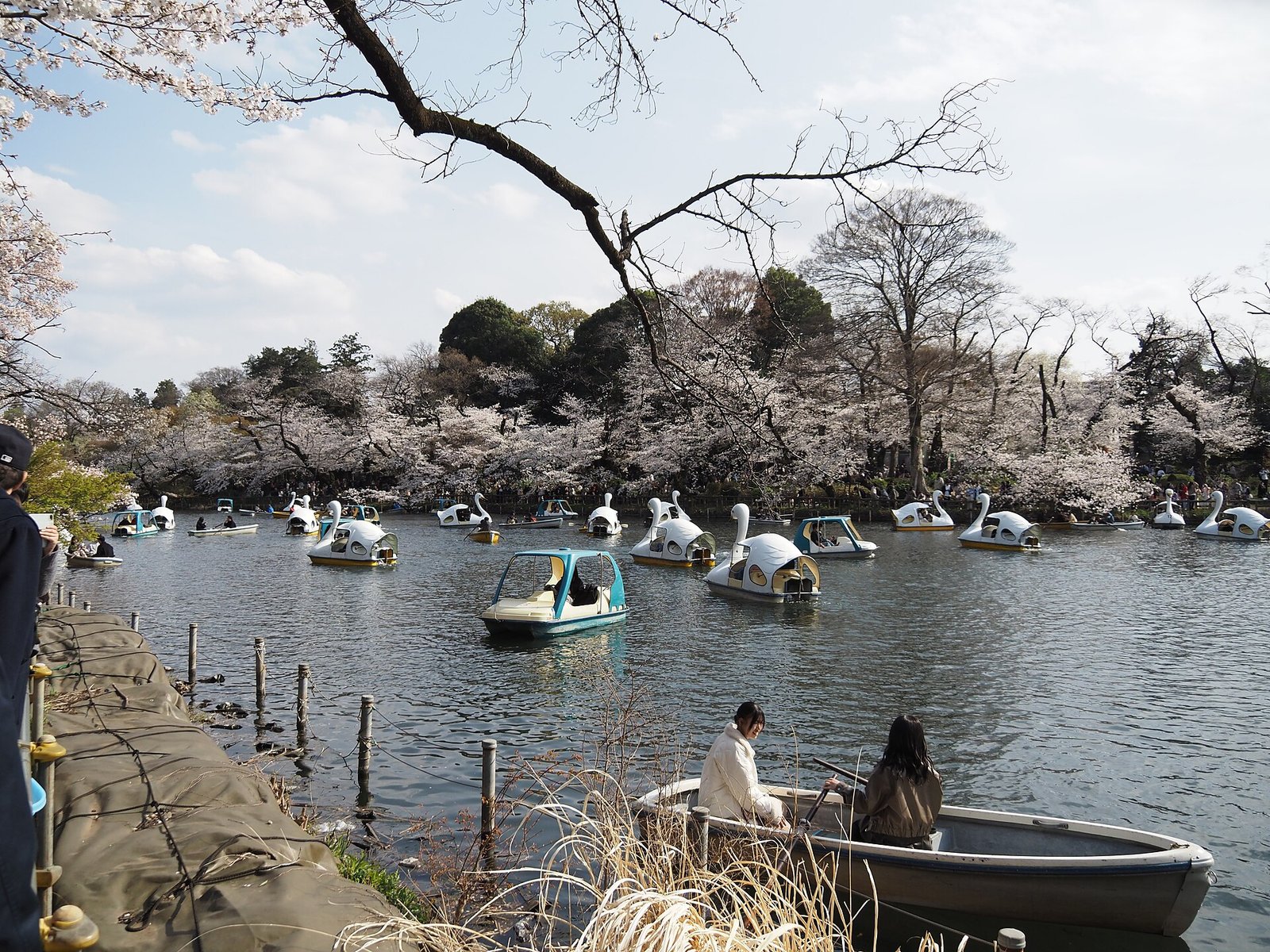
- Cherry blossom: what the record actually shows
- Month by month
- The 2027 holiday calendar, and what it does to prices
- Four things that got more expensive in 2026
- Is Japan getting more crowded?
- Best month by what you actually want
- Common questions
- Before you book
What follows is month by month, built on Japan Meteorological Agency normals for the 1991–2020 period rather than on impressions, with the cherry blossom and rainy-season dates from JMA’s own observation records and the holiday calendar from the Cabinet Office. It also carries four changes that landed in 2026 and that will cost you money in 2027 — the departure tax tripled in July, Kyoto’s lodging tax went up in March, Hokkaido introduced one in April, and Mount Fuji now charges ¥4,000 on every trail.
The two-line answer: late October to early December and late March to April are the windows that work across most of the country. June and July are the rainy season almost everywhere except Hokkaido. August and September are the typhoon months.
Editor’s note
All temperature, rainfall, cherry blossom, rainy season and typhoon figures on this page are Japan Meteorological Agency data, normals period 1991–2020, checked 19 August 2026. Public holidays are from the Cabinet Office list for 2027. Visitor numbers are JNTO monthly statistics through June 2026. Tax and fee changes are cited from the issuing prefecture, city or ministry. We could not verify JR Pass prices against JR Group own site, which blocks automated access; the figures below come from the JNTO official announcement instead.
The numbers
Mean daily maximum temperature, °C:
| Month | Sapporo | Tokyo | Kyoto | Hiroshima | Naha |
|---|---|---|---|---|---|
| Jan | −0.4 | 9.8 | 9.1 | 9.9 | 19.8 |
| Feb | 0.4 | 10.9 | 10.0 | 10.9 | 20.2 |
| Mar | 4.5 | 14.2 | 14.1 | 14.5 | 21.9 |
| Apr | 11.7 | 19.4 | 20.1 | 19.8 | 24.3 |
| May | 17.9 | 23.6 | 25.1 | 24.4 | 27.0 |
| Jun | 21.8 | 26.1 | 28.1 | 27.2 | 29.8 |
| Jul | 25.4 | 29.9 | 32.0 | 30.9 | 31.9 |
| Aug | 26.4 | 31.3 | 33.7 | 32.8 | 31.8 |
| Sep | 22.8 | 27.5 | 29.2 | 29.1 | 30.6 |
| Oct | 16.4 | 22.0 | 23.4 | 23.7 | 28.1 |
| Nov | 8.7 | 16.7 | 17.3 | 17.7 | 25.0 |
| Dec | 2.0 | 12.0 | 11.6 | 12.1 | 21.5 |
Monthly precipitation, mm:
| Month | Sapporo | Tokyo | Kyoto | Kanazawa | Naha |
|---|---|---|---|---|---|
| Jan | 108.4 | 59.7 | 53.3 | 256.0 | 101.6 |
| Feb | 91.9 | 56.5 | 65.1 | 162.6 | 114.5 |
| Mar | 77.6 | 116.0 | 106.2 | 157.2 | 142.8 |
| Apr | 54.6 | 133.7 | 117.0 | 143.9 | 161.0 |
| May | 55.5 | 139.7 | 151.4 | 138.0 | 245.3 |
| Jun | 60.4 | 167.8 | 199.7 | 170.3 | 284.4 |
| Jul | 90.7 | 156.2 | 223.6 | 233.4 | 188.1 |
| Aug | 126.8 | 154.7 | 153.8 | 179.3 | 240.0 |
| Sep | 142.2 | 224.9 | 178.5 | 231.9 | 275.2 |
| Oct | 109.9 | 234.8 | 143.2 | 177.1 | 179.2 |
| Nov | 113.8 | 96.3 | 73.9 | 250.8 | 119.1 |
| Dec | 114.5 | 57.9 | 57.3 | 301.1 | 110.0 |
Three things in those tables that guides rarely point out.
Kyoto in August is hotter than Okinawa — 33.7 °C against 31.8 °C. The basin traps heat and the humidity is punishing. Anyone planning a Kyoto temple itinerary in August should understand what they are booking.
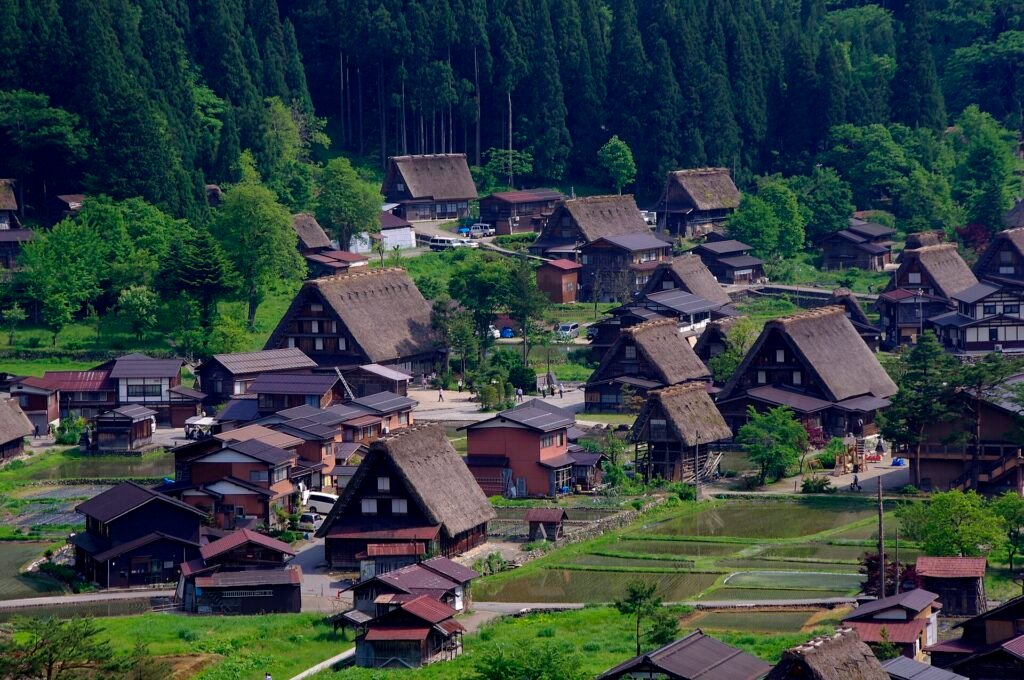
Kanazawa’s wettest months are December and January, at 301 mm and 256 mm. The Sea of Japan side runs a winter-precipitation regime that is the exact inverse of Tokyo’s. That is snow, and it is why Shirakawa-gō looks the way it does in photographs.
Sapporo’s driest months are April, May and June — 54.6, 55.5 and 60.4 mm — which is precisely when the rest of the country is heading into the rainy season.
The rainy season, officially
*Tsuyu* is not a vague warning, it is a declared meteorological event. JMA publishes normal onset and end dates by region, 1991–2020:
| Region | Normal onset | Normal end |
|---|---|---|
| Okinawa | 10 May | 21 Jun |
| Southern Kyushu | 30 May | 15 Jul |
| Northern Kyushu | 4 Jun | 19 Jul |
| Shikoku | 5 Jun | 17 Jul |
| Chugoku (Hiroshima) | 6 Jun | 19 Jul |
| Kinki (Kyoto, Osaka) | 6 Jun | 19 Jul |
| Tokai (Nagoya) | 6 Jun | 19 Jul |
| Kanto-Kōshin (Tokyo) | 7 Jun | 19 Jul |
| Hokuriku (Kanazawa) | 11 Jun | 23 Jul |
| Southern Tōhoku | 12 Jun | 24 Jul |
| Northern Tōhoku | 15 Jun | 28 Jul |
Hokkaido does not appear on the table at all. JMA does not declare a tsuyu onset or end for Hokkaido, which is the official basis for the claim that it has no rainy season — and it is the single most useful planning fact in this guide. If you must travel to Japan in June, go to Hokkaido.
In 2026 the pattern diverged sharply: western Japan cleared about eleven days early, on 8 July, while Hokuriku and Tōhoku ran late and did not clear until 4 August. Normals are averages, not promises.
Typhoons, officially
JMA’s 1991–2020 averages, where an “approach” means passing within 300 km of Japan:
| Month | Formations | Approaches | Landfalls |
|---|---|---|---|
| Jun | 1.7 | 0.8 | 0.2 |
| Jul | 3.7 | 2.1 | 0.6 |
| Aug | 5.7 | 3.3 | 0.9 |
| Sep | 5.0 | 3.3 | 1.0 |
| Oct | 3.4 | 1.7 | 0.3 |
| Nov | 2.2 | 0.5 | — |
July, August and September account for 2.5 of the 3.0 average annual landfalls — 83 per cent. September has the most landfalls, August the most formations, and the two tie on approaches. October drops sharply to 0.3, which is a large part of why late October is such a good travel window.
This does not mean avoid Japan in September. It means build slack into a September itinerary and buy insurance that covers weather disruption, because a typhoon suspends shinkansen services and cancels domestic flights for a day or two at a time.
Cherry blossom: what the record actually shows
JMA observes Somei-yoshino flowering and full bloom at fixed stations. Normals are 1991–2020; the rest are observed dates.
Flowering (開花):
| Normal | 2021 | 2022 | 2023 | 2024 | 2025 | 2026 | |
|---|---|---|---|---|---|---|---|
| Tokyo | 24 Mar | 14 Mar | 20 Mar | 14 Mar | 29 Mar | 24 Mar | 19 Mar |
| Kyoto | 26 Mar | 16 Mar | 24 Mar | 17 Mar | 29 Mar | 27 Mar | 23 Mar |
| Sapporo | 1 May | 22 Apr | 23 Apr | 15 Apr | 18 Apr | 23 Apr | 18 Apr |
Full bloom (満開):
| Normal | 2021 | 2022 | 2023 | 2024 | 2025 | 2026 | |
|---|---|---|---|---|---|---|---|
| Tokyo | 31 Mar | 22 Mar | 27 Mar | 22 Mar | 4 Apr | 30 Mar | 28 Mar |
| Kyoto | 4 Apr | 26 Mar | 30 Mar | 24 Mar | 5 Apr | 5 Apr | 30 Mar |
| Sapporo | 6 May | 27 Apr | 25 Apr | 21 Apr | 24 Apr | 27 Apr | 24 Apr |
In five of the last six years, Tokyo and Kyoto flowered earlier than the normal. Only 2024 was late. The lag from flowering to full bloom is consistently seven to nine days in Tokyo and Kyoto and about six in Sapporo, and Tokyo and Kyoto’s peak has landed between 22 March and 5 April in every year since 2021.
Planning consequence: if blossom is the point of the trip, target 25 March to 5 April and accept that you are gambling on a date that moves by up to two weeks. Sapporo is a month later and is the fallback if you miss it in Honshu. Full bloom lasts roughly a week before wind and rain take it.
Month by month
January. Sapporo at −0.4 °C, Tokyo at 9.8 °C and only 59.7 mm of rain, Naha at 19.8 °C. Tokyo and Kyoto in January are cold, dry and clear, and this is the quietest month for foreign arrivals after the New Year week. Hokkaido is deep in its ski season. The Sea of Japan side — Kanazawa at 256 mm, Shirakawa-gō — is under snow, which is the point. Good for: clear-air city days, snow country, onsen. Bad for: the first week, when the whole country travels.
February. Statistically almost identical to January and the cheapest month to fly. Sapporo’s Snow Festival fills the city. Plum blossom in Tokyo and Kyoto from mid-month, which is a real and much less crowded alternative to cherry. Good for: value, snow, plum. Bad for: anyone who wanted warmth.
March. The turn. Tokyo 14.2 °C, Kyoto 14.1 °C, rain rising to 116 and 106 mm. Cherry flowering in Tokyo and Kyoto has come between 14 and 29 March in the last six years. Good for: the second half, for blossom and thinner crowds than April. Bad for: the first half, which is neither winter nor spring. Note the Vernal Equinox holiday on Sunday 21 March 2027, with a substitute Monday 22 March.
April. Tokyo 19.4 °C, Kyoto 20.1 °C, Sapporo 11.7 °C and its driest month at 54.6 mm. April was the busiest month for foreign arrivals in 2026 at 3.69 million. Blossom in the first week in Honshu, the last two weeks in Hokkaido. Good for: everything, at maximum crowding. Bad for: anyone who dislikes queues. Golden Week 2027 begins Thursday 29 April.
May. Kyoto 25.1 °C, Tokyo 23.6 °C, Sapporo 17.9 °C. Once Golden Week ends on 5 May, this is one of the two best months in the country: warm, before the rains, with the new maple leaves in Kyoto that the Japanese call *aoimomiji*. Good for: mid-May onwards, everywhere. Bad for: 29 April to 5 May, when domestic travel peaks and rates rise.
June. The rainy season starts on the 6th or 7th across Honshu and Kyushu, and on the 11th in Hokuriku. Kyoto gets 199.7 mm, Tokyo 167.8. Hokkaido has no rainy season and June is one of its driest months. June was also the quietest month for foreign arrivals in 2026, at 3.15 million. Good for: Hokkaido, hydrangeas, and empty temples if you accept rain. Bad for: everything else, unless the discount buys the inconvenience.
July. Rains clear around the 19th in most regions. Kyoto hits 32.0 °C and 223.6 mm — its wettest month. Then the heat arrives properly. Gion Matsuri runs all month in Kyoto. Good for: festivals, Hokkaido, the northern Alps. Bad for: Kyoto and Osaka sightseeing, which becomes an endurance test.
August. The hottest month almost everywhere: Kyoto 33.7 °C, Hiroshima 32.8, Tokyo 31.3. Peak typhoon formation. Obon in mid-month is not a public holiday but is the largest domestic travel week of the year — in 2027, Mountain Day on Wednesday 11 August plus the customary 13–16 August makes 11 to 16 August effectively a shutdown. Good for: Hokkaido, high-altitude Japan, fireworks festivals. Bad for: the Kansai and Chugoku cities.
September. Still hot — Kyoto 29.2 °C, Tokyo 27.5 °C — and the peak month for typhoon landfalls at 1.0 a year. Tokyo’s rainfall climbs to 224.9 mm. Good for: the last third, once the heat breaks. Bad for: the first two thirds, and for tight itineraries with no slack.
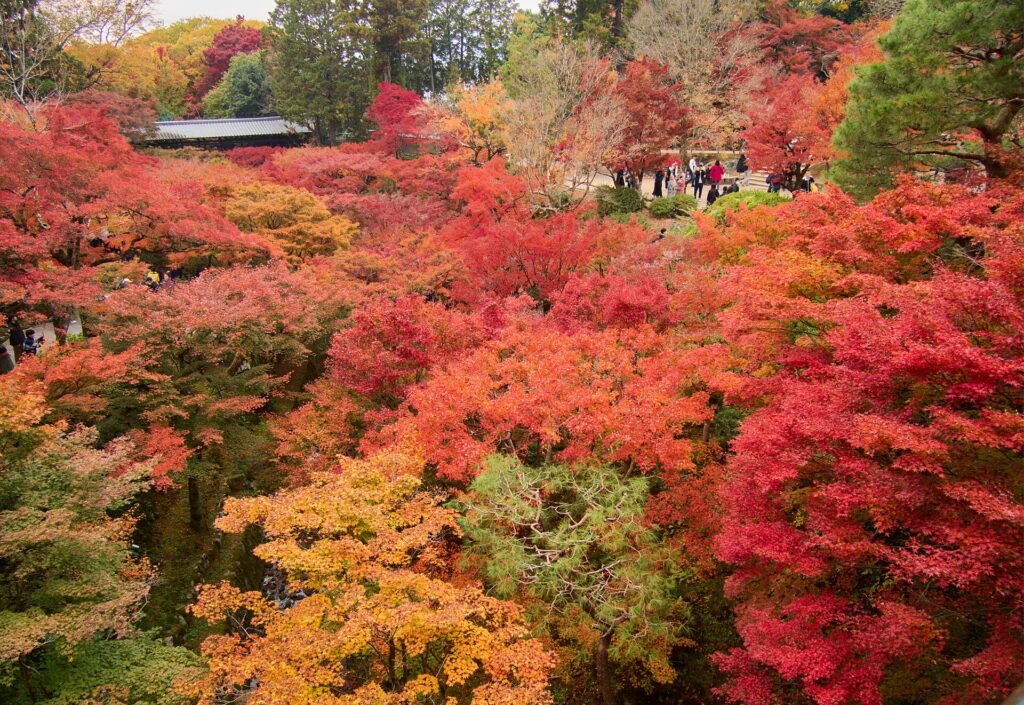
October. Tokyo 22.0 °C, Kyoto 23.4 °C, Sapporo 16.4 °C, and typhoon landfalls drop to 0.3. Autumn colour starts in Hokkaido and the northern Alps and works south. Tokyo’s 234.8 mm looks alarming and is front-loaded. Good for: the second half, which is close to ideal nationwide. Bad for: very little.
November. The best single month in most of Japan. Tokyo 16.7 °C and 96.3 mm, Kyoto 17.3 °C and 73.9 mm — its driest month. Autumn colour peaks in Kyoto in the second half and it is spectacular and extremely crowded. Kanazawa is already at 250.8 mm and turning towards winter. Good for: everything south of Tōhoku. Bad for: anyone hoping Kyoto will be quiet.
December. Tokyo 12.0 °C and its second-driest month at 57.9 mm; Kyoto 11.6 °C and 57.3 mm; Kanazawa 301.1 mm of largely frozen precipitation. The first three weeks are among the quietest and clearest of the year. Good for: clear-air city travel, early ski season, illuminations. Bad for: the last week, when the country shuts and moves.
The 2027 holiday calendar, and what it does to prices
Cabinet Office official dates for 2027:
| Holiday | 2027 date |
|---|---|
| New Year’s Day | Fri 1 January |
| Coming of Age Day | Mon 11 January |
| National Foundation Day | Thu 11 February |
| Emperor’s Birthday | Tue 23 February |
| Vernal Equinox | Sun 21 March, substitute holiday Mon 22 March |
| Shōwa Day | Thu 29 April |
| Constitution Day | Mon 3 May |
| Greenery Day | Tue 4 May |
| Children’s Day | Wed 5 May |
| Marine Day | Mon 19 July |
| Mountain Day | Wed 11 August |
| Respect for the Aged Day | Mon 20 September |
| Autumnal Equinox | Thu 23 September |
| Sports Day | Mon 11 October |
| Culture Day | Wed 3 November |
| Labour Thanksgiving | Tue 23 November |
Golden Week 2027 runs 29 April to 5 May, but note the shape: Friday 30 April is a normal working day, and 1–2 May fall at the weekend. One day of leave on 30 April yields seven consecutive days. It is a less bridged Golden Week than some years, which slightly softens the peak — but only slightly.
Obon 2027 is not a public holiday and does not appear on that list. The customary observance runs 13–16 August, which in 2027 is Friday to Monday. With Mountain Day on Wednesday 11 August and only Thursday 12 August in between, the practical domestic travel peak is 11 to 16 August. Shinkansen reserved seats and domestic flights sell out; book weeks ahead or travel in the opposite direction to everyone else.
There is no Silver Week in 2027. Respect for the Aged Day and the Autumnal Equinox are separated by two working days, so the bridging rule that creates the occasional September super-week does not apply.
Four things that got more expensive in 2026
These all landed this year and will affect a 2027 trip. Older guides do not carry them.
The departure tax tripled. Japan’s International Tourist Tax rose from ¥1,000 to ¥3,000 per departure on 1 July 2026, collected inside your airfare. A transitional rule preserves the old rate for some journeys contracted before the change, but it turns on the transport contract rather than simply the ticket issue date, and it has not applied in every case — do not assume a June-issued ticket exempts you. Children under two are exempt. Everyone flying out of Japan in 2027 pays ¥3,000.
Kyoto’s lodging tax went up on 1 March 2026, and the top band is now the highest in Japan:
| Room charge, per person per night | Kyoto tax |
|---|---|
| Under ¥6,000 | ¥200 |
| ¥6,000 – under ¥20,000 | ¥400 |
| ¥20,000 – under ¥50,000 | ¥1,000 |
| ¥50,000 – under ¥100,000 | ¥4,000 |
| ¥100,000 and above | ¥10,000 |
Hokkaido introduced a prefectural lodging tax on 1 April 2026, prefecture-wide, and municipalities levy their own on top — so in Sapporo and Niseko you pay two layers. We could not extract the exact band amounts, which the prefecture publishes only inside PDFs and images, so we are not printing numbers we cannot verify. Hiroshima Prefecture introduced its own on the same date: ¥200 per person per night on rooms of ¥6,000 or more.
Mount Fuji now costs ¥4,000 on every trail. Yamanashi’s Yoshida trail charges ¥4,000 per person per entry with a daily cap of 4,000 climbers, and the gate is closed from 14:00 to 03:00 unless you hold a confirmed mountain-hut booking. Shizuoka’s three trails — Fujinomiya, Subashiri and Gotemba — now charge the same ¥4,000 and additionally require pre-registration and completion of an online safety and conservation course. The season runs to 10 September, with staggered openings: Yoshida and Subashiri from 1 July, Fujinomiya and Gotemba from 10 July. This is up from a Yoshida-only ¥2,000 previously, and the Shizuoka pre-registration step is new.
And the Japan Rail Pass rises on 1 October 2026:
| Pass | To 30 Sep 2026 | From 1 Oct 2026 |
|---|---|---|
| 7-day Ordinary | ¥50,000 | ¥53,000 |
| 14-day Ordinary | ¥80,000 | ¥84,000 |
| 21-day Ordinary | ¥100,000 | ¥105,000 |
| 7-day Green | ¥70,000 | ¥74,000 |
| 14-day Green | ¥110,000 | ¥116,000 |
| 21-day Green | ¥140,000 | ¥147,000 |
One caveat we will state plainly: JR’s own site blocks automated access, so these figures come from the Japan National Tourism Organization’s official announcement rather than from JR Group directly. Confirm before purchase.
Is Japan getting more crowded?
Not in 2026, which surprises people. JNTO’s monthly figures show foreign arrivals for January to June 2026 at 21,084,800 — down 2.0 per cent on the same period of 2025, with four of the six months down year on year. April was the busiest month at 3.69 million and June the quietest at 3.15 million.
That is a plateau after three consecutive record years, not a decline, and it is not uniform: fifteen individual markets set June records, including Taiwan, South Korea, the United States and India. The aggregate softness comes from a few large markets rather than from everyone.
What it means practically: the pressure points are the same as ever — Kyoto in late November, blossom season in Honshu, Golden Week, Obon — and the shoulder weeks around them are measurably easier than the headline numbers suggest.
Best month by what you actually want
| If your priority is… | Go in | Avoid |
|---|---|---|
| Cherry blossom, Honshu | 25 March – 5 April | Any fixed date booked a year out |
| Cherry blossom, Hokkaido | 18–28 April | — |
| Autumn colour, Kyoto | Second half of November | Expecting it to be quiet |
| Autumn colour, Hokkaido and the Alps | Early to mid October | — |
| Warm weather without rain | Mid-May, or October | June, July |
| Snow and skiing | January–February | December, which is early |
| Lowest prices | February, and early December | New Year, Golden Week, Obon |
| Fewest foreign visitors | June | If you cannot tolerate rain |
| Hiking the northern Alps | July–August | Anything before the snowmelt |
| Climbing Mount Fuji | 1 July – 10 September only | It is closed the rest of the year |
| Okinawa beaches | Late April – June, or October | September typhoons |
Common questions
What is the single best time to visit Japan? Late October to early December if you want one answer: mild, dry in the Pacific-side cities, autumn colour moving south through it, and typhoon landfalls down to 0.3 a month. Late March to April is the rival and is more beautiful and much more crowded.
Is the rainy season really that bad? It is real — Kyoto averages 199.7 mm in June and 223.6 in July — but it is not continuous rain. It is heavy, intermittent and humid. Temples in rain are genuinely lovely and genuinely empty, and June is the least-visited month of the year. If you can accept getting wet, June is underrated. If you cannot, go to Hokkaido, which has no declared rainy season at all.
Should I avoid typhoon season? Not avoid — plan for. July through September carry 83 per cent of the average annual landfalls, with September the peak. Build a spare day into the itinerary, avoid booking the last flight out on the day you must be somewhere, and check that your insurance covers weather disruption.
When is the cherry blossom, exactly? JMA’s normal for Tokyo is flowering on 24 March and full bloom on 31 March; Kyoto is two to four days later; Sapporo is a month later. But in five of the last six years Tokyo and Kyoto flowered earlier than normal, and the peak has landed between 22 March and 5 April every year since 2021. Target that window and accept the risk.
Is Japan expensive now? More than it was, in specific ways. The departure tax tripled to ¥3,000 in July 2026, Kyoto’s lodging tax now tops out at ¥10,000 a night, Hokkaido and Hiroshima added lodging taxes in April 2026, Mount Fuji charges ¥4,000, and the JR Pass rises on 1 October 2026. None of these is individually large; together they are a few thousand yen a day on a two-week trip that older guides do not budget for.
When should I avoid Japan entirely? The New Year week, Golden Week (29 April – 5 May 2027), and the Obon window (roughly 11–16 August 2027). Not because the country is unpleasant then, but because the entire domestic population is travelling and everything is booked.
Is a JR Pass still worth it? Less often than it used to be. At ¥53,000 for seven days from October 2026, a single Tokyo–Kyoto–Tokyo round trip does not justify it, and regional JR passes frequently beat the nationwide one. Price your actual itinerary before assuming.
Which month is cheapest to fly? February, followed by early December and the first half of June. All three are also among the least crowded, for related reasons.
Before you book
Pick the region before the month. Hokkaido in June and Kyoto in June are completely different propositions, and the same is true of Kyoto in August and Sapporo in August. Check the 2027 holiday dates against your travel window — Golden Week and Obon will change what you pay and what is available more than the weather will. And if you are travelling after 1 October 2026, price the JR Pass at its new rate and check the regional alternatives, then compare flights once your dates are fixed. If you are moving between cities with luggage on the same day you want to sightsee, Radical Storage has drop points at most major Japanese stations.