
In short
A running list of the 2026 changes in Japan that move real money — the JR East fare rise of 14 March 2026 (+7.8%, the first in 39 years), the pass consolidation on the same date, the tax-free shopping switch on 1 November 2026, and Kyoto’s new lodging-tax bands from 1 March 2026. Parts of the English advice ecosystem are still repeating guidance that expired in 2021.
Each entry carries its own source and date; last updated August 2026.
Japan changed several things in 2026 that move real money, and the advice ecosystem has not caught up. Some of it is still repeating guidance that expired in 2021.
This is a running list. Dated, sourced, and corrected when we get it wrong.
What is in this guide
Last updated: August 2026
Editor’s note
If you take one thing from this list, take the Kyoto bus pass. It was withdrawn in 2024 and guides still tell you to buy it. Kyoto is now a subway-and-walking city, and planning around that saves more time than any other decision you will make there.
Transport, where most of the money moved
1. JR fares rose 7.8%
The increase sounds modest and is not, because it moves the break-even point on every rail pass. Several passes that were obvious purchases two years ago no longer pay for themselves on a normal itinerary.
The habit to unlearn: “buy the JR Pass” is no longer default advice. Price your actual route first.
2. Kyoto’s one-day bus pass no longer exists
Sales ended September 2023 and validity expired March 2024. It was withdrawn because the buses were overwhelmed.
This is the single most consequential change for anyone planning Kyoto, and guides still tell you to buy it. Kyoto is now a subway-and-walking city with buses as a last resort, and planning around that saves more time than any other decision.
3. The Subway & Bus 2-Day Pass went too
Withdrawn September 2021. Five years on, it is still recommended in print.
4. Taxi flagfall rose
Worth checking before you assume a short hop is cheap. In Kyoto in particular, where the bus network has been deliberately de-prioritised for visitors, taxis absorb more of the gap than they used to.
Prices
5. Ginkaku-ji doubled — ¥500 to ¥1,000
The first increase in 32 years. A small absolute number and a large signal: Kyoto’s temple economics are being reset.
6. Kyoto’s lodging tax now runs to ¥10,000 a night
Effective 1 March 2026, restructured into five bands from ¥200 to ¥10,000 per person per night.
Almost nobody pays the top band, which applies to very expensive rooms. But the structure means your tax line is no longer a rounding error, and guides quoting a flat ¥200–1,000 are describing the old system.
What this means in practice
The Kyoto transport arithmetic
With no day pass, budget for individual subway rides and occasional buses rather than a flat daily figure. The practical consequences:
Group by district. The most common mistake in Kyoto itineraries is a morning in Arashiyama and an afternoon in Higashiyama — roughly fifty minutes of travel between them, twice.
Walk more than you planned to. Kyoto is a walking city that visitors keep treating as a bus city. Almost every complaint about Kyoto — the crowds, the wasted hours, the heat — traces back to crossing it too many times in a day.
The pass arithmetic
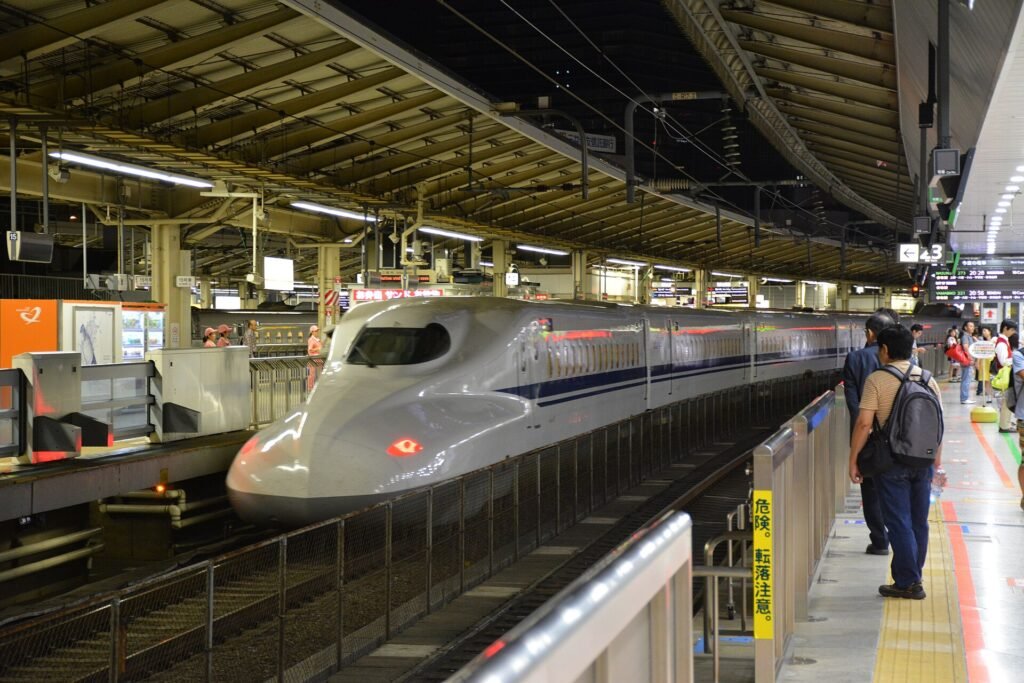
Before buying any rail pass, add up the actual fares for the actual route. After a 7.8% rise, a Tokyo-Kyoto-Osaka week no longer automatically clears the threshold, and a Tokyo-only trip never did.
Things that are still true and still ignored
7. Eat your expensive meal at lunch
The same kitchens serve set lunches at a fraction of the dinner price, and the gap is widest at exactly the restaurants you would most want to try. This is the single most useful habit in Japan and it costs nothing to adopt.
8. Forward your luggage between cities
Cheap, ubiquitous, obvious once you know about it, and almost never in anyone’s budget. It converts a difficult travel day into an easy one for roughly the price of a meal.
9. Coin lockers fill by mid-morning in peak season
Kyoto Station in particular, during sakura and autumn colour. If you arrive before check-in, plan for it rather than discovering it.
10. The Nintendo Museum cannot be pre-booked through resellers
Tickets are allocated by monthly lottery through its own site only. Any reseller offering guaranteed entry is not selling you a real ticket.
What we would tell a first-timer in 2026
Japan is still very good value. It is no longer the outright bargain the internet describes. The weak yen still helps you, but domestic prices and rail fares have risen, and the gap between the two narratives is where people over-plan and under-budget.
One week means two cities, not four. Every seven-day plan promising Tokyo, Kyoto, Osaka and Hiroshima is really a plan about trains, and you will remember the trains more clearly than the cities.
Osaka is cheaper than Kyoto for hotels and food, and not for attractions. Universal Studios in a single day can cost more than two nights of your room.
Where we are less sure
We have flagged the JR fare rise at 7.8% and the taxi flagfall change without being able to reach the operators’ own published tariffs from where we work. The direction and the approximate magnitude we are confident about; the exact current figures should be checked before you commit money.
The Kyoto lodging tax bands and the Ginkaku-ji increase we are confident in.
Corrections
If a figure here is wrong, tell us. We date entries so you can judge staleness, and we correct rather than quietly deleting.
If you are citing this
The underlying facts belong to their sources. The assembly, the dating and the practical conclusions are ours, and free to reproduce with a link back.
Nationwide, and mostly missing from English guides
The entries above are Kyoto-specific. These five apply wherever you go in Japan, and four of them landed in 2026.
11. The departure tax tripled on 1 July 2026
Japan’s International Tourist Tax went from ¥1,000 to ¥3,000 per departure, collected inside your airfare. A transitional rule preserves the old rate for some journeys contracted before the change, but it turns on the transport contract rather than simply the ticket issue date — do not assume a ticket bought in June exempts you. Children under two are exempt.
12. The Japan Rail Pass rises on 1 October 2026
The 7-day Ordinary pass goes from ¥50,000 to ¥53,000, 14-day from ¥80,000 to ¥84,000, 21-day from ¥100,000 to ¥105,000; Green passes rise in step. Any 2026 guide quoting ¥50,000 for travel after that date is wrong. Worth re-running your own arithmetic at the new price — regional JR passes now beat the nationwide one on a lot of itineraries.
13. Mount Fuji costs ¥4,000 on every trail, and the trails no longer open together
Yamanashi’s Yoshida trail charges ¥4,000 per person with a daily cap of 4,000 climbers and a 14:00–03:00 gate closure unless you hold a mountain-hut booking. Shizuoka’s Fujinomiya, Subashiri and Gotemba trails now charge the same ¥4,000 and additionally require pre-registration plus completion of an online safety course. The season ends 10 September, but in 2026 Yoshida and Subashiri opened on 1 July while Fujinomiya and Gotemba opened on 10 July. Guides quoting ¥2,000, or a single opening date, are describing a previous season.
14. Two more prefectures added lodging taxes on 1 April 2026
Hiroshima Prefecture now charges ¥200 per person per night on rooms of ¥6,000 or more, prefecture-wide including Miyajima. Hokkaido introduced a prefectural lodging tax on the same date, and municipalities there levy their own on top — so in Sapporo and Niseko you pay two layers. It is usually collected at check-in or check-out and is usually not included in the rate you booked online.
15. Hiroshima Castle’s keep closed permanently on 22 March 2026
After about 68 years as a museum, the 1958 reinforced-concrete reconstruction was closed to visitors for good on grounds of concrete deterioration. You cannot go inside or up; there is no top-floor view. The exterior is still viewable and the restored Ninomaru buildings remain open and free. The city says the keep is not scheduled for demolition — it is at the basic-investigation stage on restoration options, so reports of a timber rebuild are premature. Every guide still telling readers to pay to climb it is wrong.
16. Miyajima has charged a ¥100 visitor tax since October 2023, and the JR Pass does not cover it
Hatsukaichi City levies ¥100 per person per visit (or ¥500 for a year), collected with your ferry fare on the island-bound leg. The official Japan Rail Pass site states plainly that it is charged separately. Ferry fares also rose to ¥200 each way on the same day the tax started, so a one-way crossing that older guides print as ¥180 is now ¥300 all in.