
In short
The Osaka Amazing Pass is one of the few city passes that genuinely pays. Umeda Sky Building ¥2,000 + Tombori River Cruise ¥2,000 + Osaka Castle keep ¥1,200 + Tsutenkaku deck ¥900 = ¥6,100 at the gate, against ¥3,500 for the pass — and that is four sights in one comfortable day. Two or three paid sights and it has already covered itself.
Prices verified against each venue, August 2026.
Disclosure: some links in this guide are affiliate links. If you book through one, we earn a small commission and you pay exactly the same price. We only link to services we would use ourselves, no brand pays for placement or for a favourable write-up, and every price in this article was researched independently.
Osaka does not have Kyoto’s temples or Tokyo’s scale, and it does not care. What it has is a compact centre, the best street food in Japan, a castle, an aquarium built around a whale shark, and a general refusal to take itself seriously.
What is in this guide
- Before the list: buy the pass
- 1. Dotonbori, twice
- 2. Osaka Castle
- 3. Umeda Sky Building
- 4. Shinsekai and Tsutenkaku
- 5. Kaiyukan aquarium
- 6. Kuromon Ichiba Market
- 7. Shitennoji
- 8. Abeno Harukas 300
- 9. Sumiyoshi Taisha
- 10. Universal Studios Japan
- What we would skip
- Frequently asked questions
- A note on our numbers
- The free half of Osaka
- Osaka with children
- Seasonal notes
- Booking Osaka: what actually needs a reservation
Here is what is actually worth doing, what it costs in 2026, and the two or three things we would quietly skip.
Verified: August 2026 · Exchange rate: ¥159.21 = 1 USD
Editor’s note
A rule that holds up well in Osaka: the free things are the good things. Dotonbori at night, Shinsekai, the castle grounds, Kuromon Market, the walk along the river at Nakanoshima. None of them charge admission and all of them are better than the ticketed attractions. Spend the money on food instead.
Before the list: buy the pass
Almost everything below is free with the Osaka Amazing Pass (¥3,500 for one day, ¥5,000 for two), which also covers your transport.
| Do these four in a day | Normal price |
|---|---|
| Umeda Sky Building | ¥2,000 |
| Tombori River Cruise | ¥2,000 |
| Osaka Castle keep | ¥1,200 |
| Tsutenkaku deck | ¥900 |
| Total | ¥6,100 |
| Pass | ¥3,500 |
Two or three paid sights and it pays for itself. This is genuinely one of the better city passes anywhere.
1. Dotonbori, twice
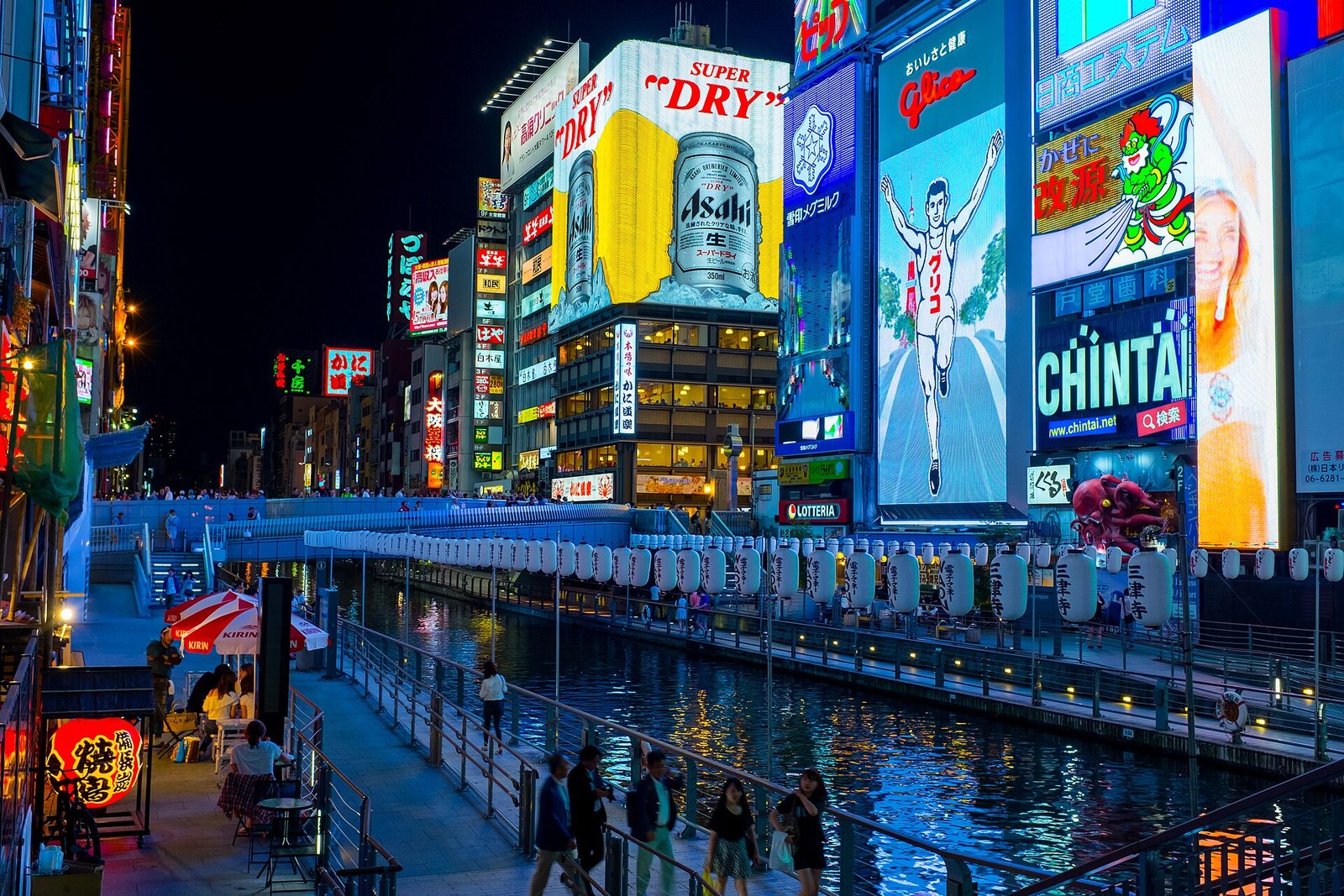
Once at night for the neon, the Glico running man and the canal reflecting all of it. Once the next morning at nine, when you can actually photograph it and see that it is a real street with real shops.
| Cost | Free to walk; ¥2,000 for the Tombori River Cruise (free with the pass) |
| Best times | 19:00 to 21:00 for atmosphere, 08:00 to 09:30 for photographs |
| Nearest station | Namba |
What is no longer there: Zuboraya, the restaurant with the giant pufferfish lantern that appears in every older guide, closed permanently in 2020 and the lantern is gone from Shinsekai. Do not go looking.
Kani Doraku, the enormous mechanical crab, is still there and still moving its legs.
2. Osaka Castle
A 1931 concrete reconstruction with a lift inside, which offends purists and does not much matter. What you get is a decent museum across eight floors, a good view, and an enormous free park around it that is one of the city’s best cherry blossom spots.
| Keep | ¥1,200 since April 2025, when the Toyotomi Stone Wall Museum joined the ticket. Some sources still print ¥600 — check at the gate |
| Nishinomaru Garden | ¥300, or ¥350 in cherry blossom season. Closed Mondays |
| Park | Free |
| Hours | 9:00 to 17:00, last entry 16:30 |
| Free with the Amazing Pass | Keep, garden, and the Gozabune boat |
The Gozabune, a golden replica pleasure boat that runs the inner moat, is ¥1,800 normally and free with the pass. It is silly and rather good.
3. Umeda Sky Building
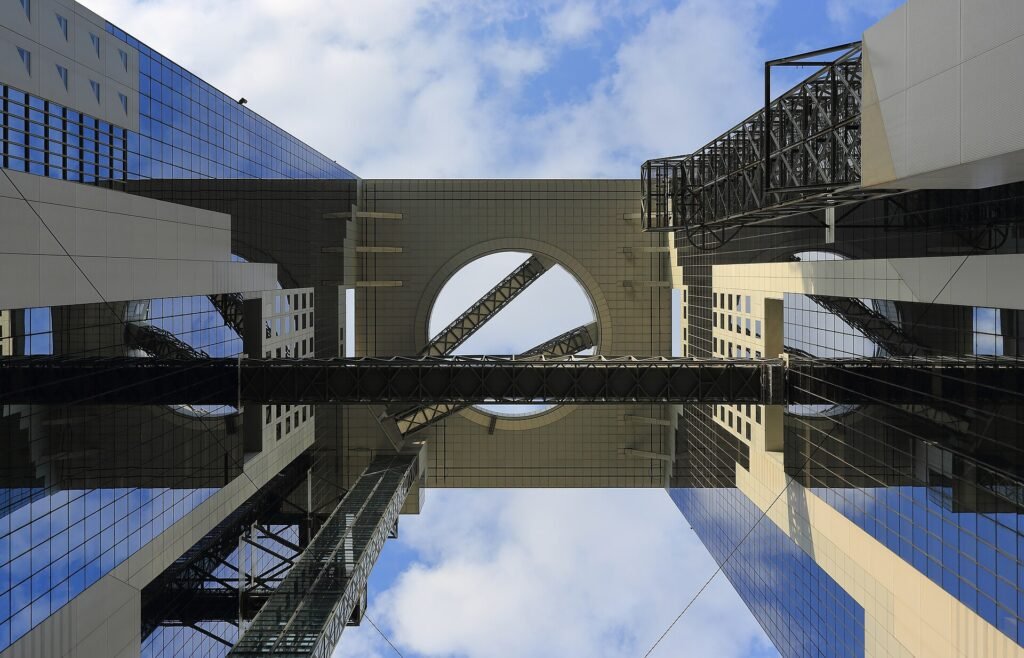
Two towers joined at the top by a floating ring, 170 metres up, with an escalator that crosses the open void between them to get you there. The observatory is open-air and open until 22:30.
| Price | ¥2,000 (child ¥500) — free with the Amazing Pass |
| Hours | 9:30 to 22:30, last admission 22:00 |
| Best time | Sunset, then stay for the lights |
This is the best paid view in Osaka and it is not close. Abeno Harukas is taller; this one is more interesting to be inside.
4. Shinsekai and Tsutenkaku
A district built in 1912 as a vision of the future, then largely forgotten for a century, which is exactly what makes it worth walking. Neon, kushikatsu smoke, retro signage, and a tower in the middle.
| Tsutenkaku observation deck | ¥900 (child ¥400) — free with the pass |
| Tower Slider | ¥1,100 — a slide down the outside of the tower. Minimum height 120 cm |
| Walking the streets | Free |
It is scruffier than the rest of the city and entirely safe. This is where kushikatsu comes from, and Daruma — the original Shinsekai shop, now with 16 branches — is the place most people try it.
The kushikatsu rule you must not break: one dip in the communal sauce, no second dip. Use a cabbage leaf as a spoon if you want more. This is the single most enforced etiquette rule in Osaka and breaking it will get you told off.
5. Kaiyukan aquarium
One of the largest aquariums in the world, arranged as a spiral you walk down around a central tank containing whale sharks.
| Price | Dynamic — expect roughly ¥3,200 to ¥3,500 adult, ¥1,800 elementary and junior high, ¥900 age 3+ |
| Booking | Timed 15-minute entry slots, price varies by date |
| Tempozan Ferris Wheel next door | ¥800 — free with the Amazing Pass |
| Best time | Opening, or after 16:00 |
Worth knowing: annual passes were abolished and the old Kaiyukan-plus-ferris-wheel combination ticket no longer appears on the official site. Buy them separately, or get the wheel free with the pass.
6. Kuromon Ichiba Market
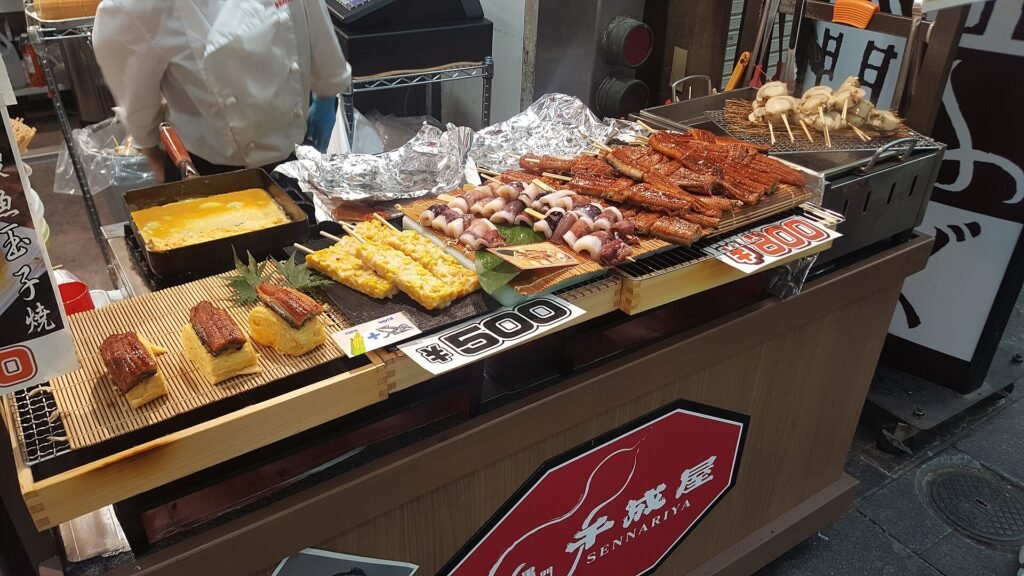
A 580-metre covered arcade with about 150 shops: fish, wagyu skewers, fruit, urchin, tempura, knives.
| Cost | Free to enter; ¥300 to ¥1,500 per item |
| Fishmongers open | 05:00 to 06:00 |
| Most shops | 09:00 to 17:00 or 18:00 |
| Best time | 07:30 to 09:30 for the working market, or after 15:00 for discounted prepared food |
| Worst time | 11:00 to 14:00 |
Eat at the stall you bought from. Every stand has a small standing counter for this. There is no law, but there is a clear expectation, and honouring it costs you nothing.
7. Shitennoji
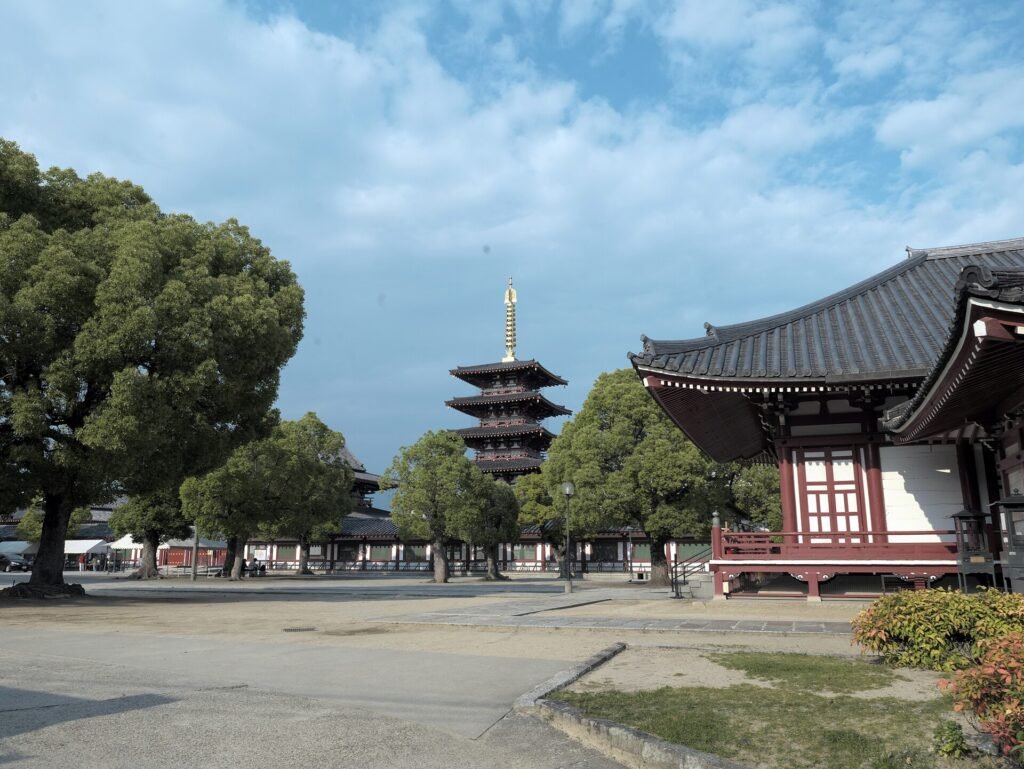
Founded in 593, and the oldest temple in Japan to have been administered by the state. Rebuilt many times, but the layout is the original 6th-century plan.
| Central Garan | ¥500 (high school ¥300, elementary and JHS free) |
| Gokuraku-jodo Garden | ¥300 |
| Treasure Hall | ¥500 |
| Outer grounds | Free, 24 hours |
| Free entry days | The 21st and 22nd of every month, plus the equinoxes |
| Hours | Apr–Sep 8:30–16:30, Oct–Mar 8:30–16:00 |
If your dates include the 21st or 22nd, go then — there is a large flea market in the grounds on the 21st and the whole complex is free.
8. Abeno Harukas 300
Japan’s tallest building, 300 metres, with a three-storey glass observatory at the top and an open-air atrium on floor 58.
| Price, from 23 July 2026 | ¥2,200 at the door / ¥1,980 booked online (10% off) |
| Child (6–14) | ¥900 / ¥810 |
| Under 6 | Free |
| Hours | 9:00 to 22:00, last admission 21:30 |
The pricing was simplified in July 2026 from four age categories down to two — older sources listing ¥2,000 adult and ¥1,200 for high school students are out of date.
Honestly? If you only pay for one view in Osaka, Umeda Sky at ¥2,000 is more fun and it is free with the Amazing Pass. Harukas is higher and it is not free with anything.
9. Sumiyoshi Taisha
One of Japan’s oldest shrines, in an architectural style that predates Chinese influence entirely — no vermilion, no curved roofs, just straight thatch and timber. The arched Sorihashi bridge over the pond is the image everyone photographs.
| Price | Free |
| Getting there | Nankai to Sumiyoshitaisha, or the Hankai tram |
| Time | 45 minutes |
The Hankai Tramway that serves it is Osaka’s last surviving streetcar line and is worth riding for its own sake.
10. Universal Studios Japan
| Ticket | 2026 price |
|---|---|
| 1-day adult | ¥8,400 to ¥11,900 |
| 1-day child (4–11) | ¥5,500 to ¥7,400 |
| 2-day adult | ¥16,000 to ¥21,400 |
| Express Pass | ¥9,800 to ¥35,200+ |
| Getting there from Osaka Station | ¥200, 11–12 min via Nishikujo |
The 1 September 2026 change matters. Until then, a date’s price was fixed once released. From September, prices start lower (¥8,400) and rise as the date fills — one reported example went ¥8,900 to ¥9,400 within a week. There is no announced ceiling. Book as early as you can commit.
Super Nintendo World and Donkey Kong Country need an area entry ticket: a free timed ticket in the USJ app once you are inside the park (usually gone before noon at weekends), a free lottery ticket after those run out, or a paid guaranteed-entry pass bought in advance. Donkey Kong Country is open and still drawing very long queues.
What we would skip
- The Yumeshima Expo site. Not a matter of taste — it is a fenced construction site with nothing open, and will be until at least 2028.
- Osaka’s Legoland Discovery Center and similar bay-area indoor attractions, unless you have small children and it is raining.
- Queueing an hour for one specific takoyaki stand. There are hundreds and the difference is smaller than the queue suggests. Aizuya, who invented the dish in 1933, has no queue.
- **Abeno Harukas *and* Umeda Sky *and* Tsutenkaku.** Pick one high view, ideally Umeda.
Frequently asked questions
What is Osaka famous for? Food, principally — takoyaki, okonomiyaki and kushikatsu all belong to this city, and conveyor-belt sushi was invented here in 1958. Beyond that: Osaka Castle, Dotonbori’s neon canal, Universal Studios Japan and a reputation for being the friendliest, most direct city in Japan.
Is the Osaka Amazing Pass worth it? Yes, if you do two or three paid attractions in a day. Umeda Sky, the Tombori cruise, Osaka Castle and Tsutenkaku total ¥6,100 against a ¥3,500 pass that also covers your transport.
How many days do you need in Osaka? Two for the city. Add a day for Universal Studios and one or two more if you are using Osaka as a base for Nara, Kobe and Kyoto — which is a very good idea.
Can you visit the Expo 2025 site? No. It closed in October 2025 and the site is now fenced off for demolition and redevelopment. A memorial park preserving about 200 metres of the Grand Roof Ring is planned but has no opening date.
What should I eat in Osaka? Takoyaki (Aizuya invented it in 1933), okonomiyaki Osaka-style with everything mixed into the batter, kushikatsu in Shinsekai — one dip only — and kitsune udon. Then whatever the person next to you is having.
Is Osaka Castle worth visiting? The park and grounds, unreservedly and free. The keep is a 1931 reconstruction with a lift and a good museum inside, at ¥1,200 — worth it if you like the history, skippable if you are short on time.
What is the best view in Osaka? Umeda Sky Building’s open-air Floating Garden at ¥2,000, free with the Amazing Pass, open until 22:30. Abeno Harukas is 130 metres taller and less interesting.
Do I need to book Universal Studios in advance? Yes, and increasingly so. From 1 September 2026 prices rise as a date sells. Super Nintendo World entry also needs a same-day timed ticket from the app, which typically runs out before noon at weekends.
A note on our numbers
Admissions, hours and pass contents were checked against operator and city sources in August 2026. Where sources disagree — Osaka Castle’s admission is quoted as both ¥600 and ¥1,200 in different places — we have flagged it rather than pick one. Kaiyukan uses date-based dynamic pricing, so treat our figure as a range, not a quote.
Keep reading: Osaka Travel Guide 2026 · The Perfect 2-Day Osaka Itinerary · Where to Stay in Osaka · Best Day Trips from Osaka and Kyoto
The free half of Osaka
You could fill a very good day here without paying an entry fee anywhere.
| Free | Where |
|---|---|
| Dotonbori and the canal at night | Namba |
| Osaka Castle Park — the grounds, not the keep | Tanimachi 4-chome |
| Sumiyoshi Taisha | Nankai to Sumiyoshitaisha |
| Shitennoji outer grounds (and everything on the 21st and 22nd) | Tennoji |
| Shinsekai streets | Dobutsuen-mae |
| Kuromon Ichiba — free to walk, you just will not manage it | Nippombashi |
| Nakanoshima riverside and the Central Public Hall exterior | Yodoyabashi |
| Amerikamura and the Shinsaibashi arcade | Shinsaibashi |
| Umeda Sky Building’s lower floors and the underground malls | Umeda |
| The Hankai Tramway — Osaka’s last streetcar, ¥230 a ride | Ebisucho |
The 21st of the month at Shitennoji is the one to time if you can: the whole complex is free and there is a large flea market in the grounds.
Osaka with children
| Attraction | Price | Why it works |
|---|---|---|
| Kids Plaza Osaka | Adult ¥1,500, child 6–15 ¥800, 3–5 ¥500 | A whole interactive museum built for climbing on. Closed 2nd and 3rd Mondays |
| Cup Noodles Museum, Ikeda | Admission free, workshops extra | Design your own cup noodle. Closed Tuesdays |
| Kaiyukan | ~¥3,200–3,500 adult, ¥900 age 3+ | Whale sharks, and a spiral route that keeps small legs moving |
| Nifrel | Adult ¥2,400, 7–15 ¥1,200, 3–6 ¥700 | Aquarium-zoo hybrid at Expocity |
| Tennoji Zoo | ¥800, free with the Amazing Pass | Central, compact |
| Osaka Castle Gozabune boat | ¥1,800, free with the pass | A gold boat on a moat. Sells itself |
| Universal Studios Japan | ¥5,500–7,400 child | A full day. Book early |
Note that children under six are free at Abeno Harukas, under-18s are free at Himeji Castle, and junior high and younger are free at Shitennoji’s central garan. Japan is generous about this.
Seasonal notes
| Season | Osaka specifically |
|---|---|
| Late March to mid-April | Osaka Castle Park and Nishinomaru Garden are the best cherry blossom in the city. Garden entry rises to ¥350 |
| Golden Week, 29 Apr to 5 May | Domestic peak. Book months out |
| June | Rainy season. Osaka is unusually good in the wet — arcades, aquarium, underground malls |
| 24–25 July | Tenjin Matsuri, one of Japan’s three great festivals: river procession and fireworks |
| August | Hot and humid, low 30s. Oban mid-month is a domestic travel peak |
| October to November | The best weather of the year. No foliage rush like Kyoto’s |
| December to February | Cheapest and quietest. The illuminations along Midosuji are genuinely good |
Booking Osaka: what actually needs a reservation
Osaka rewards people who plan less. Dotonbori is a street. Shinsekai is a neighbourhood. Osaka Castle park is free and the keep costs 600 yen at the door with a queue that rarely passes twenty minutes outside Golden Week. The city’s best evening is a kushikatsu counter you walk into.
Three exceptions are worth handling before you land.
Universal Studios Japan, if you are going. This is the single genuine pre-booking item in Osaka. Super Nintendo World runs on timed entry, and on busy days the free in-park area passes run out before lunch. Express Passes sell out weeks ahead in summer and over New Year. Check USJ tickets and Express Pass availability on Klook or on KKday. Compare both: the two resell the same park inventory and the Express Pass price often differs by more than the ticket itself.
Cooking classes, and anything else with a start time. Okonomiyaki and takoyaki classes, sake brewery tours in Nada, and small-group bar crawls take twelve people and no more. Osaka experiences on KKday.
Data. An eSIM works the moment you land, which matters more in Osaka than in Kyoto because the metro map is genuinely confusing and you will be checking it constantly.
What we would not pre-book. Osaka Aquarium Kaiyukan sells online at the same price as the gate and the queue moves. The Umeda Sky Building is walk-up. The Osaka Amazing Pass pays for itself only if you use four or more of its included attractions in one day, which most people do not manage. Airport transfers are unnecessary here in a way they are not in Kyoto: the Nankai Rapi:t from Kansai to Namba is 1,490 yen and takes 38 minutes, and the Haruka reaches Shin-Osaka in 50. Both run frequently. Book a car only if you are landing after 23:00 or travelling with more luggage than hands.