
In short
US, UK, Canadian and Australian citizens get 30 days visa-free. Registration rules changed on 1 July 2026 — hotels still handle it, but private hosts must now confirm you in an app. And a local SIM is blocked after 30 days unless you verify your phone’s IMEI, which needs a Kazakh tax ID; a roaming eSIM avoids the problem entirely. Kazakhstan is 98% cashless, but park gates are cash only.
Checked 27 August 2026 against US, UK, Canadian and Australian government advice and National Bank of Kazakhstan rates.
On this page
Kazakhstan is the ninth-largest country on earth, it took 15.7 million foreign visits in 2025, and almost nothing written about it in English is currently accurate on two points that will affect your trip.
The registration rules changed on 1 July 2026. And if you buy a local SIM card, your phone can be cut off after thirty days unless you complete a process most visitors have never heard of.
Here is the current version, checked on 27 August 2026.
Visas — the easy part
Thirty days visa-free, no application, for US, UK, Canadian and Australian citizens, confirmed independently by all four of those governments on pages updated between March and August 2026. The cap is 90 days total within any 180-day period, with unlimited entries inside that.
EU and Irish citizens are on the same list according to Kazakh tourism sources, which name around 56 countries — but we could not find an official Kazakh government page confirming it, so check if that is your passport.
Currency declaration: US$10,000 in, US$10,000 out.
Registration — the rule that changed in July
This is the most out-of-date fact on the internet about Kazakhstan.
Under an interior ministry order effective 1 July 2026, visitors arriving visa-free for stays of up to 90 days must register with the internal affairs authorities within 30 days of crossing the border, through the migration police information system. You enter your own details; your host or property owner then confirms in a mobile app; an electronic certificate is generated. Move address and you re-register within five working days.
If you are in a hotel for a normal two-week trip, the hotel handles it and you do nothing. Every source agrees on that, and both the UK and Australian governments still describe the older rule — your host registering you within three working days.
Where the new rule bites is private accommodation and long stays. If you are in an apartment booked online, make sure your host knows they have to confirm you in the app.
The SIM card trap
This one is genuinely obscure and comes straight from the UK Foreign Office’s March 2026 update:
To use a local SIM card you must verify your phone’s IMEI at the imei.kz portal. If you do not, the SIM is blocked after 30 days and you cannot activate another one.
Verification needs a border-crossing certificate from a Kazakh government app and a Kazakh tax ID number. The rules took effect in March 2025; by October 2025 nearly 900,000 IMEIs were on the warning list and over 127,000 had been blocked outright.
What this means in practice:
- Trip of 30 days or less: buy a local SIM, it works fine, it dies after you have gone home.
- Longer, or returning with the same phone: you need the full IIN and IMEI process.
- The clean way round it entirely: use a roaming eSIM. It rides an operator’s network without activating a Kazakh SIM, so it never enters the registration chain.
No article we found ranking for Kazakhstan connectivity mentions this.
Money: the most cashless country you have visited
On 27 August 2026 the tenge was about 458 to the US dollar, 625 to the pound and 535 to the euro. It has strengthened roughly 15 per cent over twelve months, so older blog prices overstate what your money buys.
Kazakhstan is startlingly cashless. The National Bank reported that in the first half of 2025, 98 per cent of payment transactions by number and 87 per cent by value were cashless. Locals pay for everything with Kaspi, the domestic super-app.
You will not have Kaspi. Opening an account as a non-resident needs a Kazakh phone number, a tax ID issued in person, and proof of legal stay. Carry a contactless Visa or Mastercard and it will work almost everywhere — international acceptance has improved sharply since deals with Alipay+ and UnionPay in 2025.
Where you still need cash, and it is specific: national park gates. Altyn-Emel sells entry passes in cash tenge only. Charyn’s gate staff rarely take cards. One 2025 Kolsai guide is blunt: cash only, no cards. Practice varies — Ile-Alatau has been taking Kaspi QR — so carry tenge notes for any park day.
When to go
| Month | Almaty high | Astana high | Verdict |
|---|---|---|---|
| January | 0.5 °C | −10.3 °C | Astana is genuinely dangerous cold |
| April | 17.9 °C | 12.3 °C | Almaty’s wettest month — 112 mm |
| May | 22.9 °C | 21.0 °C | Excellent everywhere |
| July | 30.5 °C | 26.6 °C | Canyon floors exceed 40 °C |
| September | 24.5 °C | 19.0 °C | The best month in the country |
| October | 16.9 °C | 10.5 °C | Very good for canyons and desert |
Astana’s January mean is −14.4 °C with an average daily low of −18.6 °C, on open, wind-exposed steppe. The record low is −51.6 °C. That is not a picturesque cold; it is a pack-properly-or-do-not-go cold.
By region: mountains — Kolsai, Big Almaty Lake, the Tien Shan trails — roughly mid-June to late September. Steppe and Astana — May and September. Canyons and desert — April to May and September to October, because summer on a canyon floor is brutal.
September is the answer if you want one month that works for everything.
Getting around
Fly the long legs. Almaty to Astana is 1.5 to 2 hours and typically US$60–100, with 24 to 35 flights a day on Air Astana, FlyArystan and SCAT. The train takes at least sixteen hours — a genuine overnight, covering 3,301 km as routed.
That said, the train is cheap and good, and we have written it up separately in our guide to Kazakhstan by rail.
To Bishkek, which matters if you are combining this with Kyrgyzstan: buses leave Almaty’s Sayran station at 08:00, 10:00, 12:00, 14:00 and 18:00 for around 3,300 tenge (US$7), taking four to six hours to the Korday crossing. A shared taxi seat is 5,000 tenge, a private Yandex ride about 23,000. The crossing itself takes about twenty minutes when quiet.
On the roads generally, official advice is unambiguous: driving standards are erratic, vehicles and infrastructure poorly maintained, hazards often unsignposted, and winter is worse.
Safety, and the one law to know
Every government rates Kazakhstan at its lowest tier — the US issued Level 1, “exercise normal precautions”, on 18 August 2026, and Canada, the UK and Australia all sit at the equivalent.
The law that matters most: public demonstrations are only permitted when authorised in advance. Attending an unauthorised protest risks arrest. Do not go and watch one out of curiosity.
The January 2022 unrest in Almaty was serious and is still cited by Australia as the reference case for civil-unrest potential. No government currently rates the country above its lowest tier.
Other specifics worth knowing: permits are required for Baikonur town, Gvardeyskiy village and parts of Kyzylorda region; robberies affect nightlife districts in Almaty, Astana, Atyrau and Aktau; Australia specifically warns of drink spiking in Almaty nightclubs; and Almaty sits in an active seismic zone.
A fortnight that works
| Days | Where |
|---|---|
| 1–3 | Almaty — the city, plus Big Almaty Lake |
| 4–5 | Charyn Canyon and the Kolsai lakes |
| 6 | Altyn-Emel — the Singing Dune |
| 7–8 | Astana — fly, don’t take the sixteen-hour train |
| 9–11 | Mangystau — fly to Aktau for the desert |
| 12–14 | Turkestan, or Aralsk and the recovering North Aral |
Almaty and its day trips alone justify a week. The additions are what make it a country rather than a city break.
Why now
Kazakhstan took 15.7 million foreign visits in 2025, of which 11.1 million counted as tourists — up 3.1 per cent on 2024 — with 3 million foreign travellers in the first quarter of 2026 alone.
It is also, on the evidence of the search results, one of the least-covered major destinations left in Asia. Lonely Planet has essentially one Almaty article. There is no wall of established coverage to get past. That is unusual for a country this size and this easy to enter.
What we could not verify
Whether Ireland and EU states are formally on the visa-free list — no official Kazakh page confirmed it. Passport validity requirements, where sources genuinely conflict. Current SIM prices and data allowances from the operators. And Australia’s advisory review date, which its page does not display.
For the cities and the mountains, start with our Almaty guide.
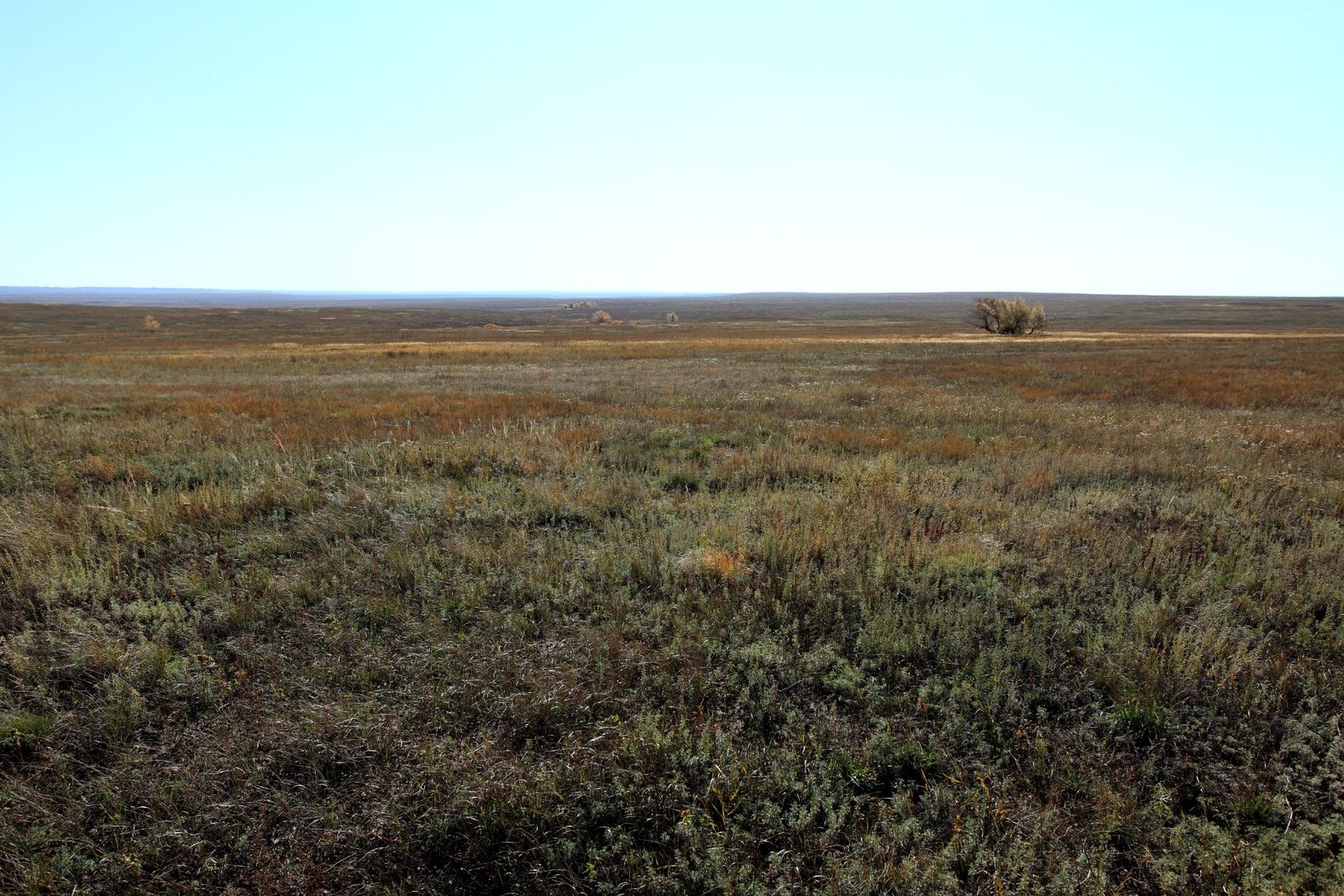
Photo: Казахстан – panoramio by Сергей Метик, via Wikimedia Commons, CC BY 3.0.