
In short
Gagarin’s Start returned to Kazakh control by June 2025 and is destined to become a museum, with a UNESCO bid in progress. Kazakhstan announced a 10-day permit turnaround in June 2026, but every tour operator still quotes 35–60 days — plan on the longer figure. You cannot visit independently. On the North Aral, the 2005–2020 recovery is real; the 2024–26 trend is disputed.
Checked 27 August 2026. Where government figures and operator practice conflict, both are given rather than reconciled.
On this page
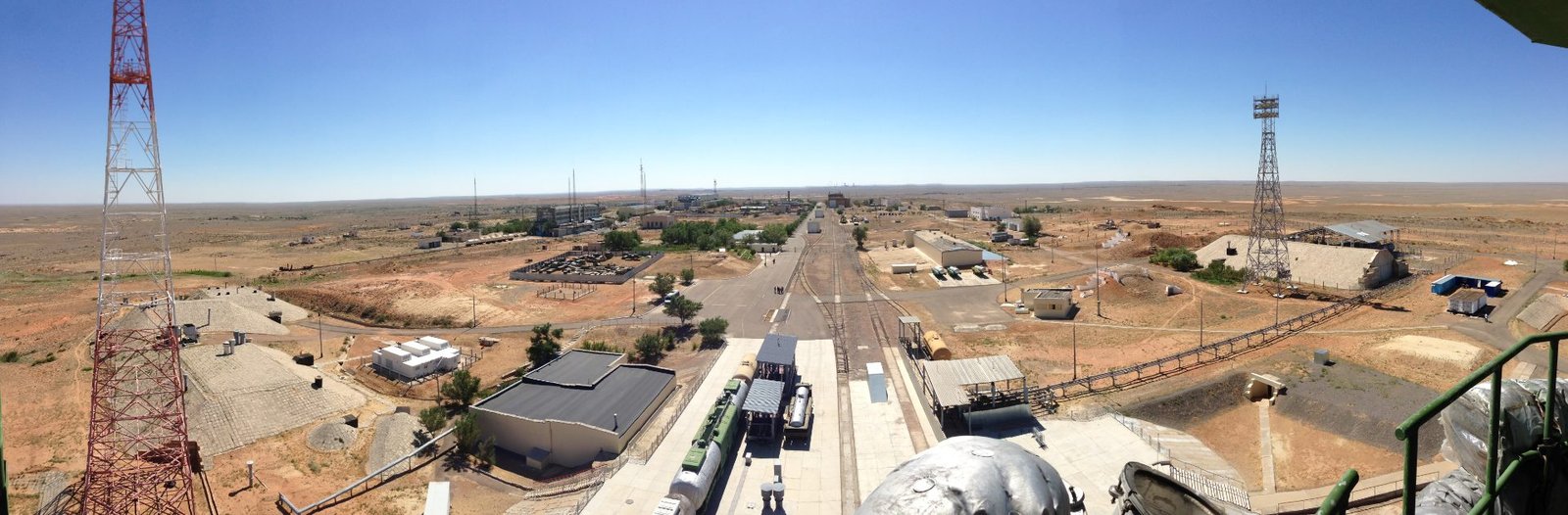
The launch pad that sent Sputnik up in 1957 and Yuri Gagarin up in 1961 is no longer Russian-controlled. Gagarin’s Start was handed back to Kazakhstan by 1 June 2025, and both countries are now pursuing UNESCO World Heritage listing for it.
That transfer is the reason access to Baikonur is loosening — and it is the most under-reported thing about the cosmodrome in English.
The status, plainly
Baikonur sits in Kazakhstan and is leased by Russia until 2050 for US$115 million a year. Kazakhstan has earned over US$3 billion from it. Reports of an early Russian exit surfaced in 2025 and were formally denied by Kazakhstan’s Aerospace Committee.
What is genuinely changing is the estate. Russia identified 234 facilities for removal from the lease, and 53 had been accepted by Kazakhstan by May 2025. By June 2026 three named sites had transferred: Gagarin’s Start, the assembly-and-fuelling complex, and the dynamic testing stand.
Gagarin’s Start — Site 1/5 — was decommissioned in 2019 because it could not take the Soyuz-2. Kazakhstan intends to turn it into a museum complex.
Can you visit? Yes — but not on the timeline the government announced
On 9 June 2026, Kazakhstan’s tourism minister told a government meeting that the permit wait for foreign tourists had been cut to 10 days, down from a month and a half to two months, under a new Baikonur Tourism Development Concept running to 2030.
We checked every tour operator we could find, and not one of them reflects it. Their stated lead times as of late August 2026 run from 15 days to two months, clustering at 35 to 60 days.
There are plausible explanations — the ten days may cover only the administrative processing step once a complete file is lodged, or only the Kazakh-controlled facilities rather than the Roscosmos zones, or the operators may simply not have updated. We could not establish which.
Our advice: treat the ten-day figure as news, and plan on 45 to 60 days, because that is what the people who actually file the paperwork are asking for. Do not book flights on the assumption of a ten-day turnaround.
You cannot do this independently. Baikonur town is a closed administrative area requiring prior government permission, which both the UK and Canadian governments list among Kazakhstan’s restricted zones. You go through an operator, or you do not go.
Aralsk and the sea that came back
Three hundred kilometres north-east, the story is entirely different from the one on the Uzbek side of the same sea.
Aralsk was a fishing port. The water left. Then, in 2005, Kazakhstan finished the Kokaral Dam across the channel to the south and simply stopped the North Aral draining into the dying southern basin — and the water came back.
That much is beyond dispute and is one of the more successful environmental interventions anywhere. We covered the southern, Uzbek half of this story in our Nukus and Muynak guide, where the picture is far bleaker.
But the recent numbers are genuinely disputed, and we are not going to pretend otherwise.
| Volume figure | Attributed to | When |
|---|---|---|
| 27 billion m³, up 42% | Water minister | February 2025 |
| 24.1 billion m³ | Ministry of Water Resources | 2025 |
| “over 23 billion m³” | Ministry | Undated |
| 19 billion m³, down from 27 | Kazakh analyst | May 2026 |
The government’s own published figures have drifted downward — 27, then 24.1, then “over 23” — while each was presented as a record. One Kazakh analysis alleges the ministry omits around 3 billion m³ a year of evaporation from its calculations; we could neither verify nor refute that.
The honest position: the 2005–2020 recovery is real, well-documented and remarkable. The 2024–2026 trend is contested. Anyone telling you the North Aral is straightforwardly still rising is going beyond what the published numbers support.
The fish catch figures conflict in the same way, between ministry statements and the statistics bureau. Fishing genuinely returned — that is not in doubt — but we would not quote you a tonnage.
Reaching Aralsk
Aralsk is on the main rail line and the train is the sensible way in, from Almaty, Astana or Kyzylorda. We have the network written up in our Kazakhstan rail guide.
In town there is a museum, the old harbour, and ship monuments where the port used to be. Reaching the current shoreline needs local transport arranged on the ground.
Kyzylorda, the regional capital between Baikonur and the Aral, is a functional stop rather than a destination — useful if you need a night and an onward connection.
Watching a launch
This is what most people actually want, and it is the part where we can help you least.
Crewed and uncrewed launches do take place, tour operators do sell launch-viewing packages, and schedules are published in advance. But launch dates slip routinely, and a scrubbed launch on a trip built around a 45-day permit is an expensive disappointment.
If a launch is your reason for going, book through an operator who has done it before, ask explicitly what happens if the launch scrubs, and get the answer in writing.
What we could not verify
Whether the ten-day permit turnaround is achievable in practice for a foreign visitor — the government says one thing and every operator says another, and the gap is a factor of four to six.
Current 2026 launch cadence and whether tourist access has changed alongside the facility transfers. Accommodation prices in Baikonur and Aralsk. Whether the UNESCO bid for Gagarin’s Start has formally progressed beyond intention. And a reliable current tonnage for the North Aral fishery.
We would also flag, in general, that this is a subject where the political arrangements can shift quickly. Everything above is dated 27 August 2026, and if you are planning a trip, the permit rules are the first thing to re-check.
For the country as a whole, see our Kazakhstan travel guide.
Photo: Baikonur Cosmodrome Site 31 by Paulsday86, via Wikimedia Commons, CC0.