
In short
A GBAO permit costs US$20 added to an e-visa at evisa.tj, 100–180 somoni in person at an OVIR office in Dushanbe, Khorog or Khujand, or US$35–45 through an agency. Zorkul and Lake Sarez need separate permits; the Wakhan and Bartang do not. Expect six to eight checkpoints and carry photocopies. Permits can be suspended at short notice.
Checked 26 August 2026. No official government tariff is published — figures come from operators, specialists and one embassy consular schedule.
On this page
Gorno-Badakhshan covers nearly half of Tajikistan and you cannot enter it on a standard visa. You need a separate permit, and there are three ways to get one — with a factor-of-four price difference between them and a contradiction between official sources about whether one of them exists at all.
Before you read any of this, read our assessment of what the situation on the ground actually is. This article is the paperwork; that one is the decision.
The three channels
| Route | Cost | Timeline |
|---|---|---|
| E-visa portal, evisa.tj — tick the GBAO box | +US$20 | Operators quote anywhere from 1–3 working days to 15 |
| OVIR / Interior Ministry office — Dushanbe, Khorog or Khujand | 100–180 somoni (about US$11–20) | Ten minutes to two days |
| Agency | US$35–45 | 48-hour express to seven working days |
The in-person route is both the cheapest and, if you are already in the country, usually the fastest. The e-visa route is the one to use if you want it settled before you fly — bearing in mind that Tajikistan’s e-visa system is unpredictable at the best of times, with delays and rejections that often trace back to photographs the system will not process.
One contradiction we could not resolve. A well-regarded Pamir specialist states plainly that you cannot obtain a GBAO permit through Tajik embassies abroad. The UK Foreign Office, updated 26 August 2026, says the opposite — that if you are in the UK you should contact the Tajik Embassy to apply for a permit before you travel. The embassy in Washington publishes a US$50 GBAO permit fee on its consular schedule, which suggests embassies do issue them.
If you want it done from home, the e-visa portal is the route everybody actually describes using.
The caveat that matters more than the price
The US State Department notes that the Tajik government can suspend travel permits for non-citizens at short notice.
That, rather than refusal, is the realistic risk. We searched specifically for reports of GBAO permits being refused or suspended during 2025 and 2026 and found none — the suspension that followed the 2022 unrest does not appear to be in force. But a regime that can change without notice is a poor thing to build non-refundable flights around.
The permits inside the permit
Getting into GBAO is not the end of it. Three areas need something extra.
Zorkul. A separate permit, obtainable at the PECTA office in Khorog’s central park, at the national park office in Murghab, or through an operator for a service fee of around US$35. It is checked at the Khargush Pass checkpoint if you approach from the Wakhan. Reported drone restrictions and limits on camping near the border apply. The fee itself varies year to year.
Lake Sarez. This one is not from the Border Service at all — you need approval from the Committee for Emergency Situations in Dushanbe, in addition to your GBAO permit. That is because Sarez is a landslide-dammed lake regarded as a genuine hazard. Access has been formally permitted since 2015. Quoted costs vary wildly — one source says US$50 per person per day including accommodation, another says there is no official fee.
Protected areas generally carry a nominal charge of around 10 somoni. Be aware that people falsely claiming to be rangers are a documented problem.
Two things that do not need a separate permit, despite what you may be told: the Wakhan corridor — your GBAO permit covers it — and the Bartang valley. Bartang’s problem is not paperwork. It is that the road is frequently closed by avalanches, rockslides, mudflows and flooding.
At the checkpoints
Expect six to eight checkpoints between Kalaikhum and the Kyrgyz border. Officers log your passport and permit details, typically taking two to five minutes per vehicle.
Carry originals, and carry photocopies — several sources report that a checkpoint may keep a copy, so bring more than you think you need. Border Guard patrols also stop travellers in the open to inspect passports and permits, which the UK Foreign Office confirms.
Photography of military or security installations is illegal. Ask before photographing anything that might qualify.
One long-standing warning worth repeating: travellers have historically had trouble with corrupt officials at some of these posts. Stay polite, keep your paperwork in order, and do not hand over originals if you can avoid it.
The Kyrgyz border at Kyzyl-Art
The crossing from Kyrgyzstan sits at 4,280 metres, with about 20 km of unpaved no-man’s-land between the Kyrgyz post at Bor-Döbö and the Tajik post at Kyzyl-Art. Processing typically takes 30 to 90 minutes.
An important quirk: since 2023 this crossing has been open only to foreigners. That is why there is no shared-taxi traffic across it and why you have to charter a vehicle.
Three other Kyrgyz–Tajik crossings reopened after the March 2025 delimitation treaty — Guliston–Qizil-Bel and Madaniyat–Kayragach in March 2025, and Tojvaron–Karamyk in July 2025.
Our Kyrgyz border-zone permit guide covers what you need on the other side, and the answer is different: Kyrgyzstan has its own separate permit system with its own unpublished pricing.
Registration, separately
Do not confuse the GBAO permit with registration. If you are staying in Tajikistan for ten days or more, you must register with the Ministry of Internal Affairs within ten working days, for 175 somoni. Hotels no longer do this for you.
What it costs to be there
For orientation rather than planning, since the security picture should drive your decision first: GBAO homestays through the Pamir network typically run in the range of a modest nightly rate with meals included, cash only. There are no ATMs and no card acceptance through most of the province — Khorog is the last reliable place to get money, and the GBAO permit fee itself is payable at a named Amonatbank branch. Carry more cash than you think you need, in clean US dollars and somoni.
What we could not verify
Whether Tajik embassies abroad genuinely issue GBAO permits — official sources contradict each other and we have flagged both. The current Zorkul permit fee, described everywhere as variable. Whether Lake Sarez carries an official charge. Whether the 45-day maximum permit validity quoted by one specialist source is still current. And whether any escort requirement applies to foreigners in GBAO — we found none in five permit guides and four government advisories, which is not the same as confirming there is none.
Permit rules in this region change without announcement. Everything above is dated 26 August 2026, and the sources behind the prices are operators and specialists rather than a published government tariff — because, as in Kyrgyzstan, no such tariff is published.
For the country as a whole, see our Tajikistan travel guide.
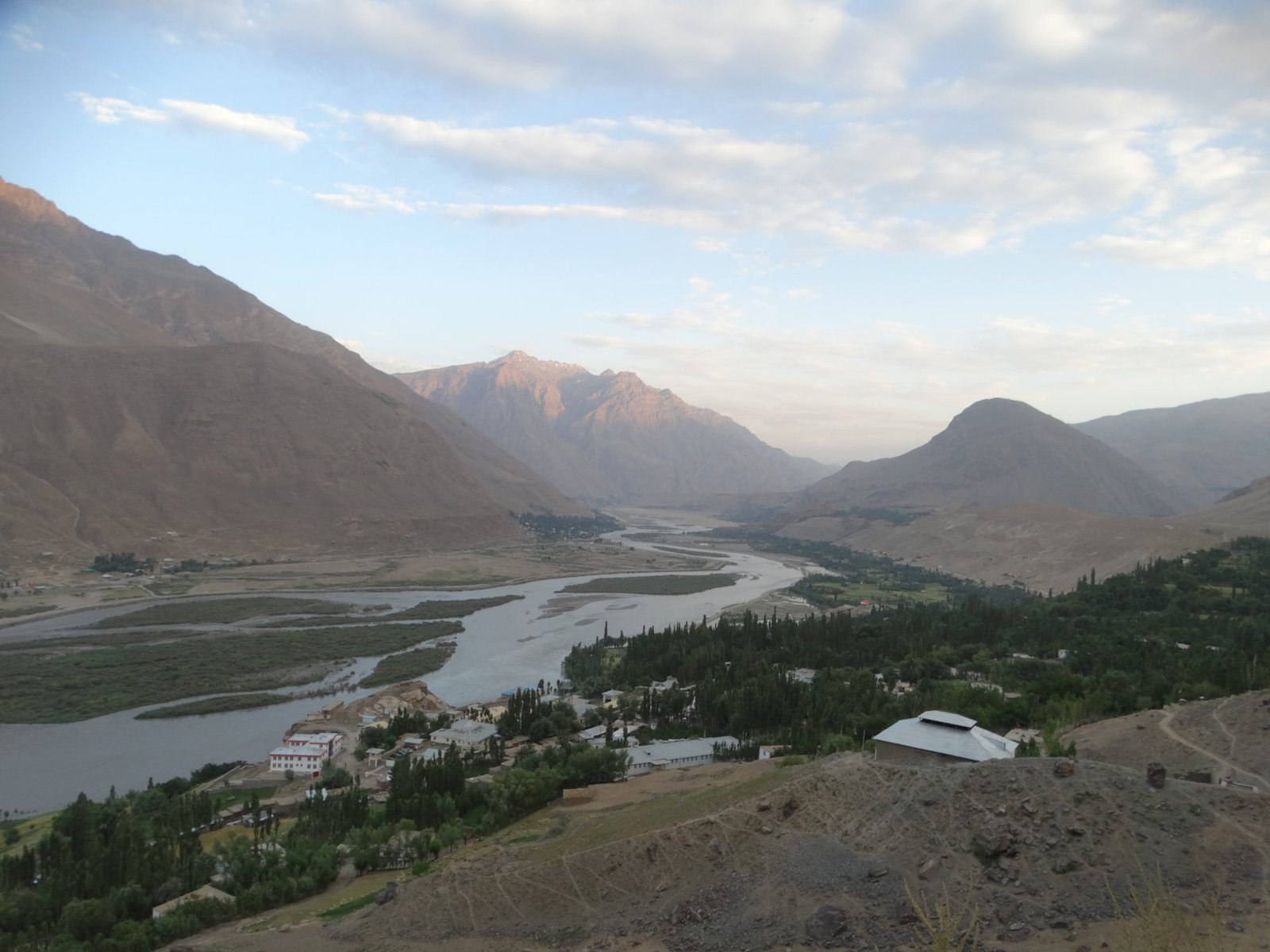
Photo: Piandj vallée by Benoît Vicart, via Wikimedia Commons, CC0.