
In short
US citizens need no visa under 30 days — but the UK Foreign Office, updated 26 August 2026, says British citizens do need one, so confirm before flying. The e-visa is evisa.tj, US$30 plus US$20 for GBAO. Cash is essential. The northern circuit — Dushanbe, Iskanderkul, the Fann Mountains, Penjikent — carries no regional warning; GBAO and the Pamir Highway do.
Checked 26 August 2026 against US, UK, Canadian and Irish government advice and dated 2025–26 reporting from Tajik outlets.
On this page
Tajikistan is the most mountainous country in Central Asia and the least visited. It is also the one where the honest guide and the enthusiastic guide look very different, because the country splits in two: a northern half that is straightforwardly wonderful to travel, and an eastern half that four Western governments currently advise caution or worse about.
This guide covers both, with the caveats where they belong. Every figure checked on 26 August 2026.
Visas — and one contradiction UK readers must not ignore
US citizens do not need a visa for stays under 30 days, per the State Department’s own country page. Tajikistan operates a unilateral visa-free regime covering somewhere between 52 and 65 countries at 30 days, with most Western European, Commonwealth and North American passports on it.
But here is the problem. The UK Foreign Office page, updated on 26 August 2026 — the day we checked — states flatly that you must have a visa to enter Tajikistan, and that arriving without one may mean being detained and refused entry. It makes no mention of visa-free entry for British citizens at all.
We could not resolve this. Tajikistan’s own foreign ministry pages, which carry the authoritative country list, were unreachable from every route we tried. If you hold a British passport, confirm your status with the Tajik Embassy in London before you fly. We are not going to tell you to turn up on the strength of a tour operator’s list when your own government says otherwise.
The e-visa is at evisa.tj — not visa.gov.tj — and costs US$30 single entry or US$50 multiple, plus US$20 for the GBAO permit if you tick that box. It is valid for stays up to 60 days within a 90-day window.
Be warned that the e-visa is unpredictable. Experienced Central Asia specialists describe processing that takes anywhere from two days to two months, with delays and outright rejections that frequently come down to passport photos the system cannot process. You cannot get a visa at a land border. Apply early.
Registration: if you stay ten days or more you must register with the Ministry of Internal Affairs within ten working days, at a cost of 175 somoni. Hotels can no longer do this for you — it is on you.
Money
On 26 August 2026 the somoni was running at about 9.23 to the US dollar, 12.55 to the pound and 10.67 to the euro.
Cash is the default for nearly everything: street food, marshrutkas, bazaars, petrol stations. Cards work at international hotels, some airlines and a handful of Dushanbe restaurants, with Visa marginally better accepted than Mastercard.
ATMs without foreign-card fees: ActivBank (which also dispenses dollars), Halyk Bank, Eskhata Bank and Orienbank at some branches. Amonatbank and Alif charge 2–3 per cent. Two real-world warnings: machines are temperamental with foreign cards, and cash shortages on Fridays and Saturdays are common.
Bring US dollars in clean, undamaged notes. Torn or marked bills get refused outright. The official currency exit limit is US$3,000.
New for 2026: a Tourism Development Fund was created by government resolution on 1 July 2026, funded partly by a per-day tourist fee — reported at roughly US$1.70 a day in hotels and US$1.30 in guesthouses. We could not establish when it starts being collected or how. Budget for it and do not be surprised.
When to go
| Month | Dushanbe high | Murghab high (3,650 m) |
|---|---|---|
| April | 22.8 °C | 6 °C |
| May | 27.9 °C | 11 °C |
| June | 33.6 °C | 16 °C |
| July | 36.4 °C | 20 °C |
| August | 35.5 °C | 19 °C |
| September | 31.3 °C | 14 °C |
| October | 24.4 °C | 6 °C |
Two different countries, as the table shows. Dushanbe is best in April–May and September–October — spring is the wet season, and summer is essentially rainless and brutally hot, with 40 °C not unusual.
The mountains run on a different clock. The high-altitude season is roughly mid-June to mid or late September. In the Fann Mountains, July and August are when the high passes are reliably snow-free; the Chimtarga pass at 4,740 m can hold snow at any time of year.
We could not find an authoritative source giving opening and closing dates for the Pamir passes. The M41 is a strategic road maintained year-round, but temporary snow closures happen. Treat it as a season window, not a timetable.
Getting around
Tajikistan is shared taxis and 4WDs. Journey times on the main routes, and be realistic about them:
| Route | Distance | Time | Road |
|---|---|---|---|
| Dushanbe – Penjikent | — | 5–6 h | Via the Anzob tunnel |
| Dushanbe – Iskanderkul | 130 km | 3–4 h | Poor and bumpy; mudslides after rain |
| Dushanbe – Kalai-Khumb | 370 km | 8 h | Mostly good; last 40 km dirt through a gorge |
| Kalai-Khumb – Khorog | 240 km | 8 h | Poor — dirt and broken pavement |
| Murghab – Osh | 410 km | 10–12 h | About 90% paved |
The Anzob tunnel on the road north is known locally as the Tunnel of Death, which tells you most of what you need. Iranian-funded renovation should improve it.
Shared taxi fares are modest — roughly 100 somoni for a seat from Dushanbe to Penjikent — but they leave when full, not on a schedule.
Safety: read this properly
Tajikistan as a whole sits at the second of four tiers on most Western advisories. The complication is regional, and it is serious.
| Government | Country | Gorno-Badakhshan (GBAO) | Dated |
|---|---|---|---|
| United States | Level 2, increased caution | Level 3 — Reconsider Travel, armed conflict potential | May 2025; embassy alert 19 Aug 2026 |
| United Kingdom | No blanket advice against | Civil unrest risk in Khorog; minefields; carry permit | 23 July 2026 |
| Canada | High degree of caution | Avoid non-essential travel to GBAO, and avoid all travel within 10 km of the Afghan border | 29 July 2026 |
| Ireland | High degree of caution | Caution in Gorno-Badakhshan including Khorog | 23 March 2026 |
Two things you need to know that most travel writing omits.
First, Canada’s ten-kilometre rule covers the entire Kulob–Kalaikhum–Khorog road, Khorog itself, and the whole Wakhan corridor — roughly sixty per cent of a standard Pamir itinerary.
Second, there have been fatal cross-border incidents. On 13 August 2026 a 21-year-old woman was killed in her home in Darvoz district by stray fire from the Afghan side, prompting a formal protest note from Tajikistan. In November 2025, two Chinese road workers were killed in the same district. The US Embassy issued a security alert on 19 August 2026 and temporarily prohibited its own personnel from travelling to the border areas.
We have written that up separately and honestly in what the Pamir Highway situation actually is. Read it before you plan anything in GBAO.
Everything north and west of that — Dushanbe, the Fann Mountains, Iskanderkul, Penjikent, Sarazm — sits nowhere near the Afghan frontier and carries no comparable warning. That is where this guide points you first.
Elsewhere: mine risk means do not walk off marked paths near borders; photography of military and security sites is illegal; altitude is a genuine hazard above 3,000 m; and road safety is poor by any standard.
What it costs
Tajikistan is inexpensive once you are there and the transport is the variable. Homestays across the Fann Mountains and the lakes run roughly 120–200 somoni a night including meals — call it US$13–22. A shared-taxi seat between towns is 50–100 somoni. Camping fees at the popular Fann lakes are about 20 somoni a person a night.
The costs that mount are chartered vehicles: a private car from Sarvoda up to Iskanderkul runs 200–350 somoni, and anything involving a dedicated 4WD and driver for multiple days is the single largest line in most budgets.
Where to actually go
Given the security picture, the itinerary we would build is northern and it is a genuinely excellent trip:
| Days | Where |
|---|---|
| 1–2 | Dushanbe — two museums, the monuments, and a city visibly demolishing its own Soviet fabric |
| 3 | Hisor fortress, a half day out of the capital |
| 4–5 | Iskanderkul — stay at the lake or better in Sarytag village |
| 6–9 | The Fann Mountains — the four-day Lakes Loop, or longer |
| 10–11 | Haft Kul, the Seven Lakes, from Penjikent |
| 12 | Penjikent and Sarazm, then the 90-minute hop to Samarkand |
That last leg is the good news: the Jartepa crossing puts you in Samarkand about ninety minutes after leaving central Penjikent, which makes Tajikistan and Uzbekistan one trip rather than two.
Why now
Tajikistan gets a fraction of the visitors its neighbours do, and the northern circuit — genuine 4,000-metre trekking, homestays, and a UNESCO site 5,500 years old with almost no visitors — is as uncrowded as serious mountain travel gets anywhere.
It is also changing fast in ways worth seeing now. Dushanbe has demolished a remarkable amount of its Soviet architecture in the last decade, including the famous Rohat teahouse in March 2025. What is there today will not all be there in five years.
What we could not verify
The authoritative visa-free country list and day count — Tajikistan’s foreign ministry site was unreachable from every route we tried, which is why the UK contradiction above stands unresolved. Whether the e-visa portal is currently accepting applications. National Bank official exchange rates, which load dynamically. The currency declaration threshold on entry. When the new tourist fee actually starts. And Australia’s current advisory, whose government page served us an archived version from January 2021 — do not rely on any figure attributed to it, including elsewhere.
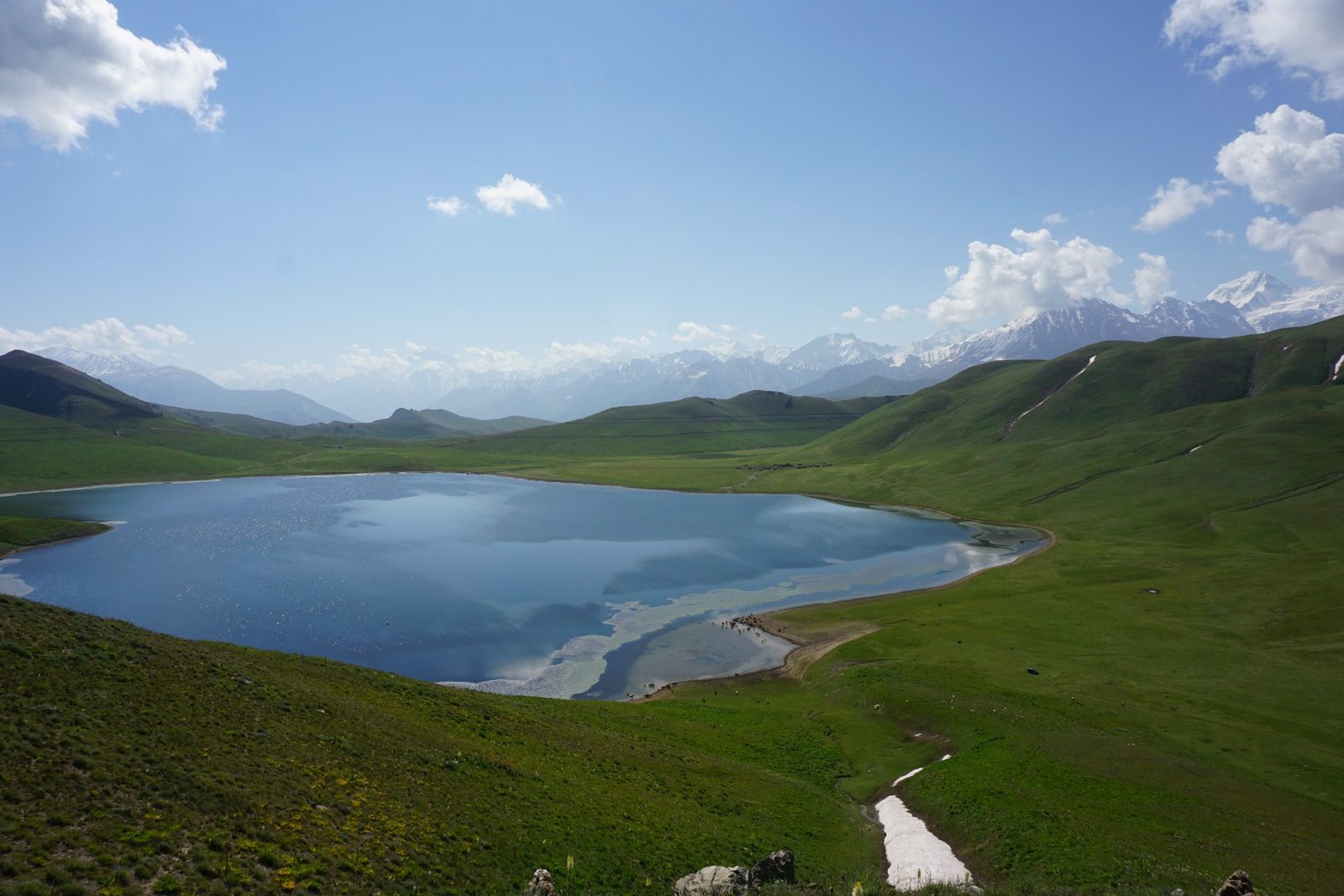
Photo: Mountain lakes of Tajikistan by Шухрат Саъдиев, via Wikimedia Commons, CC BY-SA 4.0.