
In short
The two Osaka passes are not competing products. The Osaka Amazing Pass (¥3,500 for one day) includes unlimited transport and 41 free facilities; the Osaka e-Pass (¥2,400) includes no transport at all, only entries. If you are moving across the city, the Amazing Pass; if you are walking a tight cluster, the e-Pass. Both are digital only.
Pass terms and prices verified against the operators, August 2026.
Four days is the length at which an Osaka trip stops being a city break and starts being a base. Two days covers the city; four lets you take Nara and Himeji or Kobe as day trips without cutting anything short, and it changes which tickets are worth buying.
It also gives you time to get the passes wrong, which is easy, because the Osaka Amazing Pass costs 40% more than most English guides say and no longer exists as a physical card.
What is in this guide
Everything below was checked against the operator’s, the city’s or the prefecture’s own page on 20 August 2026.
The things guides still get wrong
- Osaka Castle Main Tower is ¥1,200, not ¥600. The price changed on 1 April 2025 when the Toyotomi Stone Wall Museum was folded into the ticket. Some sources still print ¥600 — including, on the day we checked, pages that looked official.
- The Osaka Amazing Pass is ¥3,500 for one day and ¥5,000 for two, not ¥2,500 and ¥3,300. It is e-ticket only; physical cards are gone.
- The lodging tax changed on 1 September 2025 and now starts at ¥5,000 per person per night.
- The Osaka Metro base fare is ¥190.
- Kaiyukan prices by date — there is no single flat admission to quote.
- The Expo 2025 site at Yumeshima is not a visitor attraction. Do not plan a day there.
Which pass, if any
This is the decision that shapes the whole four days, and there are two different products that English guides routinely conflate.
| Osaka Amazing Pass | Osaka e-Pass (大阪楽遊パス) | |
|---|---|---|
| 1-day | ¥3,500 | ¥2,400 |
| 2-day | ¥5,000 | ¥3,000 |
| Transport included | Yes — unlimited participating trains and buses | No. Facilities only |
| Free facilities | 41 | 25+, listed as 34 |
| Format | E-ticket only, smartphone | QR code |
Osaka Amazing Pass details: sold 25 March 2026 to 31 March 2027; the 1-day version is valid for one day, the 2-day for two consecutive days; the ticket is valid three months from purchase and must be activated by 31 March 2027. Maximum four passes per transaction. There is an Itami Airport version at ¥3,800 and ¥5,400. Each facility once per day, with no daily cap on how many you use.
Two constraints that change plans and are almost never mentioned in English:
- The Umeda Sky Building observatory is included on the Amazing Pass, but pass entry stops at 15:00. If you were planning to use the pass for the sunset view, you cannot.
- The e-Pass imposes a mandatory 30-minute gap between facility entries. That materially limits how many sights you can clear in a day, and it is not in any English guide we have seen.
Kaiyukan is not included on the Amazing Pass. Neither is it on the e-Pass list.
A warning about stale official pages. The Osaka tourism bureau’s own English microsite was still showing the old ¥2,500 and ¥3,300 prices on 20 August 2026. Where the bureau’s microsite and the issuer disagree, the issuer is authoritative — and it is also newer.
If you are not buying a pass, the Enjoy Eco Card one-day Metro and city bus pass is ¥820 on weekdays and ¥620 at weekends and public holidays, child ¥310. At the weekend that beats four ¥190 rides; on a weekday you need about four ¥240 rides to break even. Note Yumeshima station is excluded from it.
Metro fares by distance: ¥190 up to 3 km, ¥240 to 7 km, ¥290 to 13 km, ¥340 to 19 km, ¥390 beyond.
Day one: the castle and the centre
Morning: Osaka Castle
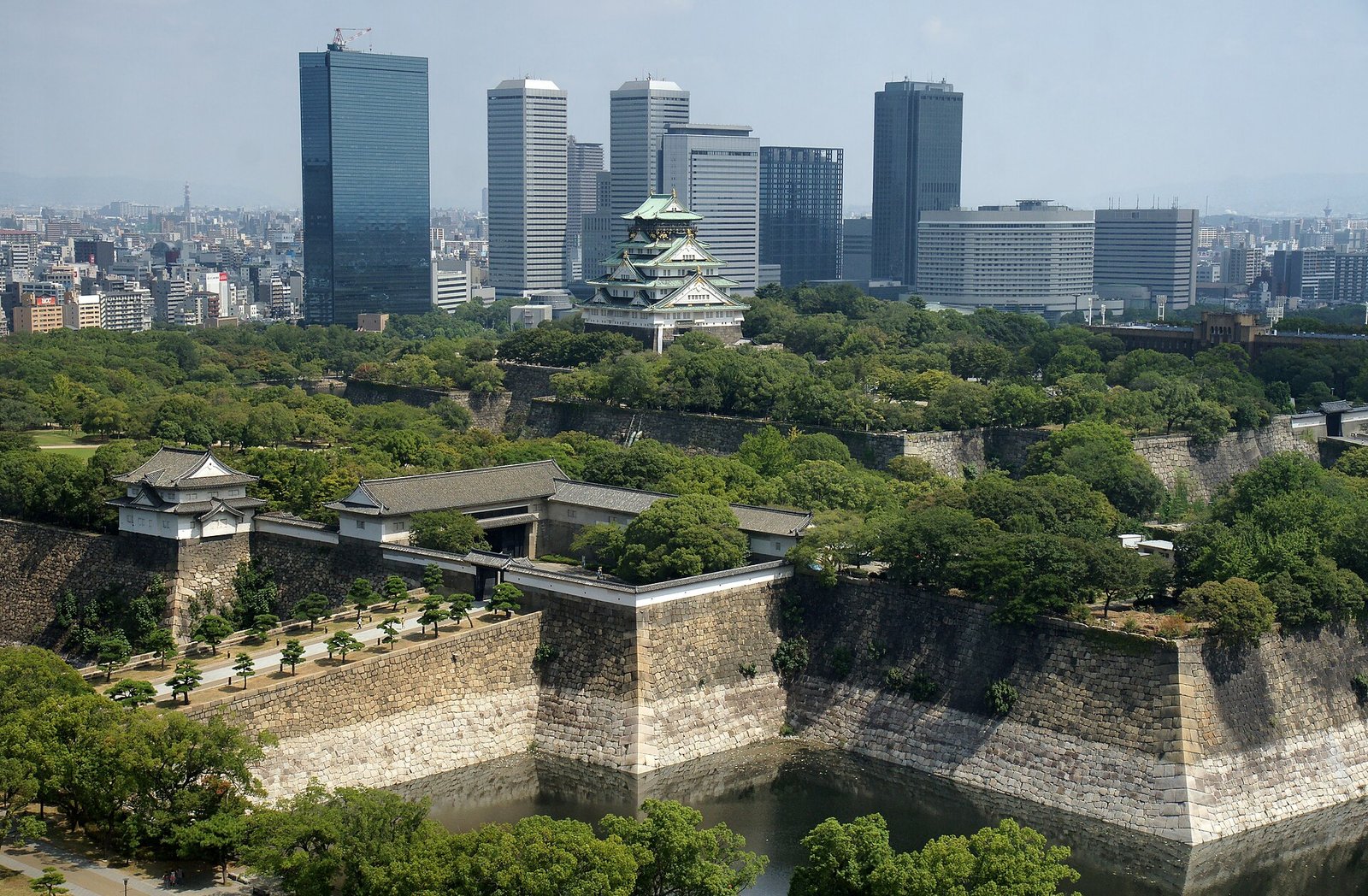
Osaka Castle Main Tower: ¥1,200 adult, open 09:00 to 18:00, last entry 17:30. The ticket now includes the Toyotomi Stone Wall Museum, which is why the price doubled in April 2025 — you are getting a second site, not simply an increase.
Go early. The park is large and the tower queues build through the morning.
On the Amazing Pass, the tower is included and valued at ¥1,200, which is a third of the one-day pass price in a single stop.
Midday: Osaka Museum of History
Across the road from the castle, and worth the ¥600 for the excavated Naniwa palace foundations underneath it — Osaka was the imperial capital in the 7th century, which is not what the city is known for and is visible here.
Afternoon: Shitennōji
Read the pricing carefully, because English guides quote one number and there are three.
| Area | Adult |
|---|---|
| Central Precinct (中心伽藍) | ¥500 |
| Garden (極楽浄土の庭) | ¥300 |
| Treasure House (宝物館) | ¥500 |
A visitor doing all three pays ¥1,300. Guides that say “Shitennoji admission ¥300” are quoting the garden only. Elementary and junior high pupils are free for the Central Precinct and Treasure House.
Hours: April to September 08:30 to 16:30; October to March 08:30 to 16:00. On the 21st of each month the hours extend to 08:00–17:00. The grounds themselves can be visited at any hour, free — you can walk in and worship from outside the halls without a ticket.
Evening: Shinsekai and kushikatsu
Down at the foot of Tsūtenkaku. This is where kushikatsu comes from — the agriculture ministry places its origin here in the late Taisho to early Shōwa period, cheap filling food for labourers.
Daruma, which claims to be the originator, was founded in 1929 by Momono Yoshie. Shinsekai main store opens 11:00 to 22:30 on weekdays and 10:30 to 22:30 at weekends, last orders 30 minutes before close.
On the famous no-double-dipping rule: it is officially documented, and the reason is hygiene — the sauce bowl is shared. But it is no longer universal: the largest chain moved away from shared sauce vats in June 2020. Follow it where there is a communal bowl in front of you.
Day two: Minami, and eating properly
Morning: Kuromon Ichiba
About 580 m of covered arcade, roughly 150 shops, named after the black gate of the nearby Enmyōji temple. There are no unified opening hours — each shop sets its own, spread roughly 08:00 to 21:00, with most closing between 17:00 and 21:00. Go late morning to mid-afternoon if you want everything open.
And ignore the etiquette advice you have read. English guides commonly tell readers not to eat while walking here. The market’s own site promotes the opposite, calling Kuromon a perfect place for tabe aruki, eating as you stroll, and describing it as an Osaka culture. There is no rule against it anywhere on the official site. Individual shops may ask you to eat at their counter — do what they ask — but that is a shop courtesy, not a market rule.
Afternoon: Dotonbori
Dotonbori is a district, not a street of stalls. The riverside walkway is properly the Tombori Riverwalk. The name comes from Yasui Dōton, who spent his fortune having the river dug in 1612.
One genuinely useful thing to know: touting in Dotonbori is illegal, not merely annoying. The area sits inside a designated prohibition zone under a City of Osaka ordinance, with administrative fines of up to ¥50,000, in force since 1 April 2021. If someone tries to steer you into a bar, that solicitation is itself an offence. Walk on.
Okonomiyaki here: Mizuno, founded 1945, at 1-4-15 Dotonbori, open 11:00 to 22:00, last orders 21:00 — and it dropped its Thursday closing day in February 2026, so it is now effectively open daily. Its menu is published as images, so we are not quoting prices. Chibo publishes text prices chain-wide, from ¥1,480 for Dotonbori-yaki and ¥1,980 for Chibo-yaki, though prices differ by branch.
The Osaka–Hiroshima okonomiyaki difference, from the agriculture ministry: Osaka mixes the ingredients into the batter; Hiroshima layers them and steam-cooks the stack with yakisoba noodles inside. Mixing versus layering — not simply “the noodles.”
Evening: Umeda Sky Building
Floating Garden Observatory: ¥2,000 adult, ¥500 for ages 4 to elementary school, under-4s free. Open 09:30 to 22:30, last admission 22:00, with no regular closing day. A maintenance closure is announced for 8 November 2026.
If you hold the Amazing Pass, you must be in by 15:00 — so either use the pass in the afternoon and come back, or pay the ¥2,000 for the night view. The night view is the point.
Day three: a day trip
Four days is what makes this possible. Pick one.
Nara
Kintetsu from Ōsaka-Namba to Kintetsu-Nara: ¥680 one way, plus a ¥520 limited-express surcharge only if you take a 特急 — the rapid express services need no surcharge, so most visitors should not pay it.
Take Kintetsu, not JR. Kintetsu-Nara station is a few minutes’ walk from Nara Park; JR Nara is considerably further out. This is worth more than the fare difference.
Himeji
About 57 minutes from Osaka, per Himeji’s own tourism body, or about 28 minutes from Shin-Osaka by shinkansen. We could not verify the rail fare from a primary source, so we are not printing one.
Himeji Castle general admission is ¥2,500 — up from ¥1,000 on 1 March 2026. The remaining ¥1,000 rate is for residents of Himeji, of any nationality, not for Japanese citizens; a visitor from Osaka pays the same ¥2,500 as anyone else. Under-18s are free. Castle plus Koko-en garden is ¥2,600.
Hours are 09:00 to 17:00 with gates closing at 16:00. Older English sources give summer hours to 18:00; the city’s current pages show no seasonal extension.
Kobe
Osaka to Kobe-Sannomiya is ¥420 on JR, or ¥330 on Hankyu or Hanshin from Umeda — both cheaper and Hankyu is faster. Kobe levies no lodging tax, which is worth knowing if you are still choosing a base.
Kobe gives you a Chinatown, a mountain night view from Mount Maya, three free sake museums in Nada and a serious earthquake memorial. See our Kobe travel guide.
Day four: aquarium, bay, or theme park
Kaiyukan
Osaka Aquarium Kaiyukan uses variable pricing, and this is the honest position: the actual price is published only inside a JavaScript date calendar on its own site and cannot be read as text. The city tourism bureau gives a reference rate of ¥2,700 adult and ¥1,400 child, noting prices may vary by season.
So: check the date calendar before you budget, and do not trust a flat figure. Hours are roughly 10:00 to 20:00, last admission an hour before closing, with about two closed days in January. Group rates published in text include high school ¥2,160, junior high ¥1,120, elementary ¥800. Kaiyukan is not on the Amazing Pass.
Universal Studios Japan
We are not going to print a USJ price, because USJ’s own site blocks automated access and we could not verify one.
What we can describe is the structure, which is what actually matters for budgeting. USJ prices the 1-Day Studio Pass dynamically on two axes: by date, according to expected demand, and by how close you are to the visit — the price rises as the date approaches and as the pass sells. So the same Tuesday costs less in March than in August, and less today than next week.
A new lower floor of around ¥8,400 for the adult 1-Day Studio Pass was introduced effective 1 September 2026, described as ¥500 below the previous year’s lowest price. There is no ceiling figure worth quoting. Ticket types are 1-Day, 1.5-Day, 2-Day and Twilight (entry from 15:00). Pick your date on the official site and buy early.
Note this is from trade coverage of USJ’s announcement rather than USJ’s own page, so treat the ¥8,400 as indicative.
Sumiyoshi Taisha
The quiet alternative, and free. Open 06:00 to 17:00, and 06:30 to 17:00 from October to March, with exceptions at New Year and the summer festival. No admission fee is stated anywhere on the shrine’s own site — the grounds are free to enter.
Not Yumeshima
The Expo 2025 site is not a visitor attraction in 2026. The City of Osaka has designated three elements to be retained and folded into redevelopment — the Grand Ring, the Forest of Quietude and the Osaka Healthcare Pavilion — but the developer tender was still being organised and no public opening date has been published. There is a Metro station; there is nothing to visit. Do not describe the Grand Ring as walkable — nothing official supports that.
What four days costs
| Item | Cost |
|---|---|
| Osaka Castle Main Tower | ¥1,200 |
| Osaka Museum of History | ¥600 |
| Shitennōji, all three areas | ¥1,300 |
| Umeda Sky Building | ¥2,000 |
| Kaiyukan | ~¥2,700, varies by date |
| Nara day trip, Kintetsu return | ¥1,360 |
| Enjoy Eco Card, per day | ¥620 weekend / ¥820 weekday |
| Sumiyoshi Taisha | Free |
Admissions plus local transport across four days: roughly ¥12,000 to ¥15,000 per adult, before food, accommodation and USJ.
Would the Amazing Pass save money? On a day taking in the castle (¥1,200), Umeda Sky before 15:00 (¥2,000) and the Museum of History (¥600), you clear ¥3,800 of value against ¥3,500 plus all your transport. On a heavy sightseeing day, yes. On a day trip to Nara or Himeji, no — it does not cover those.
The lodging tax
It changed on 1 September 2025 and it is a prefectural tax, not a city one — English sources calling it “the Osaka City hotel tax” have the right money under the wrong authority.
| Per person, per night | Tax |
|---|---|
| Under ¥5,000 | None |
| ¥5,000 to ¥6,999 | ¥200 |
| ¥7,000 to ¥14,999 | ¥200 |
| ¥15,000 to ¥19,999 | ¥400 |
| ¥20,000 and over | ¥500 |
The exemption threshold dropped from ¥7,000 to ¥5,000 and every band rose, which means ordinary business hotels that used to be exempt now charge it. Our Japan lodging tax calculator works this out across a whole trip.
When to go
Japan Meteorological Agency normals for Osaka, 1991 to 2020. Annual mean 17.1°C, precipitation 1,338.3 mm.
| Month | Mean | Daily max | Rain | Days 30°C+ |
|---|---|---|---|---|
| January | 6.2°C | 9.7°C | 47.0 mm | 0 |
| April | 15.2°C | 19.9°C | 101.9 mm | 0 |
| May | 20.1°C | 24.9°C | 136.5 mm | 1.1 |
| June | 23.6°C | 28.0°C | 185.1 mm | 7.9 |
| July | 27.7°C | 31.8°C | 174.4 mm | 22.6 |
| August | 29.0°C | 33.7°C | 113.0 mm | 28.3 |
| September | 25.2°C | 29.5°C | 152.8 mm | 14.4 |
| October | 19.5°C | 23.7°C | 136.0 mm | 0.6 |
| November | 13.8°C | 17.8°C | 72.5 mm | 0 |
August averages 28.3 days at or above 30°C out of 31, with a mean daily maximum of 33.7°C and 9.9 days at or above 35°C. A four-day walking itinerary in August is a heat-planning problem. June is the wettest month.
April, May, October and November are the months to aim for.
Frequently asked questions
Is four days too long for Osaka?
Not if you use it as a base. Two days covers the city; the other two are for Nara, Himeji or Kobe, all of which are under an hour away.
How much is the Osaka Amazing Pass?
¥3,500 for one day and ¥5,000 for two, from the issuer. It is e-ticket only — physical cards no longer exist. Guides quoting ¥2,500 and ¥3,300 are years out of date, including at least one official-looking tourism microsite.
How much is Osaka Castle?
¥1,200 for the Main Tower, since 1 April 2025, when the Toyotomi Stone Wall Museum was added to the ticket. Open 09:00 to 18:00, last entry 17:30. Anything quoting ¥600 is out of date.
Is the Osaka Amazing Pass worth it?
On a dense sightseeing day, yes — the castle alone is ¥1,200 of a ¥3,500 pass, and transport is unlimited. On a day trip out of the city, no. Remember the Umeda Sky Building cut-off at 15:00.
Can you visit the Expo 2025 site?
No. As of August 2026 Yumeshima is a redevelopment parcel with no published visitor access. Parts of the Grand Ring are earmarked for preservation, but nothing official says you can walk it.
Should I do Nara from Osaka or from Kyoto?
Either works. From Osaka, take Kintetsu from Namba, ¥680, and get off at Kintetsu-Nara — it is much closer to the park than JR Nara. See our best day trips from Osaka and Kyoto.
Photo: “Osaka Castle 02bs3200” by 663highland, via Wikimedia Commons, licensed CC BY 2.5.