
In short
For most itineraries in 2026 the Japan Rail Pass no longer pays — the 2023 price rise and the March 2026 fare changes moved the break-even a long way. This page is a calculator, not an opinion: enter your actual route and it compares the pass against point-to-point fares. Two limits are stated up front — it is not valid on Nozomi or Mizuho, and reserved-seat charges move with the season.
Fares current to August 2026; the calculator states its own limits.
Every “is the Japan Rail Pass worth it” article ends the same way: *it depends on your itinerary*. True, and useless. So here is the calculator instead.
Put your actual journeys in, and it compares the total you would pay for individual tickets against what the pass costs — at the new price from 1 October 2026, and using the train the pass would actually put you on, which is the part most comparisons quietly get wrong.
What is in this guide
Every fare in it was read off the operators’ own current tables on 20 August 2026. Nothing is estimated or interpolated, and the full table is published at the bottom so you can check our working. One thing worth knowing, because it trips up a lot of writing about Japanese rail: the fare revision of 14 March 2026 was JR East’s and applies to its network, while JR West’s Kansai restructure took effect on 1 April 2025. They are different companies and different dates, and an article that updates one while quoting the other has updated nothing.
Editor’s note
One honest limitation. This covers the shinkansen and limited-express journeys most visitors make, plus the three airport links. It does not cover every station pair in Japan, and it does not price local trains, subways or private railways — which the pass mostly does not cover anyway. If your route is not in the list, the answer it gives you will be incomplete rather than wrong. Reserved-seat charges also move with the season; the note under the result explains by how much.
Is the Japan Rail Pass worth it?
Build your route, and we compare it against the pass at the price you would actually pay. Fares checked 20 August 2026, regular season, ordinary class.
Add your journeys above.
How to read the answer
The pass is not a discount card, it is a break-even bet. A 7-day Ordinary pass at ¥53,000 needs roughly a Tokyo–Kyoto return plus one more long leg before it pays. One round trip to Kyoto on its own does not do it: ¥13,320 each way non-reserved is ¥26,640, half the pass.
Three things swing the arithmetic:
Seat type. Non-reserved is cheaper and the difference is not trivial — ¥530 per leg on most sections. If you would happily queue for a non-reserved car, individual tickets look better than most guides suggest.
Season. Reserved-seat charges rise ¥200 in the busy season and ¥400 at peak — Golden Week, Obon and New Year — and fall ¥200 in the quiet season. The pass price does not move at all. A peak-season trip therefore tilts towards the pass, and a quiet-season trip away from it.
Whether you would have taken the Nozomi. This is the big one.
The Nozomi trap
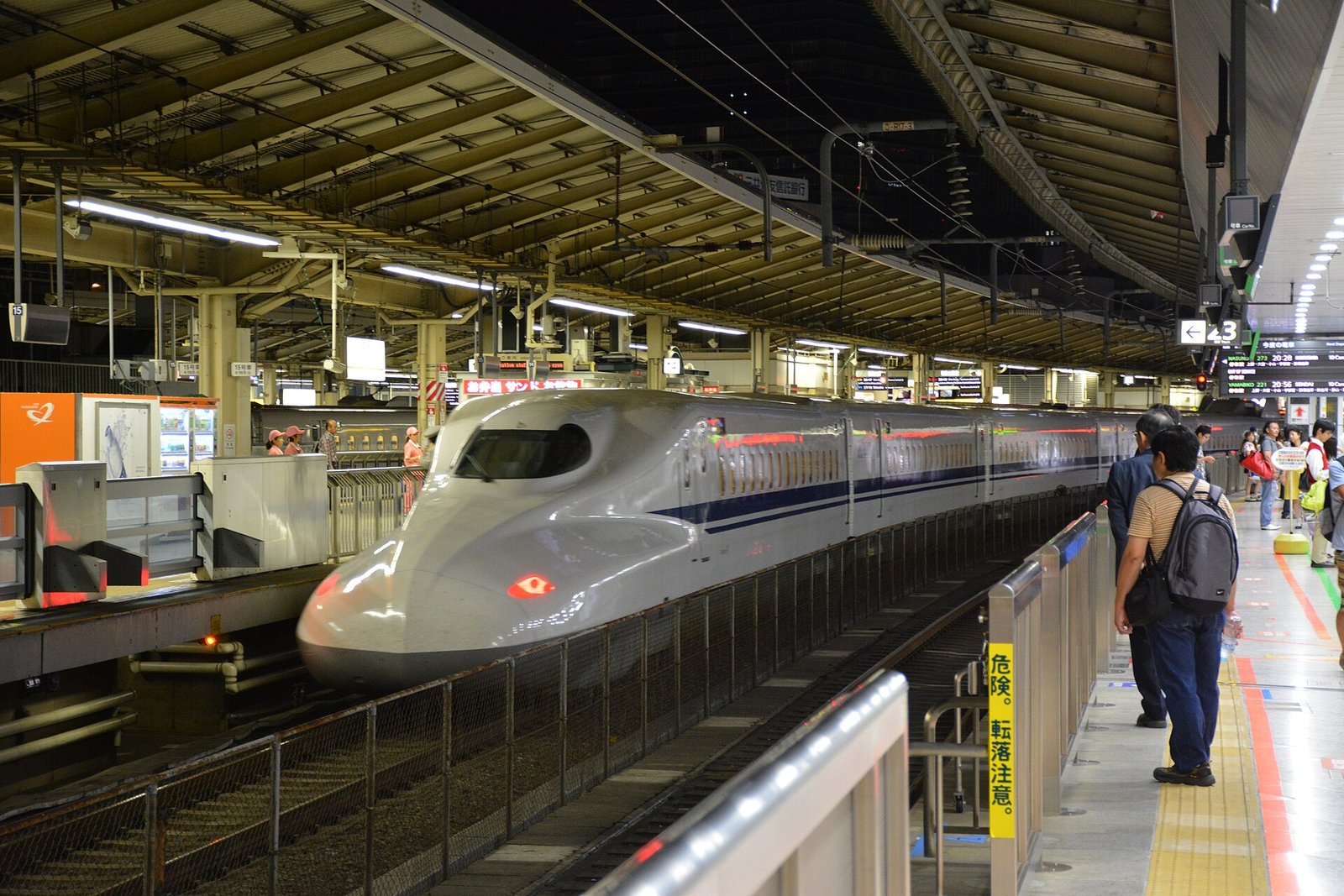
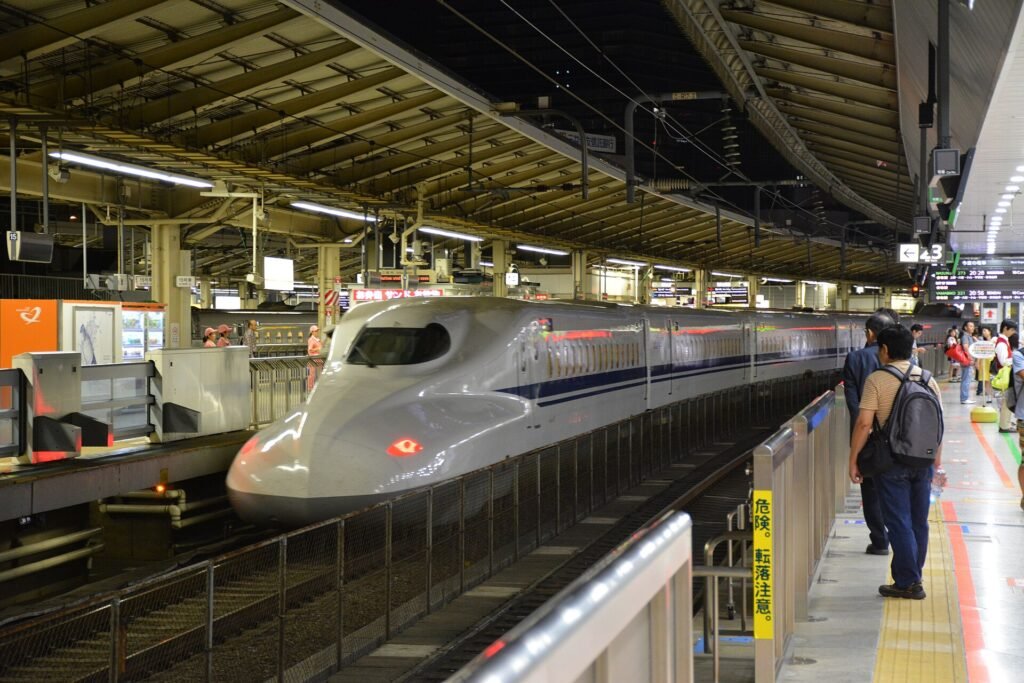
The Japan Rail Pass is not valid on Nozomi or Mizuho trains — not in reserved seats, not in non-reserved. Those are the fastest services on the Tokaido, Sanyo and Kyushu Shinkansen, and on the routes visitors use most they are also the most frequent.
With a pass you have two options, and both cost something:
- Take a Hikari or Sakura instead. Tokyo to Kyoto goes from 2 h 08 to 2 h 34. Tokyo to Shin-Osaka from 2 h 22 to 2 h 51. Not disastrous, but it is roughly half an hour each way and fewer departures to choose from.
- Buy a supplementary ticket. These are published by section and — usefully — cost the same whether you want a Green car, a reserved seat or a non-reserved seat:
| Section | Nozomi/Mizuho supplement |
|---|---|
| Tokyo – Nagoya | ¥4,180 |
| Tokyo – Kyoto | ¥4,960 |
| Tokyo – Shin-Osaka | ¥4,960 |
| Tokyo – Hiroshima | ¥6,500 |
| Shin-Osaka – Hakata | ¥4,960 |
| Hakata – Kagoshima-Chūō | ¥5,150 |
Notice what that means: a pass holder who buys a Nozomi supplement Tokyo–Kyoto pays ¥4,960 on top of the pass, when the whole non-reserved journey costs ¥13,320 outright. Two supplemented Nozomi legs erode a large share of the pass's advantage.
Our calculator already assumes you take the pass-valid train. That is the like-for-like comparison. If you would have paid for Nozomi anyway, the individual-ticket column should be a little higher and the pass looks correspondingly better.
The pass prices, before and after 1 October 2026
| Pass | Until 30 Sep 2026 | From 1 Oct 2026 |
|---|---|---|
| 7-day Ordinary | ¥50,000 · child ¥25,000 | ¥53,000 · child ¥27,000 |
| 14-day Ordinary | ¥80,000 · child ¥40,000 | ¥84,000 · child ¥42,000 |
| 21-day Ordinary | ¥100,000 · child ¥50,000 | ¥105,000 · child ¥53,000 |
| 7-day Green | ¥70,000 · child ¥35,000 | ¥74,000 · child ¥37,000 |
| 14-day Green | ¥110,000 · child ¥55,000 | ¥116,000 · child ¥58,000 |
| 21-day Green | ¥140,000 · child ¥70,000 | ¥147,000 · child ¥74,000 |
Child prices apply to ages 6–11. Under-6s travel free without their own seat. The change takes effect at local time in the place of purchase.
One caveat we cannot resolve. There are reports that the rise applies first to overseas physical sales agents, with the official online reservation service holding pre-October pricing for a period that has not been announced. We could not confirm the length of that window from an official page, so do not build a plan around it.
The regional passes almost nobody prices against
This is where the nationwide pass most often loses, and it is the check we would do before buying one.
| Pass | Validity | Adult | Child |
|---|---|---|---|
| JR Tokyo Wide Pass | 3 consecutive days | ¥16,000 | ¥8,000 |
| JR East–South Hokkaido Pass | 6 consecutive days | ¥40,000 | ¥20,000 |
| JR West Kansai Area Pass | 1 day | ¥2,800 | ¥1,400 |
| 2 days | ¥4,800 | ¥2,400 | |
| 3 days | ¥5,800 | ¥2,900 | |
| 4 days | ¥7,000 | ¥3,500 | |
| JR West Kansai WIDE Area Pass | 5 days | ¥12,000 | ¥6,000 |
| JR West Sanyo–San'in Area Pass | 7 consecutive days | ¥23,000 | ¥11,500 |
| JR West Okayama–Hiroshima–Yamaguchi | 5 days | ¥17,000 | ¥8,500 |
| JR Central Takayama–Hokuriku Area | 5 consecutive days | ¥19,800 | ¥9,900 |
Two flags on this table. The Tokyo Wide Pass went from ¥15,000 to ¥16,000, apparently with the 14 March 2026 fare revision — the new figure is from JR East's own page, the reason is our inference. And the JR West pages carry a notice that their prices are current as of 1 August 2024 and subject to change; we found no announcement of a 2026 revision, but check before you buy.
The pattern worth internalising: a trip that stays in one region almost never justifies the nationwide pass. Kansai for five days is ¥12,000 against ¥53,000. Hiroshima and the Inland Sea for five days is ¥17,000.
Airport access, and what the pass covers
| Route | Fare | Covered by the pass? |
|---|---|---|
| Narita Express, Tokyo ⇄ Narita | ¥3,140 (reserved seat included) | Yes |
| JR Sōbu Rapid, Tokyo ⇄ Narita | ¥1,410 | Yes |
| Keisei Skyliner, Narita ⇄ Nippori/Ueno | ¥2,580 | No — private railway |
| Keisei Access Express | ¥1,240 | No |
| Tokyo Monorail, Hamamatsuchō ⇄ Haneda | ¥520 | Yes |
| Keikyu, Shinagawa ⇄ Haneda | ¥330 | No |
A useful quirk: the Narita Express is expensive enough (¥3,140 each way) that using the pass for both airport runs claws back ¥6,280 on its own.
The full fare table
Published so you can check us. One way, ordinary class, regular season, checked 20 August 2026.
| Route | Non-reserved | Reserved (pass-valid train) | Reserved (Nozomi/Mizuho) |
|---|---|---|---|
| Tokyo – Kyoto | ¥13,320 | ¥13,850 | ¥14,170 |
| Tokyo – Shin-Osaka | ¥13,870 | ¥14,400 | ¥14,720 |
| Tokyo – Nagoya | ¥10,560 | ¥11,090 | ¥11,300 |
| Tokyo – Hiroshima | ¥18,380 | ¥18,910 | ¥19,760 |
| Tokyo – Hakata | ¥22,220 | — | ¥23,810 |
| Tokyo – Kanazawa | ¥14,070 | ¥14,600 | n/a |
| Tokyo – Sendai | ¥10,780 | ¥11,630 | n/a |
| Tokyo – Nagano | ¥7,920 | ¥8,450 | n/a |
| Tokyo – Shin-Hakodate-Hokuto | — | ¥24,200 | n/a |
| Tokyo – Karuizawa | ¥5,600 | ¥6,130 | n/a |
| Kyoto – Shin-Osaka | ¥1,450 | ¥2,870 | ¥3,080 |
| Kyoto – Hiroshima | ¥10,770 | — | ¥11,940 |
| Kyoto – Kanazawa | — | ¥7,720 | n/a |
| Shin-Osaka – Hiroshima | ¥9,890 | — | ¥10,950 |
| Shin-Osaka – Hakata | ¥14,750 | ¥15,280 | ¥16,020 |
| Shin-Osaka – Kanazawa | — | ¥9,410 | n/a |
| Hiroshima – Hakata | ¥8,570 | ¥9,100 | ¥9,630 |
| Nagoya – Kyoto | ¥5,170 | — | ¥5,910 |
| Nagoya – Takayama | ¥5,610 | ¥6,140 | n/a |
| Osaka – Nara | ¥840 | n/a | n/a |
Where a cell is blank, no separate pass-valid reserved fare was retrieved for that section. Where it says n/a, no Nozomi or Mizuho runs there.
Two routes lost their non-reserved option in 2024 and it catches people out: since the Hokuriku Shinkansen reached Tsuruga on 16 March 2024, Kyoto–Kanazawa and Shin-Osaka–Kanazawa require a change at Tsuruga, and the Thunderbird became all-reserved. There is no cheaper standing option on those runs any more.
Common questions
Does the calculator include local trains and subways? No, and neither does the pass in most cities. Tokyo Metro, Toei, Osaka Metro and the private railways are all separate. The pass does cover JR lines within cities — the Yamanote line in Tokyo, the Osaka Loop — which is worth something but is not usually decisive.
What about the Green pass? Rarely worth it for a first trip. Ordinary shinkansen seats are already wide, quiet and reserved; the Green car buys you more legroom and fewer people, at roughly ¥21,000 more for seven days.
Can I use the pass on the Tokyo Monorail to Haneda? Yes. It is one of the few non-shinkansen wins.
Is it worth activating the pass on my arrival day? Only if you are travelling that day. The pass runs on consecutive calendar days from activation, so activating it for a Narita Express run that costs ¥3,140 spends a day worth roughly ¥7,600.
Should I buy before 1 October 2026? If your travel falls in the pass's validity window and you are certain of your dates, yes — it is a ¥3,000 difference on the 7-day. But exchange orders have their own validity rules, so check them before buying months ahead on price alone.
Why does your Tokyo–Kyoto figure differ from other sites? Probably because they have not updated since the 14 March 2026 JR fare revision, which raised fares across JR East, Central, West, Kyushu and Hokkaido and abolished the old round-trip discount for journeys over 600 km.
Where these numbers come from
Point-to-point fares: ekitan (駅探), which publishes the JR tariff breakdown of base fare plus limited-express charge, checked 20 August 2026 on regular-season dates. Pass prices: the Japan National Tourism Organization's official notice of the 1 October 2026 increase. Nozomi and Mizuho supplements and pass validity rules: the official Japan Rail Pass site. Regional pass prices: the JR East, JR West and JR Central official pages. Seasonal reserved-seat adjustments: JR Central's published fare rules.
If you find a fare here that is wrong, tell us and we will correct it with the source named — that is what our corrections page is for.