
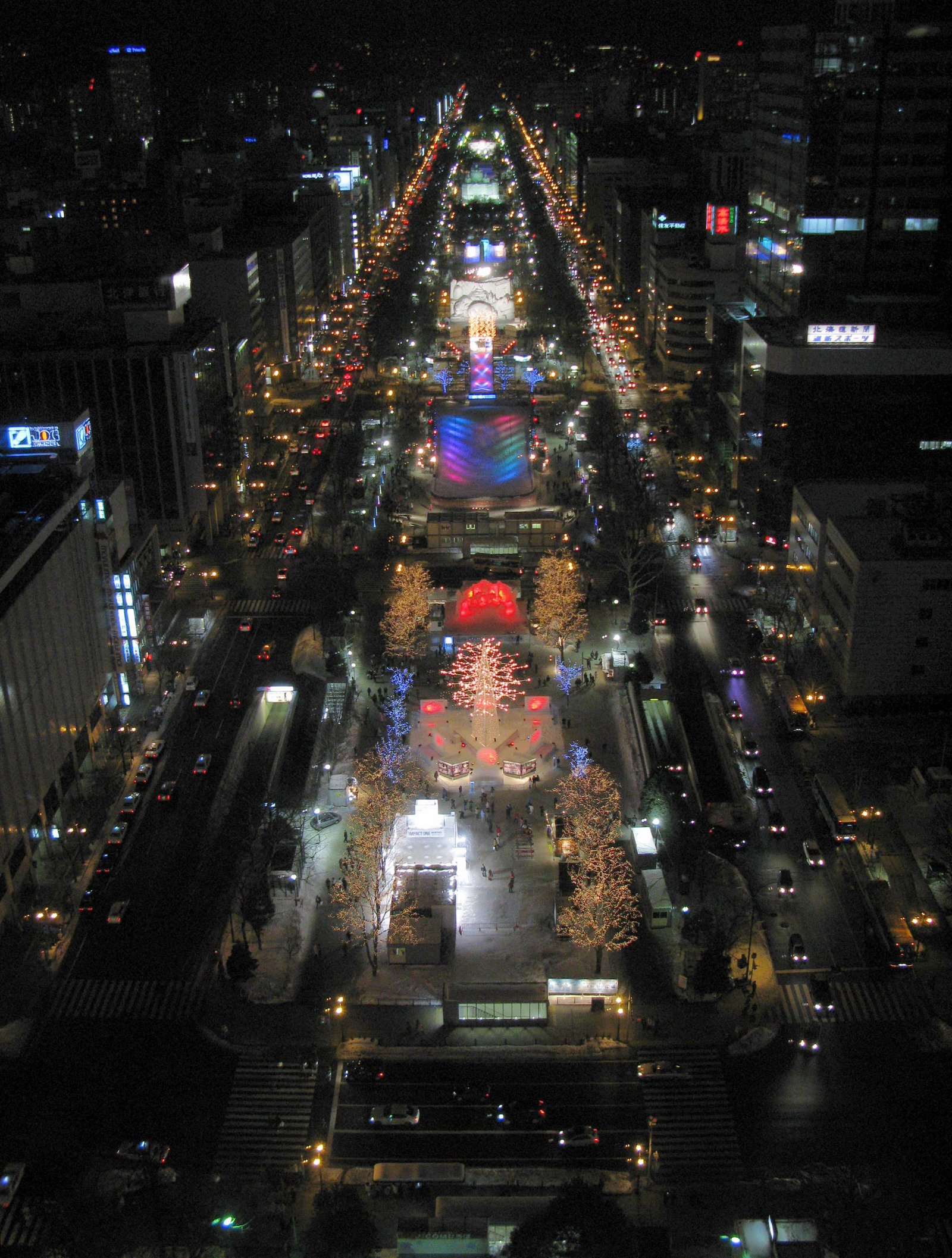
Quick answer: The 77th Sapporo Snow Festival runs 4-11 February 2027, free admission at all three venues (Odori, Susukino and Tsudome) — for 2027, all three now share the same eight-day window, which wasn’t always true in past years. What most festival guides don’t mention: since 1 April 2026 you pay two lodging taxes that stack, Sapporo hotels hit their highest rates of the year in February, and a March 2026 change to the subway fare system means you probably don’t need to buy a transit pass at all.
Contents
- Dates, venues and what’s new for 2027
- The lodging tax nobody’s pricing in
- What Sapporo hotels actually cost during the festival
- Getting in from New Chitose Airport
- Getting around: the subway fare cap you probably don’t know about
- What February in Sapporo actually feels like
- Other Hokkaido ice and snow festivals the same week
- FAQ
Dates, venues and what’s new for 2027
The organiser’s official announcement, published 13 July 2026, confirms the 77th Sapporo Snow Festival runs Thursday 4 February through Thursday 11 February 2027, eight days. All three venues are free to enter:
| Venue | What’s there | Illumination hours |
|---|---|---|
| Odori (West 1-11 blocks) | Five large snow sculptures, the International Snow Sculpture Contest (51st edition), small/medium sculptures, winter attractions | Until 22:00 |
| Susukino (Ekimae-dori South 4-6) | ~60 ice sculptures across four blocks, an ice-carving competition | Until 23:00 (22:00 on the final day) |
| Tsudome (Sapporo Sports Exchange Facility) | Family attractions: snow rafting, a kids’ snow park, horse feeding | 10:00-16:00 |
The correction worth making explicitly: in past editions, Tsudome sometimes opened earlier and ran on a different date range than Odori and Susukino. For 2027, the official announcement and FAQ give all three venues the identical 4-11 February window. A number of English pages still describe Tsudome as running separate dates — that’s now out of date.
New for 2027: a companion event, the Sapporo Snow Sports Park, runs 12-14 February — the three days immediately after the main festival closes. If you can only arrive after the 11th, this is worth knowing about, and hotel rates in that window should be meaningfully lower than during festival week itself.
The lodging tax nobody’s pricing in
Since 1 April 2026, Sapporo accommodation carries two separate lodging taxes that stack: a Hokkaido prefectural tax and a Sapporo city tax. Both are banded by room rate per person per night, excluding meals and consumption tax:
| Room rate per person/night | Hokkaido | Sapporo City | Total |
|---|---|---|---|
| Under ¥20,000 | ¥100 | ¥200 | ¥300 |
| ¥20,000-49,999 | ¥200 | ¥200 | ¥400 |
| ¥50,000 and above | ¥500 | ¥500 | ¥1,000 |
Both taxes are normally collected separately at check-in, on top of the room rate you booked. School-trip groups and certified kindergarten/nursery outings are exempt. It’s a small line item against the total cost of the trip, but it’s genuinely new (April 2026) and effectively no festival guide written before that date mentions it at all.
What Sapporo hotels actually cost during the festival
This is published, not guesswork. During the February 2026 festival (the 76th edition), Sapporo hotels ran 93-96% occupancy with an average daily rate of ¥18,600-28,100 across property segments, according to industry analysis from HotelBank, sourcing MetroEngine Research’s aggregation of roughly 27,000 verified Japanese hotel listings. In the business-hotel segment specifically, February 2026’s average rate of ¥20,300 was the single highest month in a 25-month tracked series — more than 50% above the June 2026 low of ¥13,300.
Sapporo hotels open their festival-week booking windows early — some publish festival accommodation plans a full year ahead. There’s no single confirmed “book by” date, but at 93-96% occupancy the city is effectively sold out during festival week, and rates don’t fall back down immediately once the festival ends either — elevated pricing has been reported carrying into the weeks after past editions. Book for early February 2027 well before autumn ends, not after.
Getting in from New Chitose Airport
The JR Airport Line to Sapporo Station costs ¥1,230 one-way (¥610 child) and takes 33-37 minutes. If you want a reserved U-Seat, that’s an additional ¥1,000 (paper ticket) or ¥800 (ticketless via Ekinet) — raised from ¥840 as of 14 March 2026, with the ticketless discount now available year-round.
A trap worth flagging: JR Hokkaido’s own airport page displays the old ¥1,150 fare in one place and the current ¥1,230 elsewhere on the same page — which is presumably how the outdated figure keeps circulating. Almost every English guide checked still quotes ¥1,150 and ¥840. Both are wrong for the 2026-27 season.
Rail from Tokyo isn’t a realistic alternative to flying: the Hokkaido Shinkansen still terminates at Shin-Hakodate-Hokuto, and the extension to Sapporo has slipped to fiscal year 2038 or later — roughly 12 years behind the original target, reportedly due to unexpected rock formations in tunnel construction. Fly to New Chitose.
Getting around: the subway fare cap you probably don’t know about
Since 26 March 2026, tapping a contactless bank card (Visa, Mastercard, UnionPay, JCB, American Express, Diners Club, Discover, plus phone and wearable payment) on the Sapporo municipal subway automatically caps your fares for the day: ¥830 on weekdays, ¥520 on weekends, public holidays and the New Year period — exactly matching the paper day-pass prices, without having to buy a pass in advance or fumble with cash-only ticket machines.
Worth timing against the festival calendar specifically: 2027’s festival runs Thursday 4 to Thursday 11 February. The weekend discount cap (and the paper Donichika pass) applies on Saturday 6, Sunday 7, and Thursday 11 February — the last being National Foundation Day, a public holiday. On 4, 5, 8, 9 and 10 February, the cap is the full ¥830 weekday rate.
What February in Sapporo actually feels like
Japan Meteorological Agency 1991-2020 normals for Sapporo in February: mean temperature -2.7°C, mean daily maximum +0.4°C, mean daily minimum -6.2°C, and average total snowfall for the month of 116cm. Daytime highs hover right around freezing while nights drop to around -6°C, which is why the streets refreeze every night even as the Odori sculptures survive the day intact — and why locals wear studded-sole boots. January is the snowiest month at 137cm; by February the snowpack is already deep and settled.
Other Hokkaido ice and snow festivals the same week
2027 is a genuinely good year to combine events, because several other Hokkaido winter festivals overlap directly with Sapporo’s:
| Event | 2027 dates | Notes |
|---|---|---|
| Otaru Snow Light Path | 6-13 Feb | Overlaps 6-11 Feb; Otaru is about 40 minutes from Sapporo by JR |
| Asahikawa Winter Festival | 6-11 Feb | Overlaps; free; Guinness-recognised main sculpture |
| Sounkyo Onsen Ice Fall Festival (52nd) | 23 Jan-7 Mar | Cooperation fee ¥1,000; open throughout festival week |
| Chitose-Lake Shikotsu Ice Festival | 30 Jan-23 Feb | ¥1,000 weekdays, ¥3,000 weekends and holidays — a threefold jump most pages don’t mention. Closest of these to the airport |
Note the Shikotsu weekend price specifically: during festival week, 6 and 7 February fall on the ¥3,000 tariff, not the ¥1,000 one.
FAQ
Is the Sapporo Snow Festival free?
Yes, entry to all three venues (Odori, Susukino, Tsudome) is free. Individual paid attractions exist within the venues, such as an ice rink and specific Tsudome activities, but general admission costs nothing.
Do Odori and Tsudome run on the same dates in 2027?
Yes — for 2027 all three venues share the same 4-11 February window, which corrects the older pattern some past editions followed.
Do I need a subway pass?
Probably not. Since March 2026, tapping a contactless bank card caps your daily subway fares automatically at the same price as the paper day pass, without needing to buy anything in advance.
How much extra does the lodging tax add?
Up to ¥1,000 per person per night at the top tier (room rate ¥50,000+ per person), collected separately at check-in, combining a Hokkaido prefectural tax and a Sapporo city tax that have both applied since 1 April 2026.
Photo: Sapporo Snow Festival, Odori site, at night, by ja:User:京浜にけ, via Wikimedia Commons, licensed CC BY-SA 3.0.