
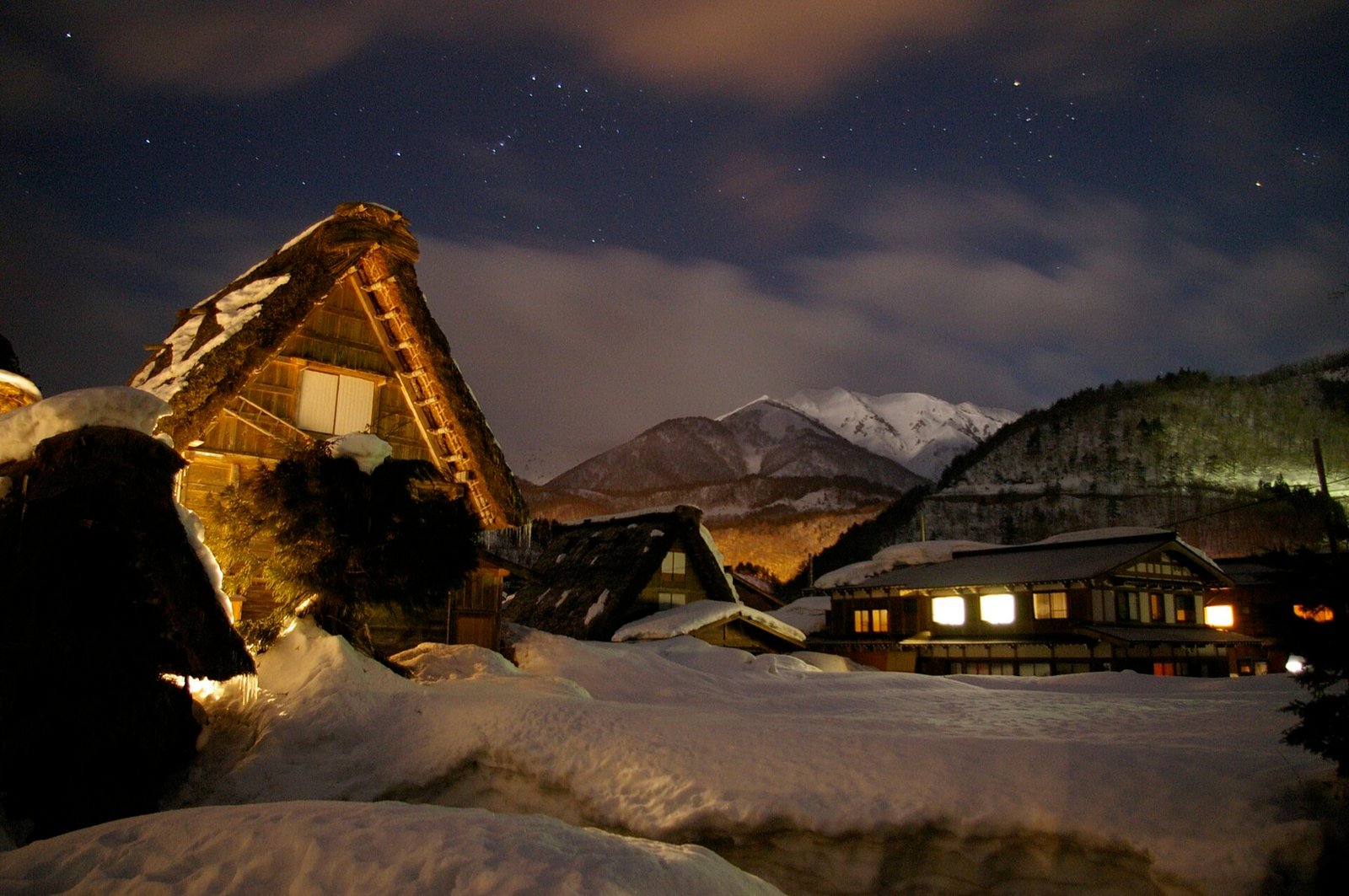
Quick answer: Shirakawa-go’s 2027 winter light-up runs on only four evenings — 11, 17, 24 and 31 January 2027, from 17:30 to 19:30 — and every visitor needs a reservation in advance; there is no walk-in entry. How you book depends entirely on how you arrive: a seat on a tour bus, an online parking slot if you’re driving yourself, or a lottery-based overnight stay in the village. Only the last two routes include a shot at the Shiroyama Viewpoint, the elevated shot of the valley that appears in almost every photo of the event. Drive yourself, and you don’t get it at all.
Contents
- The 2027 dates and hours
- The three ways to attend, and what each one actually gets you
- Route 1: Tour bus
- Route 2: Driving yourself and the parking reservation
- Route 3: Staying overnight in the village
- Shiroyama Viewpoint: who actually gets in
- Getting to Shirakawa-go in the first place
- What to expect on the night
- FAQ
The 2027 dates and hours
The Shirakawa-go Tourist Association announced the 2027 schedule on 1 July 2026: the illumination runs on four Sunday and Saturday evenings — 11, 17, 24 and 31 January 2027 — from 17:30 to 19:30. That’s it. Not a season, not a month of weekends: four specific nights, roughly two hours each. The association’s own site is blocked to automated readers, but the dates are also carried, and were checked against the July update, on japan-guide.com’s Shirakawa-go light-up page, last revised 5 July 2026.
Regular scheduled buses from Takayama and Kanazawa stop running before the lights go on, so a normal daytime visit will not overlap with the illumination by accident. If you want to see it, you are building your evening around one of these four dates on purpose.
The three ways to attend, and what each one actually gets you
This is the part almost no English-language page lays out clearly, and it’s the part that decides whether your evening includes the famous elevated view or not.
| Route | How you book | Shiroyama Viewpoint access |
|---|---|---|
| Tour bus | Book with an operator (Nohi, Kaetsuno, Hokutetsu, Toyama Chiho Tetsudo or Iruka Kotsu); reservations typically open in early October | Only on select itineraries that specifically include it |
| Private car | Online parking reservation, first-come-first-served, released in two batches (10 September and 1 December 2026, both 13:00 JST) | None — self-drive visitors cannot get a viewpoint ticket at all |
| Overnight in the village | Lottery; applications open in October, results announced 10 November 2026 | Included with the booking |
The asymmetry is deliberate: the village is tiny, the viewpoint path is narrow, and the association is managing a genuine crowd-safety problem, not just selling tickets. If the elevated shot is the reason you’re going, driving yourself is the one option that guarantees you won’t get it.
Route 1: Tour bus
Five operators run light-up tour buses: Nohi Bus, Kaetsuno Bus, Hokuriku Railroad (Hokutetsu), Toyama Chihō Tetsudō, and Iruka Kōtsū. Reservations for these typically open in early October for the following January’s dates, and they sell out — this is the most popular way to see the event precisely because it removes the parking-lottery uncertainty. Some (not all) itineraries include entry to the Shiroyama Viewpoint as part of the package; read the itinerary carefully before booking, because a bus ticket alone does not automatically include it.
Nohi Bus’s regular Takayama–Shirakawa-go route (the one you’d use for a daytime visit) runs at ¥2,800 one-way, about 50 minutes — but that is the daytime timetable, not a light-up-night charter, and daytime buses stop running before the event starts. For the illumination itself, you need one of the five operators’ specific event bus, booked separately.
Route 2: Driving yourself and the parking reservation
If you’re self-driving, you need an online parking reservation for one of the two release windows: 10 September 2026 at 13:00 JST, or 1 December 2026 at 13:00 JST. Both are first-come-first-served, and the fee runs ¥6,000–10,000 per vehicle depending on the date and vehicle size.
If you’re reading this after 23 September 2026, the first release window has already passed. The second window — 1 December 2026, 13:00 JST — is the one still ahead of you, along with the overnight-stay lottery below. Put a calendar reminder in now; slots for a four-night event go quickly.
The trade-off, stated plainly: driving gets you into the village on the night, parked, without needing a bus seat or a room booking — but it is the only one of the three routes that comes with zero path to the Shiroyama Viewpoint. You’ll see the illuminated houses from the streets and bridges at ground level, which is still the actual event, just not the postcard angle.
Route 3: Staying overnight in the village
Booking a night in one of Ogimachi’s gassho-zukuri farmhouse guesthouses is the only route that bundles parking and a Shiroyama Viewpoint slot into a single booking, decided by lottery rather than speed. Applications open in October 2026, with results announced on 10 November 2026. There are only a handful of guesthouses in the village, so demand for the four illumination nights specifically is intense — expect this to be the hardest of the three routes to actually win, and the most rewarding if you do.
Shiroyama Viewpoint: who actually gets in
Shiroyama Viewpoint (Ogimachi Castle Ruins Observatory) sits above the village and is where the classic wide shot of the lit-up gassho roofs against the snow is taken. On illumination nights it runs on timed entry slots, restricted to overnight guests and to tour-bus itineraries that specifically include it. There is no separate ticket window and no queue-up-and-hope option. If the viewpoint shot matters more to you than anything else about the evening, choose Route 1 (and confirm the itinerary includes it) or Route 3 — not Route 2.
Getting to Shirakawa-go in the first place
Most visitors reach Shirakawa-go through Takayama. Nohi Bus’s Shinjuku–Takayama highway bus runs about 5 hours 45 minutes, six departures a day including an overnight service, for ¥8,000–8,500 one-way in the day (¥9,000–9,500 overnight), with a ¥500 discount for online card bookings — see Nohi Bus’s Shinjuku route page. From Takayama, the local bus to Shirakawa-go is a separate ¥2,800, roughly 50-minute ride, and on to Kanazawa is another ¥2,800 — so a one-way trip through all three towns runs about ¥5,600 in point-to-point fares before you’ve bought a rail ticket to get to Takayama at all.
For the full breakdown of which rail passes do and don’t cover this route — including why the pass most commonly recommended for it doesn’t actually reach Takayama — see our guide to getting through the Japan Alps by train.
What to expect on the night
- January in Ogimachi is genuinely cold and the ground is packed snow and ice — proper winter boots, not city shoes.
- The illumination window is short (17:30–19:30), so arrive on time; there’s no extension for latecomers.
- Bring a tripod-free camera strategy — handheld low-light shots in a moving crowd are the norm, and many viewpoints don’t allow tripods for exactly that reason.
- Regular daytime buses stop before the event starts, so your return transport needs to be arranged as part of whichever route (bus, car, or overnight stay) you book.
FAQ
Can I just show up and buy a ticket at the gate?
No. Every visitor needs a reservation through one of the three routes above; there is no walk-up entry for the 2027 event.
I missed the 10 September parking release — is that it for driving myself?
No, there’s a second release on 1 December 2026 at 13:00 JST. That’s the one to plan around if you’re reading this in late September or October.
Does a parking reservation include the Shiroyama Viewpoint?
No. Self-driving visitors have no path to the viewpoint on illumination nights under the current system — only overnight guests and select tour-bus itineraries get timed viewpoint slots.
How many nights does the 2027 illumination run?
Four: 11, 17, 24 and 31 January 2027, 17:30–19:30 each night.
Photo: “Night in Shirakawago” by tsuda from Tsushima, Aichi, Japan, via Wikimedia Commons, licensed CC BY-SA 2.0.