
In short
“The Turquoise Coast” is two different holidays with two different airports. The Bodrum side is the Aegean, flying into Milas–Bodrum (BJV) — Bodrum, Gümbet, Bitez, Yalıkavak, Turgutreis, Gümüşlük, Göltürkbükü, Torba. The Lycian side is the Mediterranean, flying into Dalaman (DLM) — Göcek, Fethiye, Kaş, Kalkan. Booking the wrong airport is the most expensive mistake on this coast.
Checked against operator and airport sources, August 2026.
Disclosure: some links in this guide are affiliate links. If you book through one, we earn a small commission and you pay exactly the same price. We only link to services we would use ourselves, no brand pays for placement or for a favourable write-up, and every price in this article was researched independently.
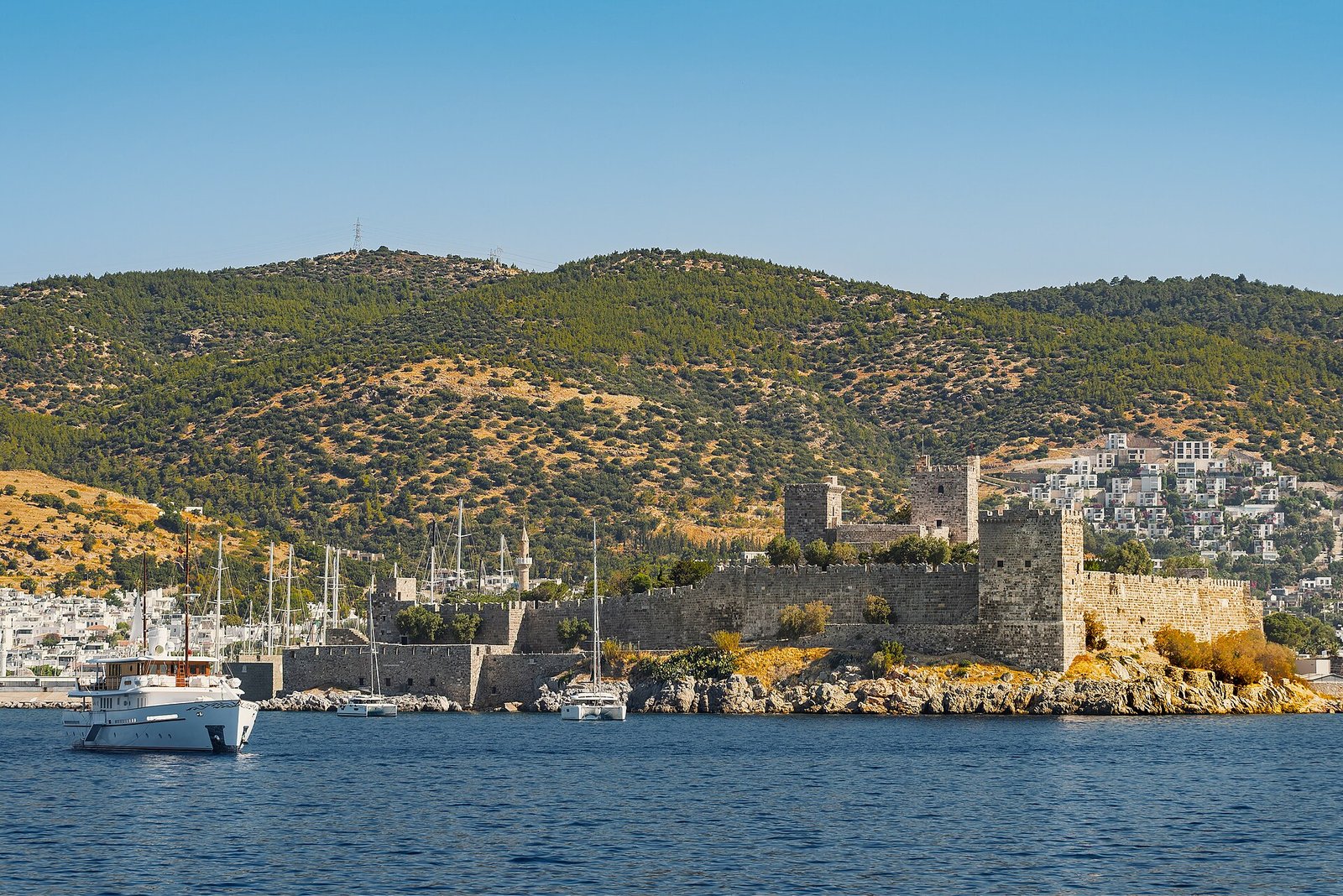
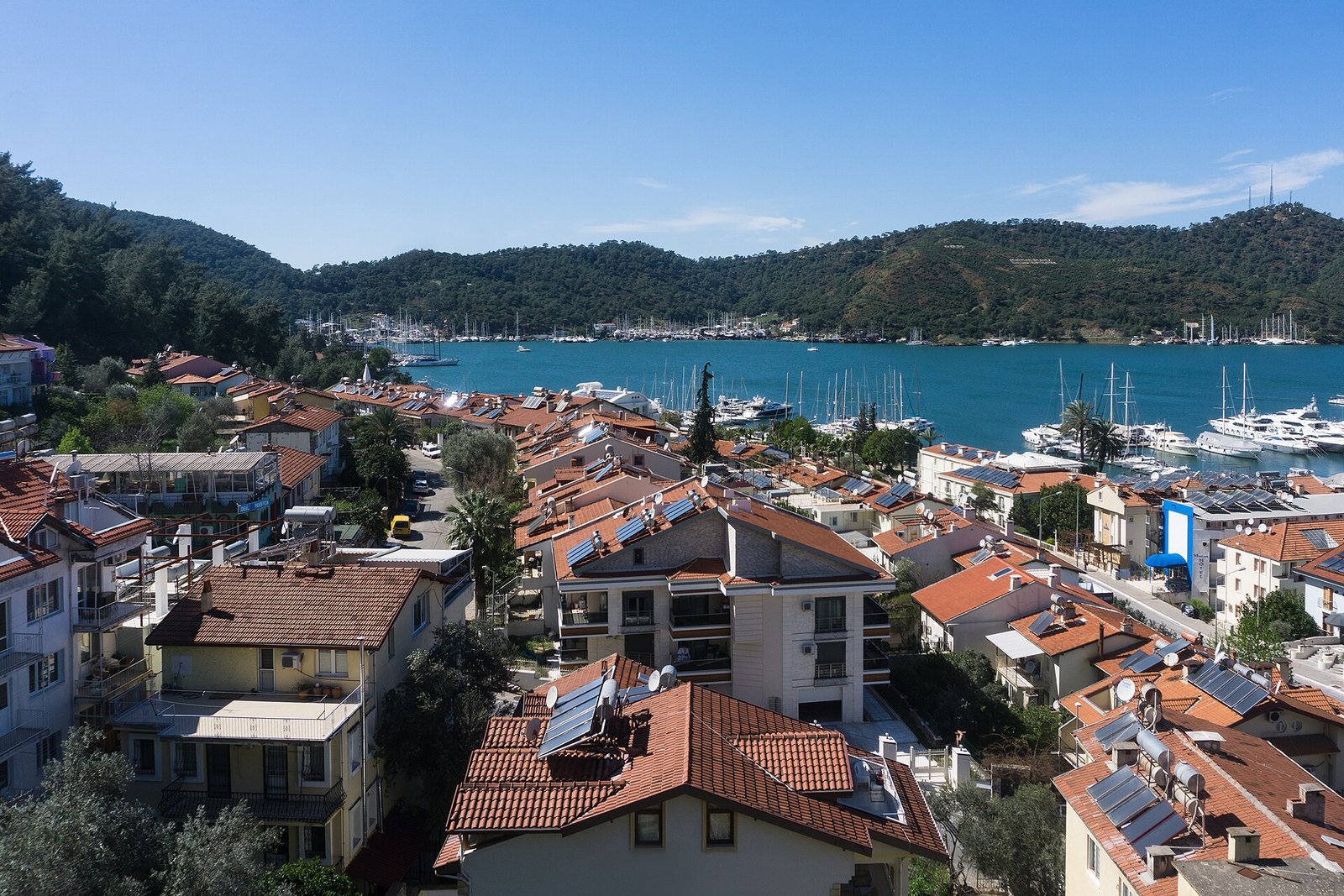
Türkiye’s southwest coast is sold in English as one place — “the Turquoise Coast”, “the Turkish Riviera” — and it is really two, with a hard practical boundary between them. Bodrum sits on the Aegean, faces the Greek island of Kos across twenty minutes of water, and is reached from Milas–Bodrum airport. The Lycian coast — Fethiye, Ölüdeniz, Kalkan, Kaş, Patara — is Mediterranean, is reached from Dalaman, and is a different holiday: mountains falling into the sea, Lycian rock tombs, and a coast road that takes a lot longer to drive than the map suggests.
What is in this guide
- The two coasts, and which airport you want
- Getting there
- Getting around
- The Greek islands: the section every guide gets wrong
- What to do, and what it costs
- The ancient sites, and an honest problem with the prices
- The Bodrum peninsula villages, honestly
- When to go, and a gap we are not going to paper over
- Money
- Safety on this coast specifically
- Common questions
- Before you book
This guide covers both, and it is built on figures we could source. Where we could not source something — and on this coast that includes the current museum tariff and, remarkably, official climate data for Bodrum itself — we say so instead of borrowing a number from another blog.
One thing to read before anything else, because almost every English guide has it wrong: the Greek island “visa on arrival” you have read about is for Turkish citizens only. If you hold a US, UK, Canadian or Australian passport you cannot buy it, do not need it, and face a completely different set of rules. That section is below.
Editor’s note
Sourcing note. Airport and dolmuş fares here come from Muğla Metropolitan Municipality’s own operator, MUTTAŞ, with the tariff date shown. Coach fares are live obilet.com searches on 19 August 2026 and will move. Museum hours are from the Ministry of Culture and Tourism’s museum portal. Entry fees are the last tariff we could reach from an official source, dated 1 March 2024 and explicitly labelled as such — every route to the 2026 figures was blocked. Safety wording is quoted from the FCDO update of 22 July 2026 and a Turkish National Police warning of 18 August 2026.
The two coasts, and which airport you want
| Bodrum side | Lycian side | |
|---|---|---|
| Sea | Aegean | Mediterranean |
| Airport | Milas–Bodrum (BJV) | Dalaman (DLM) |
| Towns | Bodrum, Gümbet, Bitez, Yalıkavak, Turgutreis, Gümüşlük, Göltürkbükü, Torba | Göcek, Fethiye, Ölüdeniz, Hisarönü, Kalkan, Kaş, Patara, Dalyan |
| Transfer time | 30–75 min | 25 min (Göcek) to about 2 h 15 (Kaş) |
| The feeling | Marinas, nightlife, a working town underneath | Mountains, ruins, water sports, small harbours |
Kaş, Kalkan and Patara are administratively in Antalya province, but you reach them from Dalaman, not from Antalya airport, which is three and a half to four hours away by road. Guides that group them with Antalya city are describing an administrative boundary, not a journey.
The airport bus, and a fare guides get badly wrong. Muğla Metropolitan Municipality’s transport company MUTTAŞ publishes the tariff for the Milas–Bodrum airport line, effective 18 May 2026:
| Route | Fare |
|---|---|
| Milas–Bodrum Airport → Bodrum (Torba, otogar) | ₺270.00 |
| Milas–Bodrum Airport → Güvercinlik | ₺220.00 |
A private travel site trading on the name bodrumairport.com still tells visitors the shuttle “will cost you 25 TL” — roughly a tenth of the municipal tariff, and a good reminder that a domain which looks official is not. The airport’s actual operator site is milas-bodrumairport.com. Use the dated municipal tariff.
We could not obtain a published Havaş fare for Dalaman in any form — flagged rather than guessed.
Getting there
There is no railway. Muğla is one of the Turkish provinces with no TCDD line at all, and there is none on the Antalya side of this coast either. Every arrival is by air, road or sea.
By air from Istanbul, both airports are served year-round by Turkish Airlines, AJet and Pegasus, about 1 h 15 in the air. The lowest one-way fares visible on a Turkish agency on 19 August 2026 were around ₺1,485 to Bodrum and ₺1,491 to Dalaman for early-September dates. These are market prices from an agency, not a carrier tariff, and they move a great deal by month — Bodrum averaged around ₺970 in October against roughly ₺2,312 in July.
By coach, from obilet.com on 19 August 2026:
| Route | Duration | From | Daily departures |
|---|---|---|---|
| Istanbul → Bodrum | ~10 h 15 | ₺650 | 131 |
| Istanbul → Fethiye | ~13 h 18 | ₺1,650 | 88 |
| Fethiye → Kaş | ~1 h 56 | ₺350 | 23 |
Note the asymmetry: Istanbul–Bodrum is both shorter and dramatically cheaper than Istanbul–Fethiye, because the Bodrum route is a competitive trunk corridor and the Fethiye one is not. If you are choosing between the two coasts on budget alone, that gap is real.
Fethiye–Kaş is an intercity coach, not a municipal dolmuş — Kaş is in Antalya province, so it sits outside the Muğla network and its fares are not on the municipal tariff.
Getting around
Dolmuş fares are published, and almost nobody quotes them. MUTTAŞ puts a tariff sheet online for every route. These are the adult fares on the two lines most visitors use:
| Route | Adult |
|---|---|
| Fethiye bus garage ↔ Ovacık / Hisarönü | ₺56.00 |
| Fethiye bus garage ↔ Ölüdeniz | ₺89.00 |
| Fethiye bus garage ↔ Faralya / Kabak | ₺123.00 |
| Ölüdeniz ↔ Faralya / Kabak | ₺68.00 |
| Short hop (İndi-Bindi) | ₺42.00 |
| Yalıkavak garage ↔ Bodrum old bus station | ₺80.00 |
| Gökçebel ↔ Bodrum new bus station | ₺89.00 |
One honest caveat: MUTTAŞ’s tariff PDFs use a merged header row with four fare columns — student, over-60 and teachers, standard adult, and a two-load Muğla Kart price. We have read the third column as the standard adult fare. If your fare comes out different, that is where the ambiguity lies.
Car hire is the real unlock here, and more so than anywhere else in Türkiye. Tlos, Pınara, Letoon and Saklıkent are inland off the D400 and are effectively unreachable in a day without a car. Kaputaş, Patara and the Kekova villages are each a separate dolmuş leg. The coast is 200 km of switchbacks with thin lateral bus links.
Two things to know before you book one:
- The licence requirement is genuinely disputed between two governments. The UK FCDO states you need a 1968 international driving permit, or a UK licence notarised in Turkish, and that *”the 1949 IDP is not accepted any more”*, plus a green card proving third-party insurance. The US State Department says a valid US licence with an IDP, or a US licence alone, is acceptable for up to 180 days. Both are official and they do not agree. A 1968 permit is cheap and over the counter, and it ends the argument at the rental desk and at a jandarma checkpoint.
- There is no toll motorway in Muğla province, but the coast road is not entirely toll-free: the Göcek Tunnel on the D400 near Dalaman charges ₺75 for a car in 2026, up from ₺60. Otherwise HGS only matters if you drive down from İzmir or Denizli.
Fuel, Petrol Ofisi published pump prices for Muğla province on 19 August 2026: petrol ₺73.23 a litre, diesel ₺81.62, LPG ₺33.84. Those are the premium V-Max grades; standard grades run slightly below. Prices were identical across Bodrum, Marmaris and Fethiye.
If you do want a car, local Turkish agencies usually undercut the international chains on this coast, and the paperwork requirements are identical either way.
The Greek islands: the section every guide gets wrong
Bodrum is twenty minutes from Kos. Fethiye is ninety minutes from Rhodes. The day trip is one of the most-searched things about this coast, and the English-language answer circulating online is wrong for most of the people reading it.
There are two entirely separate regimes.
1. The Greek “express visa” on arrival — for Turkish citizens only. Since April 2024, Turkish passport holders can obtain a visa at the port for a set of Greek islands. As of 2026 it covers twelve islands (the original ten plus Patmos and Samothraki), costs €60 officially, is valid for seven days, applies only to the island you entered, and expressly does not permit onward travel to mainland Greece or any other Schengen state. It has been extended to April 2027.
If you hold a US, UK, Canadian, Australian or EU passport, this scheme is not for you and you cannot buy it. Guides that tell foreign visitors in Türkiye to “get the visa on arrival at Kos” are describing a Turkish-citizen scheme.
2. What a US or UK visitor actually faces. You are Schengen visa-exempt for 90 days in any 180. What binds instead is the EU’s new border system:
| System | Status as of August 2026 | Effect on a day trip |
|---|---|---|
| EES (Entry/Exit System) | Rollout began 12 October 2025; the Commission set 10 April 2026 for full operation, though a UK parliamentary briefing of 19 August 2026 notes the deadline was not met at every checkpoint | Live. A Kos or Rhodes day trip is a biometric Schengen entry and exit — face image and fingerprints, not a stamp. First registration adds queue time at the island port |
| ETIAS | Not in force, and no start date is scheduled. The EU has withdrawn its firm date and says it will announce the launch several months in advance | Not required in 2026. Guides telling you to buy ETIAS now are wrong in the other direction |
The second-order point that nobody writes down: the day trip burns two EES records and counts against your 90/180 Schengen allowance. If you have already spent Schengen days this year, lunch on Kos is not free.
The crossings themselves. Bodrum–Kos runs roughly 64 sailings a week, year-round, 20 to 30 minutes typical, with indicative summer fares of €16–30 one way across several operators. Fethiye–Rhodes is 1 h 25 at its fastest, daily from June to August and thinner in the shoulder, at about €27.50–29.00 single. Those are aggregator figures, not operator tariffs — the Bodrum ferry association’s own tariff page redirected to an unrelated page and its successor domain refused us.
What to do, and what it costs
Saklıkent Gorge — the price changed by an order of magnitude. Foreign visitors now pay ₺500, up from ₺65, a rise of about 669 per cent, set by the General Directorate of Nature Conservation and National Parks. Turkish visitors pay ₺85, set by Seydikemer municipality. Two-tier pricing at a natural site is unusual in Türkiye, and it means every guide quoting “about two pounds” is out by a factor of ten. Reported March 2026; the directorate’s own page was unreachable to us.
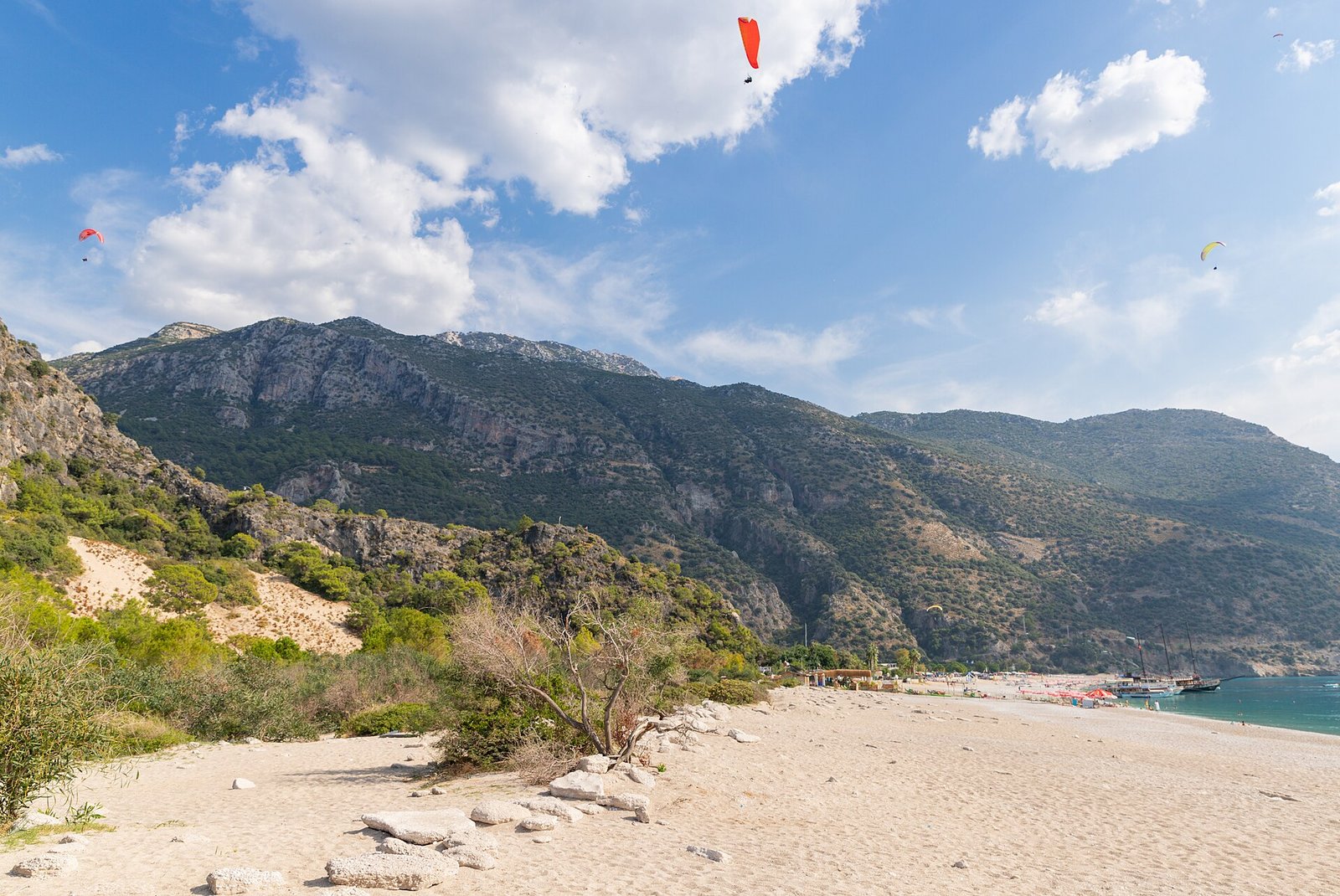
Ölüdeniz paragliding. There is no official or ceiling price for tandem flights from Babadağ, and operator advertising varies too widely for us to quote a range honestly. What is official is the FCDO’s Türkiye-specific wording: *”Paragliding is an extreme sport and carries the risk of serious injury or death. British nationals have died or been seriously injured whilst paragliding in Turkey.”* It also notes that standard travel policies frequently exclude extreme sports. Check that your policy names the activity before you book, not after.
The Babadağ cable car publishes neither fares nor hours in any form our tools could read — its site serves no content without JavaScript. Third-party resellers quote figures; we are not repeating them as if they were the operator’s.
Blue cruises are two different products and guides routinely blur them. A private charter takes the whole gulet, crew and itinerary and runs from about €5,000 to €80,000 a week depending on the boat, with most groups in the €10,000–30,000 band. A cabin charter sells you one cabin on a fixed-route, fixed-date sailing shared with strangers, at roughly €650–1,450 per person per week, full board. Both normally include the crew, meals, soft drinks and Turkish port fees, and both normally exclude alcohol, Greek island port fees and transfers. Those are a Turkish operator’s published 2026 figures — commercial, not official.
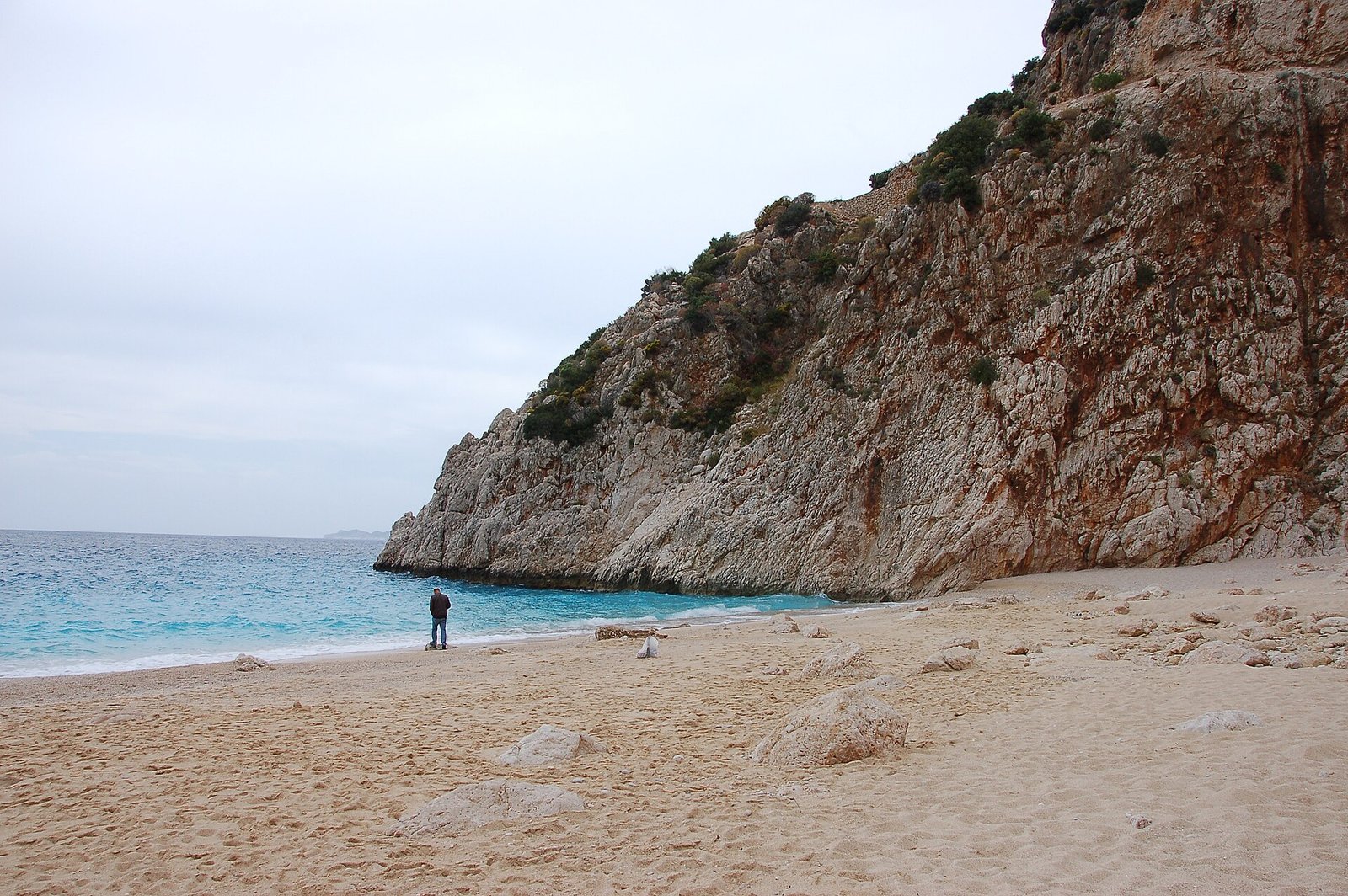
Beaches worth the detour: Kaputaş, a cove between Kalkan and Kaş reached down a long staircase from the D400; Patara, a very long dune-backed beach behind an ancient city; Ölüdeniz’s lagoon, which is enclosed, calm and unrepresentative of the open sea two hundred metres away.
The ancient sites, and an honest problem with the prices
This coast was Lycia, and its ruins are unusually good — partly because so few visitors go inland to see them.
Opening hours are official and current, from the Ministry’s museum portal on 19 August 2026:
| Site | Hours | Closed |
|---|---|---|
| Xanthos (Kınık) | 08:00–20:00, ticket office to 19:30 | None |
| Patara | 08:00–18:45, plus a night session 19:00–22:00 | None |
| Bodrum Underwater Archaeology Museum (the Castle) | 08:30–18:45, plus night 19:00–22:00 | None |
| Bodrum Mausoleum Museum | 08:30–17:30, ticket office to 17:00 | Mondays |
Now the prices, and we are going to be blunt about this. We could not obtain the 2026 tariff. Every route to it was blocked: the Ministry’s ticketing and heritage directorates, the museum-pass site, and the Official Gazette. The most recent tariff we could reach from an official source is the Ministry schedule republished by TÜRSAB, the statutory travel-agency association, headed *”entry fees valid from 01.03.2024″* and priced in euro:
| Site | Fee on the tariff effective 1 March 2024 |
|---|---|
| Bodrum Underwater Archaeology Museum | €20 |
| Patara | €15 |
| Myra (Demre) | €13 |
| Simena (Kekova) | €4 |
| Xanthos | €3 |
| Letoon | €3 |
| Tlos | €3 |
| Bodrum Mausoleum | €3 |
| Halicarnassus theatre | Free |
| Pınara | Free |
Those are 2024 figures and are almost certainly superseded. Treat them as structure rather than price. What is durable, and more useful:
- Ministry sites price foreign visitors in euro, not lira. A weaker lira makes your food, transport and hotels cheaper and does nothing whatever to your entry tickets. Guides quoting lira are quoting the Turkish-citizen rate or an obsolete tariff.
- MüzeKart is not for short-stay tourists. It is open to Turkish citizens and to foreigners holding a Turkish residence permit, foreign students and diplomats — but not to a visitor on a 90-day stamp, who needs the separately priced Museum Pass Türkiye. Its 2026 price we also could not obtain.
- Bodrum Castle is by far the most expensive ticket on this coast; Xanthos and Letoon, which together form the UNESCO World Heritage property, are among the cheapest; Pınara and the Halicarnassus theatre are free.
Check at the gate. We would rather tell you that than print a number we cannot stand behind.
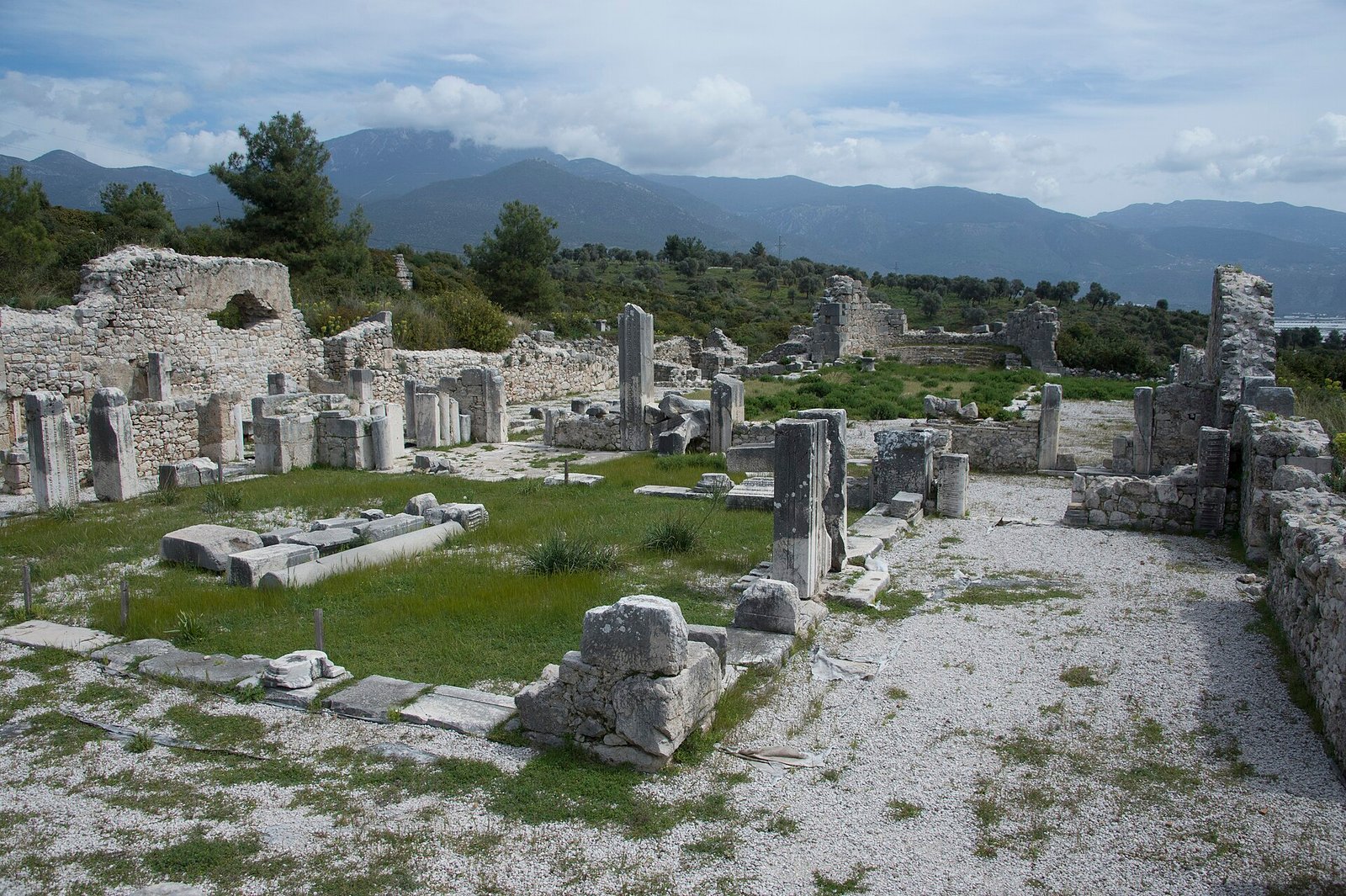
Xanthos and Letoon are inscribed as a single serial World Heritage property with two components about four kilometres apart, ticketed separately. Xanthos is at Kınık on the Fethiye–Kaş road, Letoon at Kumluova. Together they are a comfortable half day by car and effectively impossible without one.
Patara has a night session — the archaeological site is officially open until 22:00. Do not confuse that with the beach: Patara is a designated loggerhead turtle nesting beach and a seasonal evening restriction is widely described, but we could not verify its hours or its legal basis from any official source, so we are not printing one. Confirm locally.
Bodrum Castle is open. It closed in October 2017 for a major restoration and reopened in June 2020; the Ministry lists it as open daily as of 19 August 2026, with no closure notice. Guides still warning that it is shut for restoration are between five and nine years out of date.
The Mausoleum needs managing expectations. Almost nothing stands. The Knights of St John quarried the marble to build the castle and the surviving sculpture is in the British Museum. What remains is a foundation pit, some column drums and a good explanatory shelter. It is worth an hour if you like the history and twenty minutes if you do not.
The Bodrum peninsula villages, honestly
| Village | The honest line |
|---|---|
| Yalıkavak | Bought and rebuilt around its marina; the superyacht end of the peninsula, with the prices and the dress code to match. The old village behind the marina is still pleasant and much cheaper. |
| Gümüşlük | The one that kept its character, because the submerged ruins of Myndos are protected and construction is restricted. That is exactly why the fish restaurants on the sandbar are booked out, and not cheap. |
| Göltürkbükü | Istanbul’s summer social annexe. A very narrow beach, wooden swimming decks over the water, day-bed minimums, and a scene that is the point of going. You swim off a platform here, not off sand — the single most common expectation mismatch on the peninsula. |
| Bitez | The mainstream family and windsurf option, ten minutes from Bodrum town, shallow water, tangerine groves behind. Unremarkable in the best sense, and the easiest base without a car. |
When to go, and a gap we are not going to paper over
Here is something we did not expect to find. The Turkish State Meteorological Service does not publish climate normals for Bodrum, Fethiye, Dalaman or Marmaris. Its public statistics page is province-level only; those four are district stations, and their data sits behind MEVBİS, the paid data service. Every Bodrum climate table circulating in English is transcribed from a secondary source.
What MGM does publish for this province is Muğla, and using it as “Bodrum weather” is a real error rather than a rounding one — Muğla (Menteşe) is the inland provincial capital on a plateau at roughly 650 metres, and it is far colder in winter than the coast it administers — its January mean maximum is 10.4 °C against about 15 °C on the coast.
For the record, the official 1991–2020 normals for Muğla — inland, not the coast:
| Month | Mean daily max °C | Rain mm |
|---|---|---|
| Jan | 10.4 | 219.6 |
| Feb | 11.6 | 169.5 |
| Mar | 15.1 | 119.6 |
| Apr | 19.4 | 74.4 |
| May | 25.1 | 56.9 |
| Jun | 30.6 | 27.7 |
| Jul | 34.5 | 15.1 |
| Aug | 34.6 | 14.9 |
| Sep | 30.0 | 25.9 |
| Oct | 23.8 | 72.8 |
| Nov | 17.2 | 139.2 |
| Dec | 11.8 | 229.6 |
| Year | 22.0 | 1,165.2 |
An oddity worth flagging, because it shows why period labels matter: MGM’s *other* Muğla dataset, the full station record for 2001–2025, gives a July mean maximum of 33.2 °C and annual rainfall of 866 mm — three hundred millimetres drier than the 1991–2020 normal for the same city. That is not year-to-year noise; it points to a re-sited station. We use the 1991–2020 normals because they are MGM’s WMO-standard series and comparable with other cities, and we are telling you the other set exists.
Sea temperature. There are no published monthly normals for this coast — MGM issues instantaneous station readings and annual basin-scale analyses, nothing in between. Any month-by-month sea table you find in English traces back to a commercial aggregator. Readings taken from MGM’s maritime portal on 19–20 August 2026: Bodrum 25.6 °C, Datça 25.9 °C, Marmaris 26.6 °C, Fethiye 29.0 °C. Note that two Bodrum sensors disagreed by 2.5 °C on the same night, which is the best argument we can offer against trusting any single figure.
The practical shape of the year is not in dispute even where the numbers are. The coast is effectively rainless from June to September and its wet season is concentrated in December to February. The sea lags the air by roughly two months, so September is the better swimming month, not August, and the Lycian side stays swimmable materially later into October than the Aegean side. May and October are the value windows: warm, dry, and without the July and August crowds.
Money
The accommodation tax is 1 per cent, not 2. A presidential decree published on 1 May 2026 cut it for the rest of the year, to 31 December 2026 inclusive. It is charged to the business and itemised separately on your invoice, and it applies to hotels, pensions, apart-hotels, campsites and similar. It reverts to 2 per cent on 1 January 2027 — a 2027 guide must not copy this forward.
Mandatory service, table and cover charges have been illegal since 30 January 2026, nationwide, so it covers Bodrum marina restaurants and Kaş harbour tavernas equally. A *kuver* on your bill in 2026 is not a local custom, it is unlawful, and you can decline it. Voluntary tipping is untouched and matters more now, because the charge that used to cover it is gone.
On accommodation price bands, we have nothing publishable. There is no credible dated source for nightly rates in Bodrum, Fethiye or Kaş — the hotel association publishes occupancy and arrivals, not consumer rates, and the statistics agency was unreachable. We are not going to borrow a range from somewhere else and present it as research. Price your own dates and treat any published band, including ones you find elsewhere, with suspicion.
Safety on this coast specifically
The sea is the risk, not crime. The Turkish National Police issued a public warning on 18 August 2026 naming rip currents, undertow and panic, and advising: *”For your safety, choose beaches with lifeguards and warning signs.”* If caught in a rip, do not panic and swim parallel to the shore rather than straight for it. The FCDO’s wording is blunter: *”Every year, people drown in the sea and in swimming pools in Turkey. Always supervise children, even if they can swim or there is a lifeguard present.”* This applies directly at Kaputaş, which shelves steeply and has no lifeguard for much of the day, and on the open-sea side of the Ölüdeniz spit.
Day boats had a bad season. On 13 August 2026 a commercial day boat caught fire off Fethiye near Katrancı Bay with 115 people aboard including children; everyone was evacuated by the Coast Guard and nearby boats and nobody died — but 15 people were hospitalised with burns, and the vessel was extensively damaged. Two further incidents on this coast in 2026 are reported in the trade press and we could not verify them independently.
The honest framing: several day-boat emergencies in one season with no fatalities is a story about capacity and margin, not about a safe record. There is no public register of licensed operators a foreign visitor can consult, which is itself the useful point. The practical proxies are a TÜRSAB-registered agency displaying its licence number, a visible passenger manifest, and life jackets in adult and child sizes actually on deck rather than stowed.
New rules for private boats took effect on 17 July 2026, splitting amateur skipper certification by vessel length and mandating safety equipment scaled to size. Note what it is not: that regime targets private craft under 24 metres, and it did not change the licensing of commercial day-tour boats. Do not read it as a fix for the incidents above.
Common questions
Bodrum or Fethiye for a first trip? Bodrum if you want a town with a life of its own, marinas, nightlife and an easy Greek island hop. The Lycian side if you want mountains, ruins and water — and are willing to hire a car.
Do I need a car? On the Lycian side, effectively yes if you want the inland sites. On the Bodrum peninsula, no — the dolmuş network covers the villages and parking in Bodrum town is genuinely unpleasant.
Can I do a Greek island day trip? Yes, easily — but read the section above, because the rules that apply to you are not the ones most guides describe. You need your passport, you are making a Schengen entry under EES, and it counts against your 90/180 days.
When is the sea warmest? Late August into September. Readings on 19–20 August 2026 ran from 25.6 °C at Bodrum to 29.0 °C at Fethiye. There are no official monthly normals, so treat any single figure as indicative.
Is Saklıkent worth ₺500? For most people, once, yes — it is a genuinely dramatic gorge and you wade through it. But go knowing the price, because guides quoting the old ₺65 figure will make it feel like a swindle at the gate rather than a decision you made.
What about the museum entry fees? Budget generously and check at the gate. We could not obtain the 2026 tariff from any official source, and we would rather say so than print a 2024 number as if it were current.
Is it safe for families? Yes, with the water caveats above taken seriously. Both governments’ warnings on this coast are about drowning and boats, not crime.
Before you book
Decide which coast you are going to first, because they need different airports and the transfer times are not interchangeable. If the Lycian side wins, price local car hire early — it is the difference between seeing four ancient cities and seeing none. And if a Greek island day is part of the plan, check how many Schengen days you have already used this year before you build an itinerary around it.
When your dates are fixed, compare flights into both airports rather than assuming one is cheaper — Bodrum and Dalaman price very differently by month.