
In short
The country-level page: what a trip to Türkiye costs, how to move between the places you have heard of, when to go, what the entry rules actually are, and the six things that changed in 2026 that older guides have not caught up with — starting with the accommodation tax, which is 1% until 31 December 2026 and reverts to 2% on 1 January 2027. City guides sit underneath this one.
Verified against Turkish government sources, August 2026.
Disclosure: some links in this guide are affiliate links. If you book through one, we earn a small commission and you pay exactly the same price. We only link to services we would use ourselves, no brand pays for placement or for a favourable write-up, and every price in this article was researched independently.
Türkiye is cheap in euros and expensive in lira, and both of those things are true at the same moment. That contradiction is why so much of what you will read about the cost of a Turkish holiday is wrong: a guide written in 2024 that quotes “about 40 lira to the euro” is out by roughly a quarter, and a guide that quotes lira prices without a date is out by whatever inflation has done since — which in the year to July 2026 was 31.75 per cent.
What is in this guide
So this guide does two things differently. Every price carries the date we checked it and the body that published it. And where the official sources disagree with each other, we say so instead of picking the answer that reads more cleanly.
This is the country-level page. It covers what a trip costs, how to move between the places you have heard of, when to go, what the entry rules actually are, and the six things that changed in 2026 that older guides have not caught up with. The individual city guides on this site all link back here.
Editor’s note
A note on sourcing: exchange rates come from the Turkish central bank bulletin of 18 August 2026, inflation from TÜİK, climate figures from the Turkish State Meteorological Service normals, safety wording quoted directly from the UK FCDO update of 22 July 2026 and the US State Department advisory of 11 June 2026. Where we could not verify something — Trabzon climate normals, the 2026 museum entry tariff — we have left it out rather than filled the gap.
Six things that changed in 2026
If you are working from a guide written before this year, these are the specific lines that are now wrong.
1. Compulsory service charges are illegal. On 30 January 2026 the Ministry of Trade amended the Price Label Regulation so that restaurants, cafés, patisseries and similar food-and-drink businesses may not demand a mandatory service charge, table charge or cover charge under any name. Everything you can be billed for must appear on the displayed price list. Voluntary tips are still perfectly legal — and now matter more, because the 10 per cent that used to appear automatically no longer does.
2. The accommodation tax was halved. A presidential decree published on 1 May 2026 cut the rate from 2 per cent to 1 per cent for the rest of the year. It is charged to the hotel and shown as a separate line on the invoice — on a 5,000 TL stay it is 50 TL. Note the two edges: it took effect on publication, not retroactively to January, and it goes back up to 2 per cent on 1 January 2027.
3. Istanbul public transport went up 20 per cent. A full-fare journey on the metro, tram, bus or Marmaray costs 46.20 TL with an İstanbulkart. The fare rose to 42.00 TL on 16 February 2026 and again, by a further ten per cent, on 20 July 2026. Any guide still quoting 42 lira is a month out of date.
4. High-speed rail fares rose on 17 August 2026. Ankara–Istanbul economy is now 990 TL one way, up from 780 TL at the start of the year — a 27 per cent rise in eight months.
5. The 1949 international driving permit is dead. The FCDO is explicit: you need a 1968 IDP, or a UK licence notarised in Turkish, plus a green card proving third-party insurance. A photocard licence on its own is not enough, and the older permit that many guides still name is no longer accepted.
6. Large US dollar notes are being refused. Both the FCDO and Turkish banks report a surge in counterfeit 50 and 100 dollar bills, and exchanges increasingly will not take them. Do not plan to fund a trip with hundreds.
Where to go: the five trips inside Türkiye
Türkiye is not one destination. It is at least five, and the mistake first-time visitors make is trying to string three of them together in a week.
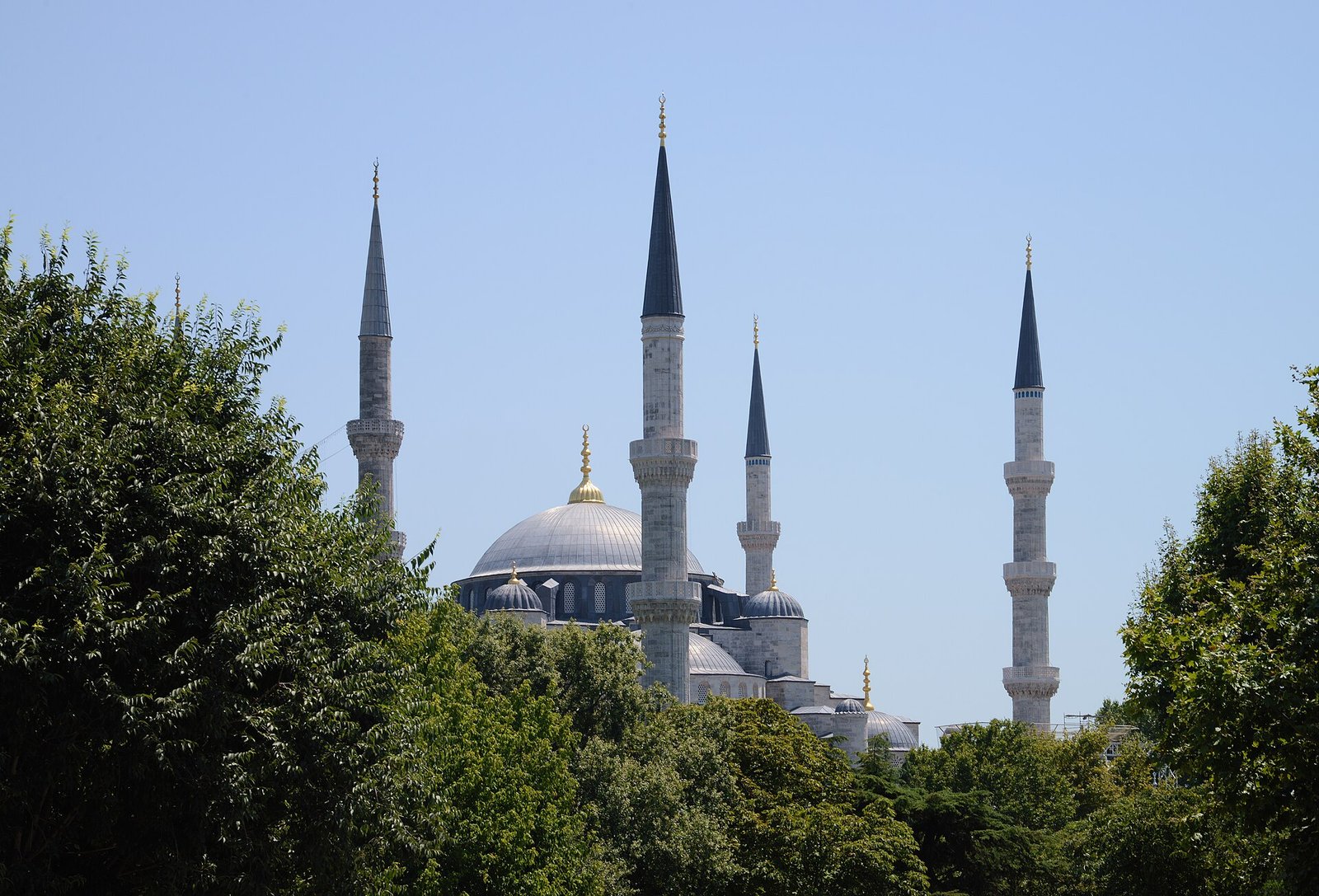
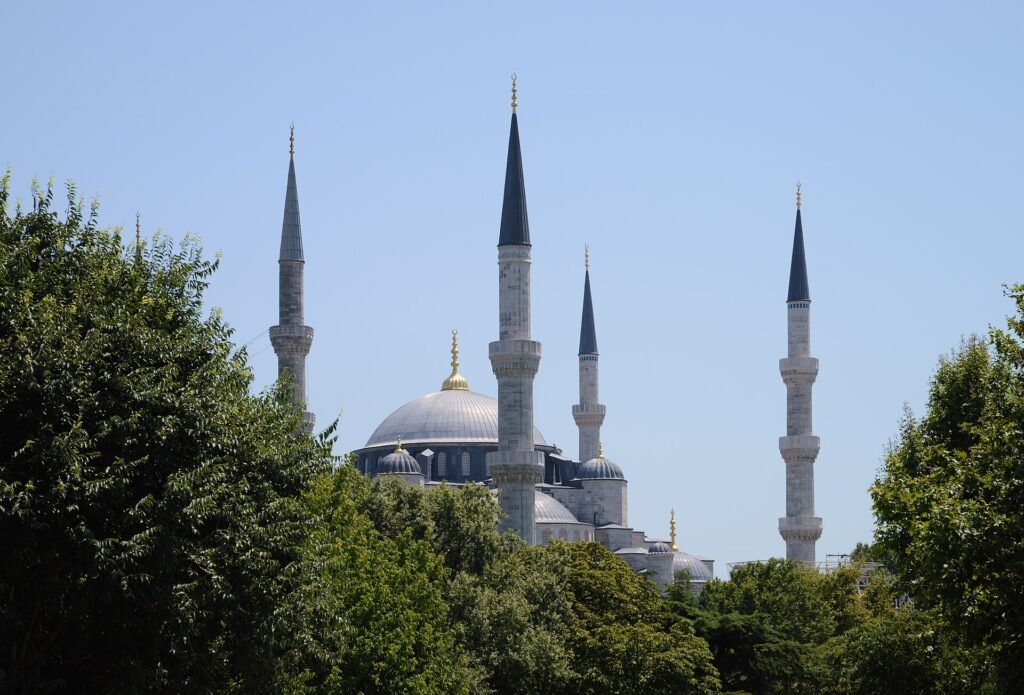
Istanbul. Two or three full days minimum, four if you want to sit still anywhere. The historic peninsula — Hagia Sophia, the Blue Mosque, Topkapı, the Basilica Cistern — is walkable in a day, but the city that people fall for is the other one: Balat’s painted houses, the ferry across to Kadıköy, breakfast in Beşiktaş, the fish restaurants under the Galata Bridge. Skip the Sultanahmet “Ottoman restaurant” tier entirely.
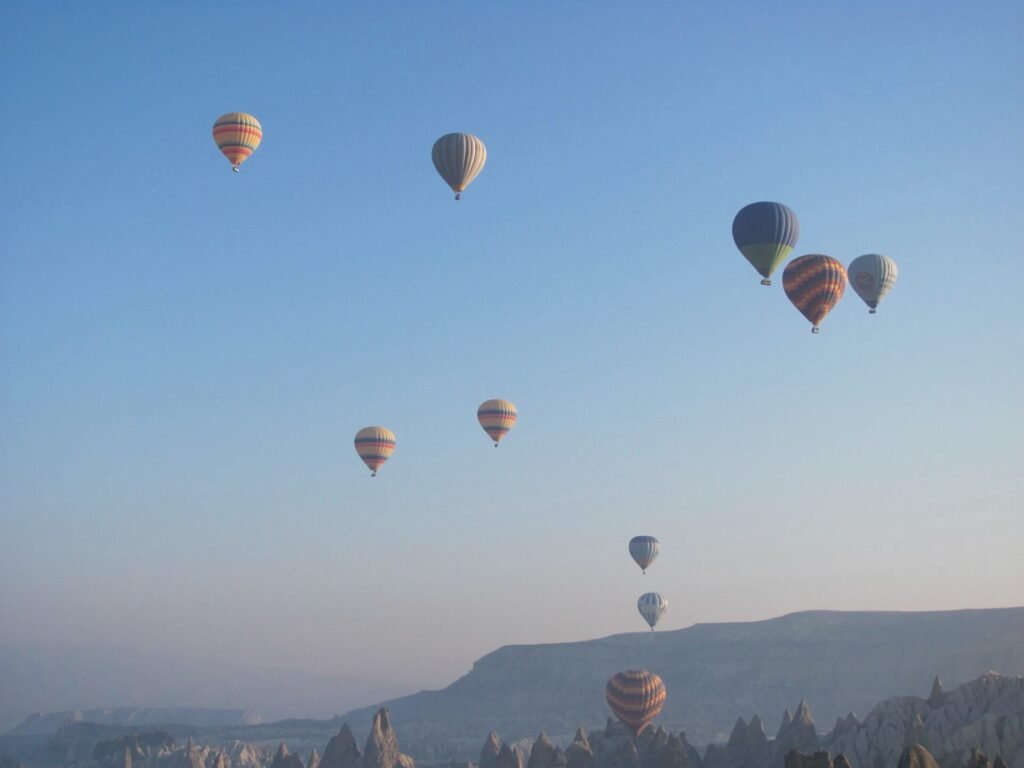
Cappadocia. Two nights, three if you want a spare morning in case the balloons are grounded. Göreme, Uçhisar, Ürgüp and Avanos all sit in Nevşehir province, roughly ten hours by overnight coach from Istanbul or ninety minutes by air to Kayseri or Nevşehir. There is no high-speed train to Cappadocia and there will not be one soon.
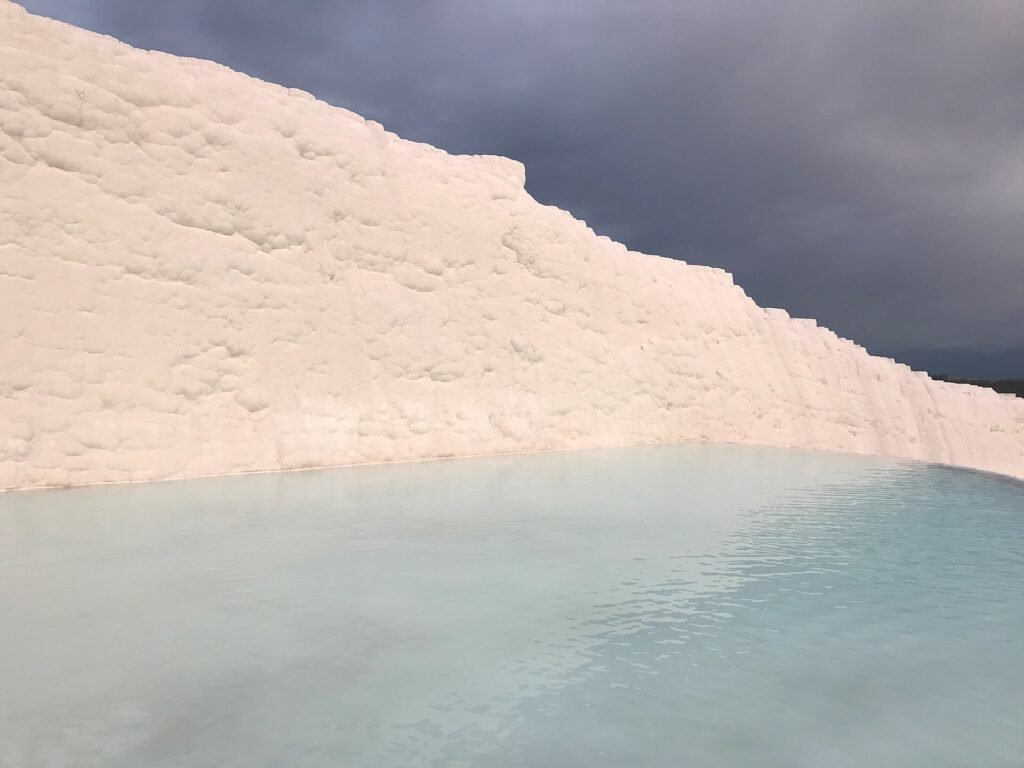
The Aegean. İzmir as a base, Ephesus and Şirince as day trips, Pamukkale three hours further inland. This is the classical Türkiye — the Library of Celsus, the terrace houses, the travertines — and it is the easiest region in the country for vegetarians, because Aegean cooking is built on cold olive-oil vegetable dishes rather than kebab.
The Mediterranean coast. Antalya for the old town and the Roman theatres at Aspendos and Perge; Fethiye, Kaş and Kalkan for the Lycian coast, where a hire car genuinely pays for itself. Note the season: Antalya’s mean maximum is 34.2 °C in July but its December rainfall averages 250.9 mm, which is wetter than Manchester. The sunny-Mediterranean framing only holds May to October.
The southeast. Gaziantep, Şanlıurfa and Mardin have the most serious food in the country — Gaziantep is a UNESCO City of Gastronomy — and almost no foreign visitors. Check the map before you book: both the UK and US advisories name a ten-kilometre strip along the Syrian and Iraqi borders, and Gaziantep province borders Syria directly and the city itself is around an hour from the frontier.
A realistic first trip is Istanbul plus one other region. A realistic second trip is everything you skipped.
What a trip to Türkiye costs in 2026
The single most useful thing we can give you is the exchange rate with a date on it, because everything else follows from it. Turkish central bank bulletin 2026/153, 18 August 2026:
| Currency | Forex selling rate (TL) |
|---|---|
| 1 USD | 47.92 |
| 1 EUR | 55.47 |
| 1 GBP | 64.93 |
Now the prices. These are Istanbul figures from July and August 2026, and at roughly 32 per cent annual inflation they will be materially wrong within about four months — which is exactly why we date them.
| Item | TL | ≈ GBP | ≈ USD |
|---|---|---|---|
| Metro, tram or bus journey (İstanbulkart) | 46.20 | 0.71 | 0.96 |
| Taxi flagfall, Istanbul | 71.94 | 1.11 | 1.50 |
| Taxi minimum fare | 230 | 3.54 | 4.80 |
| Glass of çay from a street vendor | 20–40 | 0.31–0.62 | 0.42–0.83 |
| Turkish coffee | 80–150 | 1.23–2.31 | 1.67–3.13 |
| Simit | 30–50 | 0.46–0.77 | 0.63–1.04 |
| Balık ekmek (fish sandwich), Eminönü | 150–200 | 2.31–3.08 | 3.13–4.17 |
| Lunch at a lokanta, per person | 250–500 | 3.85–7.70 | 5.22–10.43 |
| Dinner in a tourist-district restaurant, per person | 600–1,500 | 9.24–23.10 | 12.52–31.30 |
| 50 cl can of beer, retail | ≈125 | 1.93 | 2.61 |
| Bottled water, corner shop | 15–30 | 0.23–0.46 | 0.31–0.63 |
| Bottled water, at a major sight | 50–80 | 0.77–1.23 | 1.04–1.67 |
| Petrol, per litre (Istanbul, 19 Aug 2026) | 71.46 | 1.10 | 1.49 |
Sterling and dollar columns are our own conversions at the rates above and are there for scale, not for budgeting to the penny.
Alcohol is the outlier. A fixed per-litre excise duty is re-indexed twice a year and 20 per cent VAT sits on top of it, which is why a beer in a bar can cost more than the meal it comes with. It is also, directly, why both the British and American governments now warn about counterfeit and methanol-adulterated spirits: the tax gap creates the market. Buy branded, buy from a licensed shop or a proper bar, and treat an unusually cheap bottle as dangerous rather than a bargain. Turkish wine — Öküzgözü, Boğazkere, Kalecik Karası, Narince — is domestically produced, genuinely good, and much better value than imported spirits.
A rough daily budget, excluding flights, per person sharing a double room:
- Lean: 2,000–3,000 TL a day. Pension or guesthouse, lokanta meals, public transport, one paid sight a day.
- Comfortable: 4,500–7,000 TL. Mid-range hotel, a sit-down dinner, taxis when it suits, a guided day trip every few days.
- Loose: 12,000 TL and up. Cave suite in Cappadocia, balloon flight, private transfers.
Getting there is the variable we cannot price for you, because it depends entirely on where you start and when you book. If you are still deciding on dates, it is worth running the route through a flight comparison before you fix anything else, because Turkish domestic and international fares move a lot by season.
Getting around
High-speed rail (YHT) is excellent where it exists and does not exist where most visitors want to go. The network runs Ankara–Istanbul, Ankara–Konya, Ankara–Sivas, Istanbul–Konya direct, plus Ankara–Eskişehir. Ankara is the hub. There is no high-speed line to Cappadocia, none to Antalya, and none between Istanbul and İzmir. Economy one-way fares from 17 August 2026:
| Route | TL |
|---|---|
| Ankara–Istanbul | 990 |
| Ankara–Eskişehir | 511 |
| Ankara–Konya | 458 |
| Ankara–Sivas | 1,001 |
| Eskişehir–Istanbul | 639 |
| Konya–Istanbul | 1,442 |
Ankara–Istanbul currently takes 4 hours 7 minutes, and the Ministry of Transport said in June 2026 that tunnel works will cut it to 3 hours 37 minutes when they finish.
Intercity coaches cover everything the trains do not, and they are nothing like the American mental image. Turkish coaches are 2+1 recliners with an attendant serving tea. Overnight is the norm on the long trunk routes; departures for Cappadocia cluster between 20:00 and 23:00 and arrive between 07:00 and 09:30, which is how most independent travellers get there.
| Route | From (TL) | Duration |
|---|---|---|
| Istanbul–Nevşehir (Cappadocia) | 1,500 | 10 h 22 |
| Istanbul–Antalya | 1,300 | 12 h 11 |
| İzmir–Denizli (Pamukkale) | 420 | 3 h 13 |
Do the arithmetic on that Antalya line before booking it: the coach is 1,300 TL for twelve hours, and the cheapest flights we could find for the same period were around 1,480 TL for eighty minutes. The coach saves under 200 lira and costs you eleven hours.
Flights. Turkish Airlines, its low-cost arm AJet, and Pegasus cover the domestic trunk routes; Istanbul–Antalya alone runs about 51 flights a day. The trap is the two Istanbul airports. İstanbul Havalimanı (IST) is on the European side and handles Turkish Airlines and all long-haul. Sabiha Gökçen (SAW) is on the Asian side and is where Pegasus and the cheapest AJet domestic fares depart. There is no rail link between them and the transfer crosses the Bosphorus. If your itinerary arrives at one and leaves from the other, allow three hours.
Car hire. Worth it on the Lycian coast, in Cappadocia’s outer valleys, and in the Aegean hinterland. Not worth it in Istanbul, where parking is scarce, driving is aggressive and a metro ride costs 46.20 lira. Three things catch people out: you need a 1968 IDP, not a 1949 one; motorway tolls are electronic-only via the HGS system with no cash booths, so confirm the transponder arrangement at pickup; and the tolls are not trivial — the Osmangazi Bridge alone is 1,170 TL for a car as of 1 July 2026. If you do want a car, Localrent aggregates local Turkish agencies rather than only the international chains, which is usually where the price difference sits.
Left luggage. Istanbul’s sights are strung along a peninsula and hotel check-in is rarely before 14:00, so a first or last day with bags is a real problem. Radical Storage has drop-off points near Sultanahmet, Taksim and both main stations.
When to go
Türkiye covers six climate zones and the honest answer varies by region, which is why a single “best time to visit Türkiye” sentence is useless. These are official Turkish State Meteorological Service normals — mean daily maximum temperature, and mean monthly rainfall.
| Month | Istanbul °C / mm | Cappadocia °C / mm | İzmir °C / mm | Antalya °C / mm |
|---|---|---|---|---|
| Jan | 9.6 / 88.8 | 4.0 / 45.4 | 12.5 / 134.5 | 15.0 / 225.5 |
| Feb | 10.2 / 70.7 | 5.5 / 41.1 | 13.7 / 100.9 | 15.6 / 148.1 |
| Mar | 12.4 / 62.3 | 10.3 / 48.1 | 16.4 / 74.2 | 18.0 / 90.8 |
| Apr | 17.4 / 47.8 | 16.0 / 50.2 | 21.0 / 45.9 | 21.4 / 48.5 |
| May | 22.3 / 32.9 | 20.6 / 57.9 | 26.2 / 30.9 | 25.7 / 33.3 |
| Jun | 27.1 / 27.6 | 24.9 / 37.5 | 30.8 / 12.8 | 30.8 / 10.7 |
| Jul | 29.7 / 22.1 | 28.5 / 9.4 | 33.3 / 4.2 | 34.2 / 4.7 |
| Aug | 29.7 / 23.9 | 28.7 / 8.4 | 33.0 / 6.4 | 34.1 / 4.3 |
| Sep | 25.9 / 39.7 | 24.5 / 14.3 | 29.3 / 15.5 | 31.2 / 16.7 |
| Oct | 20.6 / 66.3 | 18.3 / 28.0 | 24.1 / 44.0 | 26.6 / 70.6 |
| Nov | 16.1 / 78.1 | 11.8 / 34.3 | 18.7 / 92.3 | 21.4 / 127.7 |
| Dec | 11.8 / 99.2 | 6.2 / 48.4 | 14.2 / 145.8 | 16.7 / 250.9 |
Cappadocia figures are the Nevşehir station, which is the correct one for Göreme, Ürgüp, Uçhisar and Avanos. Two numbers that do not appear in the table but should: Nevşehir’s mean minimum is below freezing from November to February, and only 5.1 °C in April. That matters if you are standing at a viewpoint before dawn waiting for balloons.
The short version. Late April to early June, and mid-September to late October, are the two windows that work everywhere in the country at once. July and August are for the coast and nowhere else — Denizli, the station for Pamukkale, averages 34.8 °C in July and the travertines are unshaded and walked barefoot. Winter is genuinely good in Istanbul and genuinely cold in Cappadocia, which is its own kind of beautiful under snow.
Avoid the two bayram holidays if you can. Domestic travel peaks, coach and train seats sell out weeks ahead, and coastal and Cappadocian hotels raise rates. Both 2026 bayrams have already passed. In 2027, Ramazan Bayramı falls on 9–11 March and Kurban Bayramı on 16–19 May, running straight into the 19 May national holiday — expect an extended shutdown. Museums and major sights stay open; banks and small businesses close.
Entry rules, and one conflict nobody resolves
Visas. Ordinary passport holders from the United States, United Kingdom, Canada, Australia, Ireland and the EU are exempt from visas for 90 days in any 180-day period for tourism. That is the Turkish Ministry of Foreign Affairs’ own wording, checked on 19 August 2026.
Two exclusions worth stating plainly, because they invert what people expect:
- Official and service passports of the US, UK, Canada and Australia — and, for the UK, diplomatic passports too — are *not* exempt. The ordinary tourist passport is the privileged one.
- British National (Overseas), British Subject and British Protected Person passports are not exempt. The MFA says these holders must obtain visas from a Turkish diplomatic mission abroad — not on arrival, and not through the e-Visa system. This regularly catches BN(O) holders who moved to the UK after 2021 and assume UK residence carries the exemption. It does not.
Passport validity: three official bodies, three different answers. We are reporting this rather than resolving it, because it is not resolvable.
| Source | Requirement |
|---|---|
| Turkish MFA | Legal rule is expiry at least 60 days beyond your permitted duration of stay; separately *advises* six months |
| UK FCDO | At least 150 days after your arrival date, plus one blank page |
| US State Department | Six months beyond arrival, plus a blank page per stamp |
The conflict is traceable. Türkiye’s legal rule is stay plus 60 days, and 90 + 60 = 150, which is exactly the FCDO’s figure. The six-month number is the Turkish ministry’s own advisory recommendation, which the State Department has hardened into a stated requirement. Our advice: travel on six months’ validity, because that is the figure an airline check-in agent will apply if they apply anything — while knowing the strict legal minimum is lower.
Money in practice
- Everything domestic is priced in Turkish lira. There is no dual-pricing regime on transport or flights for foreigners; separate foreign-visitor pricing exists only at Ministry-run museums and archaeological sites.
- Card acceptance is very high — contactless works in taxis, most cafés and many street-food kiosks. Türkiye is, in practice, more card-friendly than most of southern Europe.
- Where you still need cash: village markets, dolmuş minibuses, hamam attendants, small pensions in Anatolia, mosque donation boxes, and tips.
- Use bank-branded ATMs (Ziraat, İş Bankası, Garanti BBVA, Yapı Kredi, Akbank) rather than standalone machines, and always decline dynamic currency conversion. The “convert to GBP” offer costs several per cent.
- Do not carry euros as a payment method. Shops in tourist areas will accept them, at a rate worse than any bank’s. Carry a small reserve as emergency backup only.
- Never change money with someone who approaches you in the street. Both governments list this as a specific scam.
Safety, without the vibes
Neither the UK nor the US advises against travel to Türkiye. Both restrict a ten-kilometre strip along the Syrian and Iraqi borders — the US at Level 4, the UK advising against all travel within 10 km of Syria. The entire standard tourist itinerary, Istanbul through Cappadocia to Antalya, İzmir and Pamukkale, sits outside every restricted zone in both advisories. Cappadocia is roughly a thousand kilometres from that strip. Guides that summarise this as “parts of Turkey are dangerous” without giving the distance are not being helpful.
What both governments actually flag:
- Street robbery and pickpocketing in Istanbul’s tourist areas.
- Drink spiking — buy your own drinks and keep sight of them.
- The bar scam: a friendly English-speaker in Taksim or Sultanahmet invites you for a drink and the bill arrives at several thousand lira, with menace. Do not follow strangers to a bar or club.
- Counterfeit and methanol alcohol, which has killed people and cannot be identified by taste or smell.
- Unofficial taxis. Use a metered, registered taxi or an app — BiTaksi and Uber both dispatch licensed cars in Istanbul.
- Demonstrations, which the police have broken up with tear gas and water cannon. Foreign participation risks detention.
Two things deserve their own line. The US advisory now cites arbitrary detention — a legal risk aimed mainly at dual nationals and people with social-media posts critical of the Turkish state, not a street-crime risk. And on sexual assault, the FCDO reports 29 assaults among 4.27 million British visitors in 2025, adding that a significant number were committed by hotel or spa staff; the State Department independently names spas, hamams, nightclubs, taxis and walking alone at night. That is a low absolute rate, and solo female travel in Türkiye is done constantly and successfully. But both governments identified the same vector without coordinating, which makes it worth acting on: choose women-only hamam hours, decline a private room arrangement that feels wrong, use app-dispatched taxis after dark.
Earthquakes. The hazard is real and geographically specific. The highest-risk zones follow the North Anatolian Fault through the Marmara region, the East Anatolian Fault through Kahramanmaraş and Hatay, and the Aegean graben system around İzmir, Aydın and Denizli. Cappadocia sits in one of the lowest-hazard parts of the country. Modern hotels are built to post-1999 code; learn where your exits are, as you would anywhere on a fault line.
Tap water. The State Department’s own wording is the clearest: tap water is generally safe for cooking, but people in cities do not drink it. Turkish households themselves buy 19-litre bottles. Follow local practice — tap for teeth and washing, bottled for drinking.
Food, region by region
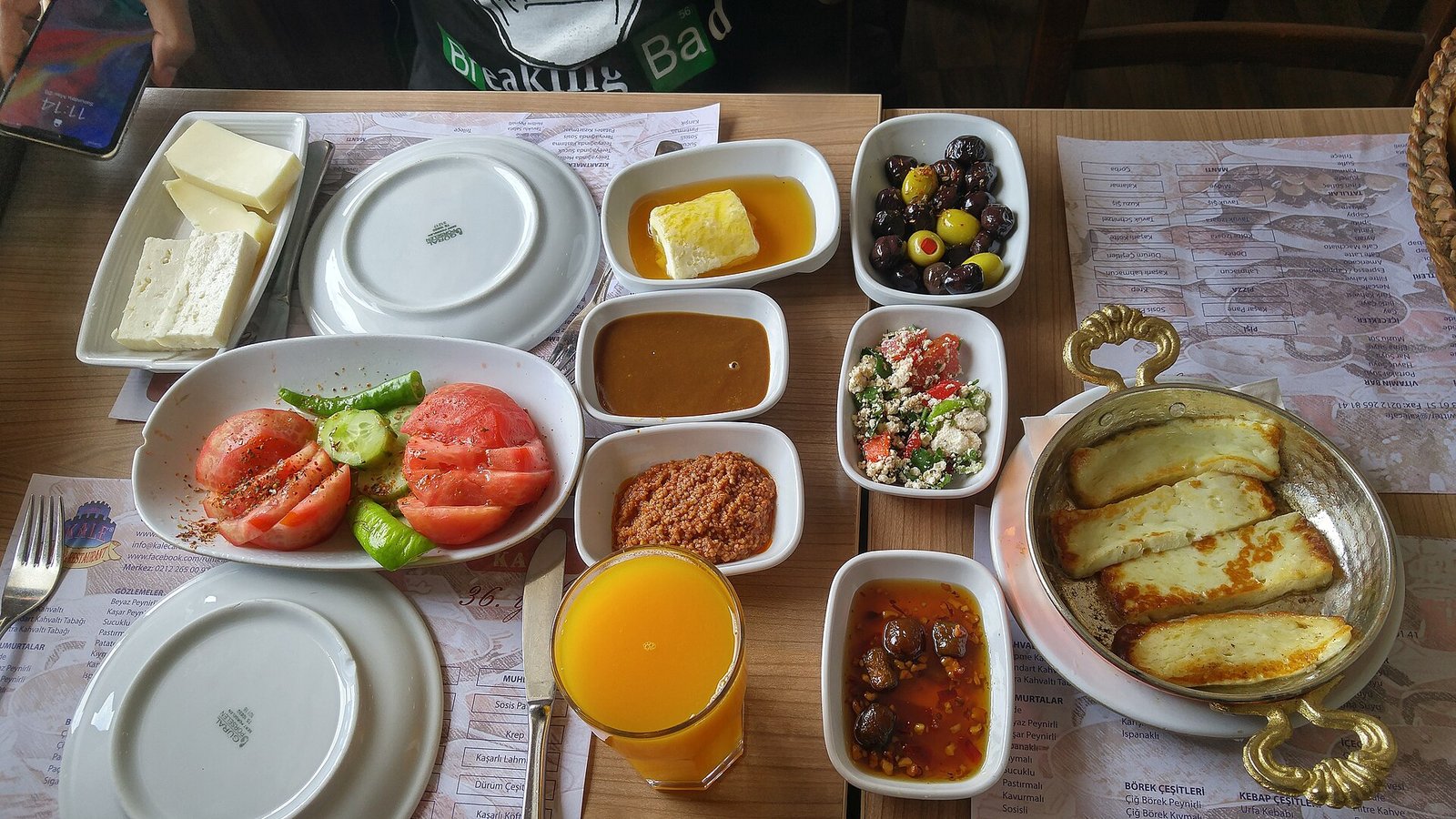
Turkish food is regional to a degree that surprises people who arrive expecting kebab. Istanbul is a collection of migrant regional cuisines rather than a cuisine of its own: seek out balık ekmek at Eminönü, a steam-table lunch at an esnaf lokantası where you point at what you want, a meyhane evening, and the serpme kahvaltı breakfast of twenty small plates.
The Aegean cooks in olive oil and serves it cold — artichokes, broad beans, wild greens, stuffed vine leaves — which makes İzmir and its coast the easiest region in Türkiye for vegetarians. The Mediterranean gives you Antalya-style piyaz with tahini and, further east into Hatay, a Levantine repertoire of künefe, warm humus and zahter that is quite unlike central Anatolian cooking. Cappadocia has testi kebabı, the sealed clay pot broken at the table, and mantı, and a real indigenous-grape wine industry built on Emir and Kalecik Karası. The southeast — Gaziantep, Şanlıurfa, Mardin — has the most serious food in the country, and pistachio baklava that makes the Istanbul version look approximate.
Halal is effectively the default; almost all meat sold is halal-slaughtered and no certificate hunting is needed. Pork is rare and clearly labelled. The live issue for observant travellers is alcohol served in the same establishment, which is common and unremarkable.
Vegetarian is much easier than the kebab reputation suggests. Mercimek çorbası is everywhere and almost always meat-free; mezze, mücver, imam bayıldı, börek, cheese gözleme, pide and the full breakfast are all vegetarian. Two traps: soups and pilafs are often made with meat stock even when no meat is visible — ask *et suyu var mı?* — and in small towns *et yemiyorum* (“I don’t eat meat”) travels better than the word *vejetaryen*. Vegan is genuinely hard, because yoghurt, butter and cheese are structural to the cuisine.
Tipping, now that service charges are banned. Round up at a lokanta or leave 5–10 per cent; 10 per cent in cash on the table at a sit-down restaurant or meyhane; round up the coins at a café; round up a taxi fare; 50–100 TL for a hotel porter. And check your bill — if you still see a *servis* or *kuver* line, it has been unlawful since 30 January 2026 and you can decline it.
Common questions
Is Türkiye expensive in 2026? In euros, dollars or sterling, no — it is one of the better-value destinations in the eastern Mediterranean. In lira, prices rose 31.75 per cent in the year to July 2026. Both are true. What it means practically is that any lira figure you read needs a date attached, and that you should re-check restaurant and hotel prices close to travel rather than trusting a guide written six months ago.
Do I need a visa? Not for tourism on an ordinary US, UK, Canadian, Australian, Irish or EU passport — 90 days in any 180. Official and diplomatic passports of those countries do need one, as do BN(O) and other non-Citizen British passports.
How many days do I need? Seven nights buys Istanbul plus one other region comfortably. Ten buys Istanbul, Cappadocia and the Aegean at a pace that is brisk but not silly. Fourteen is when you stop feeling like you are commuting.
Can I get from Istanbul to Cappadocia by train? No. There is no high-speed line to Nevşehir or Kayseri and there is no plan for one. Fly to Kayseri or Nevşehir, or take the overnight coach.
Is it safe for solo women? Yes, and it is done constantly — with the specific caveats above about hotel and spa staff and about one-to-one situations with people met that day, which both governments flag independently.
Should I book tours or go independently? Istanbul, İzmir and Antalya are straightforward independently. Cappadocia’s outer valleys and the underground cities are the case for a guided day — distances are awkward without a car and the geology genuinely benefits from someone explaining it. WeGoTrip sells self-guided audio tours if you want structure without a group.
Is 2026 a crowded year? Slightly less than 2025. Foreign arrivals in the first half of 2026 were 20.77 million, down 2.96 per cent year on year. Not a collapse, and the usual crowd-avoidance advice — early mornings, weekdays, shoulder season — still applies unchanged.
Before you book
Three things worth doing in this order. Fix your dates against the climate table rather than against a generic “best time” claim, because the right month for Antalya and the right month for Cappadocia are not the same month. Check your passport’s expiry against the six-month rule even though the legal minimum is lower. And price the coach against the flight on any route over eight hours, because on Istanbul–Antalya the twelve-hour bus is not the cheap option.
When you are ready, compare flights and, if the Lycian coast or Cappadocia’s valleys are on your list, look at local car hire rather than only the international chains.