In short
The practical rules most Istanbul guides skip. Mosques close to visitors roughly 30–60 minutes before each of the five daily prayers and reopen about 30 minutes after, so the reliable visiting window is 08:30–11:30, Monday to Thursday. Loaner headscarves exist but run short at peak times; one large lightweight pashmina covers hair and shoulders and removes the problem.
Verified against mosque and municipal sources, August 2026.
Istanbul is the only city on earth that sits on two continents, and it never lets you forget it. You can eat breakfast in Europe, take a twenty-minute ferry, and be drinking tea in Asia before the glass has cooled. Between those two shores sit 1,600 years of empire — Byzantine, Ottoman, and now a restless modern republic of sixteen million people.
This guide is the entry point to everything we’ve written about Istanbul. It covers what the city actually costs in 2026, how to move around it, what’s worth your time, and the mistakes that catch almost every first-time visitor.
What is in this guide
- Istanbul at a glance
- Do you need a visa? (Probably not, and be careful here)
- Getting from the airport
- Getting around: the İstanbulkart
- What things cost
- The sights: what they actually cost, and what’s free
- Mosque etiquette
- Where to stay
- The Bosphorus: don’t overpay for the view
- Best time to visit
- Safety and the scams that actually happen
- Practical odds and ends
- Frequently asked questions
- Where to go next
- Before you book
Prices verified: August 2026. Turkish transit fares and museum tickets changed three times in the eleven months before this guide was written, so we’ve dated every figure and linked our sources. Check before you travel.
Editor’s note
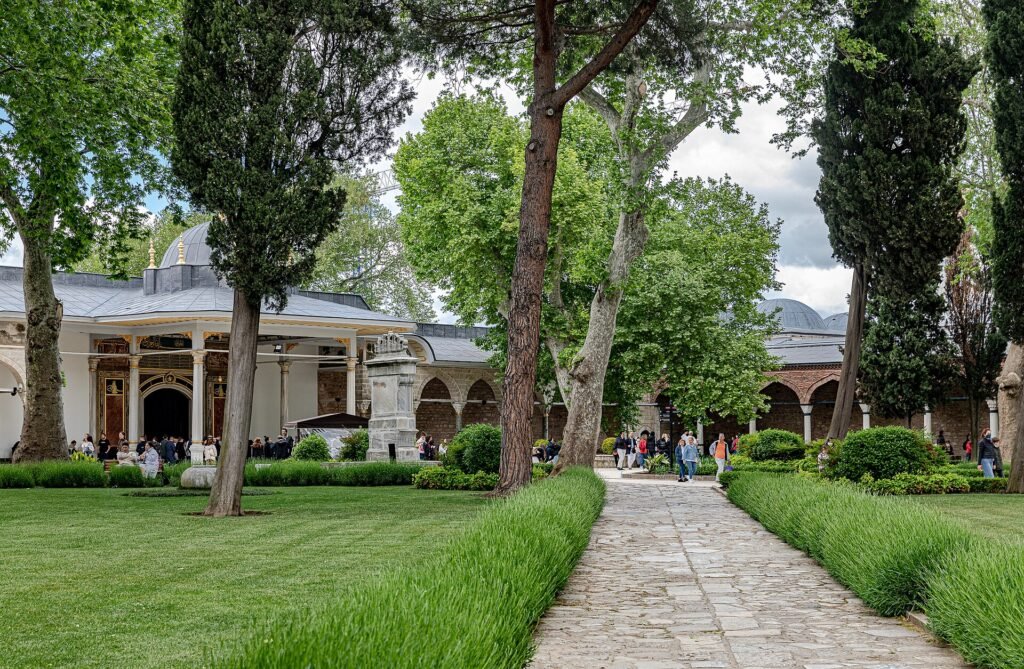
Istanbul punishes people who plan by distance rather than by day. Topkapi closes on Tuesdays, and several other major sites have their own closed day. A perfectly sensible-looking route can walk you to three locked doors in a single morning. Everything in this guide is arranged around that, which is why the order occasionally looks odd on a map.
Istanbul at a glance
| Country | Türkiye |
| Continents | Europe and Asia, split by the Bosphorus strait |
| Population | ~15.9 million |
| Currency | Turkish lira (₺ / TRY) — 1 USD ≈ ₺47.9, 1 EUR ≈ ₺55.5 (18 Aug 2026) |
| Language | Turkish. English is reliable in tourist areas, thin elsewhere |
| Visa | Not required for US, UK, Canadian and Australian citizens — 90 days |
| Airports | IST (Istanbul Airport, European side) · SAW (Sabiha Gökçen, Asian side) |
| Best months | Late April–mid May · mid September–mid October |
| Ideal trip length | 4–5 days for a first visit |
| Daily budget | $60 backpacker · $130 mid-range · $300+ comfortable |
Do you need a visa? (Probably not, and be careful here)
US, UK, Canadian and Australian passport holders do not need a visa or an e-visa to visit Türkiye for tourism. You get 90 days within any 180-day period, free, on arrival.
This changed relatively recently — Americans and Canadians were exempted in late 2023, Britons in March 2024, and Australians only on 17 April 2026. A large number of travel websites, including ones updated in 2026, still tell these nationalities they need a $50–60 e-visa. They are wrong, and there is an entire industry of third-party “Turkey e-visa” sites happy to charge you for a document you do not need.
The only official portal is evisa.gov.tr, and if you hold one of the four passports above, you have no reason to visit it.
Passport validity: official guidance conflicts — the Turkish foreign ministry says 60 days beyond your stay, the UK and Canadian governments say 150 days from arrival, the US State Department says six months. Travel with six months’ validity and a blank page and you’re safe under every rule. Check that immigration physically stamps your passport on arrival; a missing entry stamp can cause problems on the way out.
Getting from the airport
Istanbul has two airports and they are on opposite sides of the city. Check which one you’re flying into before you book a hotel — it genuinely affects where you should stay.
From IST (Istanbul Airport)
| Option | Cost | Time to Taksim | Notes |
|---|---|---|---|
| M11 metro | ₺47.89 to Gayrettepe, then ₺34.40 transfer = ₺82 (~$1.72) | 45–55 min | Cheapest and most reliable. Runs 06:00–00:00 only — no night service |
| Havaist bus | ₺470 (~$9.81) | ~90 min | 24/7, from arrivals level −2. Card or app only, no cash, no İstanbulkart |
| İETT city bus (H-lines) | ₺92.40 | 90–150 min | Slow, many stops. Only if the metro is closed |
| Taxi | ₺2,050–2,350 (~$43–49) + tolls | 45–60 min | Metered by law. Anyone quoting a flat price up front is off-book |
From SAW (Sabiha Gökçen)
| Option | Cost | Time | Notes |
|---|---|---|---|
| M4 metro to Kadıköy | ₺46.20 (~$0.96) | ~52 min | 06:00–00:00, and 24 hours on Friday and Saturday nights |
| Havabüs to Taksim | ₺485 (~$10.12) | ~90 min | Night runs 01:00–04:00 timed to arrivals |
| Havabüs to Kadıköy | ₺300 | ~60 min | |
| Taxi to Taksim | ₺2,650–3,400 + bridge or tunnel toll | 60–90 min | Tolls: ₺47 FSM Bridge or ₺225 Eurasia Tunnel |
The one-line rule: if you’re flying into IST, staying near a green-line (M2) metro stop saves you real time. If you’re flying into SAW, Kadıköy is a 52-minute direct metro ride and everything else is a project.
Getting around: the İstanbulkart
Buy one. It is the single most useful ₺165 you will spend in Istanbul.
The İstanbulkart is a rechargeable card that works on every metro, tram, bus, ferry, funicular, Marmaray train and the nostalgic trams. You buy it from the yellow Biletmatik machines at any station or ferry pier. The machines take banknotes and give no change, so load a round number.
What a ride costs (effective 20 July 2026)
| Mode | Fare |
|---|---|
| Metro, tram, bus, funicular, Tünel, nostalgic tram | ₺46.20 (~$0.96) |
| Marmaray (Sirkeci↔Üsküdar, the cross-Bosphorus hop) | ₺37.40 |
| Ferry Eminönü↔Üsküdar | ₺58.52 |
| Ferry Karaköy↔Kadıköy | ₺65.21 |
The transfer discount is the part people miss
Within 120 minutes of your first tap, each subsequent leg gets cheaper:
| Leg | You pay | Saving |
|---|---|---|
| 1st boarding | ₺46.20 | — |
| 1st transfer | ₺34.40 | −26% |
| 2nd transfer | ₺26.42 | −43% |
| 3rd–5th transfer | ₺17.18 | −63% |
A four-leg sightseeing day — tram, funicular, metro, ferry — costs ₺124 (about $2.59) instead of ₺185. Maximum five transfers per chain.
Can two people share one card? Yes, tap once per person at the same gate. But only the first tap gets the transfer discount, so for a multi-leg day, two cards pay for themselves.
Skip the tourist transport passes. The “Istanbul Tourist Pass” explicitly excludes metro, tram and bus. Unlimited-ride QR products need 10–12 rides a day to break even, which nobody does. Pay as you go.
What things cost
Istanbul is cheap by Western European standards and getting cheaper in dollar terms, because the lira has fallen faster than local prices have risen.
| Item | Price | ≈ USD |
|---|---|---|
| Çay (tea), street glass | ₺20–40 | $0.40–0.85 |
| Simit | ₺30–50 | $0.65–1.05 |
| Döner wrap | ₺295–495 | $6.15–10.35 |
| Midye dolma (stuffed mussel), each | ₺17.50 | $0.37 |
| Balık ekmek (fish sandwich), Eminönü | ₺150–250 | $3.15–5.20 |
| Turkish breakfast for two | ₺800–1,200 | $17–25 |
| Mid-range dinner for two, three courses | ₺2,500 | ~$52 |
| Draught beer, bar | ₺200 | $4.20 |
| Single metro ride | ₺46.20 | $0.96 |
| Taxi, Sultanahmet → Taksim | ₺250–450 | $5–9.50 |
We break this down properly, day by day and tier by tier, in our full Istanbul trip cost guide.
One money rule that will save you 5–10%: when a card terminal or ATM offers to charge you in dollars or pounds “for convenience,” always decline and pay in lira. That offer is Dynamic Currency Conversion and the exchange rate is deliberately bad.
The sights: what they actually cost, and what’s free
Istanbul’s ticketing is genuinely confusing because two different authorities price things two different ways — some sites charge foreigners in euros, others in lira, and the two-tier pricing (foreigners pay roughly double the Turkish rate at state sites) is official policy, not a scam.
| Site | Foreign visitor price | ≈ USD | Closed |
|---|---|---|---|
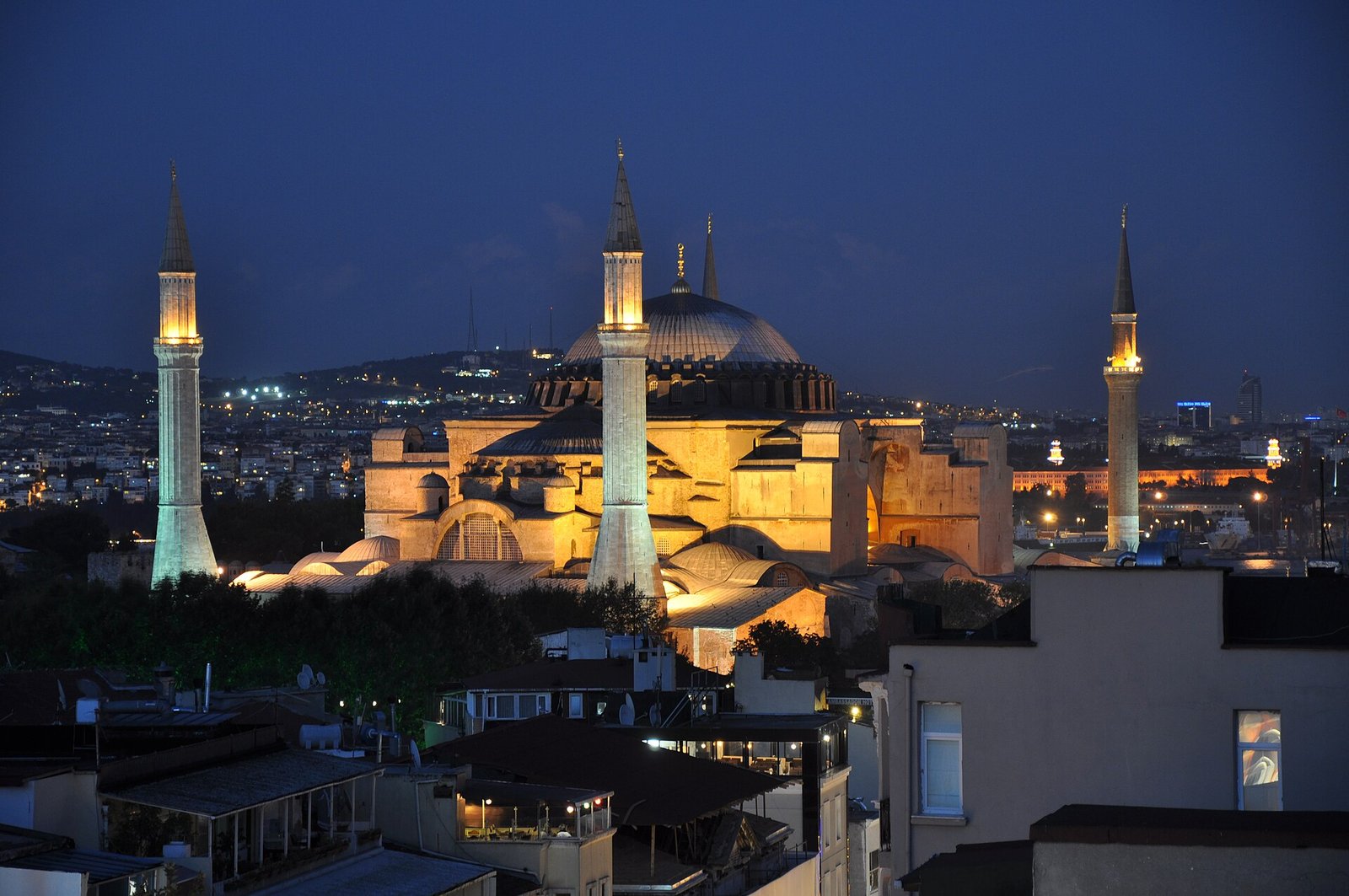
| Hagia Sophia — ground floor | FREE | — | Fri 12:00–14:30 |
| Hagia Sophia — upper gallery | €25 | ~$27 | Same |
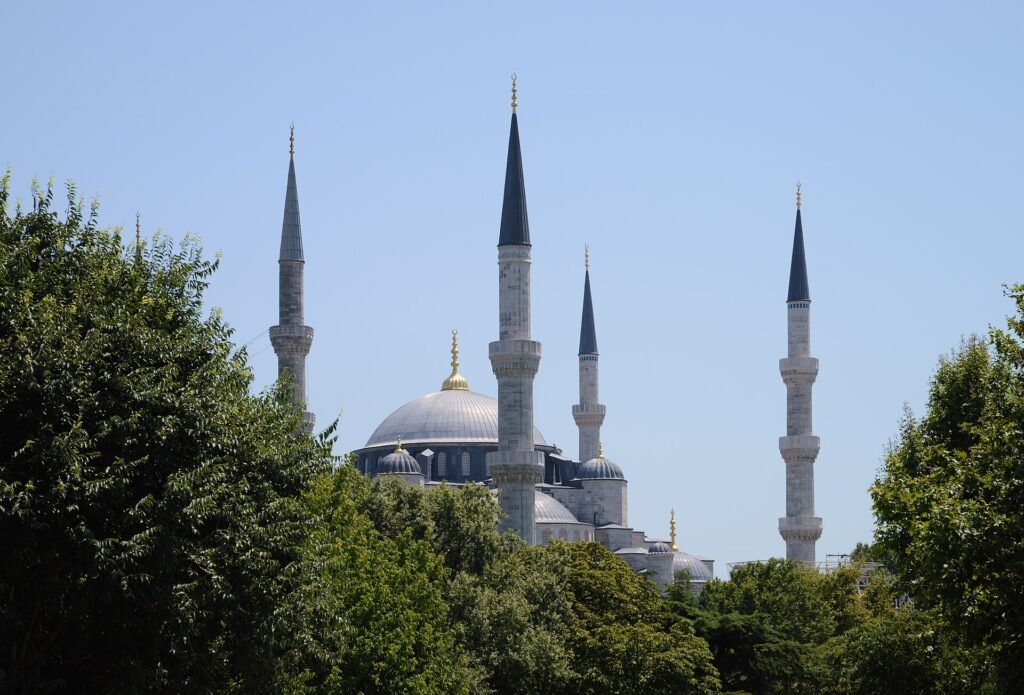
| Blue Mosque | FREE | — | Mornings, reopens ~14:30 Fri |
| Süleymaniye Mosque | FREE | — | Mornings on Friday |
| Topkapı Palace (incl. Harem + Hagia Irene) | ₺2,750 | ~$58 | Tuesday |
| Basilica Cistern — day | ₺1,950 | ~$41 | Open daily |
| Basilica Cistern — evening (19:30–22:00) | ₺3,000 | ~$63 | |
| Dolmabahçe Palace | ₺2,000 | ~$42 | Monday |
| Galata Tower | €30 | ~$32 | None |
| Chora / Kariye Mosque | €20 | ~$23 | Friday, all day |
| Archaeological Museums | €15 | ~$17 | Monday |
| Grand Bazaar | Free | — | Sunday |
| Spice Bazaar | Free | — | Open Sundays |
Three things worth knowing before you buy anything
1. Hagia Sophia’s ground floor is free. It is a working mosque, and anyone may walk in. The €25 buys the upper gallery — the Byzantine mosaics, the Deësis, the Imperial Loge — via a separate entrance on the Bosphorus side. If the mosaics aren’t your priority, you can see the interior of Hagia Sophia for nothing. Card only, no cash.
2. Nobody sells tickets to the Blue Mosque, because it’s free. Multiple websites sell “Blue Mosque tickets” and “skip-the-line access.” This is outright fraud. The queue is usually under five minutes.
3. The Museum Pass Istanbul (€105, 5 days) probably won’t pay off. It excludes Hagia Sophia, the Basilica Cistern, Dolmabahçe and Chora — which is most of a typical first-timer’s list. It covers Topkapı (€50 of value), the Archaeological Museums (€15) and Turkish & Islamic Arts (€17), which is €82. You need four-plus covered sites to break even. And it does not skip the security queue, which is the actual bottleneck.
Memorise the closed days
This is the single most common Istanbul itinerary mistake:
| Day | Closed |
|---|---|
| Monday | Dolmabahçe, Archaeological Museums, Istanbul Modern, Pera, Rahmi Koç |
| Tuesday | Topkapı Palace |
| Friday | Chora all day; all mosques closed to visitors until ~14:00–14:30 |
| Sunday | Grand Bazaar |
Our 5-day Istanbul itinerary is built around these closures so you don’t have to think about it.
Mosque etiquette
All of Istanbul’s great mosques are free and welcome non-Muslim visitors. There is a dress code and it is enforced politely but consistently.
Women: hair covered with a scarf, shoulders covered, knees covered. Men: shoulders covered, no shorts above the knee — long trousers are strongly preferred and some mosques refuse shorts outright. Everyone: shoes off at the carpet. Wear or bring socks. Keep your voice down, don’t walk in front of anyone praying, don’t photograph worshippers.
Scarves and wraps are lent free at the visitor entrances of the Blue Mosque, Süleymaniye and Hagia Sophia — but they’re shared, often in short supply at peak times, and rarely clean. Bring a large lightweight pashmina and it solves headscarf and shoulders in one item.
Mosques close to visitors roughly 30–60 minutes before each of the five daily prayers and reopen about 30 minutes after. The best window is 08:30–11:30, Monday to Thursday — least crowded and no prayer interruptions.
Where to stay
The short version: three nights or fewer, stay in Sultanahmet. Four nights or more, stay in Karaköy or Galata.
| Area | Best for | Watch out for |
|---|---|---|
| Sultanahmet | First-timers, sights on foot, flat terrain | Tourist bubble, poor restaurants, dead after 22:00 |
| Karaköy / Galata | 4+ night stays, food, nightlife | Steep hills and stairs; noisy bars |
| Cihangir | Longer stays, café culture | Poor transit, brutal climbs |
| Kadıköy (Asian side) | Repeat visitors, food, value | 40–60 min to the Old City every day |
| Nişantaşı | Calm base, shopping, IST airport access | Nothing to see, 25–35 min to everything |
The trap most first-timers fall into is booking Sultanahmet for a week and then eating badly for seven nights — the Old City empties of locals at 18:00. The trap in the other direction is booking Galata and discovering that the “ten-minute walk to the tram” is a ten-minute climb at midnight.
Our full where to stay in Istanbul guide breaks down ten neighbourhoods with real nightly rates, named hotels and honest downsides.
The Bosphorus: don’t overpay for the view
This is where travellers waste the most money in Istanbul. Four completely different products are all sold as “Bosphorus cruise.”
| Option | Price | Duration | Verdict |
|---|---|---|---|
| Commuter ferry (Eminönü↔Üsküdar) | ₺58 (~$1.22) | 20 min | The sleeper pick. 90% of the view for 1% of the price |
| Tourist mega-yacht cruise | $8–12 | 2h | Excellent value. Audio guide, open deck, 4.8★ across 18,000+ reviews |
| Şehir Hatları Long Bosphorus Tour | ₺640 (~$13) | ~6h | Public ferry to Anadolu Kavağı. One departure daily at 10:35 |
| Sunset yacht cruise | $40–60 | 2–2.5h | Smaller boat, live guide, drinks. Fine if you want the upgrade |
| Cheap dinner cruise | $45 | 3–3.5h | Avoid. Mediocre food, drink upselling, overcrowding. Rated 3.8★ vs 4.8★ for the $8 daytime boat |
There is no meaningful difference in view between the $8 boat and the $58 boat. You’re buying deck space and a drink.
Best time to visit
| Period | Weather | Crowds | Verdict |
|---|---|---|---|
| Late Apr – mid May | 17–21°C, tulips, low humidity | Moderate | Best overall |
| Mid Sep – mid Oct | 19–24°C, beautiful light | High | Best light, more people than you’d think |
| Jun–Aug | 28°C+, humid | Peak | Queuing in full sun. Peak hotel prices |
| Nov–Feb | 8–15°C, 12–14 rain days/month | Low | Cheap, empty mosques, wet-weather gamble |
| March | Cold, grey | Lowest | Cheapest month |
One honest caveat most guides skip: Istanbul’s official arrival figures show October is almost as busy as July. This is a year-round city break, not a summer resort. Shoulder season buys you better weather, not an empty Hagia Sophia — book major sites ahead in every month except January to March.
Safety and the scams that actually happen
Istanbul is safer for a tourist than most large American or Western European cities in terms of violent crime. The realistic risks cost you money and dignity, not your safety.
| Scam | How it works | Defence |
|---|---|---|
| Shoe shine | A shiner drops a brush ahead of you; you helpfully pick it up; he insists on shining your shoes, then demands a fortune | Don’t pick it up. Keep walking |
| The “friendly local” bar | A well-dressed English speaker befriends you and suggests a bar. Women join your table, drinks appear, the bill is €500–1,500 and the door is blocked | Never follow a stranger to a bar. This is the one that costs people thousands |
| “The mosque is closed today” | A helpful man tells you Hagia Sophia is shut and offers to show you his cousin’s carpet shop | Walk to the entrance and read the board yourself |
| Taxi tricks | “Meter’s broken,” scenic routes, note-swapping (you hand ₺500, he shows you ₺50) | Use BiTaksi or Uber (which dispatches licensed taxis). Say the note’s value out loud |
| Restaurant bill | Unordered bread, water and meze appear “complimentary,” then itemised | Ask “Bu ücretli mi?” — is this charged? Photograph the menu |
| Card terminal DCC | Offers to charge you in your home currency at a 5–10% worse rate | Always press TRY |
Areas to avoid after dark: Tarlabaşı and Dolapdere (five minutes downhill from İstiklal), unlit backstreets off İstiklal, and Laleli/Aksaray. Sultanahmet, Kadıköy, Beşiktaş, Karaköy, Cihangir, Nişantaşı and Üsküdar are all fine at night.
One serious warning from the UK Foreign Office: methanol poisoning from illegally produced spirits is a real and occasionally fatal risk in Türkiye. Drink at established venues and be suspicious of unbranded or unusually cheap rakı and vodka.
Practical odds and ends
Tipping. Low-stakes and genuinely optional. 5–10% at sit-down restaurants, round up in taxis, nothing at street food. Hamams are the exception — 10–20% of the service is expected. Note that as of 30 January 2026, mandatory service charges and cover charges (kuver) are banned by law in Turkish restaurants and cafés. If you see “servis ücreti” on a bill, you can refuse to pay it.
Money. Cards are accepted almost everywhere, including many taxis and market stalls; contactless works without a PIN up to ₺2,500. Carry some cash for street food and mosque donations. For exchanging cash, the döviz bürosu offices around the Grand Bazaar and Spice Bazaar give the best rates; the airport and your hotel give the worst.
SIM cards. Turkish tourist SIMs are expensive — Turkcell’s welcome pack is around ₺1,800 (~$38). Buy a travel eSIM before you fly for a fraction of that. (There’s an obscure rule where a foreign phone stops working on Turkish networks 120 days after first using a Turkish SIM unless you pay a ₺54,258 registration fee. Irrelevant for a holiday; relevant if you’re a repeat long-stay visitor.)
Water. Tap water meets safety standards but almost nobody drinks it — old building plumbing and heavy chlorination are the issue, not the source. Fine for teeth and cooking. Drink bottled; it’s ₺29 for 1.5 litres.
Language. English works throughout the tourist core and stops abruptly outside it. Taxi drivers, older shopkeepers and neighbourhood restaurants mostly don’t speak it. Four words that change how you’re treated: merhaba (hello), teşekkürler (thanks), lütfen (please), and kolay gelsin — “may it come easy,” said to anyone working. Turks love that one.
Frequently asked questions
How many days do you need in Istanbul? Four to five for a first visit. Three is enough for the Old City headline sights but leaves nothing for the Bosphorus, the Asian side, or the neighbourhoods where people actually live. Two days is a stopover, not a trip.
Is Istanbul expensive? No, by Western standards. A comfortable mid-range day — hotel, three meals, transit and one paid attraction — runs about $130 per person. The expensive parts are museum tickets, which are priced in euros for foreigners and are not cheap.
Do I need a visa for Türkiye? Not if you hold a US, UK, Canadian or Australian passport. Ninety days, visa-free, no e-visa, no fee. Ignore any site that tells you otherwise.
Is Hagia Sophia free? The ground floor is free to everyone. The upper gallery with the Byzantine mosaics costs €25 and has a separate entrance.
What should I not do in Istanbul? Don’t visit Topkapı on a Tuesday or the Grand Bazaar on a Sunday. Don’t buy a “Blue Mosque ticket.” Don’t follow a friendly stranger to a bar. Don’t book the cheap dinner cruise. Don’t let a card machine charge you in dollars.
Is Istanbul safe for solo female travellers? Yes, with the caveat that persistent commercial attention — shopkeepers, touts, unsolicited conversation — is common and can be wearing. It’s rarely physical. A firm, unsmiling “hayır” works better than politeness. Kadıköy and Beşiktaş are the easiest neighbourhoods to base in.
Which airport should I fly into? Whichever is cheaper, but know that they’re on opposite sides of the city. IST pairs best with a European-side hotel near the M2 metro; SAW pairs best with Kadıköy on the Asian side.
European side or Asian side? Stay European for a first visit — that’s where the sights are. But spend at least one afternoon in Kadıköy. It’s twenty minutes by ferry, it’s where Istanbul eats, and it will change your impression of the city.
Where to go next
- The perfect 5-day Istanbul itinerary — day by day, built around the closed days, with transit times and costs
- How much does Istanbul cost? — a real 2026 budget breakdown at three spending tiers
- Where to stay in Istanbul — ten neighbourhoods, honest downsides, named hotels
- The best tours and day trips — what’s worth paying for, and the four categories to avoid
Prices and opening hours verified August 2026. Turkish transit fares and museum tickets are revised frequently — often two or three times a year — so please re-check anything time-sensitive before you travel.
Before you book
If you would rather explore at your own pace than follow a raised umbrella, self-guided audio tours cover the Old City for a fraction of a guided tour and let you stop when you want. For Hagia Sophia and Topkapi in particular, the audio version is the better trade: you get the history without the group timetable.
Save this for later