In short
Five days in Istanbul costs about ₺750 per person (~$16) in transit for the whole trip, plus roughly ₺5,900 + €45 (~$175) if you pay for every attraction — the ticketed sights, not the transport, are the budget. Expect 8–14 km of walking a day; the itinerary is sequenced around each site’s closing day rather than around the map.
Fares and fees checked August 2026.
Most Istanbul itineraries you’ll find online have the same problem: they ignore the closed days. They’ll send you to Topkapı Palace on a Tuesday when it’s shut, or the Grand Bazaar on a Sunday when 4,000 shops are locked, or a mosque on a Friday morning when tourists aren’t admitted.
This one is built around those closures. It also tells you what each leg actually costs and how long it actually takes, because “then head to Dolmabahçe” is not a plan when Dolmabahçe is a 40-minute journey and closed on Mondays.
What is in this guide
Best start day: Wednesday or Thursday. That puts your Old City museum day mid-week and keeps Topkapı, the Grand Bazaar and the Friday mosque restriction out of each other’s way. If you must start on another day, there’s an adjustment table at the end.
Prices verified August 2026.
Editor’s note
This plan is built backwards from the closed days rather than from the map. On paper it looks less efficient. In practice it works considerably better: slightly more walking, and far less time standing outside a shut building working out what to do instead.
Before you start
| Total transit cost | ~₺750 per person (~$16) for all five days |
| Total attraction cost | ~₺5,900 + €45 (~$175) if you do everything paid |
| Walking | 8–14 km per day. Bring real shoes — Istanbul is cobbles and hills |
| Buy on arrival | İstanbulkart (₺165) from any Biletmatik machine |
| Dress code | Shoulders and knees covered for mosque days; scarf for women |
One thing to do before day one: download BiTaksi and a prayer-times app. The first saves you from taxi arguments; the second tells you when mosques will close to visitors.
Day 1 — Sultanahmet: the greatest hits
Base yourself in the Old City today and don’t cross a bridge. Everything below is within a fifteen-minute walk of everything else.
Morning: Hagia Sophia and the Blue Mosque
08:30 — Hagia Sophia. Get here before the coaches. The ground floor is free and open to everyone; you walk in through the main gate on Sultanahmet Square, take your shoes off, and stand under a dome that held the record as the world’s largest for nearly a thousand years.
If you want the Byzantine mosaics — the Deësis, the Comnenus panel, the view down into the prayer hall — that’s the upper gallery, €25, separate entrance on the Bosphorus-facing side, card payment only, no cash. Worth it if you care about the Byzantine layer. Skippable if you don’t.
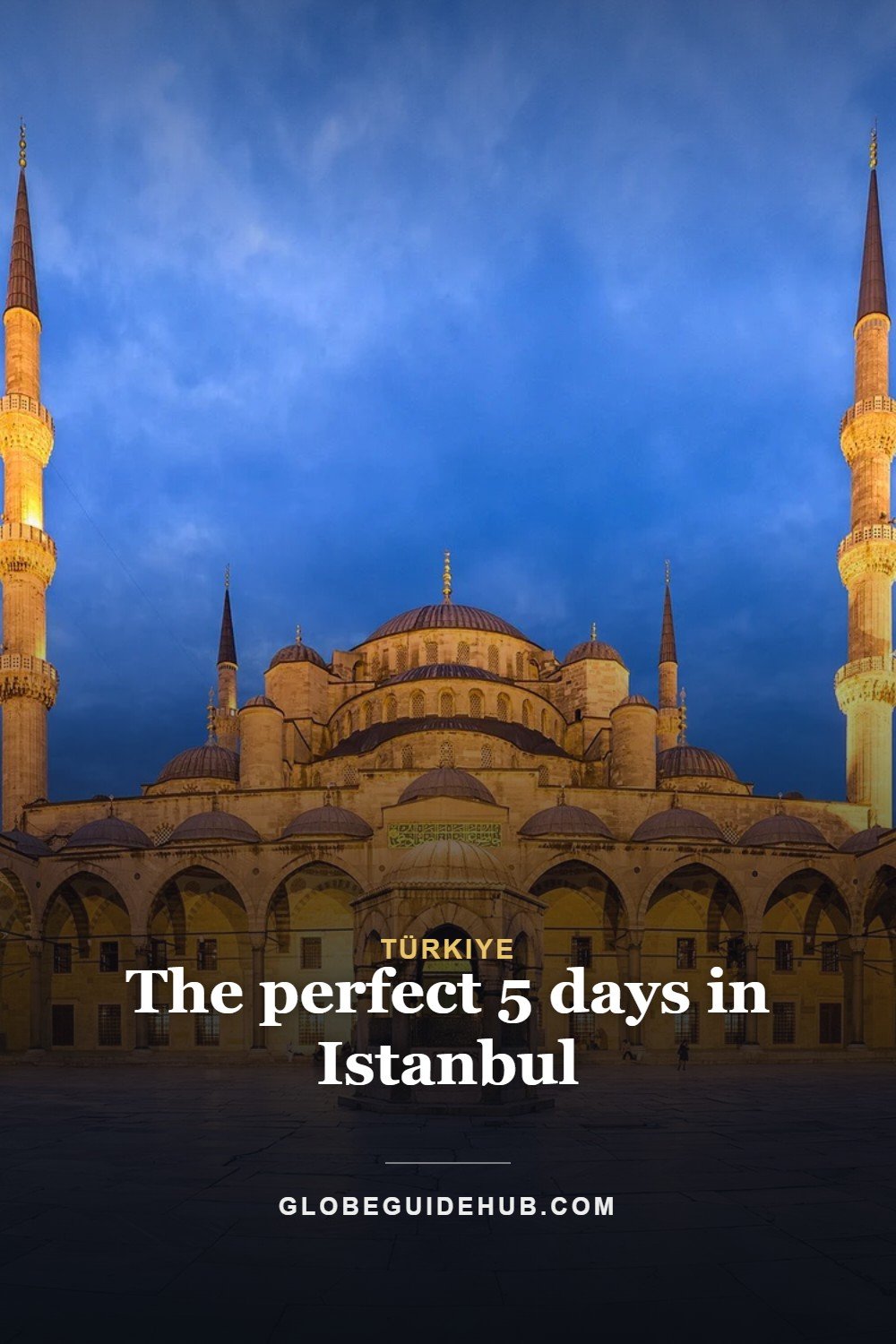
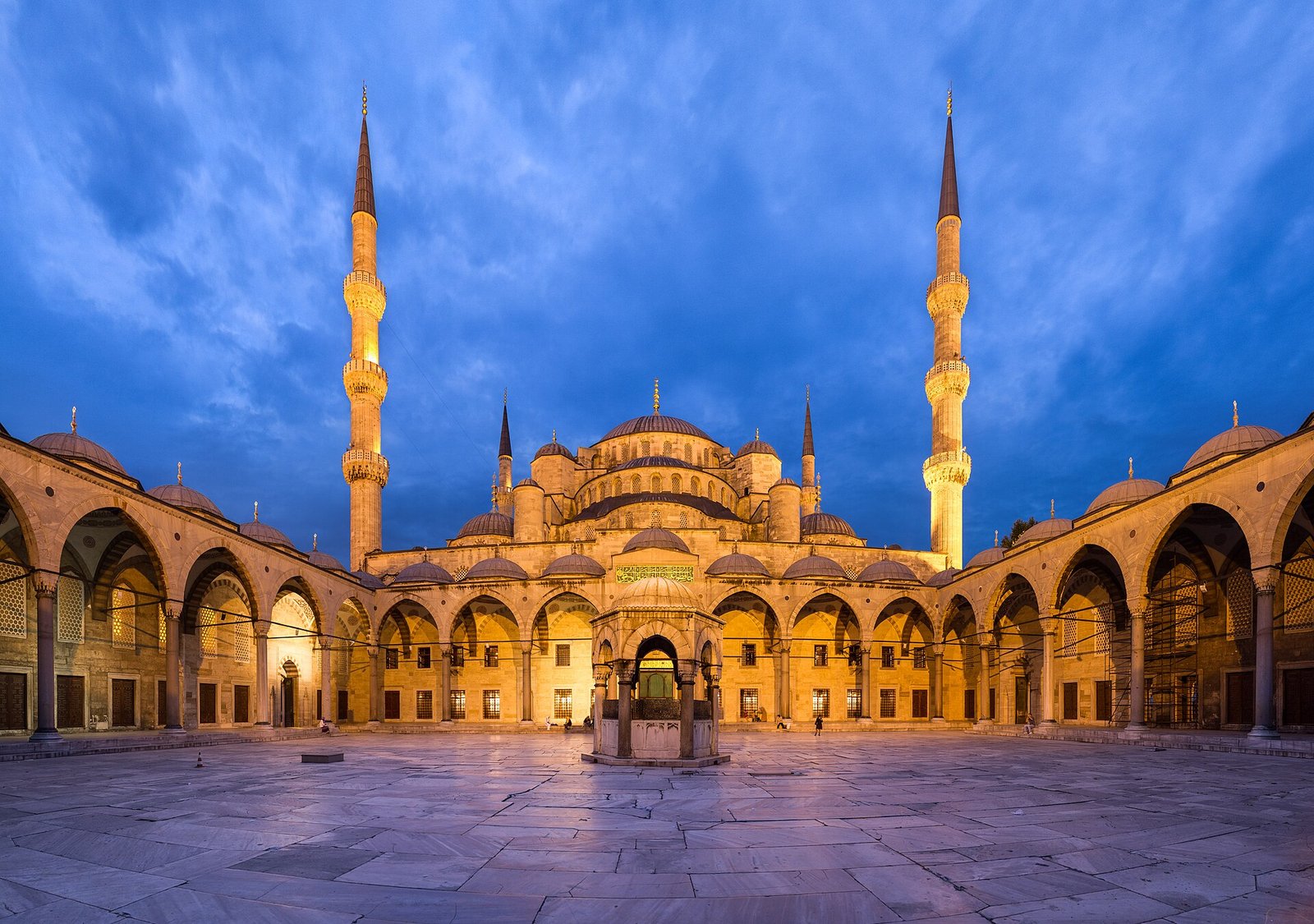
10:00 — Blue Mosque (Sultanahmet Camii). Free. Two minutes’ walk across the square. The 2015–2023 restoration is essentially finished — the scaffolding is down and the İznik tiles are visible again. Enter via the southern visitor entrance, not the courtyard gate the crowds queue at.
Nobody sells tickets to the Blue Mosque. It’s free and the queue is usually under five minutes. Several websites sell “Blue Mosque skip-the-line tickets.” That is fraud, full stop.
11:00 — The Hippodrome. The long open space between the two mosques was a Roman chariot-racing stadium seating 100,000. What’s left is three monuments standing in a row: an Egyptian obelisk carved for Thutmose III around 1450 BC and shipped here in 390 AD, the bronze Serpent Column looted from Delphi, and the crumbling Walled Obelisk. There’s no ticket and no signage worth reading — it takes ten minutes and it’s the most historically dense ten minutes in Istanbul.
Lunch
Walk five minutes uphill away from the square. Sultanahmet’s restaurant scene is the most tourist-degraded in the city — the ones with photo menus and a man outside inviting you in are exactly what they look like. Head toward Kadırga or Küçük Ayasofya and eat where the tradesmen eat.
Budget: ₺300–500 per person at a proper esnaf lokantası.
Afternoon: Topkapı Palace
13:00 — Topkapı Palace. ₺2,750 (~$58), and that single ticket now includes the Harem and Hagia Irene — they used to be separate supplements.
Allow three hours minimum. The four courtyards work outward from public to private, which is the whole point of the layout. Priorities if you’re short on time: the Treasury (the Spoonmaker’s Diamond, the Topkapı Dagger), the Holy Relics Chamber, and the Harem — which is not the salacious thing the name suggests but the most beautiful tiled interior in the city.
Closed Tuesdays. Summer hours 09:00–18:00, last entry 17:00; winter 09:00–16:30, last entry 15:30.
17:00 — Gülhane Park. The palace’s old outer garden, free, and the terrace at the northern end gives you the Golden Horn, the Bosphorus and the Asian shore in one view. Have a tea at the Set Üstü Çay Bahçesi.
Evening
19:30 — Basilica Cistern, evening session. ₺3,000 (~$63) for the 19:30–22:00 “night” ticket versus ₺1,950 in the day. The evening version adds theatrical lighting and sometimes live music. Night tickets are sold only at the door after 19:30, not online.
Is it worth 54% more? If you’re going to see it at all, yes — the cistern is a lighting experience more than an architectural one, and the day session is significantly more crowded. If you’re economising, do the day session and skip the evening.
Then eat in Kumkapı or head back up to your hotel. The Old City is quiet by ten.
Day 1 costs
| Item | Cost |
|---|---|
| Hagia Sophia ground floor | Free |
| Hagia Sophia upper gallery (optional) | €25 |
| Blue Mosque, Hippodrome, Gülhane | Free |
| Topkapı Palace + Harem + Hagia Irene | ₺2,750 |
| Basilica Cistern, evening | ₺3,000 |
| Transit | ₺0 — walk everything |
| Total | ₺5,750 + €25 (~$147) |
Day 2 — Bazaars, Süleymaniye and the Golden Horn
Do not do this day on a Sunday. The Grand Bazaar is closed.
Morning: Süleymaniye
09:00 — Süleymaniye Mosque. Free, and the best mosque in Istanbul. This is Sinan’s masterpiece — the imperial architect’s own favourite — and it gets a fraction of the Blue Mosque’s crowds because it’s a fifteen-minute uphill walk from the tram.
The courtyard terrace behind it looks down over the Golden Horn. Süleyman the Magnificent and his wife Hürrem Sultan are buried in the garden.
Getting there: T1 tram to Beyazıt–Kapalıçarşı (₺46.20), then walk 12 minutes uphill.
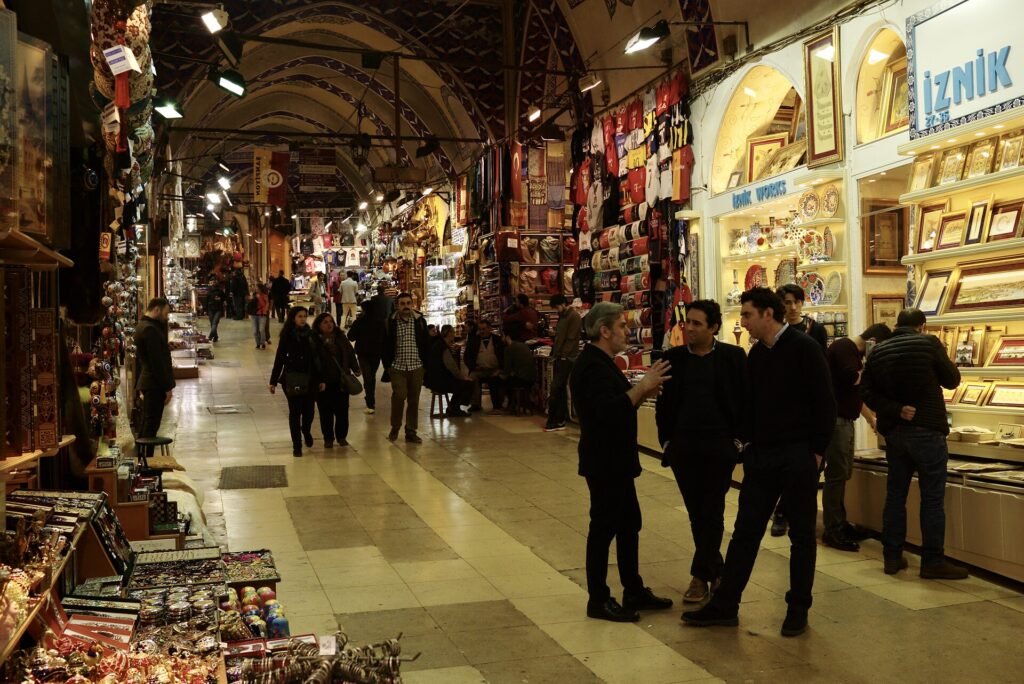
10:30 — The Grand Bazaar. Free, open 08:30–19:00, closed Sundays. 4,000 shops, 22 gates, 61 covered streets, and you will get lost — that’s the experience, not a failure.
What’s actually good: Turkish carpets and kilims (if you know what you’re doing), copper and brassware, old jewellery in the Old Bedesten at the centre, and İznik-style ceramics. What isn’t: anything labelled “genuine antique” (illegal to export), branded goods, and the leather.
Haggling is expected but not aggressive. A reasonable opening counter is 50–60% of the asking price. If you’re not going to buy, don’t start negotiating — it wastes everyone’s time and you’ll feel cornered.
Lunch
13:00 — Eminönü, balık ekmek. Walk down through the bazaar quarter to the waterfront at Eminönü and eat a grilled mackerel sandwich off one of the boats, standing up, with a glass of pickle juice (turşu suyu) if you’re brave. ₺150–250. It is Istanbul’s most famous cheap meal and it deserves the reputation.
14:00 — Spice Bazaar (Mısır Çarşısı). Free, and unlike the Grand Bazaar it’s open on Sundays. Smaller, denser, and more useful — this is where you buy pistachios, Turkish delight, dried fruit and actual spices. The backstreets around the Spice Bazaar are better than the bazaar itself: this is where the city’s coffee roasters, cheese sellers and kitchenware shops are.
Buy your baklava at Karaköy Güllüoğlu, not in the bazaar. A 250g portion of pistachio baklava runs about ₺625.
Afternoon: the Golden Horn
15:30 — T5 tram to Fener and Balat. ₺46.20, or ₺34.40 as a transfer. These are the old Greek and Jewish quarters of Istanbul, now the most photographed streets in the city — steep lanes of painted houses, antique shops and cafés.
Two honest notes. First, the famous coloured houses are on Kiremit Caddesi and there is a queue to photograph them by mid-morning. Second, the gentrified café strip is one street deep; behind it is a genuinely poor, conservative neighbourhood where people live. Dress and photograph accordingly.
Worth seeing: the Fener Greek Orthodox Patriarchate (the spiritual centre of Eastern Orthodoxy, quietly, behind a modest gate) and the red-brick Phanar Greek Orthodox College that towers over everything.
17:00 — Chora Mosque (Kariye). €20. Closed all day Friday. A twenty-minute walk uphill from Balat, or a short taxi.
This building contains the finest Byzantine mosaics and frescoes anywhere. They survived because Ottoman plaster covered rather than destroyed them, and a 1947 restoration brought them back. It was reconverted to a mosque in 2020 and still functions as one, but the mosaics remain visible — curtains are occasionally drawn over figural images during prayer.
Evening
Ferry or tram back to your base. If you’re staying in Beyoğlu, this is a good night for Nevizade Sokak — the meyhane alley off İstiklal where rakı and meze are the entire point.
Day 2 costs
| Item | Cost |
|---|---|
| Süleymaniye, Grand Bazaar, Spice Bazaar, Balat | Free |
| Chora Mosque | €20 |
| Transit (4 legs with transfers) | ₺124 |
| Lunch + baklava | ~₺800 |
| Total | ₺924 + €20 (~$42) |
Day 3 — The Bosphorus and the Asian side
Today is the day that changes people’s minds about Istanbul.
Morning: up the Bosphorus
10:00 — Dolmabahçe Palace. ₺2,000 (~$42). Closed Mondays. Tram T1 to Kabataş, then a five-minute walk.
This is the Ottoman Empire’s answer to Versailles, built in 1856 when the empire could no longer afford it — 285 rooms, 14 tonnes of gold leaf on the ceilings, and a 4.5-tonne Bohemian crystal chandelier that was a gift from Queen Victoria. Atatürk died here in 1938; every clock in the palace is stopped at 09:05.
The ₺2,000 ticket now covers the Selamlık, the Harem and the Painting Museum together. Audio guide included. Allow two hours.
Note: the Museum Pass Istanbul does not cover Dolmabahçe. It’s run by a separate authority.
Midday: the Bosphorus itself
You have three choices and the cheapest is genuinely excellent.
| Option | Price | Time | Best for |
|---|---|---|---|
| Commuter ferry, Eminönü↔Üsküdar | ₺58.52 | 20 min | Anyone. 90% of the view for 1% of the money |
| Tourist cruise, 2 hours | $8–12 | 2h | Audio guide, open deck, goes up to the second bridge |
| Şehir Hatları Long Tour | ₺640 | ~6h | A whole day. Departs Eminönü 10:35, one sailing daily |
Our pick for a five-day trip: the 2-hour tourist cruise. It’s about eight dollars, it has 18,000-plus reviews at 4.8 stars, and it takes you past the palaces, the fortresses and the wooden yalı mansions with commentary. There is no meaningful difference in view between the $8 boat and the $58 one — you’re paying for deck space.
The Long Tour is a better experience if you have a spare day, but it’s a fixed 10:35 departure, there’s no commentary, and the 2.5-hour stop at Anadolu Kavağı is a mediocre fish-restaurant strip.
Afternoon: Kadıköy
15:00 — Ferry to Kadıköy. ₺65.21 from Karaköy or Eminönü, about 20–25 minutes.
Kadıköy is where Istanbul eats. Not the Old City, not Beyoğlu — here. Güneşlibahçe Sokak is a single street of fishmongers, pickle shops, cheese sellers and meyhanes, and walking it slowly with an empty stomach is the best afternoon in the city.
Specific things to eat: çiğ köfte from a hole in the wall, a pickle juice from Özcan Turşu, İskender at a proper kebapçı, and tea afterwards. Then walk twenty minutes along the shore to Moda for the sunset over the European skyline.
18:30 — Kadıköy’s bar street (Kadife Sokak) if you want the night, or the ferry back if you don’t. The crossing at dusk with the Old City silhouetted against the light is, genuinely, the thing people remember.
Day 3 costs
| Item | Cost |
|---|---|
| Dolmabahçe Palace | ₺2,000 |
| Bosphorus cruise (2h tourist boat) | ~₺400 ($8) |
| Ferries and tram | ~₺180 |
| Food | ~₺900 |
| Total | ~₺3,480 (~$73) |
Day 4 — Beyoğlu, Galata and a hamam
Morning: the slow half
Sleep in. You’ve earned it and today is the day Istanbul stops being a checklist.
10:30 — Turkish breakfast. A serpme kahvaltı is fifteen to twenty small plates — cheeses, olives, jams, honey with clotted cream, eggs, tomatoes, cucumbers, sausage, endless bread and endless tea. It takes two hours and it is a meal, not a snack.
Go to the Beşiktaş breakfast street where it’s ₺800–1,200 for two, rather than the Bosphorus waterfront where the same thing is ₺2,500–3,000.
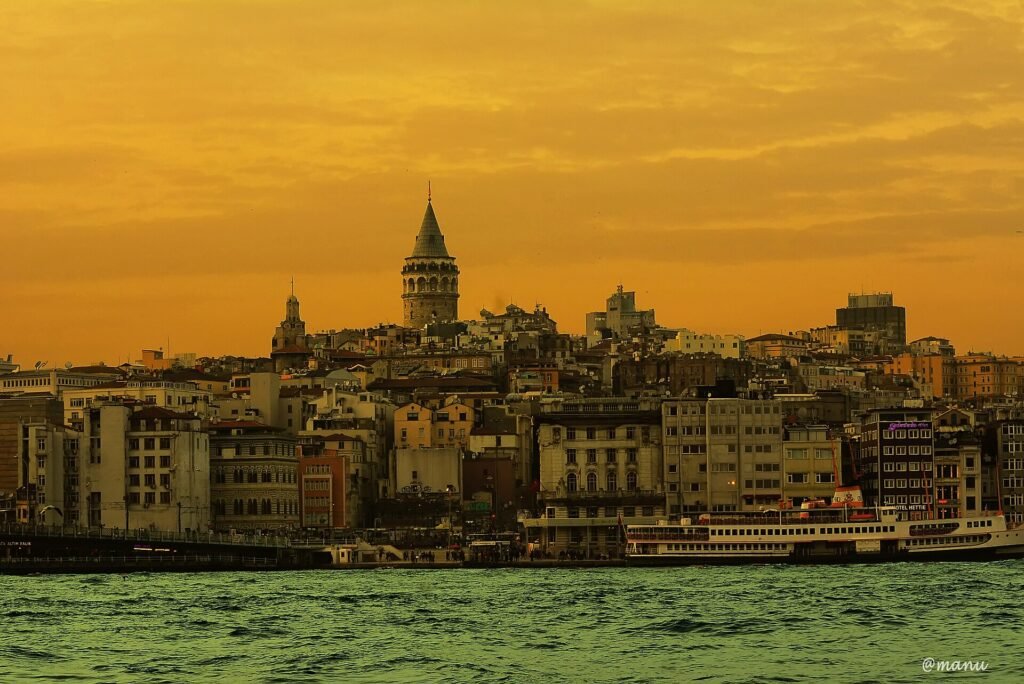
12:30 — Galata Tower. €30 (~$32). Open 08:30–23:00.
Honest assessment: it’s expensive for what it is — a lift, a narrow circular balcony and a queue. The view is genuinely the best 360° in the city. Whether that’s worth €30 is a personal call. The free alternative is the terrace at Süleymaniye or any rooftop bar in Karaköy where you buy a €6 drink instead.
13:30 — Walk İstiklal Caddesi. Free. 1.4 km of pedestrian street from Tünel to Taksim Square, with the red nostalgic tram trundling down the middle. It received 107 million visitors in 2025 — around 427,000 people on a weekend day — so treat it as a phenomenon rather than a pleasant stroll, and keep your wallet in a front pocket.
Duck off it. The good stuff is one street either side: Asmalımescit for bars, Çukurcuma for antiques, Serdar-ı Ekrem for design shops.
Late afternoon: the hamam
16:00 — A Turkish bath. This is the single most Istanbul thing you can do, and it’s worth doing properly once.
| Hamam | Built | Entry-level ritual | Arrangement |
|---|---|---|---|
| Çemberlitaş Hamamı | 1584 (Sinan) | Scrub + foam wash €72 | Separate men’s and women’s sections, simultaneous |
| Kılıç Ali Paşa Hamamı | 1580 (Sinan) | Traditional ritual ₺4,300 (~$90) | Single chamber, alternating: women 08:00–16:00, men 16:45–23:30 |
| Cağaloğlu Hamamı | 1741 | From €95 | Separate sections. The most beautiful and the most upsold |
| Local neighbourhood hamam | Various | €35–50 | Separate sections |
What to buy: the scrub and foam wash tier (€60–95). An attendant exfoliates you with a coarse mitt — you will be shocked at what comes off — and then soaps you in a cloud of foam squeezed from a pillowcase. That’s the thing. Everything above it is spa upsell, and in historic hamams the oil massage is ordinary; you’re paying for the room.
The trap for couples: Kılıç Ali Paşa has one chamber with alternating hours, so you cannot go together. Çemberlitaş and Cağaloğlu have mirrored wings and you can go at the same time, separately.
Expect a firm tip request afterwards — ₺200–500 is normal, and this is the one place in Türkiye where tipping is genuinely expected.
Evening
20:00 — Karaköy or Cihangir for dinner. Karaköy has the city’s best restaurant density; Cihangir is quieter and more residential. Either way, you’re a ten-minute walk or one funicular ride from where you spent the afternoon.
If you want the whirling dervishes, the Hodjapasha Culture Center in Sirkeci runs a one-hour Sema in a converted 15th-century hamam for about $26. It’s a curated performance, not a religious rite — honest value if you know that going in. For the actual ceremony, the Galata Mevlevihanesi and the EMAV Thursday ritual are the real thing, but schedules are unreliable and tickets are sold on-site only.
Day 4 costs
| Item | Cost |
|---|---|
| Turkish breakfast for two | ₺800–1,200 |
| Galata Tower | €30 |
| Hamam, scrub + foam | €72–90 |
| Transit | ~₺120 |
| Dinner | ~₺1,200 |
| Total | ~₺2,400 + €102 (~$160) |
Day 5 — Choose your ending
Three options, depending on what kind of traveller you turned out to be.
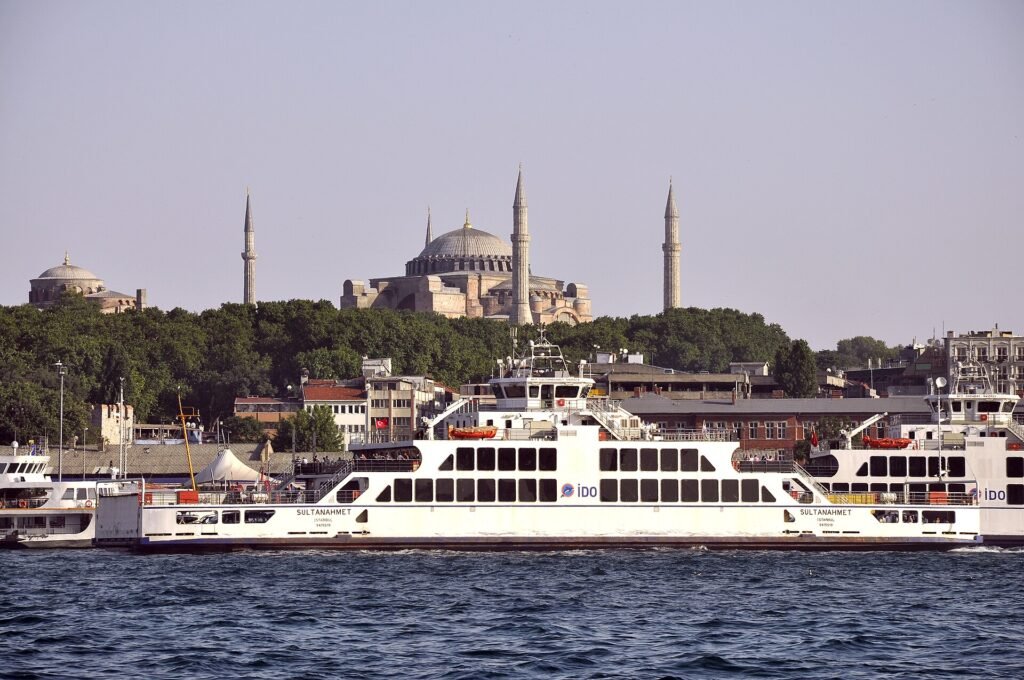
Option A: The Princes’ Islands (best all-rounder)
A cluster of nine car-free islands in the Sea of Marmara, ninety minutes from the European side or under an hour from Bostancı on the Asian side (₺156, ~$3.30).
Horse carriages were abolished in 2020, so it’s bikes, electric minibuses or your feet. On Büyükada, the big draw is the walk up to the Aya Yorgi monastery — about an hour, steep, with a view over the Marmara at the top and a small restaurant serving wine.
Do this yourself. Organised tours cost $40–70, add a lunch you don’t need, and remove the flexibility that is the entire point of an island day.
Full day. Cost: ~₺350 transit + food.
Option B: A food tour (best if you loved Kadıköy)
If day three converted you, spend day five with someone who can explain what you ate. Istanbul food tours are the highest information-per-dollar product in the city — ratings sit at 4.7–4.9 stars across thousands of reviews, and a $135 tour includes what amounts to a full breakfast and a full lunch.
Book direct with the operator, not through a booking platform. The same 3-hour evening tour is $89 on the operator’s own site and $135 on a platform.
Neighbourhood ranking for a single tour: Kadıköy > Beyoğlu/Karaköy > Old City.
3–5.5 hours. Cost: $89–150.
Option C: Museums and the modern city (best in bad weather)
Istanbul Modern (₺900 for foreigners, closed Mondays) in its new Renzo Piano building at Karaköy, then Pera Museum (₺300, and free for everyone on Friday evenings 18:00–22:00), then the Archaeological Museums (€15, closed Mondays) if you have the stamina — the Alexander Sarcophagus alone justifies the ticket.
Half to full day. Cost: ~₺1,200 + €15.
Adjusting for your start day
| If you arrive on | Do this |
|---|---|
| Monday | Start with Day 2 (bazaars). Dolmabahçe is closed Mondays, so push Day 3 back |
| Tuesday | Start with Day 3 or 4. Topkapı is closed, so Day 1 must move |
| Wednesday | Run it as written — the ideal start |
| Thursday | Run it as written |
| Friday | Start with Day 3 (Bosphorus and Asian side). Mosques and Chora are restricted on Fridays |
| Saturday | Start with Day 1, but expect Old City crowds at their worst |
| Sunday | Start with Day 1 or 3. The Grand Bazaar is closed, so Day 2 must move |
What five days costs, all in
| Category | Budget | Mid-range | Comfortable |
|---|---|---|---|
| Accommodation (5 nights, per person sharing) | $150 | $400 | $1,000 |
| Food | $110 | $250 | $500 |
| Attractions | $80 | $175 | $175 |
| Transit | $16 | $16 | $60 |
| Tours and extras | $0 | $110 | $300 |
| Total per person | ~$356 | ~$951 | ~$2,035 |
Flights not included. We break these numbers down properly in our Istanbul trip cost guide.
Frequently asked questions
Is five days enough for Istanbul? Yes for a first visit — it covers the Old City, the Bosphorus, the Asian side and Beyoğlu with room to breathe. Three days covers the headline sights and nothing else. Seven days lets you add Bursa or the Princes’ Islands without rushing.
What’s the best day to start? Wednesday or Thursday. That keeps Topkapı away from Tuesday, the Grand Bazaar away from Sunday, and the mosques away from Friday morning.
Can I do this itinerary in reverse? Yes, but check the closed-day table first. The days are independent of each other except that Day 1 assumes you haven’t seen the Old City yet.
Do I need to book anything in advance? Hamams and food tours, yes — two to five days in summer. Hagia Sophia’s upper gallery skip-the-line is worth about $3–7 extra in April–October when the ticket queue runs 30–60 minutes. Everything else you can walk up to.
How much walking is this? Eight to fourteen kilometres a day, much of it on cobbles and hills. Istanbul is not a flat city. If mobility is a concern, base yourself in Sultanahmet and use taxis between districts.
Is the Museum Pass Istanbul worth it for this itinerary? No. The €105 pass excludes Hagia Sophia, the Basilica Cistern, Dolmabahçe and Chora — four of the paid sites in this plan. It covers Topkapı and the Archaeological Museums, which is about €65 of value.
Continue planning:
- The complete Istanbul travel guide — transport, safety, money, mosque etiquette
- How much does Istanbul cost? — a proper 2026 budget breakdown
- Where to stay in Istanbul — which neighbourhood suits this itinerary
- The best tours and day trips — what’s worth paying for
Prices and hours verified August 2026. Turkish museum tickets and transit fares change frequently — re-check anything time-sensitive before you travel.
Save this for later