
In short
Ten days that work because they only move four times: Fethiye or Ölüdeniz for three nights (Ölüdeniz, Saklıkent, Tlos), Kalkan or Patara for two (Xanthos, Letoon, Patara, Kaputaş), Kaş for three (Kekova, Myra, diving), then Göcek or back to Fethiye for two. Most Turquoise Coast itineraries fail by hopping nightly along a road that is slower than it looks.
Distances and fees checked August 2026.
Disclosure: some links in this guide are affiliate links. If you book through one, we earn a small commission and you pay exactly the same price. We only link to services we would use ourselves, no brand pays for placement or for a favourable write-up, and every price in this article was researched independently.
Ten days is enough to see the Turquoise Coast properly, and not enough to see both halves of it well. That is the first decision, and most itineraries you will find online duck it — they string Bodrum, Marmaris, Fethiye, Kalkan, Kaş and Antalya into one line and quietly assume you will spend half the holiday driving the D400.
What is in this guide
This route makes the choice explicitly. It runs Dalaman to Dalaman down the Lycian coast, which is the half with the ancient cities, the mountains and the best driving, and it treats Bodrum as a separate trip rather than a bolt-on. At the end there is an alternative Bodrum-and-Aegean version for people who want the other coast, and an honest note on why we do not recommend combining them in ten days.
Every fare and opening time below carries the date we checked it.
Editor’s note
This itinerary assumes a hire car, because on the Lycian coast that is not a luxury — Tlos, Pınara, Letoon and Saklıkent are inland off the D400 and are effectively unreachable in a day without one. If you would rather not drive, the coast still works by dolmuş and intercity coach, but you will see the harbour towns and not the ruins. We say where that trade bites.
The route at a glance
| Days | Base | Nights | Why here |
|---|---|---|---|
| 1–3 | Fethiye or Ölüdeniz | 3 | Ölüdeniz, Saklıkent, Tlos, the harbour |
| 4–5 | Kalkan or Patara | 2 | Xanthos, Letoon, Patara, Kaputaş |
| 6–8 | Kaş | 3 | Kekova, Myra, diving, the town itself |
| 9–10 | Göcek or back to Fethiye | 2 | Boat day, slow finish, easy airport run |
Four moves in ten days, none of them longer than about two hours, all on one road. That is the point of doing this coast in one direction rather than as a loop.
Total driving is roughly 300 km across the whole trip. It will take longer than you think: the D400 between Fethiye and Kaş is a good road but it climbs, descends and switchbacks continuously, and the sensible average is 50–60 km/h, not 90.
Days 1–3: Fethiye and Ölüdeniz
Getting there. Dalaman airport is about 25 minutes from Göcek and 45 minutes from Fethiye. Pick the car up at the airport rather than in town — the town offices are harder to find than they look and you will want the car on day one.
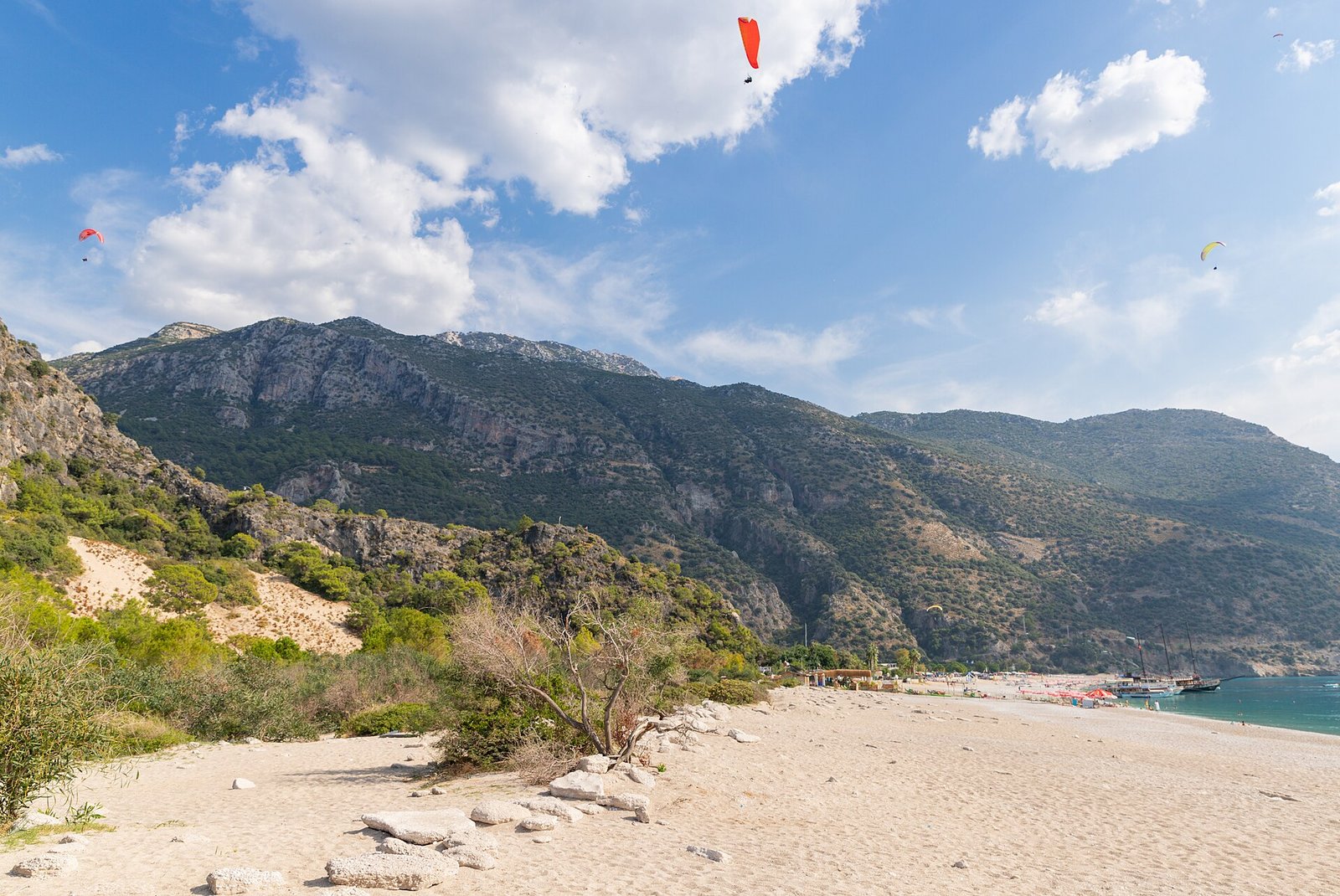
Day 1 — Ölüdeniz and the lagoon. The Blue Lagoon sits inside a nature park and is the photograph everyone has seen. Two honest notes: the lagoon is enclosed, calm and warm, and is not representative of the open sea two hundred metres away on the spit, where currents are real; and it is busy from mid-morning, so go early or late. Paragliders come down onto the beach through the afternoon, which is either the attraction or the reason to sit further along.
If paragliding from Babadağ is on your list, book it for a morning with a spare morning behind it, and read the FCDO’s wording first: *”Paragliding is an extreme sport and carries the risk of serious injury or death. British nationals have died or been seriously injured whilst paragliding in Turkey.”* Check that your travel policy names the activity. There is no official or ceiling price for tandem flights, and we are not going to quote operator advertising as if it were a tariff.
Day 2 — Saklıkent and Tlos. Saklıkent Gorge is 45 minutes inland. You wade in cold water between walls that close overhead; it is genuinely dramatic and it is a half day with lunch on the platforms over the river. Know the price before you arrive: foreign visitors now pay ₺500, up from ₺65 — a rise of about 669 per cent set by the national parks directorate — while Turkish visitors pay ₺85 under the municipal tariff. Every guide quoting “about two pounds” is a decade out. Reported March 2026.
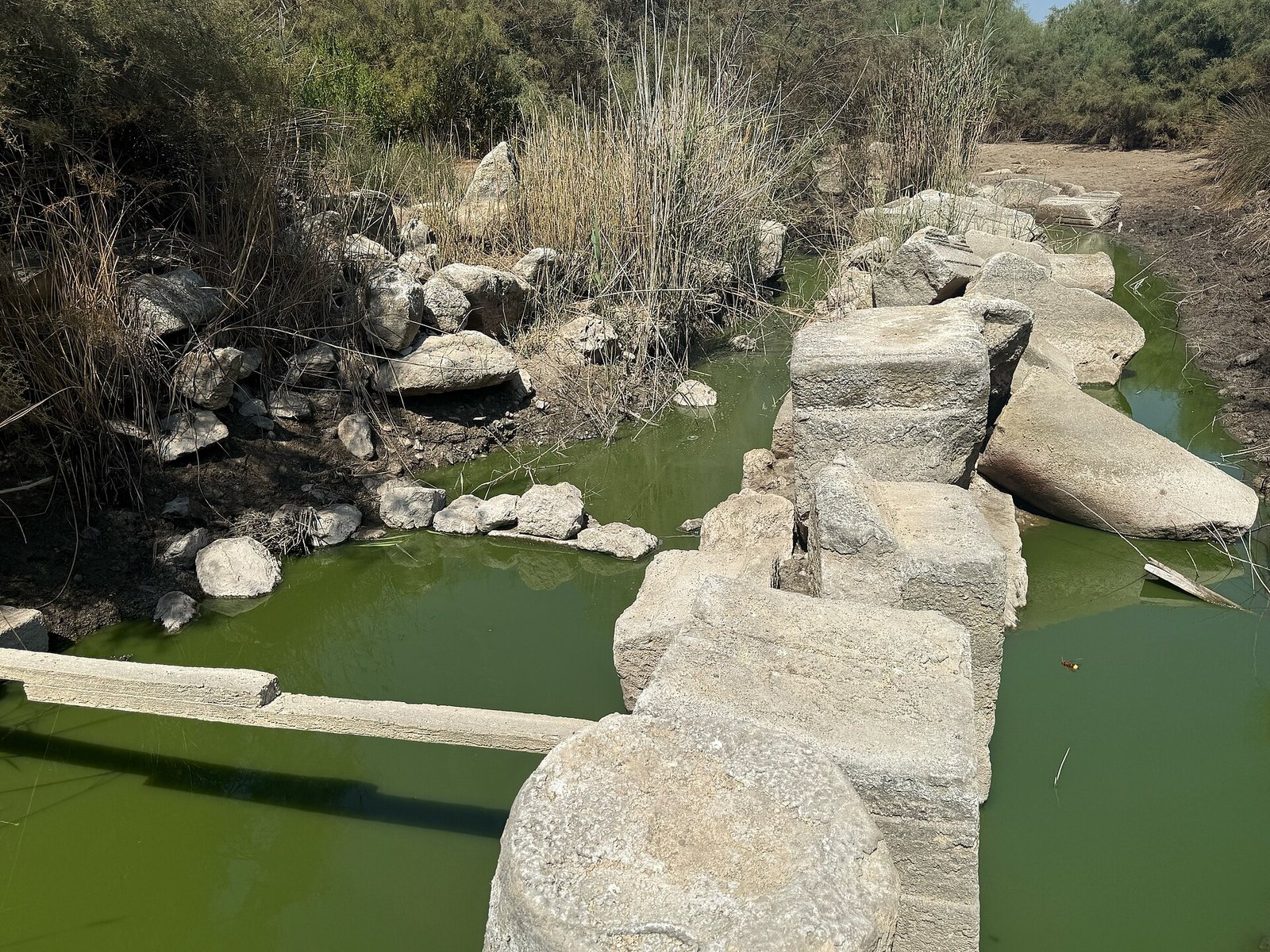
Combine it with Tlos on the way back, a Lycian hill city with rock tombs cut into the acropolis and an Ottoman fortress on top of it. On the last Ministry tariff we could reach — effective 1 March 2024 — Tlos was €3.
Day 3 — Fethiye itself, or a boat. The town has a proper working harbour, a good Tuesday market, Lycian rock tombs in the cliff above the centre, and the ruins of Kayaköy, the abandoned Greek village, twenty minutes away. Alternatively take a twelve-island boat day out of the harbour, with the safety caveats below.
Where to base: Fethiye town if you want restaurants and a market; Ölüdeniz if you want to walk to the beach; Hisarönü if you want nightlife and are willing to be inland. Çalış is the flat, family beach option.
Days 4–5: Xanthos, Letoon, Patara
The drive from Fethiye is about an hour to Kınık, on the D400, and it is the stretch where the coast starts to feel remote.
Day 4 — the World Heritage pair. Xanthos was the Lycian capital and Letoon its sanctuary, four kilometres apart, inscribed together as a single UNESCO property and ticketed separately. Xanthos has the pillar tombs, the theatre and a long, sad history — the city destroyed itself twice rather than surrender. Letoon is lower, wetter and quieter, with three temple terraces and, usually, frogs.
Official hours from the Ministry’s museum portal on 19 August 2026: Xanthos 08:00–20:00, ticket office to 19:30, no closed day. On the 1 March 2024 tariff both were €3.
Together they are a comfortable half day by car and effectively impossible without one — which is precisely why they are empty while Ephesus is not.
Day 5 — Patara. An ancient city and an enormous dune-backed beach, on one site. The city has a restored bouleuterion, a triumphal arch and a lighthouse claimed as the world’s oldest; the beach runs for kilometres behind it.
Two official details worth having:
- The archaeological site runs a night session: 08:00–18:45, then 19:00–22:00, daily, with the ticket office closing at 21:30. Walking a Lycian city at dusk is one of the better things you can do on this coast, and almost nobody does it.
- Patara is a loggerhead turtle nesting beach and a seasonal evening restriction on the *beach* is widely described. We could not verify its hours or legal basis from any official source and are not printing one. Confirm locally, and do not assume the site’s 22:00 closing applies to the sand.
Kaputaş is on the way onward: a cove between Kalkan and Kaş, reached down a long staircase from the road. It shelves steeply, there is no lifeguard for much of the day, and both the Turkish police and the FCDO have issued warnings this year about rip currents and drowning on this coast. It is beautiful and it is not a paddling beach.
Where to base: Kalkan for the stepped old town and the rooftop restaurants; Patara village for the site and the beach and very little else.
Days 6–8: Kaş
Kaş is the best town on this coast — small, pedestrian in the centre, built up a hill above a harbour, with a Lycian sarcophagus standing in the middle of a street and Meis (Kastellorizo) sitting a few kilometres offshore in Greek water.
Day 6 — Kekova and the sunken city. Boats run from Kaş and from Üçağız to the sunken settlement at Kekova, where earthquake-dropped foundations and staircases sit under clear water along the shoreline, and to the castle village of Kaleköy/Simena, which has no road. On the 1 March 2024 tariff Simena was €4. Swimming directly over the submerged ruins is restricted under Türkiye’s protected-site rules; we could not retrieve the decision text setting out its current scope, so take the boat crew’s instruction as authoritative rather than a guide’s.
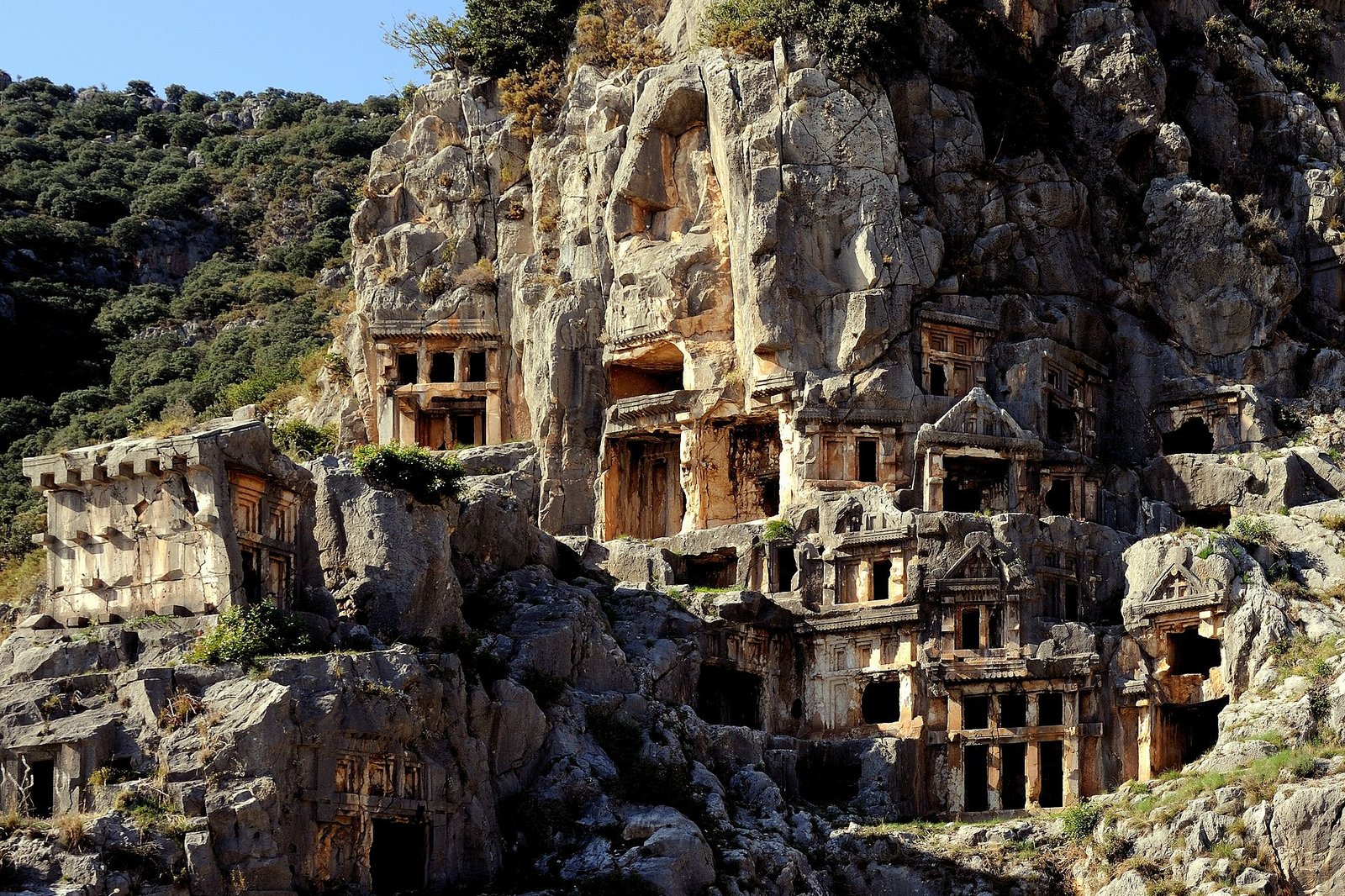
Day 7 — Myra and Demre. An hour east. Myra has the best rock-cut tomb façades in Lycia, stacked in a cliff above a Roman theatre, and Demre has the church of St Nicholas — the historical figure behind Father Christmas, which is a stranger day out than it sounds. Myra was €13 on the 2024 tariff, the second most expensive site on this coast after Bodrum Castle.
Day 8 — the town, or under it. Kaş is one of Türkiye’s main diving centres, with wrecks and reefs a short boat ride out. If diving is not your thing, this is the day to do nothing in particular: the harbour, the Friday market, the walk up to the Hellenistic theatre for sunset.
Where to base: Kaş town centre if you want to walk everywhere; Çukurbağ peninsula if you want a sea-view room and do not mind a taxi in.
Days 9–10: slow finish at Göcek
The drive back is about two and a half hours to Göcek, which is 25 minutes from Dalaman airport — the point being that your last morning is not a race.
Göcek is a small marina town with almost no beach and a lot of boats, and its purpose on this itinerary is a boat day: the twelve-island route out of Göcek bay is calmer water than the open coast, and it is the easiest place to end.
If you would rather have one more archaeological day, Pınara is inland from Fethiye, free on the 2024 tariff, and has a cliff honeycombed with hundreds of tombs and, usually, nobody in it.
What this costs, roughly
We can give you the transport with confidence and not much else.
| Line | Basis |
|---|---|
| Fuel, ~300 km | Muğla pump prices 19 Aug 2026: petrol ₺73.23/litre, diesel ₺81.62 |
| Tolls | No toll motorway in Muğla, but the Göcek Tunnel on the D400 costs ₺75 per car in 2026 |
| Airport bus, if not driving | ₺270 airport to Bodrum otogar (MUTTAŞ tariff, eff. 18 May 2026) |
| Dolmuş, Fethiye ↔ Ölüdeniz | ₺89 adult (MUTTAŞ published tariff) |
| Coach, Fethiye → Kaş | from ₺350, ~1 h 56 (obilet, 19 Aug 2026) |
| Accommodation tax | 1% of the room rate, to 31 December 2026, then back to 2% |
On hotel rates we have nothing publishable. There is no credible dated source for nightly prices in Fethiye, Kalkan or Kaş — the hotel association publishes occupancy, not consumer rates. We are not going to borrow a range and present it as research.
The Bodrum version, if you would rather have the Aegean
Ten days out of Milas–Bodrum, no long drives:
- Days 1–4, Bodrum town. The castle and its Underwater Archaeology Museum (08:30–18:45 plus a 19:00–22:00 night session; the Mausoleum museum closes Mondays), the harbour, the amphitheatre, and the town’s own restaurants rather than the marina’s.
- Days 5–7, the peninsula. Gümüşlük for the fish restaurants on the sandbar, Yalıkavak for the marina if that is your thing, Bitez for easy swimming. Göltürkbükü has a very narrow beach and wooden swimming decks over the water — you swim off a platform, not off sand — the most common expectation mismatch here.
- Day 8, Kos. Twenty minutes by ferry, ~64 sailings a week. Read our Greek island rules page first: the €60 visa on arrival is for Turkish citizens, and what applies to you is EES, live since April 2026, which spends your Schengen days.
- Days 9–10, a gulet day or Datça. Datça is two hours west on a spectacular road and feels like the peninsula did thirty years ago.
Why we do not recommend combining the two coasts in ten days. Bodrum to Fethiye is about four hours of driving on a good day, on roads that do not reward hurrying, and it costs you two half-days plus a car drop fee. You would be trading the two best days of either itinerary for a transfer. Do one properly and come back.
Boats: the part to take seriously
Day boats are central to this coast and had a bad 2026. On 13 August 2026 a commercial day boat caught fire off Fethiye near Katrancı Bay with 115 people aboard including children. Everyone was evacuated by the Coast Guard and nearby vessels and nobody died — but 15 people were hospitalised with burns, and the boat was extensively damaged. Two further incidents on this coast are reported in the trade press and we could not verify them independently.
Several emergencies in one season with no fatalities is a story about margin, not about a safe record. There is no public register of licensed operators a visitor can consult. The practical proxies: a TÜRSAB-registered agency displaying its licence number, a visible passenger manifest, and life jackets in adult and child sizes on deck rather than stowed.
New rules for private boats under 24 metres took effect on 17 July 2026, splitting skipper certification by length and mandating safety equipment. Note what that is not: it did not change the licensing of commercial day-tour boats.
Common questions
Can I do this without a car? Partly. Fethiye, Kalkan, Kaş and Patara are linked by dolmuş and intercity coach, so the harbour towns and beaches work. Xanthos, Letoon, Tlos, Pınara and Saklıkent do not — those are the five things a car buys you.
Which direction should I drive it? Fethiye to Kaş, as written. It puts the longest drive on day four when you are fresh, and it leaves you 25 minutes from the airport on the last morning.
When should I go? May, early June, September or early October. July and August are hot, full and expensive, and the archaeological sites are unshaded. September has the warmest sea — readings on 19–20 August 2026 ran 25.6 °C at Bodrum to 29.0 °C at Fethiye, and the water keeps warming into September.
Is ten days too long for this coast? No. It is the length at which you stop moving every night. Seven days works if you cut Kaş to two nights and skip Göcek.
What about Antalya? Different trip. Kaş to Antalya is another three hours east and Antalya has its own airport, its own old town and its own cluster of Roman sites. Do not staple it on.
How much of this is bookable in advance? Very little, and that is a feature. Book the car and the first two nights; leave the rest loose. The exception is a gulet cabin charter in July or August.
Before you book
Fly into Dalaman, not Antalya, for everything from Göcek to Kaş — the map makes Antalya look reasonable and the road does not. Sort the car before the hotels, because it determines which half of this itinerary is available to you; local Turkish agencies generally undercut the international chains here. And check your driving licence: the FCDO requires a 1968 international driving permit or a notarised Turkish translation, and says the 1949 permit is no longer accepted.
When your dates are set, compare flights into Dalaman across carriers — the fare spread between months on this route is very large.