
In short
Two entries that most lists still carry and should not: Hiroshima Castle’s keep closed permanently in March 2026, and the August fireworks on Miyajima were discontinued in 2021. Everything else here was checked against an official source in August 2026 and dated on the page.
Verified against official sources, August 2026.
Disclosure: some links in this guide are affiliate links. If you book through one, we earn a small commission and you pay exactly the same price. We only link to services we would use ourselves, no brand pays for placement or for a favourable write-up, and every price in this article was researched independently.
Most “things to do in Hiroshima” lists are the same fourteen items in the same order, and at least three of them are no longer true. The castle keep closed permanently in March 2026. The ropeway up Mount Misen takes multi-week closures that nobody mentions. The August fireworks on Miyajima were discontinued in 2021.
What is in this guide
- 1. The Peace Memorial Museum, on the 7:30 slot
- 2. Peace Memorial Park, the Dome, and the Memorial Hall
- 3. Miyajima, timed against the tide
- 4. Mount Misen
- 5. Okonomiyaki, properly
- 6. Shukkeien
- 7. Oysters in season
- 8. Anago meshi at Miyajimaguchi
- 9. Hiroshima Castle grounds — but not the keep
- 10. The Mazda Museum
- 11. Riding the Hiroden
- 12. Tōrō Nagashi on 6 August
- 13. Onomichi and the Shimanami Kaidō
- 14. Iwakuni and the Kintaikyō
- Three things we would skip
- Fitting it into the time you have
- Common questions
- Before you book
This list is ranked by what we would actually protect if a day got short, with the practical detail attached — what it costs, when it is open, what closes it, and in three cases why we would skip it. Everything was checked against official sources in August 2026 and dated. Where a figure could not be verified from a primary source, it is flagged rather than filled in.
Editor’s note
Sources for this page: the Peace Memorial Museum booking system and hours pages, Hiroshima City for the castle closure, Shukkeien and the Mazda Museum official sites, the Miyajima Tourist Association price sheet and tide tables, the Miyajima Ropeway operating notices, Hatsukaichi City for the visitor tax and deer management plan, and Hiroden for fares. Two things we could not verify and therefore do not state: Itsukushima Shrine opening hours, whose official site blocks automated access, and an official recommended duration for the Peace Memorial Museum, which the museum does not publish.
1. The Peace Memorial Museum, on the 7:30 slot
¥200 adult, ¥100 high school, free below. Book online.
This is the reason most people come to Hiroshima and it is worth arranging your day around rather than fitting in. The detail that changes the visit: the museum opens at 7:30, not the 8:30 most English guides still print — but the 7:30–8:30 window is web-ticket-only, capped at 300 people for the block as a whole, with no ticket-machine or counter sales at all during it. Booking opens 90 days ahead.
Take that slot. It is the difference between walking through the exhibition and being carried through it by a crowd. Allow 90 minutes to two hours; the museum publishes no official figure, so that is our estimate.
Hours run 7:30–19:00 for most of the year, to 20:00 in August and to 21:00 on 5 August — but note that on 6 August itself the museum opens at 09:45 and closes at 21:00 because of the ceremony, and to 18:00 from December to February. Closed 30–31 December and for several days in mid-February each year; the museum announces the exact dates only shortly in advance.
The museum permits personal non-flash photography and prohibits tripods and lighting during opening hours, explicitly as things that obstruct other people’s viewing. That is the right frame for the whole visit.
2. Peace Memorial Park, the Dome, and the Memorial Hall
All three free.
The park is open ground with no gates, the A-Bomb Dome is viewable from outside only — you cannot go in — and the National Peace Memorial Hall for the Atomic Bomb Victims next to the museum is a separate national institution, free, and is not a museum: it holds the names, photographs and testimonies of the dead. People sometimes wander in expecting exhibits.
Walk the park early or late, when it is empty. The Dome was inscribed as UNESCO World Heritage in 1996, which makes 2026 its thirtieth anniversary — as it is for Itsukushima Shrine.
3. Miyajima, timed against the tide
Ferry ¥200 each way, plus a ¥100 visitor tax the JR Pass does not cover.
The island is the other half of a Hiroshima trip and the tide decides what you see. The Miyajima Tourist Association publishes the thresholds: at 100 cm or below you can walk out across the sand to the base of the great torii; at 250 cm or above the shrine and gate appear to float. Arrive at 130 cm and you get neither.
Check the published table before you fix the date. The tidal range is large enough that both often happen within one visiting window, which is the ideal.
Itsukushima Shrine is ¥300, or ¥500 combined with the Treasure Hall. We could not verify its opening hours — the shrine’s own site blocks automated access and the prefecture’s tourism site declines to publish them — so check before planning a late arrival.
And the torii is not under scaffolding. That restoration finished on 18 December 2022.
4. Mount Misen
Ropeway ¥2,000 return, or ¥1,500 with the Hiroden day pass. Or walk.
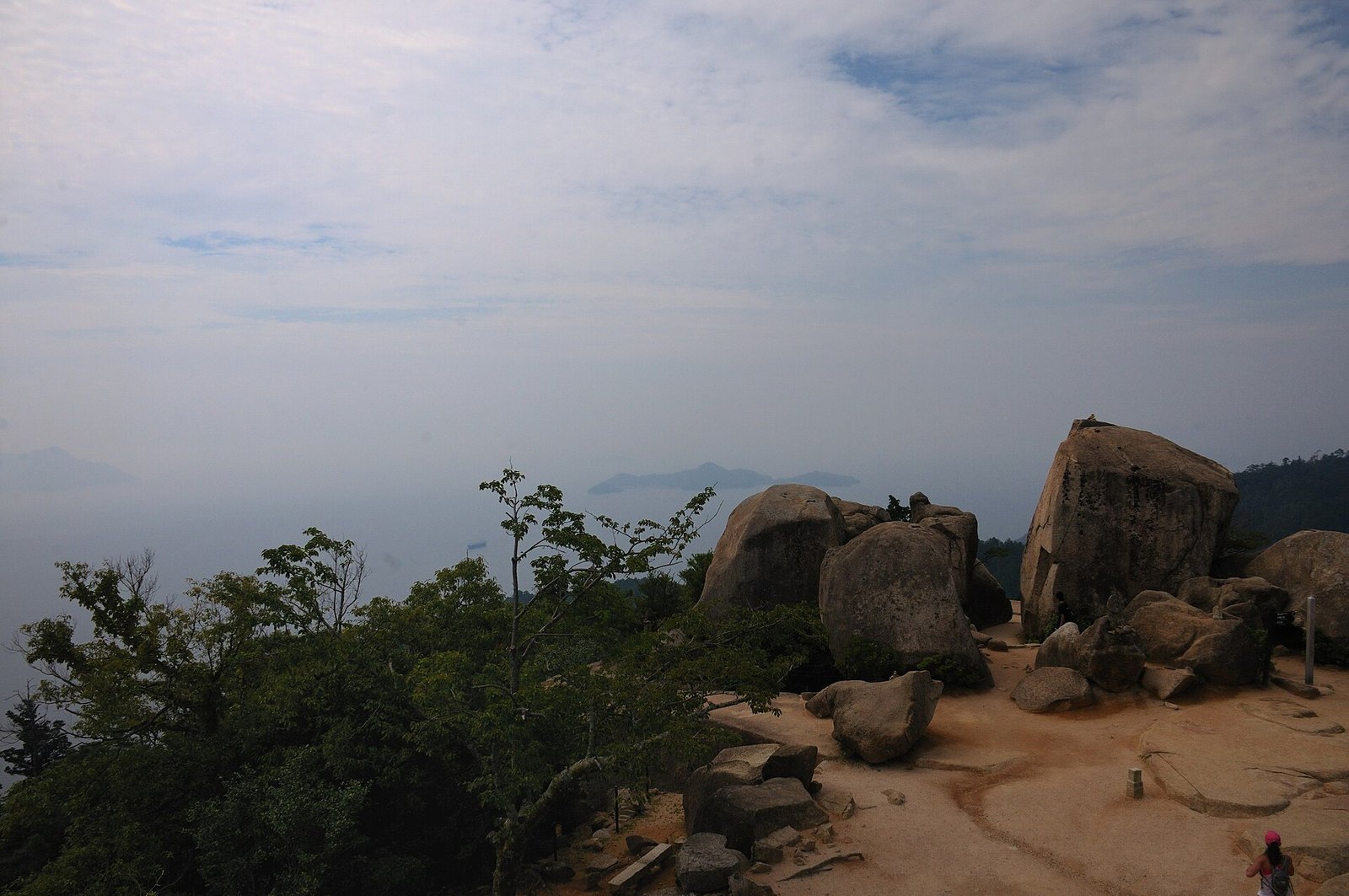
The ropeway runs up from 9:00 to 16:00 with the last descent at 16:30, about fourteen minutes across two linked lines. It does not reach the summit — it terminates at Shishiiwa Station, and from there it is roughly twenty minutes on foot to the Misen Hondō and Reikadō temple complex, with the 535 m summit beyond that. The Tourist Association’s guidance is that adding the summit costs about an extra hour. Stone steps, not a stroll.
Check for closures before you commit. The ropeway shut completely from 16 January to 6 March 2026 for its first gondola renewal in eighteen years, and again from 22 June to 16 July 2026 for inspection. That pattern recurs, and no guide we have seen mentions it. It is also running night operations from 19 to 23 October 2026 for the shrine’s World Heritage anniversary.
Walking up takes 1 h 30 to 2 hours: Momijidani is the standard beginner route, Daishō-in is a similar time over 2.6 km of stone steps with the best views, and Ōmoto runs 2 to 2.5 hours through primeval forest with the most junctions to get lost at.
5. Okonomiyaki, properly
¥900–¥1,300 at a well-known shop.
Hiroshima’s okonomiyaki is not a variant of Osaka’s, it is a different construction. Osaka’s is mixed in a bowl and poured as one disc. Hiroshima’s is layered: a thin crêpe of batter, a mound of shredded cabbage, bean sprouts and pork belly, more batter, flipped, then set on a separately griddled nest of fried noodles with an egg. Taller, steam-cooked inside, eaten off the griddle with a metal spatula.
Locals call it simply *okonomiyaki*. The term 「広島焼き」 is used elsewhere and mildly resented here. Noodles are standard, not an extra.
Okonomimura in Shintenchi is the famous multi-floor building of stalls and the most touristed answer. Mitchan Sōhonten carries the founding-family lineage, with branches at Hatchōbori and inside ekie at Hiroshima Station; its standard soba-with-meat-and-egg was ¥960 as published, with the oyster version at ¥1,840. Hassho in Yokogawa has its own following. Honestly, the independent counters through Kamiyachō and Hondōri are as good and less queued.
6. Shukkeien
¥350 adult, ¥150 university, free for elementary, junior high and high school students since April 2025.
The best-value paid site in the city. A genuine 17th-century daimyo stroll garden, compact enough for 45 to 60 minutes, five minutes from the Shukkeien-mae tram stop and directly beside the Prefectural Art Museum. Open 9:00–18:00 from 16 March to 15 September and 9:00–17:00 the rest of the year, last entry half an hour before closing, closed 29–31 December.
Best in late November for the maples and late March for cherry. There is an evening illumination event in mid-August.
7. Oysters in season
Hiroshima produced, in 2023, 62.9 per cent of Japan’s entire oyster output. The eating season runs roughly October to March and the local material treats midwinter as the best of it, once glycogen has built up through the autumn cooling.
Grilled oysters at the stalls along Miyajima’s Omotesandō are the classic version; *kaki-goya* oyster huts operate around the prefecture through the winter; oyster okonomiyaki is the city version. One honest note: oysters served on Miyajima in high summer are outside the local season. If you are there in August, eat something else.
8. Anago meshi at Miyajimaguchi
¥2,530–¥3,340.
Grilled saltwater eel over rice — distinct from the freshwater *unagi* served nationally, and originally a railway bento sold at Miyajimaguchi station. Anagomeshi Ueno is the century-old originator, a few minutes from the ferry terminal: ¥2,530 small, ¥2,800 regular, ¥3,340 large, tax included.
It does not take table reservations — its own site says so plainly — and the queue is long. The workaround is the boxed bento, sold separately, which you can eat on the ferry or on the island.
9. Hiroshima Castle grounds — but not the keep
Ninomaru free. The keep is closed permanently.
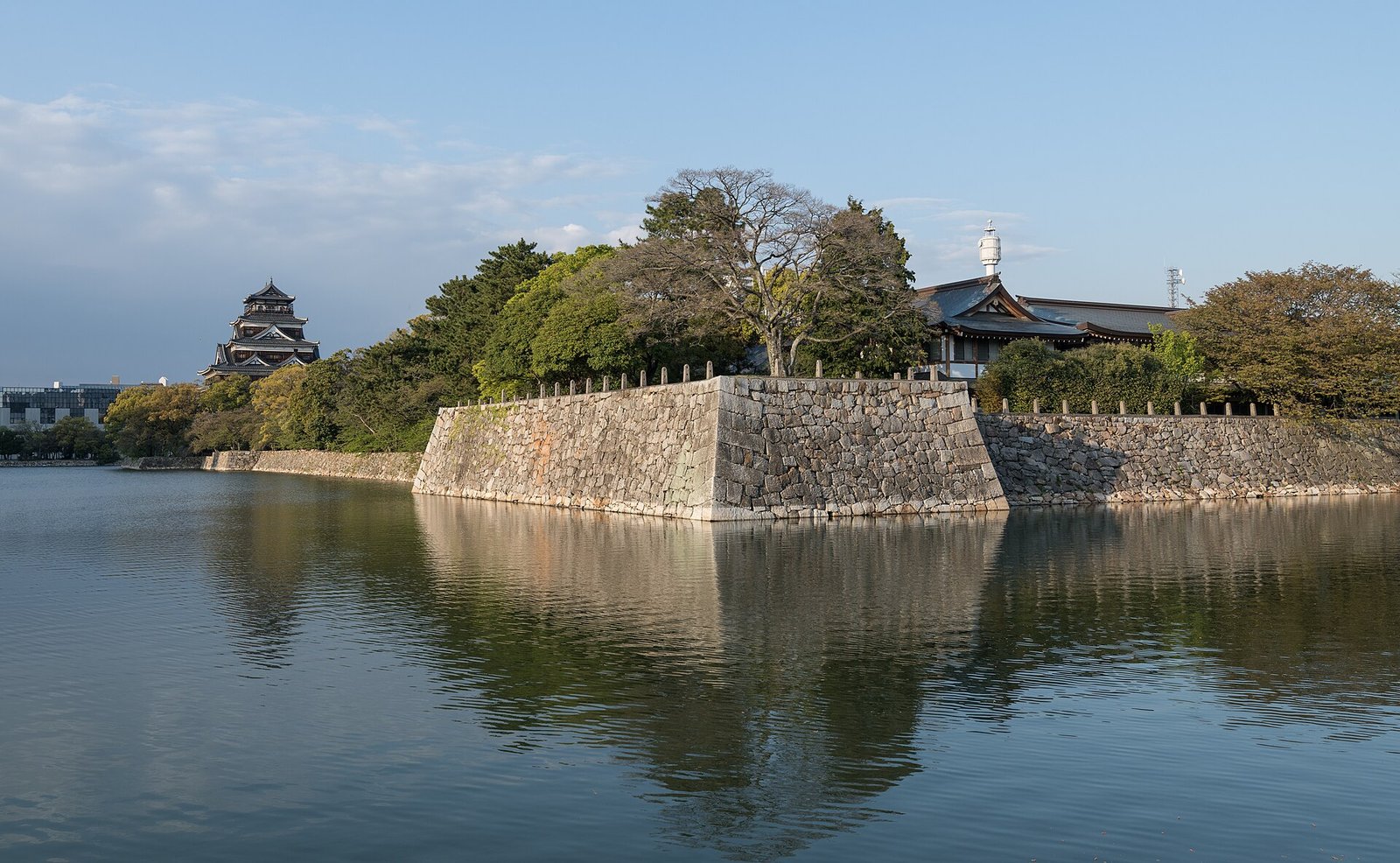
This is the correction that matters most on this page. Hiroshima Castle’s main keep closed permanently to visitors on 22 March 2026, after about 68 years as a museum, because the 1958 reinforced-concrete reconstruction has deteriorated. There is no top-floor view any more. Every guide still telling you to pay to climb it is wrong.
The exterior remains fully viewable, the restored Ninomaru buildings are open and free (9:00–17:30 April–September, 9:00–16:30 October–March, closed 8 December and 29–31 December), and the city states the keep is not scheduled for demolition — it is at the basic-investigation stage on restoration. A new Ninomaru history museum is targeted for the end of FY2026.
Verdict: this drops from a 60–90 minute stop to a 25-minute walk through free grounds. Worth it if you are already walking between the Peace Park and Shukkeien, which you probably are. Not worth a special journey.
10. The Mazda Museum
Free, 120 minutes, online booking only.
Better than it sounds, and a genuine change of register after a morning at the Peace Park. Tours run 120 minutes, English in the afternoon and Japanese in the morning, weekdays only. Booking is online only — no telephone, no email — and cancellations need two days’ notice.
The trap is the company shutdowns: closed 8–17 August 2026, which straddles Obon and catches summer visitors; 26 December 2026 to 5 January 2027; and 8–26 February 2027. English afternoon slots fill, so book weeks ahead.
11. Riding the Hiroden
Not an attraction exactly, but the trams are a genuine pleasure and the system changed in ways worth knowing. Flat fare of ¥240 adult and ¥120 child across the whole network since 1 February 2025 — including the Miyajima Line. The full forty-minute run from Hiroshima Station to Hiroden Miyajimaguchi is ¥240. Guides still print ¥270 or ¥280.
You board through any door now and pay on exit. And since 3 August 2025 trams run into the second floor of the JR Hiroshima Station building — the first arrangement of its kind in Japan — cutting about four minutes off the run into the centre. A further circular route opened on 28 March 2026.
The fleet is part of the appeal: 1950s cars run alongside modern low-floor Green Movers, and some of the older stock survived the bombing.
12. Tōrō Nagashi on 6 August
The lantern floating on the Motoyasu River beside the A-Bomb Dome on the evening of 6 August is the part of that day most visitors find affecting, and it is open to anyone.
Know what the day involves before you plan around it. The Peace Memorial Ceremony runs 08:00 to about 08:50 with a moment of silence at 08:15, and the park is under access control from 05:00 to 09:00 — the third consecutive year — with hand-luggage inspection and metal detectors from 06:00. Flammables, blades, drones, amplifiers, instruments, placards and armbands are prohibited. There is a dedicated unscreened entrance between 05:00 and 07:00 for those who only wish to pay respects at the memorials, which is the practical route in without a seat allocation.
If you go: dress soberly, arrive before 07:00, carry as little as possible, and be silent at 08:15. It is not a sightseeing day.
13. Onomichi and the Shimanami Kaidō
About 1 h 35 by JR local, ¥1,520.
The best day trip out of Hiroshima if you have a third day. Onomichi is a hillside town of temples, cats and ramen, and it is the mainland end of the Shimanami Kaidō — the cycling route across the islands to Imabari, which the city gives as roughly 70 km (the 70 m figure often quoted is the bridge height above the sea, not the cumulative climb), one to two days for most riders, or half a day for fast ones. You do not have to do all of it; crossing individual bridges and turning back is a normal way to ride it.
The shinkansen-plus-local route takes about an hour but costs ¥3,850–¥5,200. Unless you are on a rail pass, take the local train.
14. Iwakuni and the Kintaikyō
Bridge toll ¥310; ¥970 combined with the ropeway and castle.
The five-arch wooden bridge is about forty minutes away — JR to Iwakuni then a bus, or a highway bus from Hiroshima Bus Center in about an hour. Toll booths run 8:00–18:00 in summer and 8:00–17:00 in winter, though the bridge itself is accessible around the clock and lit until 22:00.
Note that Iwakuni is in Yamaguchi Prefecture, so the Hiroshima accommodation tax does not apply there and it is outside the Hiroden network entirely.
Three things we would skip
The ¥700 tram-only day pass. At a flat ¥240 you need three rides to break even, and most visitors walk between the Peace Park, Hondōri and the castle. The ¥1,000 tram-and-ferry pass on your Miyajima day is a different matter and is worth buying — tram out, ferry, visitor tax, ferry back and tram back is ¥980 on its own, and the pass includes all of it plus a ¥500 saving on the ropeway.
Feeding the deer. There is nothing to feed them with — Miyajima has no deer crackers, unlike Nara — and Hatsukaichi City prohibits feeding, managing the deer as wildlife and citing stomach injuries from foreign objects. They will take maps, tickets and ferry stubs straight out of your hand. Keep paper in a closed bag.
Looking for the Miyajima fireworks. The historic underwater fireworks festival was permanently discontinued by its organising committee in April 2021. A differently named, ticketed revival was held once, in October 2025, for the 80th anniversary of the bombing. It is not running in 2026. Any guide listing “Miyajima fireworks, August” is wrong on the name, the month, the ticketing and the existence.
Fitting it into the time you have
One day: museum on the 7:30 slot, park, Dome, Memorial Hall, lunch in Hondōri, then either Shukkeien and the castle grounds or a compressed Miyajima afternoon. Choosing between the city and the island is a bad choice, which is why one day is not enough.
Two days: city on day one, Miyajima on day two timed against the tide. This is the right shape.
Three days: add Onomichi or Iwakuni, or slow the island down and stay a night on it — the day-trip crowd leaves on the late-afternoon ferries, the shrine is illuminated until 23:00, and the early morning before the first mainland ferry is the reward.
Common questions
What is the one thing not to miss? The museum on the 7:30 slot. Everything else on this list survives being rushed; that does not.
Is Miyajima worth it if the tide is wrong? Yes — the Tourist Association is careful to say the island is worth visiting regardless — but you will have missed the specific photograph you came for. Check the table first.
How much does a day on Miyajima cost? Buy the ¥1,000 Hiroden pass and you have covered trams, the ferry both ways and the visitor tax. Add ¥500 for the shrine and Treasure Hall, ¥1,500 for the discounted ropeway return, and ¥2,800 if you want anago meshi. Under ¥6,000 for a full day.
Can I do Hiroshima as a day trip from Osaka or Kyoto? Physically yes — 1 h 20 to 1 h 45 each way on a Nozomi or Mizuho, though rail-pass holders are on Sakura or Hikari. Realistically it gets you the museum and the park and nothing else. Miyajima will not fit.
Is anything closed in winter? The Miyajima ropeway has taken long January-to-March closures, so check its notices. Otherwise the city runs normally, and midwinter is the best of the oyster season, which is an argument for going then.
Do I need to book anything in advance? The museum’s early and evening slots, yes, from 90 days ahead. The Mazda Museum, yes, weeks ahead for an English afternoon tour. Nothing else on this list requires it.
Before you book
Check the Miyajima tide table and the ropeway’s operating notices before you fix your dates — those two pages will change your itinerary more than any guide will. Book the museum slot the day your 90-day window opens. And if Hiroshima is one leg of a longer Japan trip, compare fares and think about whether a regional JR West pass beats the nationwide one, which rises on 1 October 2026. Day-tripping with luggage is the other solvable problem — Radical Storage has drop points near the station.