
In short
Twelve claims that English travel guides to Türkiye still repeat, each with the source that disproves it. The clearest: “Visit the Antalya Museum, the city’s finest” — it closed on 16 July 2025 and the building has been demolished, yet it is still listed as a highlight across the web. A page about other people’s stale facts is worth nothing without its own, so every entry here is dated and sourced.
Each correction traced to a primary source; last updated August 2026.
Travel guides go stale in a particular way. Nobody lies; a figure gets published, other sites copy it, and then the underlying thing changes and the copies do not. Ten years later a hundred pages confidently describe a museum that has been demolished.
Here are twelve things English-language guides to Türkiye still get wrong, with what is actually true and where we checked. We have included two mistakes we made ourselves.
What is in this guide
- 1. “Visit the Antalya Museum, the city’s finest”
- 2. “Take the tram from Antalya airport into town”
- 3. “Swim in Cleopatra’s Pool at Pamukkale”
- 4. “Walk across the travertine terraces and bathe in the pools”
- 5. “Pamukkale is getting more crowded every year”
- 6. “Buy the museum pass, it always pays off”
- 7. “Entry costs a few hundred lira”
- 8. “Accommodation tax is 2%”
- 9. “Restaurants add a 10% service charge”
- 10. “You will need an e-visa for Türkiye”
- 11. “There is a train from İstanbul to Denizli for Pamukkale”
- 12. “Ephesus and Pamukkale close at sunset”
- Two we got wrong ourselves
- How we check
- Corrections welcome
- If you are citing this
Last updated: August 2026
Editor’s note
A page listing other people’s stale facts is worth very little without its own. Two of the twelve entries below are mistakes we made this month and corrected before publication. They are marked.
1. “Visit the Antalya Museum, the city’s finest”
It closed on 16 July 2025 and the building has been demolished. It failed earthquake safety assessment. Around 100,000 artefacts are in storage; the rebuild targets late 2026.
This is the most widely repeated error about Türkiye we found. Itineraries still allocate it half a day.
2. “Take the tram from Antalya airport into town”
The airport tram serves Terminal 1 only. International flights land at Terminal 2, which has no stop. You need an inter-terminal shuttle first, by which point the tram’s advantage has evaporated.
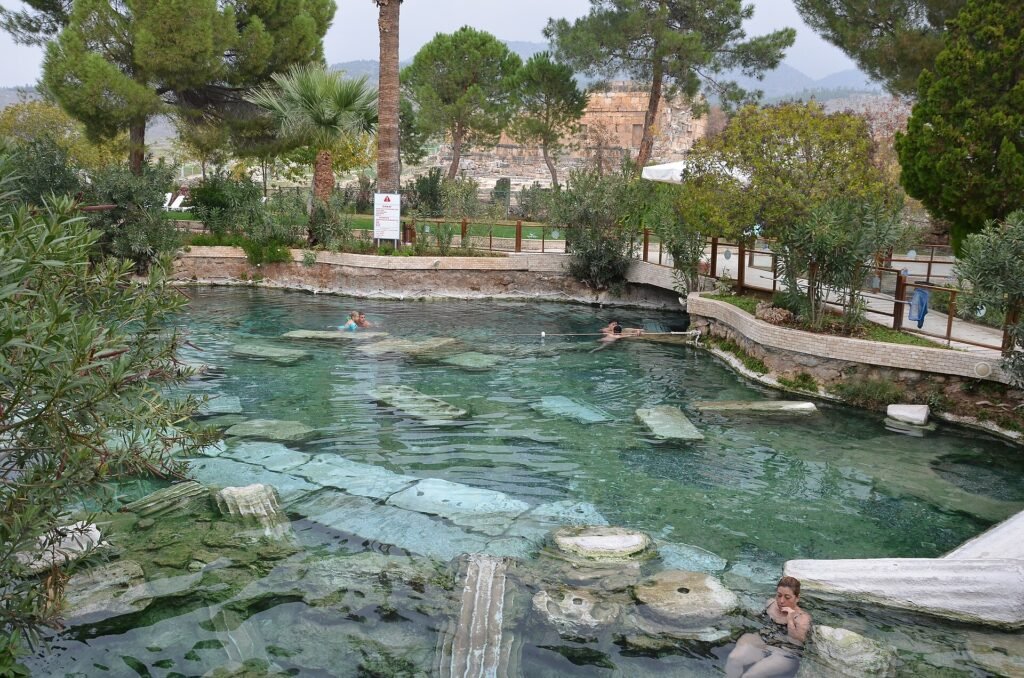
3. “Swim in Cleopatra’s Pool at Pamukkale”
Fine advice today. It was closed from January 2025 to 1 May 2026 — sixteen months — for a renovation delayed by contractor problems.
Which means any article published during 2025 describing a swim there is describing something that did not happen. Worth remembering when you assess how a site sources its content.
4. “Walk across the travertine terraces and bathe in the pools”
UNESCO’s record for the property states that visitor access to the travertine terraces is prohibited, in order to sustain water flow, with access confined to designated paths. It separately notes that designated bathing areas in the hot springs have been established.
What you actually get is one barefoot causeway with the famous white basins roped off either side. It is a wonderful twenty-minute climb. It is not a wander across the terraces.
There is also less water than the photographs suggest: source flow has fallen from 450 litres per second in 1993 to about 150 today, and the IUCN recorded in October 2025 that the site has no water management plan.
5. “Pamukkale is getting more crowded every year”
Foreign visitors fell 12.5% in January–May 2026 against the same period in 2025 — 625,199 against 714,677 — with organised-tour arrivals down 27.7%.
What has increased is the domestic holiday peak. The all-time single-day record, 21,192 visitors, was set on 29 May 2026 during Kurban Bayramı. Plan around the Turkish calendar, not the European one.
6. “Buy the museum pass, it always pays off”
On a three-day Selçuk trip the €95 Aegean pass loses you about €24. Realistic pass-eligible spend is around €71. It only clears if you leave Selçuk for Bergama, Aphrodisias or Pamukkale.
Same pattern in Cappadocia: the €65 pass against a typical €48 of gate spend, with the valleys — the reason people go — free and on no pass at all.
7. “Entry costs a few hundred lira”
Ministry prices for foreign visitors are quoted in euro, since March 2024. Ephesus €40, Pamukkale €30, Göreme €20.
The practical consequence people miss: a weakening lira makes your dinner and hotel cheaper and does nothing to your ticket.
8. “Accommodation tax is 2%”
It is 1% until 31 December 2026, halved by presidential decree effective 1 May 2026. It reverts to 2% on 1 January 2027 — so this page will be wrong in four months, and we will update it.
9. “Restaurants add a 10% service charge”
Compulsory service charges have been banned since 30 January 2026 — and the ban is broader than most reporting: it covers cafés and patisseries as well as restaurants, and it bans cover and table charges too. Voluntary tipping is untouched.
10. “You will need an e-visa for Türkiye”
US, UK, Canadian, Australian and EU ordinary passport holders need no visa and no e-visa, for 90 days in any 180.
There is an entire industry of third-party sites selling “Turkey e-visa” documents to people who do not need one. The only official portal is evisa.gov.tr, and if you hold one of those passports you have no reason to visit it.
11. “There is a train from İstanbul to Denizli for Pamukkale”
There is not. The Pamukkale Ekspresi runs Eskişehir–Denizli, once daily, about eight hours. From İstanbul you take the high-speed train to Eskişehir and change — realistically 11 to 12 hours. Fly, or take an overnight coach.
12. “Ephesus and Pamukkale close at sunset”
Both run night sessions. Ephesus 19:00–23:00 Wednesday to Saturday; Pamukkale 19:00–23:00 every day since April 2024, covering the travertines, the theatre and the Plutonium.
Floodlit, far cooler, nearly empty — and in July and August, when both sites sit at 33–35 °C with no shade, it is the only sensible way to see them. No museum pass covers night sessions.
Two we got wrong ourselves
We are including these because a page listing other people’s errors without listing its own is not worth much.
We described İzmir’s public transport as distance-based. It is not. Buses, metro and trams run on a flat fare with an İzmirim Kart. İZBAN suburban rail is distance-based beyond about 20 km, and roughly twenty long-distance suburban bus routes use a separate “Gittiğin Kadar Öde” tariff. We had the exception and the rule the wrong way round.
We misread the UNESCO text on Pamukkale. We wrote that UNESCO records bathing in the pools as prohibited. It records the opposite — that designated bathing areas have been established — and prohibits access to the terraces. We then built a paragraph around a contradiction that existed only in our misreading.
Both were caught in review before publication and corrected. We mention them because the honest version of “most guides are stale” includes the sentence “and so were we, twice, this month.”
How we check
Turkish official sources first — the Ministry of Culture and Tourism’s museum portal, the Official Gazette, the state meteorological service, TCDD, provincial governorships — then UNESCO and IUCN, then Turkish press, then everything else.
Where we cannot reach a primary source, we say so rather than promoting a blog to the status of an official record. The Ministry’s master price tariff, in particular, has been unreachable from where we work, so euro prices on this site carry a confidence rating rather than a false certainty.
Corrections welcome
If something here is wrong, tell us and we will fix it with a date. We would rather be corrected than quietly trusted.
If you are citing this
The underlying facts belong to their sources. The assembly and the checking are ours, and free to reproduce with a link back.