
In short
The Fergana Valley is about five hours east of Tashkent by train over the Kamchik Pass — no permit needed, but foreigners are passport-checked at the pass. Plan around Kumtepa Bazaar in Margilan, which trades on Thursdays and Sundays only. Give it two nights minimum. Afrosiyob does not serve the valley; these are conventional trains.
Checked 26 August 2026 against UNESCO’s intangible heritage register, Uzbek regional tourism authorities and 2026 travel reporting.
On this page
Every Uzbekistan itinerary runs west: Samarkand, Bukhara, Khiva. The Fergana Valley runs east, over a 2,268-metre pass, and almost nobody writing in English goes there.
What is out there is the country’s living craft economy — silk woven by hand on wooden looms, ceramics glazed with plant ash, and a bazaar where tailors buy their cloth by the bolt. Not demonstrations staged for coaches. Workshops that sell to Uzbeks.
If you are reading this in mid-September 2026, there is also a reason to hurry: the Atlas Bayrami textile festival runs in Margilan from 10 to 24 September 2026, organised with UNESCO’s Tashkent office. It is biennial, so the alternative is 2028.
Margilan: silk
The Yodgorlik Silk Factory still operates and still takes visitors, and you can follow the entire process in one building — cocoons boiled and reeled, warp threads bound and resist-dyed for ikat, then hand-weaving on wooden looms. Atlas, the pure silk, and adras, the silk-cotton blend, both come off those looms.
On cost, sources genuinely disagree: two well-established travel writers describe the tour as free, a third mentions a modest fee. The likeliest reality is no fixed admission, an informal guide, and an expectation that you tip or buy something in the shop. Budget for the shop; the fabric is the point.
Opening hours are not published anywhere official. Go on a weekday morning.
A distinction worth getting right: the Margilan Crafts Development Centre, housed in the Said Ahmad Khoja madrasah, is a separate institution — and it, not the Yodgorlik factory, is the body named in Margilan’s UNESCO listing.
Kumtepa Bazaar, and the day everyone gets wrong
Kumtepa runs on Thursdays and Sundays. Sunday is the bigger day. Any other day you will find a skeleton of stalls and wonder what the fuss was about.
This is a working market, not a tourist one — bolts of atlas and adras sold wholesale to tailors, alongside produce and household goods. Go in the morning.
Rishtan: ceramics
Rishtan’s ceramics are that particular blue-green, and the colour comes from ishkor — a glaze made with the ash of a desert plant called qyrq bogan, “forty branches”, which vitrifies at around 1,400 °C.
Rustam Usmanov is the best-documented master receiving visitors: workshop on B. Ar-Roshidoniy Street, with a guest house and a family museum on site, listed on the regional tourism authority’s own pages. One 2026 account reports his tours are free.
Alisher Nazirov runs the Usto-Shogird — master-and-apprentice — workshop and is central to the ishkor revival. He trained in Japan under a Kutani-school master, and his workshop also houses a Japanese language school. Whether he charges for visits, we could not establish.
A Rishtan Traditional Pottery Museum opened in September 2025 during the town’s second international pottery forum. We could find no address, hours or admission price for it — a fair illustration of how thin the information is out here.
Kokand: the palace with one-sixth left
The Palace of Khudayar Khan was built in 1871, the seventh khan’s palace of the Kokand Khanate. It measured 138 by 65 metres, with seven courtyards and 119 rooms.
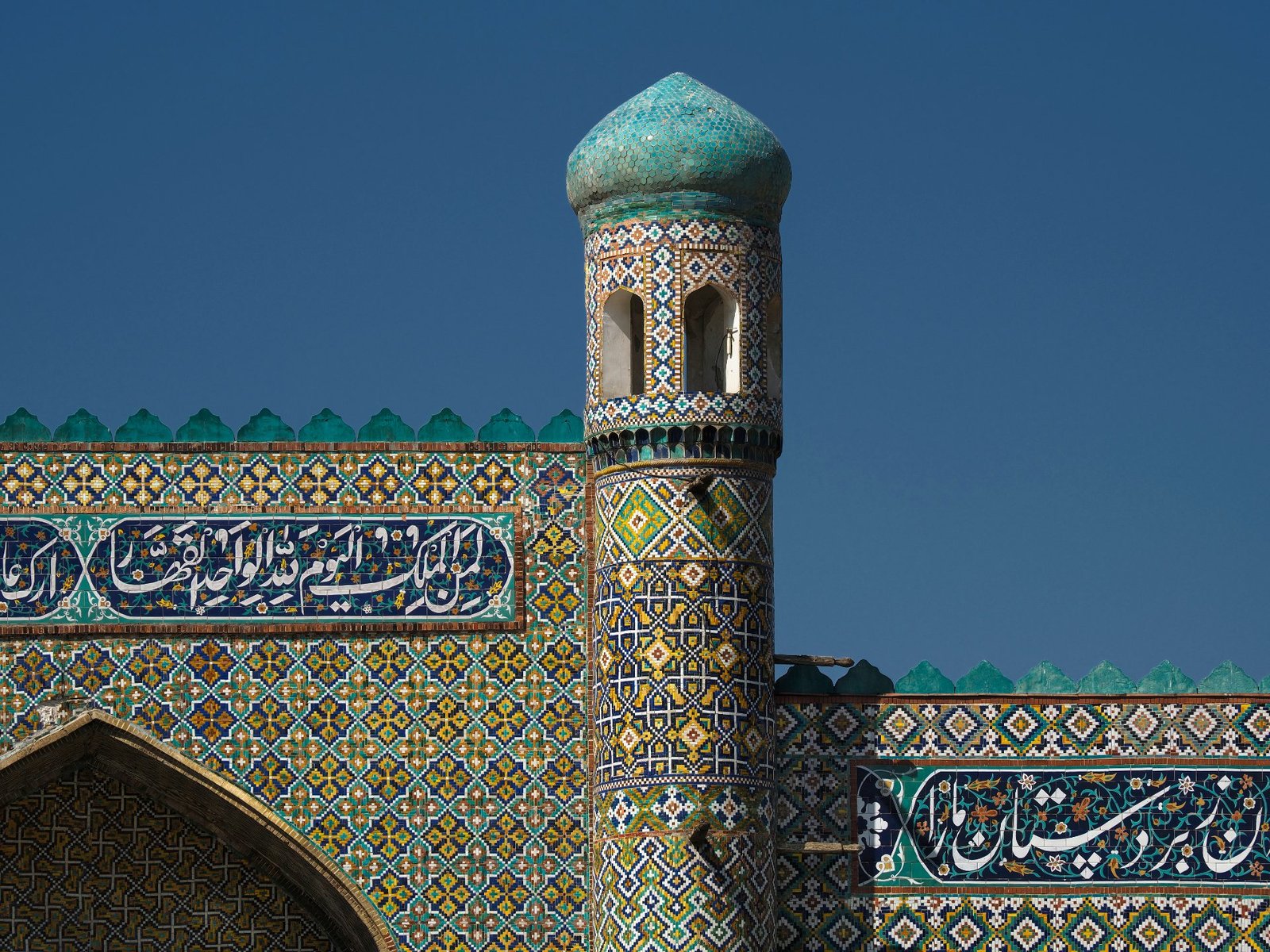
Two courtyards and nineteen rooms survive. The harem wing was demolished by the Russians in 1919. The khan’s jewelled throne is in the Hermitage in St Petersburg. What remains holds the regional museum, behind a tiled façade that is still one of the most photogenic things in the valley.
No official admission price is published. We checked the national tourism portal, the regional authority and every operator listing we could find; not one gives a current figure, or a closing day. Expect a nominal foreigner ticket plus a separate camera fee, in cash.
Also in town: the Juma Mosque with its hand-painted columns, carved wooden iwan and roughly 20-metre minaret; the Modari Khan and Dakhma-i-Shokhon mausoleums; and the Norbutabiy madrasah.
Fergana city and Andijan, honestly
Fergana city was founded in 1876 as a Russian garrison town. It is grid-planned, tree-lined and low-rise, and it has no significant monuments. Its value is as the valley’s transport hub and its best hotel base — everything else is between twenty minutes and two hours away by shared taxi.
Andijan is a border town. Babur, founder of the Mughal empire, was born here in 1483 and there is a museum to him, plus the Juma mosque complex and a bazaar on Sundays and Thursdays. Unless you are crossing to Osh in Kyrgyzstan, you can skip it.
Namangan, if you have the time, is the religious heart of the valley and feels markedly different from the rest of the country.
Getting there
By road, it is about 360 km and five hours from Tashkent over the Kamchik Pass — 2,268 metres, on the A373, carrying ten to fifteen thousand vehicles a day. It closes in winter for avalanche risk, and mudslides are a recurring problem.
There is a police checkpoint on the pass where foreigners must show passports, and officers can be thorough about registration slips — keep every hotel receipt. No permit is required, despite what you may read.
By train is more comfortable. The branded O’zbekiston express runs through the 19.2-kilometre Kamchiq Tunnel, opened in 2016, which removed the old need to transit Tajikistan. A representative schedule:
| Outbound | Return | |
|---|---|---|
| Tashkent | dep 08:05 | arr 21:39 |
| Kokand | 12:09 | 17:38 |
| Margilan | 12:59 | 16:48 |
| Andijan | arr 13:49 | dep 16:00 |
Call it about five hours; timings shift seasonally, so check the operator for your date. Note that Afrosiyob does not serve the Fergana Valley — these are conventional trains, and the station for Fergana city is at Margilan, signed Yangi-Margilan.
That may change. Ten Škoda electric units are due from 2027 covering Tashkent–Kokand and the Pap–Namangan–Andijan–Margilan–Kokand circuit, and Uzbekistan has increased its high-speed order with the extra sets earmarked for Tashkent–Andijan. See our train booking guide for how tickets work.
What is actually UNESCO-listed here
This is worth being precise about, because a lot of writing about Margilan is not.
| Element | List | Year |
|---|---|---|
| Margilan Crafts Development Centre, safeguarding atlas and adras technologies | Register of Good Safeguarding Practices | 2017 |
| Ceramic arts in Uzbekistan | Representative List | 2023 |
| Sericulture and traditional silk production for weaving | Representative List (multinational) | 2022 |
Margilan ikat is not itself inscribed on the Representative List. What is listed is the crafts centre’s safeguarding programme, on a much smaller register with only around thirty-five entries worldwide. Silk-making is covered generically by the multinational sericulture listing. Anything claiming “Margilan ikat is UNESCO Intangible Cultural Heritage” is imprecise.
Two more corrections while we are here: Lazgi, the dance often attached to this region, is Khorezm’s, and the Boysun cultural space is in Surxondaryo. Neither is Fergana.
How long, and is it worth it?
Two nights minimum, three if you want it to be relaxed — and the itinerary is dictated by Kumtepa, which only works on a Thursday or Sunday. Build around that first, then fit Kokand and Rishtan around it.
The honest comparison: Bukhara has the denser payoff and no five-hour mountain transfer. If you have seven days in Uzbekistan, spend them in the west. The valley earns its place on a trip of ten days or more, and what it offers is different in kind — craft you can watch being made and buy at source, in towns where you will meet almost no other foreign visitors.
Where to stay
We could not find reliable dated prices — the online listings we checked contradicted each other badly, quoting the same guesthouse at both US$22 and US$50. Rather than print a fake range, here are properties that independent 2026 travel writing actually corroborates:
- Margilan: Guest House Ikathouse, Evergreen Margilon Guesthouse
- Fergana: Sakura Guest House, Asia Hotel, Hotel Voyage
- Kokand: Ahmadkhon Hotel, Silk Road Kokand Hotel
Indicatively, guesthouses run around US$20–40 and mid-range hotels US$40–70, but treat that as a sighting shot rather than a quote.
What we could not verify
Opening hours for the Yodgorlik Silk Factory, and whether its tour carries a fee. Admission and hours for the Khudayar Khan Palace and the Kokand regional museum. Any visitor information at all for the new Rishtan pottery museum. Whether Alisher Nazirov charges. Current shared-taxi and train fares to the valley — the only figures we found date from 2017 and are worthless now. And whether a fourth Kokand handicrafts festival is planned; the last was September 2025 and it appears to be biennial.
For the country as a whole, start with our Uzbekistan travel guide.
Photo: Palace of Khudáyár Khán, Kokand (Дворец Худояр-хана, Xudoyorxon oʻrdasi) by Petar Milošević, via Wikimedia Commons, CC BY-SA 4.0.