
In short
Türkiye’s accommodation tax is not a flat rate this year: 2% from 1 January to 30 April 2026, 1% from 1 May to 31 December 2026, and 2% again from 1 January 2027. It shows as a separate line on your invoice and covers not only the room but services sold as part of the stay — so a cave hotel’s breakfast and transfer are inside the base, not outside it.
Verified against Presidential Decision 11263, Official Gazette 33240.
Disclosure: some links in this guide are affiliate links. If you book through one, we earn a small commission and you pay exactly the same price. We only link to services we would use ourselves, no brand pays for placement or for a favourable write-up, and every price in this article was researched independently.
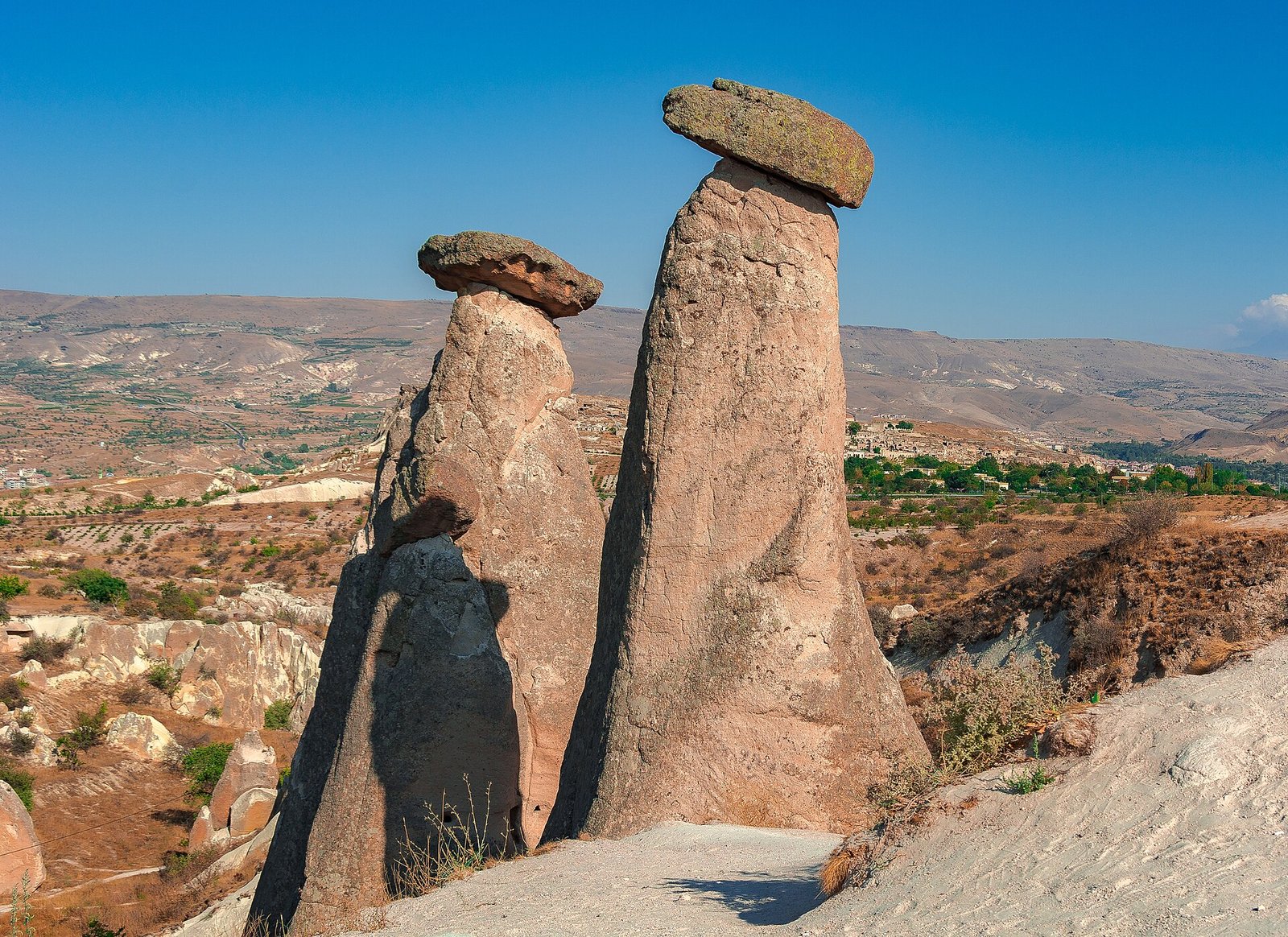
Cappadocia is one of the few places where the hotel is genuinely part of the trip. You are sleeping inside rock that people carved out by hand, sometimes a thousand years ago. A cave room holds a steady temperature year-round, muffles sound completely, and has no view unless someone cut a window.
What is in this guide
- First, the tax that just changed
- The five towns
- Named properties by band
- What nobody tells you about cave rooms
- The one thing that should decide your hotel
- How far ahead to book
- Should you stay somewhere else and day-trip?
- Frequently asked questions
- A note on our numbers
- Booking a cave hotel: the checklist
- What a cave room is actually like
- Two nights or three?
- Booking channels
- Frequently asked questions, part two
- Getting to the village you just chose
That last part matters more than the brochures admit. Read on.
Verified: August 2026 · Rates: €1 = 55.5 TRY · $1 = 47.9 TRY
Editor’s note
Village choice is really a question about half past four in the morning. Goreme, Uchisar and Cavusin sit closest to the launch fields, which matters when the pickup is before dawn. Ortahisar and Urgup are quieter and cheaper and add twenty minutes to a morning you will already resent.
First, the tax that just changed
Turkey’s accommodation tax (konaklama vergisi) was cut from 2% to 1% on 1 May 2026 and stays there until 31 December 2026, reverting to 2% on 1 January 2027 unless extended.
| Period | Rate |
|---|---|
| 1 Jan – 30 Apr 2026 | 2% |
| 1 May – 31 Dec 2026 | 1% |
| From 1 Jan 2027 | 2% again |
It appears as a separate line on your invoice and covers not just the room but services sold as part of the stay — meals, activities, spa. On a €270 three-night stay that is €2.70 rather than €5.40. Small, but nearly every English-language guide still prints 2%.
The five towns
They are genuinely different places, and picking wrong is the most common accommodation mistake here.
| Town | Character | Suits | Nightly | To balloon fields |
|---|---|---|---|---|
| Göreme | The hub. Walkable, social, tour desks and rooftop terraces | First-timers, solo travellers, no car | €15–350 | 1–3 km |
| Uçhisar | Highest point. Quiet, upmarket, panoramic. Almost no nightlife | Couples, photographers | €60–500+ | 5–7 km |
| Ürgüp | A real town. Wine culture, restaurants with Turkish-only menus | Food and wine travellers, repeat visitors | €70–400 | 8–12 km |
| Ortahisar | Small, lived-in, castle-centred. Least touristed | Authenticity on a mid budget | Cheap — no verified 2026 band | ~8 km |
| Avanos | Riverside, pottery town, artisan workshops | Families, longer stays | €25–100 | 12–18 km |
| Çavuşin | Tiny village. Balloons pass at rooftop height. Rose Valley trailheads | Budget travellers, photographers | €30–120 | 3–5 km |
Göreme — the default, and usually right
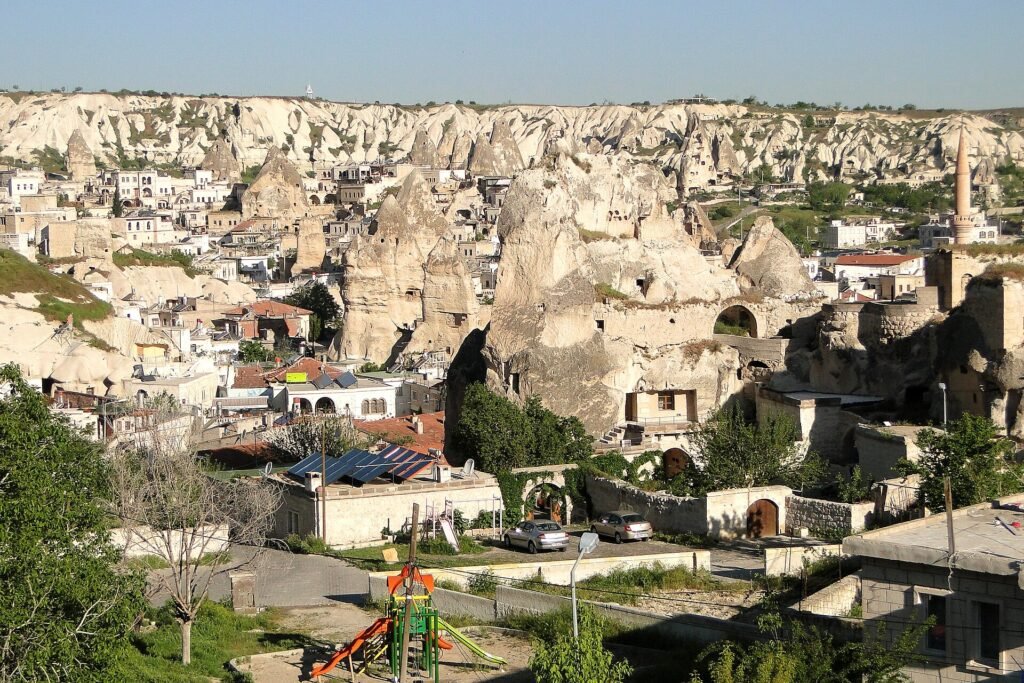
Everything picks up here. Every tour, every balloon transfer, every dolmuş. You can walk to dinner, walk to the Open Air Museum, and walk into Pigeon Valley from the edge of town.
The trade-off: it is the busiest and least atmospheric of the five. The main street is tour agencies and carpet shops. At sunrise, though, the rooftop terraces here have the view everyone came for.
Stay here if it is your first visit, you have no car, or you want options at 21:00.
Uçhisar — the view
Built around a castle rock at the highest point in the region, looking out over everything. The luxury properties are here and so are the wide landscape photographs.
The trade-off: you will taxi to dinner. Uçhisar has a handful of restaurants and essentially no nightlife. It is quiet in a way that is either the point or the problem.
Ürgüp — the grown-up choice
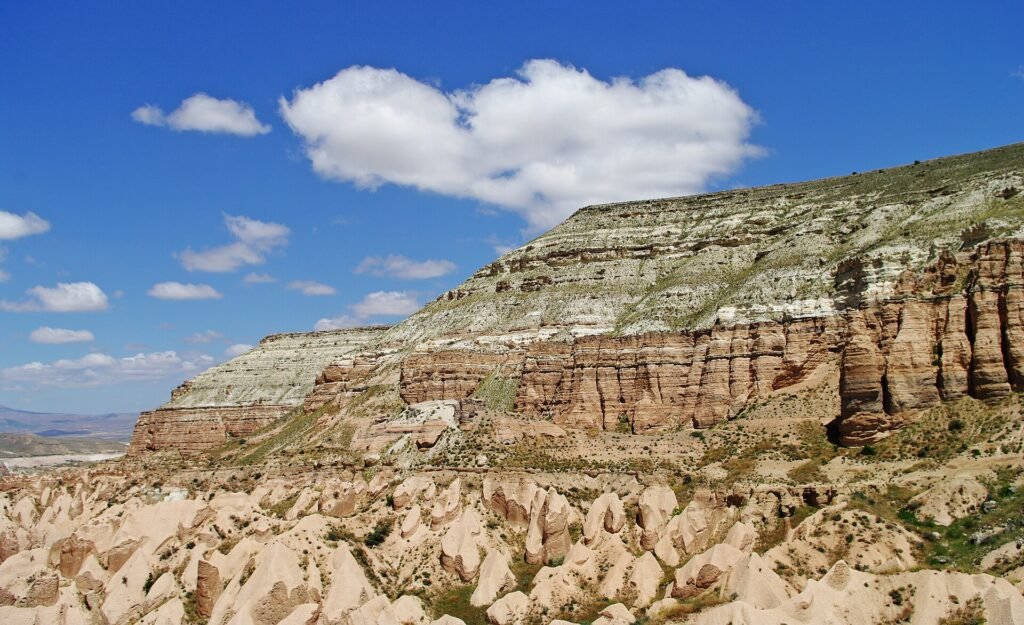
An actual town of 20,000 people with a proper high street, wine shops and restaurants where the menu is in Turkish because most customers are Turkish. This is Turkey’s oldest wine region and almost nobody tells you.
Stay here if you have been to Cappadocia before, or you care more about dinner than about being in the middle of the postcard.
Avanos — value and the river
On the Kızılırmak, Turkey’s longest river. Pottery workshops, a bridge, riverside cafés. The cheapest of the five by a clear margin — €25–100 covers most of what is available.
The trade-off: 12–18 km from the balloon fields, so a 20–25 minute transfer at 04:30.
Ortahisar and Çavuşin — the quiet ones
Ortahisar is a small town around its own castle, the least visited of the main five. Çavuşin is tiny, sits directly under the balloon flight path, and has the Rose and Red Valley trailheads at the edge of the village.
Both are for people who have decided they want to hear nothing at night.
Named properties by band
| Band | Property | Town | 2026 nightly |
|---|---|---|---|
| Budget | Koza Cave Hotel | Göreme | €40–60 |
| Budget | Traveller’s Cave Hotel | Göreme | €50–80 |
| Mid | Kelebek Special Cave Hotel | Göreme | €80–150 |
| Mid | Mithra Cave Hotel | Göreme | €100–200 |
| Mid–upper | Sultan Cave Suites | Göreme | €150–300 |
| Mid–upper | Taşkonaklar | Uçhisar | €150–300 |
| Luxury | Kayakapı Premium Caves | Ürgüp | €200–400 |
| Luxury | Sacred House | Ürgüp | €200–400 |
| Luxury | Argos in Cappadocia | Uçhisar | €300–600 |
| Luxury | Museum Hotel | Uçhisar | €350–700 |
Hostel dorms in Göreme run €15–30. Aggregator floor prices for a basic hotel room in Göreme or Ürgüp sit around $38–45.
These are indicative 2026 bands from booking platforms and hotel listings rather than published rate cards. Peak season — and any morning with a good balloon forecast — pushes the top of each band.
What nobody tells you about cave rooms
Most cave rooms have no natural light. They were carved as storage, stables and shelter, not as bedrooms with a view. A “deluxe cave suite” may have one small window or none at all. If waking up in the dark bothers you, filter for a room with a terrace or a window and confirm it in writing.
They are cool. Wonderful in August, genuinely cold in February. Heating in the good ones is underfloor; in the cheap ones it is a wall unit that struggles.
Humidity is real. Rock holds damp. Well-run hotels dehumidify; poorly run ones smell of it. This is the single best thing to check in recent reviews.
Sound does not travel through rock, but it does travel through doors. A cave room off a courtyard is silent. A cave room next to a breakfast terrace at 04:00, when the balloon pickups start, is not.
Stairs. These are hillside villages built vertically. A hotel “5 minutes from the centre” may mean five minutes and eighty steps, with a suitcase. Ask.
The one thing that should decide your hotel
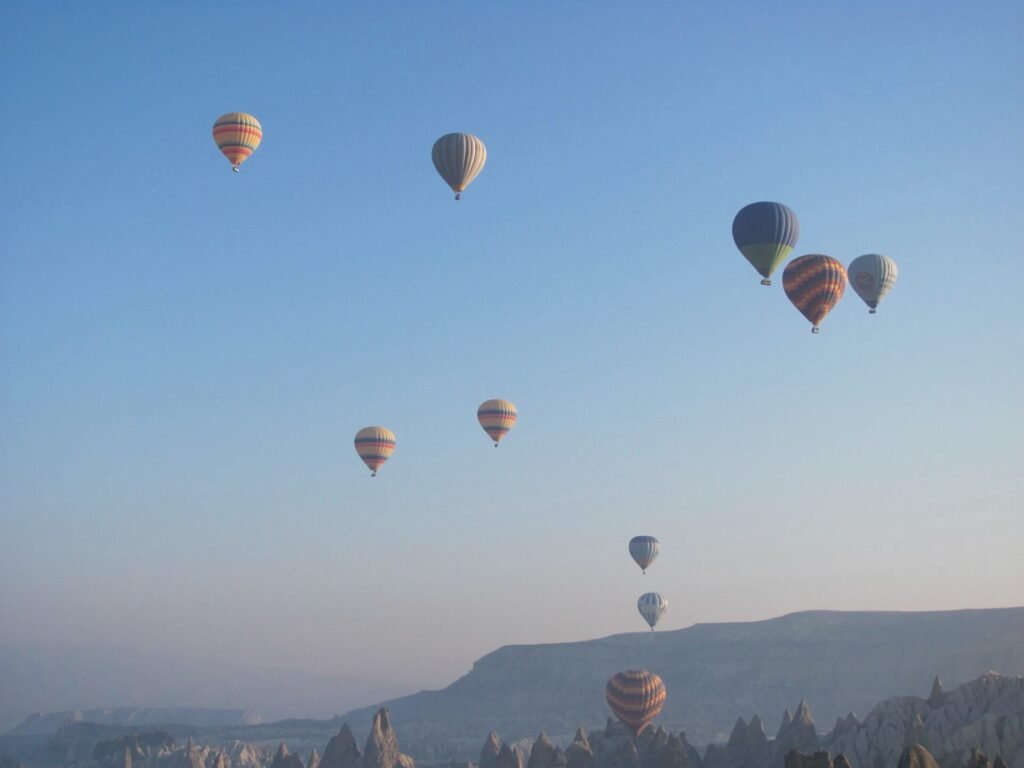
The terrace. On a flying morning, a hotel terrace facing the valleys gives you the balloon photograph without leaving the building — and on a cancelled morning it is the only thing that saves the day.
Göreme’s rooftop terraces are the famous ones, and Sultan Cave Suites is the address that made the shot famous. Çavuşin sits directly under the flight path. Uçhisar has the widest panorama but the balloons are further away.
Ask one question before booking: does the terrace face the valley, and is it open at 05:30? Some are locked until breakfast, which is useless.
How far ahead to book
| Period | Lead time |
|---|---|
| September–October (our pick, and everyone else’s) | 3–4 months |
| July–August | 2–3 months |
| April–June | 2 months |
| November, March | 3–4 weeks |
| December–February | 1–2 weeks — the genuine slack |
Should you stay somewhere else and day-trip?
Short answer: no. Cappadocia is not near anything. Kayseri is 74 km away and is a city with no fairy chimneys; Nevşehir is a provincial town. The whole point is waking up in the landscape.
The only real decision is which village, and for a first visit that is Göreme.
Frequently asked questions
Where should I stay in Cappadocia for the first time? Göreme. Every tour and balloon transfer picks up there, you can walk to dinner, and it has the widest range of prices from €15 dorms to €350 suites.
Are cave hotels actually worth it? Yes, but check for natural light. Many cave rooms have no window at all, because they were carved as storage rather than bedrooms. Also check recent reviews for damp.
Which town has the best balloon views? Çavuşin sits directly under the flight path. Göreme’s rooftop terraces are the classic shot. Uçhisar has the widest panorama but the balloons are further off.
How much is a cave hotel in Cappadocia? Roughly €40–80 budget, €80–200 mid-range, €200–700 luxury per night. Avanos is the cheapest town at €25–100; Uçhisar and Ürgüp are the most expensive.
Is there an accommodation tax in Turkey? Yes, and it changed. It was 2% until 30 April 2026, is 1% from 1 May to 31 December 2026, and returns to 2% on 1 January 2027. It appears as a separate line on your bill.
Göreme or Ürgüp? Göreme for convenience and a first visit. Ürgüp if you have been before, want a real town with proper restaurants, and do not mind a 15–20 minute transfer to the balloon field.
How far ahead should I book? Three to four months for September and October, two to three for summer, and one to two weeks in December, January and February.
Do I need a hotel with a terrace? It is the single feature most worth paying for. On a flying morning it is your photograph; on a cancelled morning it is the consolation. Confirm the terrace faces the valley and is unlocked before sunrise.
A note on our numbers
The accommodation tax change is from the Turkish Official Gazette (Presidential Decree 11263, 1 May 2026). Price bands come from booking platforms and hotel listings checked in August 2026 rather than published rate cards, so treat them as ranges. We could not verify a 2026 band for Ortahisar specifically and have said so rather than guessing.
Keep reading: Cappadocia Travel Guide 2026 · How Much Does a Trip to Cappadocia Cost? · The Perfect 3-Day Cappadocia Itinerary · The Best Things to Do in Cappadocia · Where to Stay in Istanbul
Booking a cave hotel: the checklist
Cave rooms vary more than any other accommodation type we know, and photographs hide most of it. Before you book, get answers to these.
| Ask | Why it matters |
|---|---|
| Does the room have a window or natural light? | Many cave rooms have neither. They were carved as storage and stables |
| Does the terrace face the valley? | This is your balloon photograph. A terrace facing the car park is not the same product |
| Is the terrace open before sunrise? | Some are locked until breakfast, which defeats the point entirely |
| How many steps from the road to reception, and from reception to the room? | These are vertical villages. “Central” can mean eighty steps with a suitcase |
| Is there a lift? | Almost never, and the ones that exist are worth paying for |
| How is the room heated and dehumidified? | Rock holds damp. Underfloor heating is the good answer; a wall unit is not |
| Does the rate include the balloon transfer pickup? | Most hotels arrange it; a few charge |
| Breakfast time? | If you are flying, you will be back at 07:30 and want it late |
What a cave room is actually like
Temperature. Rock is a superb insulator. A cave room sits at a fairly constant temperature all year — blissful in an August afternoon when it is 29°C outside, and genuinely cold in February without proper heating.
Sound. Almost none through the walls. Rock does not transmit noise the way plasterboard does. What you will hear is the corridor, the courtyard and the 04:00 balloon pickups, so ask for a room away from the terrace if you are a light sleeper.
Light. The thing nobody warns you about. If your room was carved rather than built, it may have one small opening or none. Some people find it restful; others wake up disorientated at 11:00 with no idea what time it is.
Damp. The single best predictor of a bad cave-hotel experience. Well-run hotels dehumidify constantly. Poorly run ones smell of it and your clothes will too. Read recent reviews specifically for this word.
Bathrooms. Often the newest part of the room, cut into the rock later. Water pressure varies enormously.
Two nights or three?
We argue for three throughout this cluster, and accommodation is why it is affordable.
| 2 nights | 3 nights | |
|---|---|---|
| Mid-range hotel | €180 | €270 |
| Balloon chances | 1 | 3 |
| Odds of flying in May 2026 | 55% | 91% |
| Odds of flying in June 2026 | 83% | 99.5% |
The extra night costs €90. The flight costs €180. If you are travelling between November and May, the third night is the cheapest insurance you will ever buy.
Booking channels
Cappadocia is unusual in that direct booking is often genuinely better. Cave hotels here are mostly small, family-run and not part of chains. Emailing them gets you a room choice rather than a room category, and they will often hold a terrace room for you if you explain you are flying.
Platforms are better for comparing and for free cancellation. Our approach: find the hotel on a platform, then email the hotel and ask what they can do — particularly about which room.
Frequently asked questions, part two
Do cave hotels have wifi and air conditioning? Wifi yes, universally. Air conditioning is often unnecessary — the rock does the work — but confirm for July and August, and confirm heating for December through March.
Are cave hotels safe in earthquakes? The rock is soft volcanic tuff and has stood for a thousand years. Turkey has demolished more than a thousand unauthorised structures in the region since 2019 precisely to protect the geology and the visitor. Licensed hotels are inspected.
Can I stay in a cave hotel with limited mobility? It is difficult. These are hillside villages with steps everywhere and very few lifts. Ürgüp and Avanos are flatter than Göreme and Uçhisar. Ask specific questions about steps before booking anything.
Is breakfast usually included? Almost always, and Turkish hotel breakfast is a genuine event — olives, cheeses, tomatoes, cucumber, eggs, honey, bread, endless çay. Ask whether they serve it late if you are on a balloon morning.
Getting to the village you just chose
Cappadocia has no useful public transport from either airport, and the villages are 10-20 minutes apart by road with nothing scheduled between them. This is where accommodation guides usually stop being helpful.
From Kayseri (ASR) or Nevsehir (NAV). Shared shuttles exist and cost little, but they wait until they are full and then drop passengers village by village, which regularly turns a 45-minute drive into two hours. On a three-night trip that is a meaningful chunk of your first afternoon. A booked transfer is the one transport purchase we would make here without hesitating, and it matters more if you are staying in Ortahisar, Uchisar or Ibrahimpasa rather than Goreme, since those come last on the shuttle route.
Arriving by overnight bus from Istanbul instead? Do not book anything. The bus company shuttles you from Nevsehir otogar to your village at no extra cost, and this is included in the ticket you already bought.
A cave room detail worth knowing before you book. Genuine cave rooms hold temperature well but many have no window, and a few have humidity problems in spring. The listings that say “cave-style” rather than “cave” are usually conventional rooms with a stone facing. Neither is wrong; they are just different products at similar prices.
Village choice and the balloon. If the balloon is the reason you are coming, Goreme, Uchisar and Cavusin put you closest to the launch fields, which matters at a 04:30 pickup. Ortahisar and Urgup are quieter and cheaper but add 15-20 minutes to a very early morning.
One practical thing. Operators confirm or cancel the balloon by WhatsApp at around 04:30, and hotel wifi in a stone room two floors underground is frequently not up to it. An eSIM is the small purchase that stops you standing in a courtyard at dawn wondering whether the flight is on.