
Quick answer: Sarajevo rewards two to three days: Baščaršija’s Ottoman-era old bazaar for a half-day, the Tunnel of Hope museum (20 BAM, about €10, cash only) for a half-day including transit, and time to simply walk the streets where Austro-Hungarian architecture gives way to Yugoslav-era buildings and back again within a few blocks. The siege of Sarajevo (1992-1996) shaped the modern city visibly, and sites addressing it directly — rather than glossing over it — are some of the most memorable things you’ll see here.
Contents
Baščaršija, the Old Bazaar
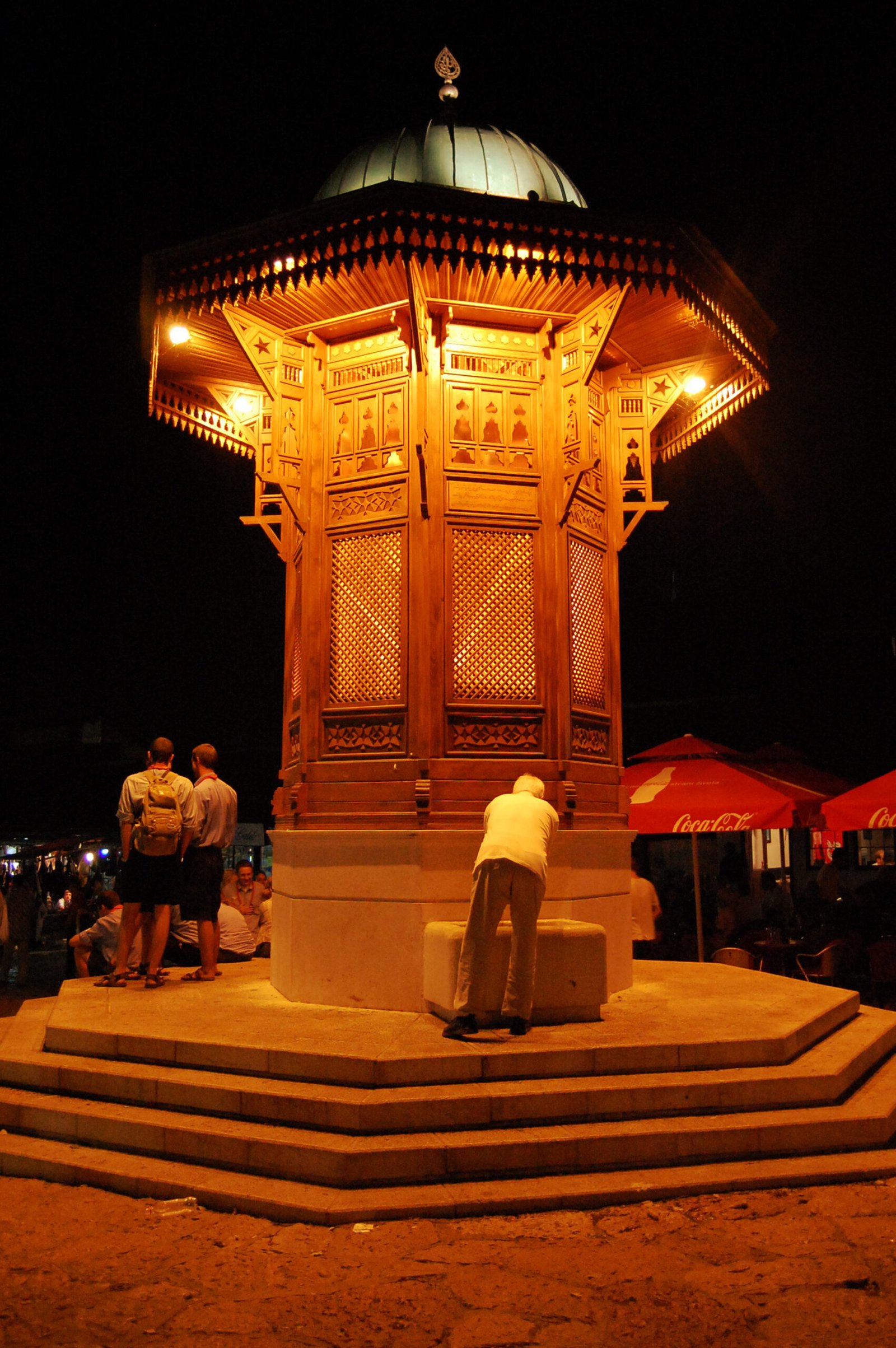
Baščaršija is Sarajevo’s old Ottoman-era bazaar quarter, centered on the Sebilj — a small wooden fountain that’s become the city’s most photographed landmark — and radiating out into narrow streets of copper workshops, cafés serving traditional Bosnian coffee, and small mosques dating back centuries. It’s easy to spend half a day here just wandering, stopping for coffee, and browsing the copper and jewelry stalls that have operated in roughly the same spots for generations. The nearby eternal flame memorial and the point where Austro-Hungarian architecture visibly takes over from Ottoman style along Ferhadija street are both worth the short walk from the bazaar’s edge.
The Tunnel of Hope
The Tunnel of Hope (Tunel spasa) museum preserves a section of the hand-dug tunnel that was Sarajevo’s main lifeline during the 1992-1996 siege, running under the airport runway to connect the besieged city to Bosnian-held territory beyond. Tickets are 20 BAM for adults (about €10), 8 BAM for students, free for children under 6, with a 3 BAM audio guide add-on — cash only in BAM, no cards or foreign currency accepted. It’s open daily, 08:30-17:00 from April to October and 09:00-16:00 November to March (last entry 30 minutes before closing). The site is about 6km southwest of Baščaršija; take tram line 3 toward Ilidža (about 25 minutes) and then a short taxi from the Ilidža tram terminus (5-7 BAM), or join a guided tour that includes transport — the location isn’t walkable from the center and public transport alone involves a short taxi leg either way.
Sarajevo’s Layered Architecture
Walking from Baščaršija toward the city’s newer districts, you pass through visible layers of history in a few blocks: Ottoman-era buildings give way abruptly to Austro-Hungarian architecture from Sarajevo’s time as part of that empire (1878-1918), which gives way in turn to Yugoslav-era modernist blocks, with 1990s-era bullet and shrapnel damage still visible on some facades. This isn’t a formal walking tour stop so much as something you’ll notice simply moving through the city — worth slowing down for rather than treating as background on the way to somewhere else.
Getting Around
Central Sarajevo is compact and walkable for most sights; trams (including the old, slow but functional tram line 3) cover the wider city reasonably well, and taxis are cheap for anything outside easy tram reach, including the trip to the Tunnel of Hope. For onward travel to Mostar, buses run frequently and take around 2.5 hours — covered along with the rest of the regional transport picture in our transport guide.
FAQ
Do I need to book the Tunnel of Hope in advance?
Not typically, but check current hours before going since they shift seasonally, and bring cash since cards aren’t accepted.
How many days should I spend in Sarajevo?
Two to three days covers Baščaršija, the Tunnel of Hope, and enough unhurried walking to take in the city’s layered architecture.
Is it appropriate to visit siege-related sites as a tourist?
Yes — these are presented as serious historical sites, and a respectful visit (especially with a local guide who can add context) is generally welcomed rather than seen as intrusive.
Photo: Milan Suvajac, CC BY-SA 4.0, via Wikimedia Commons — the Sebilj fountain in Baščaršija, Sarajevo’s old Ottoman-era bazaar quarter.