
Quick answer: US, UK, and EU citizens get 90 days visa-free in Bosnia and Herzegovina within a rolling 180-day period — standard terms, same as Serbia and Montenegro. The currency is the convertible mark (BAM), pegged by law at a fixed rate of 1 EUR = 1.95583 BAM since 1997 and never adjusted since — easy mental math once you know the ratio (roughly BAM × 0.51 = EUR). Bosnia’s main draws are Sarajevo’s layered Ottoman, Austro-Hungarian, and 1990s-war history, Mostar’s Old Bridge and its diving tradition, and the Una River’s waterfalls in the country’s northwest.
Contents
Visa and Entry Rules
US, UK, and EU citizens can enter Bosnia and Herzegovina visa-free for up to 90 days within any rolling 180-day period, counted separately from Schengen days since Bosnia is outside the Schengen Area. Bosnia’s eVisa system exists but is aimed at nationalities that already require a visa — it doesn’t affect US, UK, or EU travelers, who need nothing beyond a valid passport (with at least three months’ validity remaining). The full picture by nationality, including the eVisa details for other countries, is in our dedicated Bosnia visa and entry rules guide.
Currency: The Convertible Mark
Bosnia’s currency is the convertible mark (BAM, sometimes written KM locally), managed under a currency-board arrangement established in 1997 alongside the Central Bank of Bosnia and Herzegovina — every BAM in circulation is backed by euro reserves, and the exchange rate is fixed by law at exactly 1 EUR = 1.95583 BAM, a peg that has never been adjusted. In practice this makes currency math easy once you know the ratio: roughly divide a BAM price by 2 (or multiply by 0.51) to get a rough euro equivalent. Cards are accepted in cities but many smaller attractions — including, notably, the Tunnel of Hope museum in Sarajevo — are cash-only in BAM, so keep some on hand.
Where to Go in Bosnia and Herzegovina
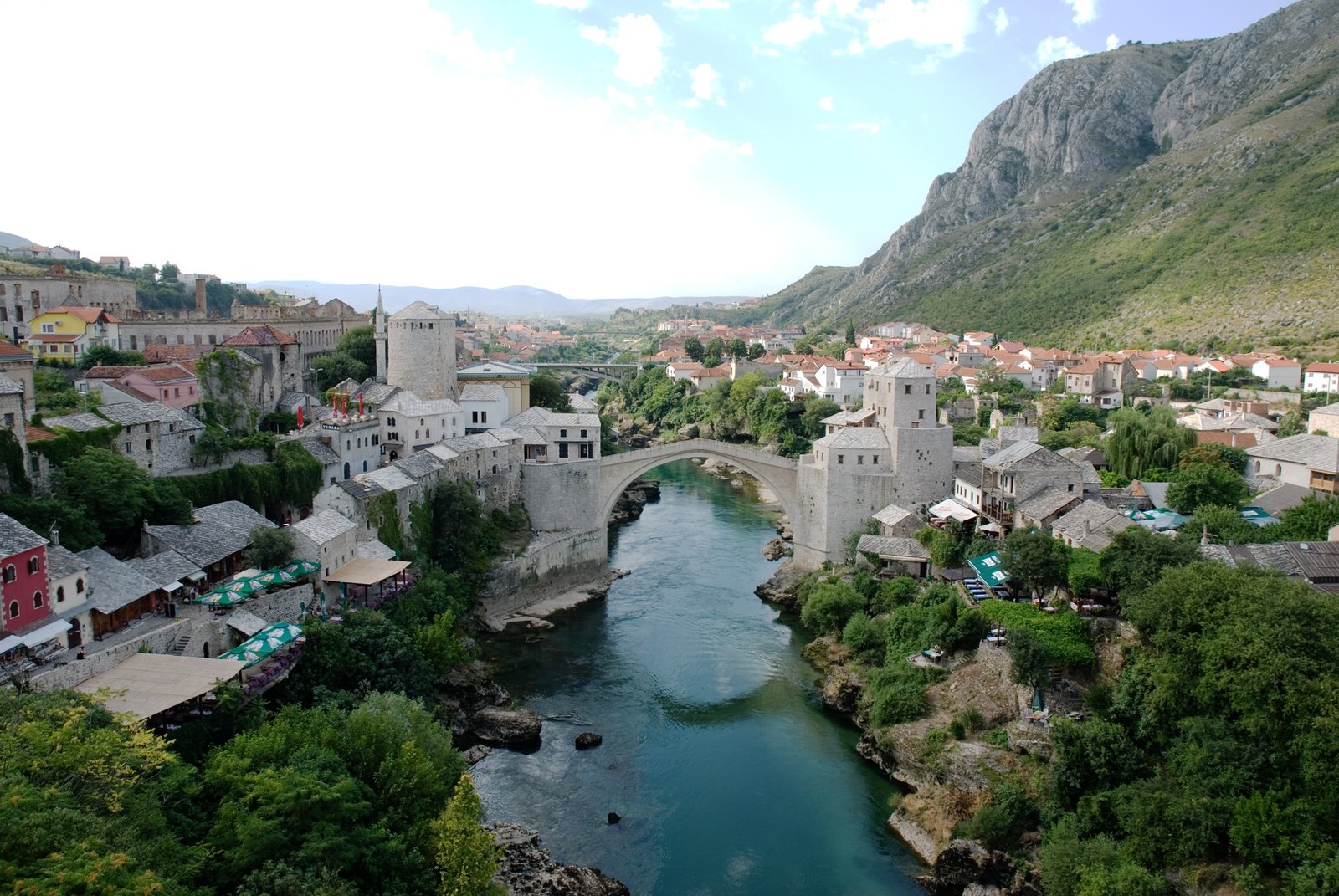
Sarajevo — the capital, where Ottoman-era Baščaršija, Austro-Hungarian architecture, and the legacy of the 1990s siege sit within walking distance of each other. Mostar — built around the reconstructed Stari Most (Old Bridge) and its famous bridge-diving tradition, with Herzegovina’s hot, dry summer climate a sharp contrast to Sarajevo’s. Una National Park and Jajce — the country’s northwest, with the Una River’s waterfalls, rafting, and the separate Pliva Lakes and waterfall at Jajce.
A Note on Visiting War History Sites
Bosnia’s 1992-1995 war is recent enough that many of the people you’ll meet lived through it directly, and sites like Sarajevo’s Tunnel of Hope present that history without much softening. These are genuine historical sites worth understanding, not dark-tourism curiosities — approach them with the same respect you’d bring to any site commemorating recent, lived trauma, and consider a guided tour with a local guide (several run by people with direct personal connections to the period) over a self-guided visit if you want context beyond what a plaque can give you.
FAQ
Is Bosnia and Herzegovina safe to visit?
Yes — it’s a stable, well-established tourist destination; the war ended in 1995, and normal travel precautions apply rather than any special caution.
Can I use euros in Bosnia?
Not officially — the convertible mark is the currency, though its fixed peg to the euro makes conversion simple if you’re coming from a eurozone country.
Is Bosnia in the EU?
No — it’s a candidate country at an earlier stage of accession talks than Serbia or Montenegro.
Photo: Ramirez HUN, CC BY-SA 3.0, via Wikimedia Commons — Stari Most, the Old Bridge in Mostar.