
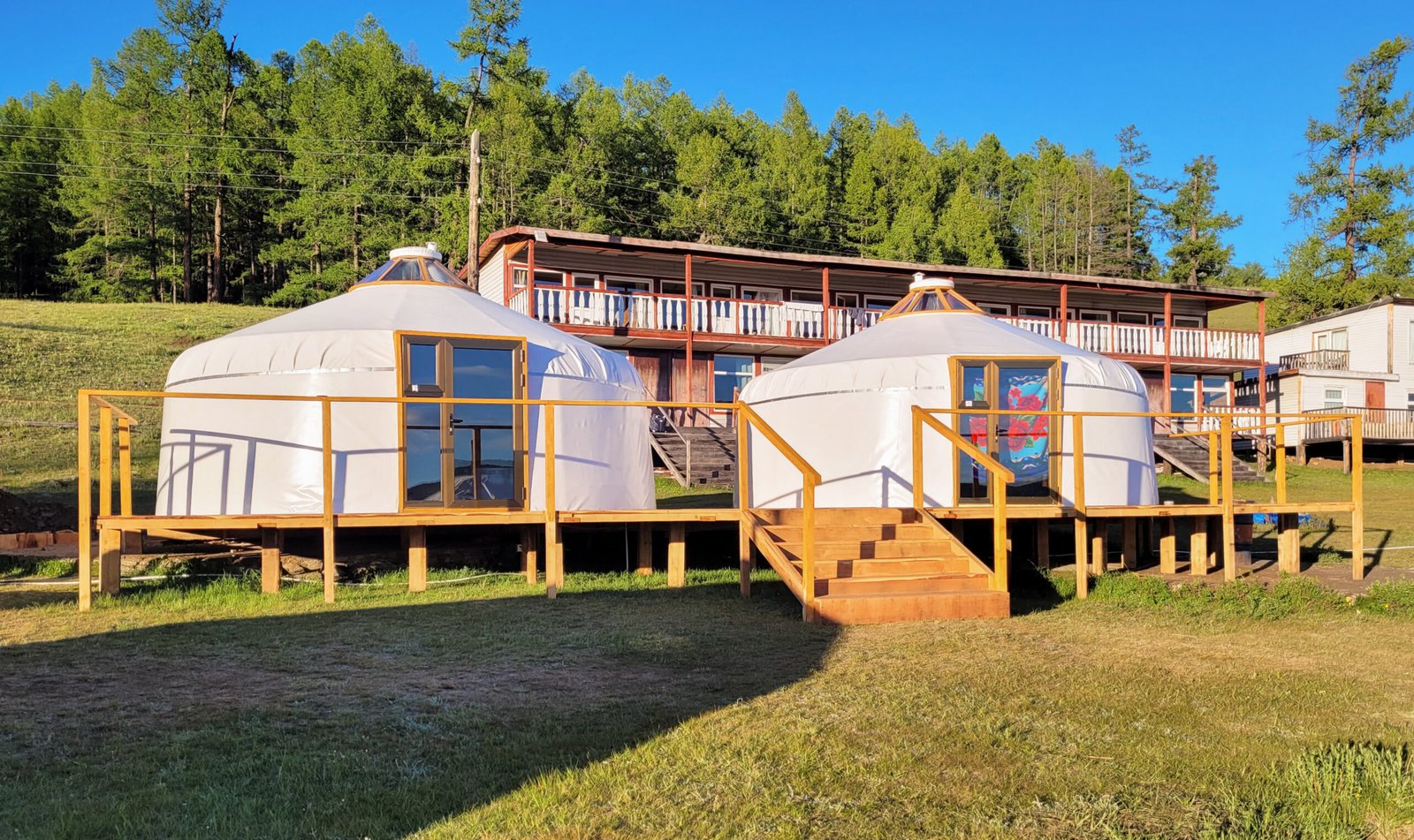
Quick answer: “Ger camp” covers an enormous range in Mongolia — from a $20/night family homestay with an outdoor toilet to a $400/night luxury lodge with 24-hour hot water. The tourist-camp premium over a basic family guesthouse runs $35–70 per person per night, and a private en-suite bathroom typically costs a published $30/night extra. Wifi is essentially absent everywhere except a handful of top-tier properties — plan around that, not for it.
Table of contents
Price tiers and what physically changes
“Ger camp” is doing several different jobs in Mongolia tourism marketing, and prices found across multiple 2026 sources range from as little as $7 a bed to $400 a night — because the term covers everything from a nomad family’s spare ger to a full glamping resort. Here’s the tier structure that best matches what you’ll actually find:
| Tier | Price/person/night | Bathroom | Electricity | Wifi |
|---|---|---|---|---|
| Nomad homestay | $20–40 | Shared, outdoor | None | None |
| Standard tourist ger | $40–70 | Shared block, separate building | Limited (generator hours) | Rare |
| En-suite / deluxe | $80–150 | Private, attached | 24-hour | Limited, some camps |
| Luxury / glamping | $150–400 | Premium en-suite | Full | Full |
The most reliable single data point we found: one operator’s own price list shows that upgrading a shared-bathroom tourist camp to an en-suite one costs exactly $30 per person per night — a clean, isolated figure for what a private bathroom is worth.
Tourist ger camp vs. family homestay
These are genuinely different products, not just different price points. A tourist ger camp is essentially a hotel built to look like a traditional ger — typically 15–40 gers arranged around a central restaurant building, sleeping 2–4 people per ger on real beds, with staff and set meal times. Nobody lives there in winter; it’s tourism infrastructure.
A family homestay puts you in an actual working nomad household’s ger, or a spare one right beside it — outdoor toilet, camping-style shower, 4–5 beds, no running water. It’s a genuinely different experience: you’re a guest in someone’s home and daily life, not a hotel customer. If cultural contact is what you’re after, this is the tier that delivers it; if reliable plumbing matters more, pay for the tourist camp.
One more thing worth knowing: there’s no official Mongolian government classification system for ger camps — no star rating, no licensing standard. “Deluxe” and “luxury” are marketing terms each operator applies to itself. Judge by the specifics (private bathroom? 24-hour power?) rather than the label.
The honest realities: wifi, power, water, heat
A few things almost no marketing copy tells you plainly:
- Wifi is essentially absent at nearly every ger camp, and cell signal is patchy across rural Mongolia. A handful of top-tier camps near provincial towns advertise it — treat that as the exception, not the norm, and download offline maps before you leave Ulaanbaatar.
- Electricity typically runs on generators from dusk until around 11pm at remote camps, not 24 hours, except at the higher (en-suite/luxury) tiers. Each ger usually has one light bulb and maybe one outlet. Bring a headlamp — camps often turn off path lighting at night specifically to avoid attracting insects, so the walk to the shared bathroom block is genuinely dark.
- Hot water can fail on rainy days when the boiler doesn’t fully heat, and — this is the one nobody mentions — plumbing at some camps can freeze and shut down entirely during shoulder-season cold snaps in May or late September/October, even at nicer properties. If you’re travelling outside the June–August core season, don’t assume a hot shower is guaranteed regardless of what tier you’ve booked.
- Heating is a central wood-burning stove per ger. On cold nights, camp staff or a family member typically refuels it through the night; on milder nights it’s common for the stove to simply die out by midnight, and the ger cools quickly after that. Gobi camps in particular have limited wood supplies. Ask for extra blankets when you check in, not at 2am.
When ger camps are open
Most seasonal tourist ger camps operate roughly 1 May to early October, with several sources pointing to early October as the typical closing date. A small number of higher-end lodges stay open into November, and camps near Ulaanbaatar (Terelj, Khustai) tend to run closer to year-round. If you’re planning a trip outside the June–September core, confirm directly with the specific camp rather than assuming — closures aren’t universally synchronized.
Ger etiquette
A few customs worth knowing before you visit any ger, tourist camp or family home alike:
- Call out rather than knock when approaching — traditionally “nokhoi khorio” (“hold the dog”), even if you don’t see one. Enter by opening the door flap with your right hand, and step over the threshold rather than on it.
- Move clockwise inside. Guests generally sit on the left, the host family on the right, and the back (north) wall holds the family altar — don’t put your belongings there.
- Don’t touch or lean on the wooden roof-support pillars, don’t whistle indoors, and don’t throw rubbish in the stove — the hearth is treated as sacred.
- When offered food or drink, use your right hand — sources agree this is always correct, while accounts differ on whether using both hands is also acceptable. Using the left hand alone is universally considered wrong.
- Small talk traditionally covers health, family, livestock and pasture conditions — a genuinely good icebreaker with a host family.
These customs come from what Mongolian tour operators consistently tell their guests, not from a single codified official source — treat them as strong general guidance rather than rigid law, and take cues from your specific hosts.
FAQ
Will I have wifi at a ger camp?
Almost certainly not, except at a small number of top-tier properties. Plan for offline.
Is a private bathroom worth paying extra for?
It typically costs around $30/night more, and also usually comes with 24-hour electricity rather than generator hours — worth it if reliable plumbing matters to you.
What’s the difference between a “tourist ger camp” and staying with a nomad family?
A tourist camp is hotel-style infrastructure built for visitors; a family homestay puts you in an actual working household, with more basic facilities but more genuine cultural contact.
Photo: Bernard Gagnon, CC0, via Wikimedia Commons.