
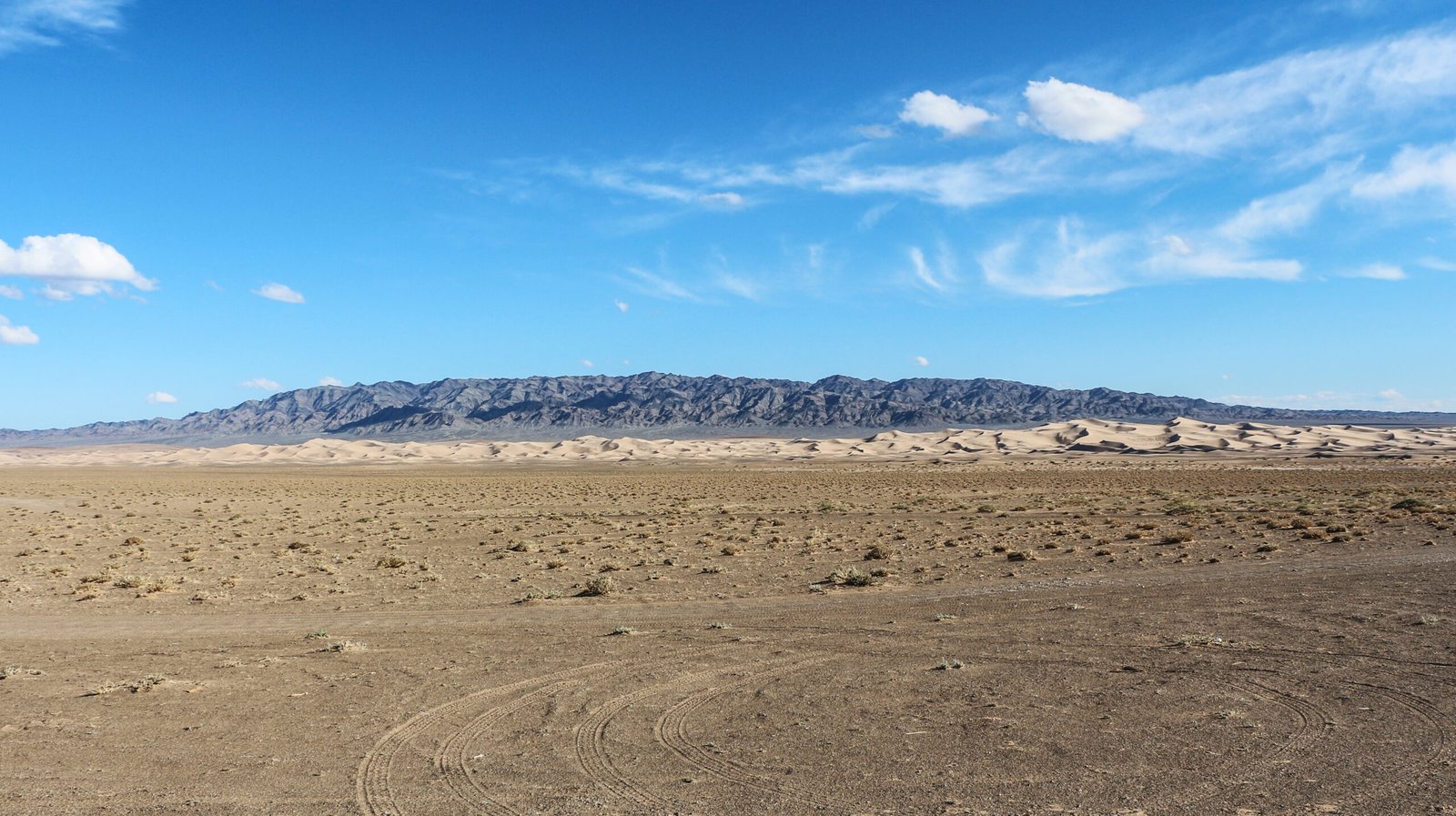
Quick answer: A guided, all-inclusive Gobi Desert tour in a group of four or more runs about $155–190 per person, per day in 2026, staying in tourist ger camps. Budget options with a local guesthouse and no guide start around $75/day. Travelling as a couple instead of a group is the single biggest cost driver — expect to pay 48–76% more per person than someone in a group of eight doing the identical itinerary. And that widely-quoted $60/day figure still floating around the internet? It’s from 2018.
Table of contents
2026 price bands, by tier
We compared published 2026 prices across more than ten tour operators, from budget shuttle-bus trips to luxury lodges. Stripped of the outliers, the market clusters fairly tightly:
| Tier | Per person, per day | What’s typically included |
|---|---|---|
| Budget (no guide, local guesthouse, group 4+) | $75 | Transport, meals, guesthouse. No guide, no entrance fees. |
| Budget with guide (group 4+) | $95–140 | Transport, guide, all fees, local guesthouse or basic ger camp |
| Mainstream (group 4+) | $155–190 | Guide, driver, tourist ger camps, all meals, entrance fees, activities |
| Couples travelling privately | $230–280 | Same as mainstream, but a private vehicle for two |
| Western-branded small group | ~$378 | Larger operators like G Adventures, en-suite ger camps |
| Luxury lodge | $830–1,140 | Deluxe gers, private excursions, premium service (e.g. Three Camel Lodge) |
If you’ve seen a figure of “$60 a day” for a Gobi tour, it’s outdated — that number traces back to at least two blog posts from 2018 that were never meaningfully updated despite claiming to be. Against 2026’s realistic guided rate of $155–190/day, it’s off by a factor of roughly 2.5 to 3.
Why group size matters more than anything else
This is the single biggest lever in Gobi trip pricing, and it’s rarely explained clearly. One operator’s identical 8-day itinerary, same inclusions, priced only by party size:
| Party size | Price per person | Premium vs. scheduled group |
|---|---|---|
| Scheduled group (8–16 people) | $1,268 | — |
| Private group of 4 | $1,373 | +8% |
| Private group of 3 | $1,518 | +20% |
| Couple (2 people) | $1,880 | +48% |
Another operator’s 17-day itinerary shows the same pattern, more steeply: $2,700 per person at 9–10 travellers versus $4,750 for a couple — a 76% premium. The logic is simple once you see it: the vehicle, driver and guide are a fixed cost split across however many seats are filled. Two people pay for what is effectively an empty Land Cruiser. If your budget is tight and your dates are flexible, joining a scheduled group departure is the single most effective way to cut the cost.
Tourist ger camp vs local guesthouse
One operator sells the exact same 5-day itinerary at two accommodation tiers, which makes it possible to isolate what the accommodation upgrade actually costs: a tourist ger camp runs $35–70 more per person, per night than a local family guesthouse doing the same route. A private en-suite bathroom, when offered as an add-on, costs a published $30 per night.
What that money buys, concretely: a door on your own toilet instead of a shared block, more reliable 24-hour electricity instead of generator power that runs dusk to around 11pm, and (at the higher tiers) staff who refuel the wood stove overnight rather than letting it die out by midnight. Wifi is essentially absent at nearly every ger camp regardless of tier — treat any camp advertising it as the exception, not the norm. And a detail worth knowing before you book shoulder-season (May or late September): plumbing at some camps genuinely freezes in cold snaps, meaning flush toilets and hot showers can be unavailable even at a “deluxe” property.
Also worth knowing: there’s no official Mongolian government classification or star-rating system for ger camps. “Deluxe,” “standard” and “luxury” are marketing terms set by each operator, not a regulated standard — compare what’s actually included rather than the label.
The park fee everyone gets wrong
You’ll see “3,000₮ entry fee” (about $0.83) quoted constantly for Gobi Gurvan Saikhan National Park — including a widely copied conversion error that states this as “$3.” Mongolia restructured its protected-area fees in March 2023 into four tiers by park category, ranging from 3,000₮ up to 15,000₮ depending on the protection level. Gobi Gurvan Saikhan’s own legal designation puts it in the 9,000₮ tier (about $2.50), not the 3,000₮ one commonly quoted.
Here’s the honest version: collection at the gate appears inconsistent, with travellers reporting anywhere from 1,000₮ to 9,000₮ paid in practice, and we found an unconfirmed 2025 news report suggesting fees may have risen further with a separate foreign-visitor rate — we could not verify this against an official source. Either way, the amount is trivial: under $3 against a trip that will otherwise cost $800–1,500+. Any article — or traveller — treating this fee as a meaningful budget item is worrying about the wrong number.
Getting to the Gobi
Most guided tours drive in, and the road tells you why off-piste Gobi travel takes as long as it does: the paved highway legs run at normal speed, but the dirt sections between sites average only about 32–37 km/h — roughly a third of highway pace. Budget accordingly; “it’s only 150km” can still mean four hours.
Flying is a real alternative and often worth it: MIAT and at least one newer carrier operate the Ulaanbaatar–Dalanzadgad route in 2026, with round-trip fares published in the $280–380 range across several operators. That saves roughly 1,200km of round-trip driving and 15+ hours — competitive the moment you value your time. The catch is a typical 15kg baggage allowance and limited weekly frequency outside July–August, so a missed flight costs you days, not hours. A public bus also runs from Ulaanbaatar’s Lavai terminal to Dalanzadgad twice daily for around $8 one-way, taking 8+ hours on a paved road — useful for the truly budget-conscious, though schedules can be irregular.
Doing it yourself
It’s possible, and cheaper — but the savings are more modest than people assume, and what you give up is the guide who knows which of five identical-looking tyre tracks is actually the road. Hiring a local driver with a van runs roughly $56–58/day (split four ways, about $14/person/day), against a guided budget product at $75/person/day. Self-drive rentals run $105–220/day depending on vehicle, but come with real warnings from rental operators themselves: never drive after dark, don’t drive off-trail during or after rain, and watch for mileage caps — one rental company’s 150km/day cap would badly under-budget a circuit that averages 340km/day. If self-driving appeals to you, read the fine print closely.
When to go — and the August rain problem
The Gobi tourist season runs roughly mid-May to mid-September, with most ger camps closing by early October. July is the hottest month (highs around 28°C on average, but daytime temperatures in the high 30s aren’t unusual), and August is genuinely the wettest month of the year — about 37mm of Dalanzadgad’s modest 169mm annual rainfall falls in August alone. That matters because tour operators themselves warn against driving off-trail during and after rain, meaning the most popular month to visit is also the month the dirt tracks are most likely to be temporarily unusable. September offers a good compromise: comfortable daytime temperatures, fewer crowds, and drier conditions — though nights get cold and shoulder-season plumbing issues at camps become more likely.
FAQ
What’s a realistic daily budget for a Gobi tour?
$155–190 per person per day for a guided, all-inclusive trip in a group of four or more, staying in tourist ger camps.
Is it cheaper to fly or drive to the Gobi?
Flying costs more upfront ($280–380 return) but saves 15+ hours and over 1,000km of driving — often worth it if your time is limited.
How much is the park entrance fee?
Officially around 9,000₮ (about $2.50) for Gobi Gurvan Saikhan National Park under the current fee structure, though collection in practice varies and older sources quoting 3,000₮ are out of date. Either way, it’s a negligible part of your budget.
Photo: Bernard Gagnon, CC0, via Wikimedia Commons.