
In short
Ephesus costs €40 for foreign visitors (₺600 for Turkish citizens) and opens 08:00–18:45 daily, with a night session 19:00–23:00, Wednesday to Saturday (ticket office closes 22:00). The Terrace Houses are a separate ticket, 09:00–18:00 by day and 19:00–21:30 on night evenings — the most common and most expensive mistake is assuming they are included.
Verified against the Ministry portal, August 2026.
Disclosure: some links in this guide are affiliate links. If you book through one, we earn a small commission and you pay exactly the same price. We only link to services we would use ourselves, no brand pays for placement or for a favourable write-up, and every price in this article was researched independently.
Most people get two things wrong at Ephesus: which gate they walk in through, and what time they arrive. Both are fixable, both are free, and together they change the visit more than anything you could buy.
What is in this guide
- Tickets and hours at a glance
- The gate decision, which matters more than the ticket
- Timing, in order of importance
- Heat, water and shade — take this seriously
- What you are actually looking at
- Should you take a guide?
- Around Selçuk, in the order we would do them
- Common questions
- A note on our numbers
- A walking order that works
- What to bring
- How long to allow
- The Ephesus Experience Museum
- Before you book
This is the practical page — tickets, gates, hours, the night session, and the specific mistakes that turn a great site into a hot, crowded slog.
Verified: August 2026 · Exchange rate: €1 = ₺55.47 · $1 = ₺47.92 (TCMB, 18 Aug 2026)
Editor’s note
Two free decisions matter more here than anything you can buy: enter at the upper gate, and be there at 08:00. Walking downhill means meeting the Library of Celsus in the sequence the Romans designed. Arriving at eight means having it to yourself before the Kuşadası coaches land at ten.
Tickets and hours at a glance
| Foreign visitor price | €40 |
| Turkish citizens | ₺600 |
| Day hours | 08:00–18:45, every day |
| Night hours | 19:00–23:00, Wednesday–Saturday (ticket office closes 22:00) |
| Terrace Houses | Separate ticket, 09:00–18:00 |
| Terrace Houses at night | 19:00–21:30, Wednesday–Saturday |
| Museum passes at night | Not valid |
Two things in that table catch people out. The Terrace Houses need their own ticket and open an hour after the main gate. And if you were planning to use a museum pass for the atmospheric night visit, you cannot — night sessions are sold separately.
One thing worth checking: the site occasionally cancels a night session when the theatre is allocated for a concert or private event. The Ministry posts these on its own museum page, so glance at it before you build an evening around the night visit.
The gate decision, which matters more than the ticket
Ephesus was built down a valley between two hills. There are two entrances, and they are not equivalent.
The upper gate (South, also called Magnesia) puts you at the top of the site. You walk downhill past the Odeon, the Temple of Hadrian and the length of Curetes Street, and the Library of Celsus appears below you exactly as it was designed to. Then the Great Theatre, then out at the bottom.
The lower gate reverses all of that. You climb, in full sun, seeing every monument from behind.
The catch is logistics: entering at the top means a taxi or dolmuş up and a pickup at the bottom, or a walk back along the road. That inconvenience is precisely why most independent visitors end up at the lower gate by default. Plan the transport and take the upper gate.
Timing, in order of importance
1. Be at the gate at 08:00. Not 09:00. The coaches from Kuşadası cruise port begin arriving around 10:00, and Kuşadası is a heavily-called port — a four-ship day is a completely different experience from a no-ship day. It is worth checking the cruise schedule for your specific date.
2. In July and August, go at night instead. The site is open 19:00–23:00 Wednesday to Saturday, floodlit and far cooler. This is the single best answer to the summer heat problem and most English guides do not mention the night session exists.
3. Allow three hours minimum. Two if you are brisk and skip the Terrace Houses. The site is about 3 km end to end on uneven marble.
Heat, water and shade — take this seriously
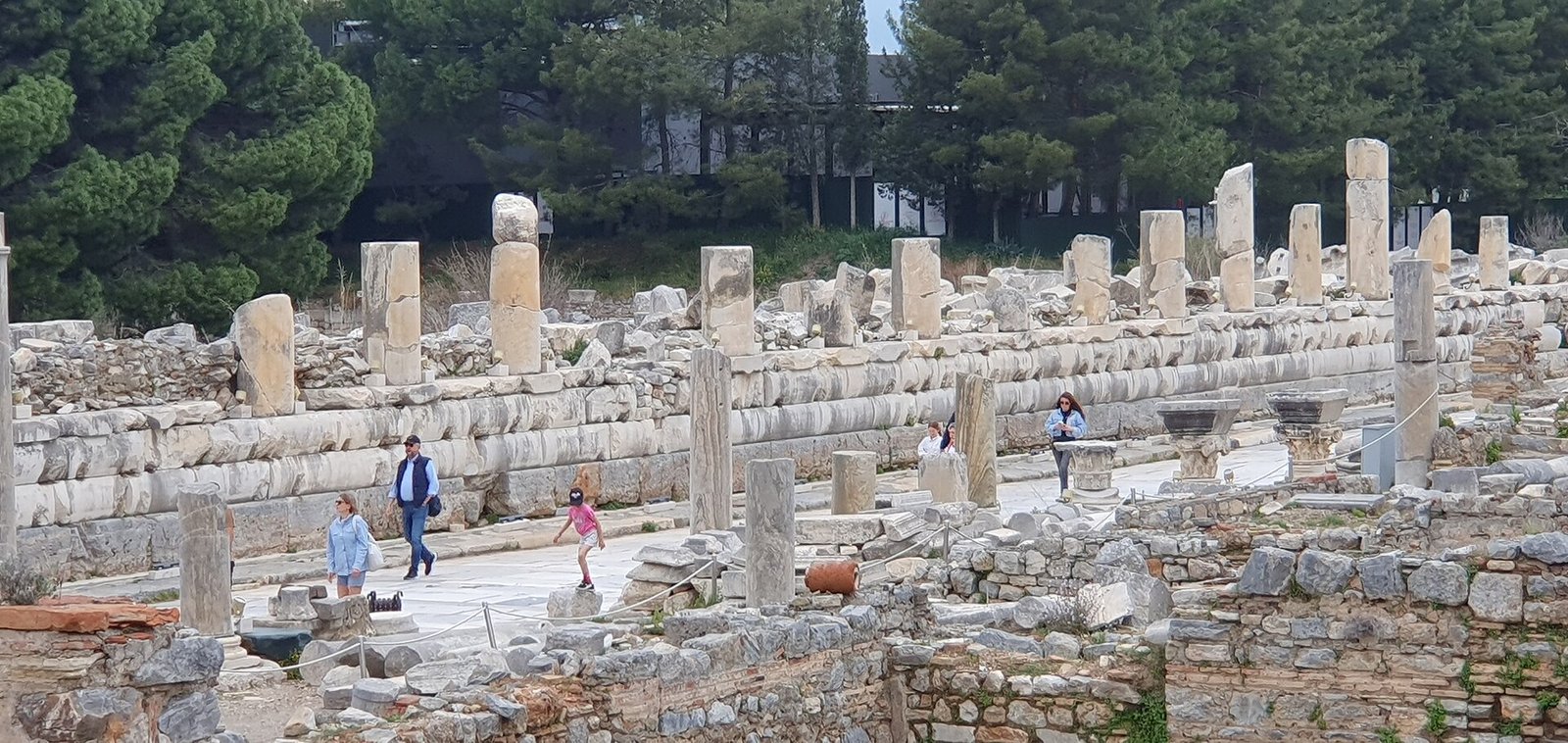
Ephesus is an excavated marble city on a south-facing slope with essentially no mature tree cover along the main route. Curetes Street, the Library and the Great Theatre are all fully exposed.
July and August average a 33 °C maximum with 4–6 mm of rain for the entire month. That is not “hot but with occasional cloud” — it is cloudless, and pale marble reflects heat back at you, so the felt temperature is higher than the number.
There are no drinking fountains inside the archaeological zone. Bring at least 1.5 litres per person, more in high summer. There are vendors at the entrance and inside at entrance prices. Hat and sunscreen are not optional between June and September.
What you are actually looking at
The Library of Celsus is the photograph, and it deserves to be. Built around 117 AD as a tomb-library for a Roman governor, its facade was reconstructed from original fragments in the 1970s. It held perhaps twelve thousand scrolls.
Curetes Street runs downhill from the upper gate, lined with column bases, mosaic pavements and the Temple of Hadrian. This is the stretch where the city stops being ruins and starts being a street.
The Great Theatre seated around 25,000. Stand at the bottom and look up; it is the scale that lands, not the detail.
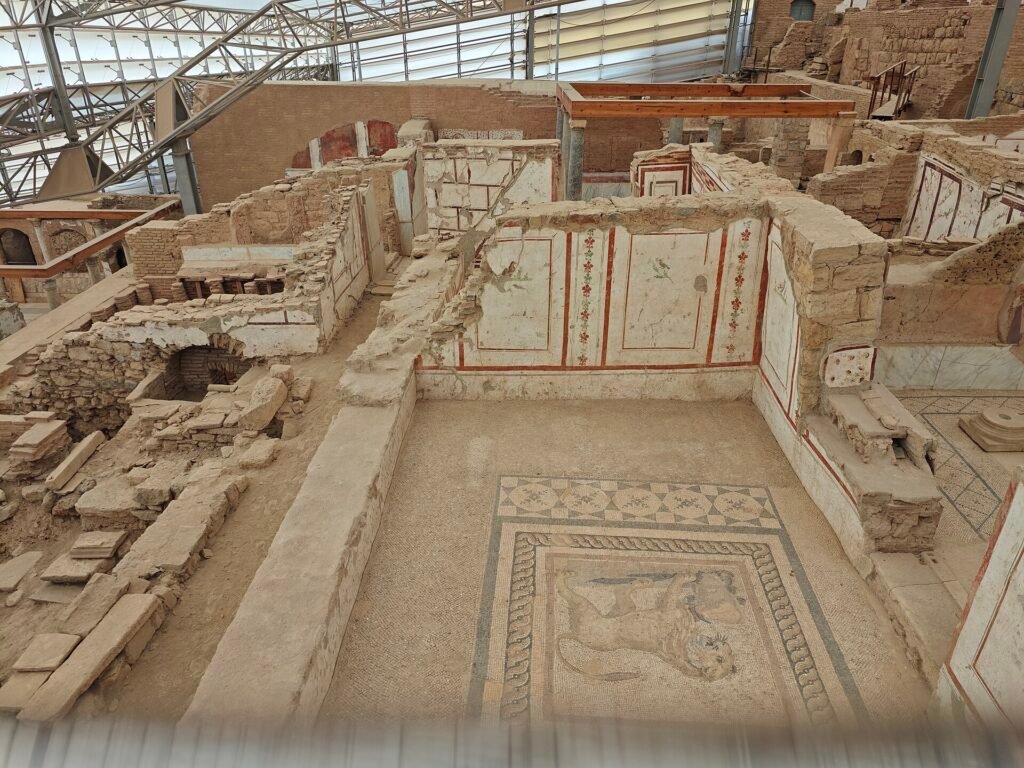
The Terrace Houses are the part people skip and then regret skipping. They are covered — which also makes them the one shaded part of the site — and they preserve the painted walls and mosaic floors of wealthy Ephesian homes under a modern roof and walkway. Separate ticket, opens 09:00.
The Odeon, near the upper gate, is small, intact and almost always empty because everyone walks straight past it toward the Library.
Should you take a guide?
Normally we argue you do not need one. Ephesus is the exception.
The site has very little interpretive signage relative to its complexity, and without context a great deal of it reads as attractive rubble. Licensed guides are available at the gate or bookable in advance.
There is a wrinkle worth knowing: the fee charged for the site’s electronic guidance system was among the practices challenged in the Turkish court case over Ephesus ticketing. That case is unresolved.
Around Selçuk, in the order we would do them
| Site | Time needed | Notes |
|---|---|---|
| Ephesus | 3 hours | Upper gate, 08:00 |
| Terrace Houses | 45 min | Inside Ephesus, separate ticket, opens 09:00 |
| Ephesus Museum, Selçuk | 1 hour | Open 08:30–20:00 daily. Where the good small finds ended up |
| Basilica of St John | 45 min | 08:00–19:00. Hilltop, good views over Selçuk |
| Temple of Artemis | 15 min | Free. One column standing out of a wonder of the ancient world |
| House of the Virgin Mary | 1 hour | Not a Ministry site — no pass covers it |
| İsa Bey Mosque | 20 min | Free, working mosque. Cover shoulders and knees |
| Şirince | Half day | Free village, 8 km up the hill |
On prices for these, we are being careful. Only the €40 Ephesus figure is confirmed on the Ministry’s own site. The Terrace Houses at about €15, the Ephesus Museum at about €10 and St John at about €6 come from commercial sources that agree with each other but that we could not check against the official tariff, which was unreachable. Treat them as good estimates.
Common questions
Can I buy Ephesus tickets online in advance? Ministry sites sell at the gate and through official channels. Third-party sellers offering “skip the line” tickets are generally reselling at a markup — Ephesus does not have a queue problem that money solves, it has a crowd problem that timing solves. Arrive at 08:00 instead.
Is the €40 per person or per group? Per person, for each foreign visitor. Turkish citizens pay ₺600 and children’s rates apply.
Can I pay in euros? The price is quoted in euros but state ticket offices generally do not accept euro cash. Pay by card, or in lira at the day’s rate.
How long does Ephesus take? Three hours for a standard visit including the Terrace Houses. Ninety minutes if you walk the main street and leave. Four hours with a guide.
Is it wheelchair accessible? Partly. The main route down Curetes Street is paved but uneven, with cart ruts and worn marble throughout. The Terrace Houses involve stairs and walkways. Entering at the upper gate and travelling downhill is considerably easier than the reverse.
Can I bring a drone? No. Drones are prohibited over Turkish archaeological sites without written permission from the Ministry.
Is there anywhere to eat inside? There are vendors near both gates at entrance prices. There is nothing in the middle of the site, which is a kilometre from either end. Eat in Selçuk before or after.
What is the Ephesus Experience Museum, and do I have to go? A privately-operated digital museum using projection and sound, currently bundled into the €40 ticket. You are paying for it either way at present, though a Turkish court suspended the compulsory bundling in April 2026 and the Ministry has continued to sell it regardless.
Is the night visit worth it? In July and August, unambiguously — it is the difference between 33 °C and something comfortable. In spring and autumn it is atmospheric rather than necessary. It runs Wednesday to Saturday only, needs its own ticket, and no museum pass covers it.
Do I need a guide? More than at most sites. Ephesus has thin interpretive signage relative to its complexity, and a licensed guide changes what you actually understand of it. Two hours is enough.
What if it rains? The marble becomes genuinely slippery. December and January are İzmir’s wettest months at around 135–146 mm. Wear shoes with grip and take the Terrace Houses first, since they are covered.
A note on our numbers
Prices and hours checked August 2026 against the Turkish Ministry of Culture and Tourism’s museum portal, which is the source for the €40 admission and for all the opening hours above. Where a figure could not be confirmed officially we have said so rather than presenting it as fact. Ministry euro prices are revised annually and the Ephesus ticketing arrangement is currently subject to an unresolved court ruling, so confirm at the gate.
A walking order that works
Ephesus is roughly three kilometres end to end and the sequence matters. This is the order we would take, entering at the upper gate.
The Odeon and the Upper Agora. Immediately inside the upper gate and almost always empty, because everyone walks straight past toward the Library. The Odeon is a small roofed council chamber seating around 1,500, and it is intact enough to sit in. Five minutes here sets the scale for everything below.
The Prytaneion and the Temple of Domitian. Column stumps and terrace walls. Worth a slow walk rather than a stop.
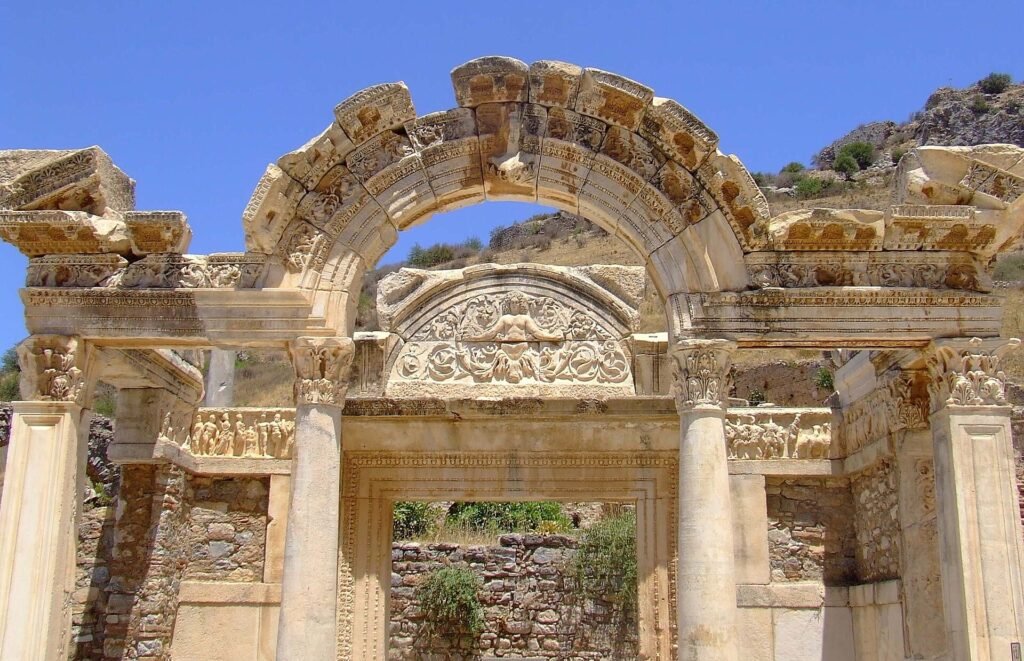
Curetes Street. This is where the site turns from ruins into a city. The street runs downhill, paved and rutted by cart wheels, lined with column bases, shopfronts, mosaic pavements under modern walkways, and the Temple of Hadrian with its arch and Medusa keystone. Allow half an hour; it is a two-hundred-metre walk that rewards stopping.
The public latrines and the Scholastica Baths, just off Curetes Street. The latrines are a marble bench with holes over a drainage channel, and they are the most photographed toilets in the ancient world for good reason — they explain Roman daily life faster than any signboard.
The Terrace Houses, if you have the separate ticket. Enter here rather than doubling back.
The Library of Celsus. The facade appears below you at the bottom of Curetes Street, and the approach is the whole design. Built around 117 AD as a tomb and library for Tiberius Julius Celsus Polemaeanus, a Roman governor buried in a vault beneath it, the reconstructed front holds statues personifying Wisdom, Virtue, Intelligence and Knowledge. It held perhaps twelve thousand scrolls.
Marble Street and the Great Theatre. The theatre seated around 25,000 and is where, according to Acts, the silversmiths rioted against Paul. Climb partway for the view back down Harbour Street.
Harbour Street. A colonnaded avenue running toward what used to be the sea. Ephesus was a port; the harbour silted up and the coast is now five kilometres away. Standing at the top of this street and knowing that is one of the more striking things about the site.
What to bring
| Why | |
|---|---|
| 1.5 litres of water per person | No drinking fountains inside the archaeological zone |
| Hat and sunscreen | No mature tree cover on the main route |
| Proper shoes | Uneven marble and cart ruts throughout |
| Cash and card | State ticket offices take cards; euro cash is generally not accepted despite euro pricing |
| Modest clothing if visiting mosques | İsa Bey Mosque is a working mosque |
How long to allow
| Visit | Time |
|---|---|
| Brisk, main street only | 1.5 hours |
| Standard, including Terrace Houses | 3 hours |
| Thorough, with a guide | 4 hours |
| Night session | 2 hours is plenty; the lit route is shorter |
The Ephesus Experience Museum
The €40 ticket currently bundles entry to this privately-operated digital museum, which uses projection and sound to reconstruct the ancient city. Opinions on it vary sharply and it is not to everyone’s taste.
What is not a matter of opinion is that a Turkish court suspended the compulsory bundling in April 2026, on the grounds that charging foreign visitors up front for a museum they had not entered violated property rights and effectively guaranteed visitor numbers to a private operator. The Ministry has continued selling the bundle regardless.
You are currently paying for it whether you go or not, so you may as well go. But it is worth knowing that the arrangement is legally contested, and that if the ruling is implemented the site-only price should fall.
Before you book
If you want context without a group timetable, a self-guided audio tour costs a few euros, works offline, and lets you start at eight in the morning — which no scheduled tour will do. At Ephesus that timing advantage is worth more than the commentary.