
In short
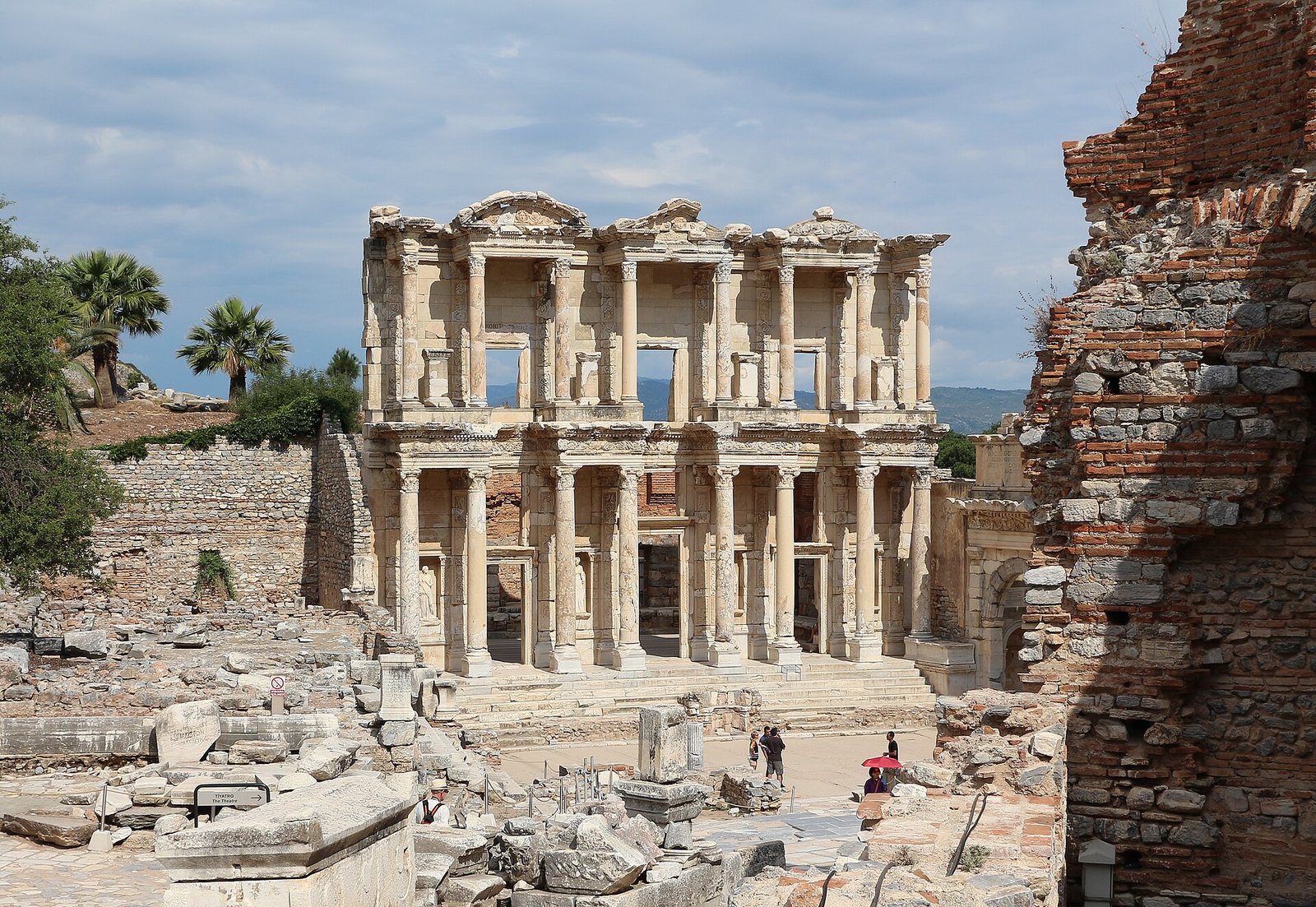
The best time to see Ephesus is the night session: 19:00 to 23:00, Wednesday to Saturday — lit, dramatically cooler, and far quieter than the coach hours. Two caveats worth knowing before you plan around it: night sessions are occasionally cancelled for concerts and private events, and a museum pass does not cover them.
Verified against the Ministry portal, August 2026.
Disclosure: some links in this guide are affiliate links. If you book through one, we earn a small commission and you pay exactly the same price. We only link to services we would use ourselves, no brand pays for placement or for a favourable write-up, and every price in this article was researched independently.
Ephesus is the best-preserved Roman city in the Mediterranean and the most misunderstood ticket in Türkiye. In April 2026 a Turkish court suspended the rule that forces foreign visitors to buy a bundled ticket — and the Ministry has carried on selling it anyway. That single fact tells you most of what you need to know about planning a trip here: the official position and the ticket window do not always agree, and almost nothing written in English has caught up.
What is in this guide
- The short version
- Eight things that changed, and most guides have not caught up
- The Ephesus ticket, and the court case nobody has reported in English
- What things cost
- The museum pass question, worked out properly
- Getting there
- Getting around İzmir
- When to go, and why July is a mistake
- Six mistakes worth avoiding
- Where to go next
- A note on our numbers
- Where Ephesus sits among the great Roman sites
- Selçuk in half a day
- Practical Turkish for the region
- Money and payment
- Safety and comfort
- Before you book
This guide covers Ephesus, its base town Selçuk, and İzmir, the city an hour north that most visitors skip and shouldn’t. Every price below was checked in August 2026, and where we could not confirm something against an official Turkish source, we say so instead of inventing a number.
Verified: August 2026 · Exchange rate: €1 = ₺55.47 · $1 = ₺47.92 (TCMB, 18 Aug 2026)
Editor’s note
One fact shapes this whole page: in April 2026 a Turkish court suspended the rule forcing foreign visitors to buy a bundled Ephesus ticket, and the Ministry has carried on selling it anyway. The legal position and the ticket window are out of step. If the ruling is implemented, the €40 should fall — and you would be the last person to hear it from a guidebook.
The short version
| Country | Türkiye |
| Region | Aegean coast, İzmir province |
| Ephesus admission | €40 for foreign visitors — quoted in euro, not lira |
| Base town | Selçuk, 3 km from the site, on the rail line |
| Airport | İzmir Adnan Menderes (ADB) |
| Visa | Not required for US, UK, Canadian, Australian and EU citizens — 90 days |
| Best months | Late April–May · late September–October |
| Worst month | July and August, and it is not close |
| Ideal length | 3 days for Ephesus and Selçuk · 5 with İzmir |
Eight things that changed, and most guides have not caught up
| # | What guides say | What is actually true in 2026 |
|---|---|---|
| 1 | Ephesus costs a few hundred lira | €40, quoted in euro. Foreigner prices moved to euro pricing in March 2024 |
| 2 | One ticket, one site | The €40 bundles the privately-run Ephesus Experience Museum — and a court has suspended that bundling |
| 3 | Ephesus closes at sunset | Night opening 19:00–23:00, Wednesday to Saturday |
| 4 | Buy a museum pass, it always pays | For a 3-day Selçuk trip the Aegean pass loses you about €24 |
| 5 | Your pass covers everything | Passes are not valid at night sessions, and Meryem Ana is not a Ministry site at all |
| 6 | The Terrace Houses are included | Separate ticket, and it opens an hour later than the main site |
| 7 | Accommodation tax is 2% | Cut to 1% for 1 May – 31 December 2026 |
| 8 | İzmir has a flat transit fare | İzmir charges by distance — “Gittiğin Kadar Öde” |
The Ephesus ticket, and the court case nobody has reported in English
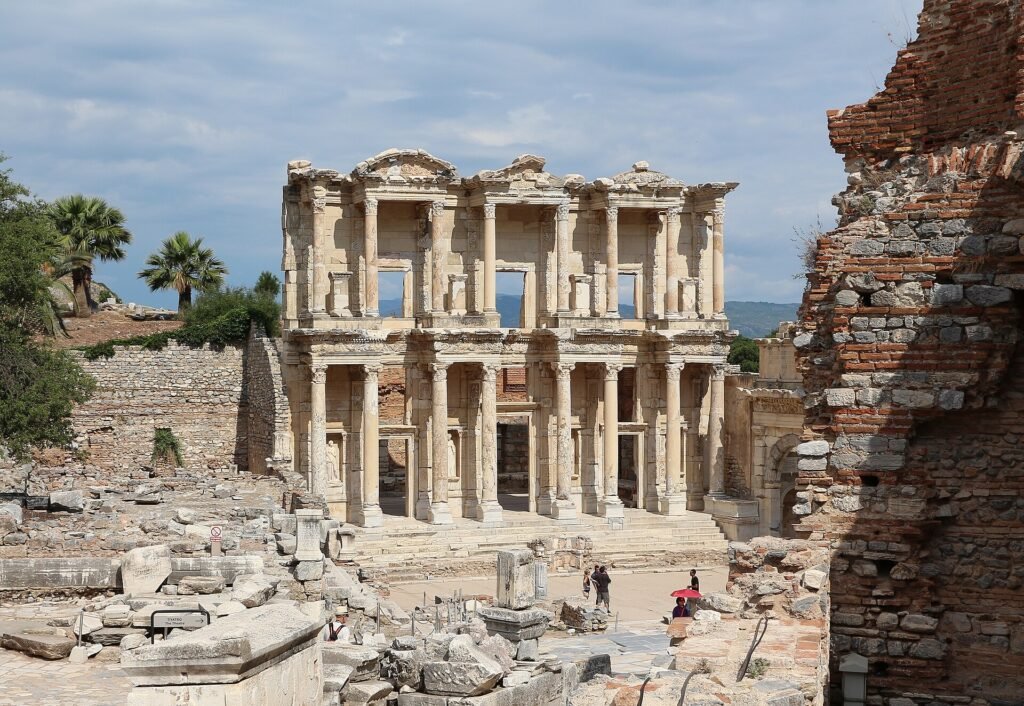
The Ministry of Culture and Tourism sells one product for Ephesus. Its own page calls it “Ephesus Archaeological Site + Ephesus Experience Museum”, and it states plainly that non-Turkish citizens pay €40. Turkish citizens pay ₺600.
In April 2026 the Danıştay, Türkiye’s Council of State, granted a stay of execution against that arrangement. The case was brought by TÜRSAB, the travel agents’ association, against DÖSİMM, the ministry’s operating arm. The court’s reasoning was that charging foreign visitors up front for a museum they had not entered violated property rights, and that the arrangement effectively guaranteed visitor numbers to a private operator.
As of today the ticket window has not changed. The Ministry still sells the bundle and still charges €40. We are flagging this because if the ruling is implemented, the site-only price for foreigners should fall — and you would be the last person to hear about it from a guidebook.
One honest caveat: reporting on the decision date is inconsistent, with Turkish outlets citing March, 13 April and 26 April 2026. We have not been able to confirm which is correct.
What things cost
| Site | Foreign visitor price | Confidence |
|---|---|---|
| Ephesus Archaeological Site | €40 | Confirmed on the Ministry’s own site |
| Terrace Houses (Yamaç Evler) | ~€15 | Commercial sources only — not confirmed |
| Ephesus Museum, Selçuk | ~€10 | Commercial sources only |
| Basilica of St John | ~€6 | Commercial sources only |
| House of the Virgin Mary | ~₺700 | Not a Ministry site; no official price found |
| Temple of Artemis | Free | Consistent across sources |
| İsa Bey Mosque | Free | Working mosque — dress modestly |
| Şirince village | Free to enter | You pay for parking, food and wine |
We could not open the Ministry’s master tariff document, which is the one canonical price list. Everything marked “commercial sources only” above should be treated as a good estimate rather than a fact. We would rather tell you that than print a confident number we cannot stand behind.
The museum pass question, worked out properly
There are two passes sold to foreign visitors. Müzekart, the cheap card Turkish residents use, is not available to you.
| Pass | Price | Valid | Covers |
|---|---|---|---|
| MuseumPass The Aegean | €95 | 7 days from first use | 40+ Ministry sites in İzmir, Aydın, Muğla and Denizli |
| MuseumPass Türkiye | €165 | 15 days from first use | 350+ Ministry sites nationwide |
Both allow one entry per museum, and neither is valid for night sessions.
Now the arithmetic that guides never do. A visitor spending three days based in Selçuk realistically buys:
| Ephesus | €40 |
| Terrace Houses | ~€15 |
| Ephesus Museum | ~€10 |
| Basilica of St John | ~€6 |
| Total | ~€71 |
Against a €95 pass, that is roughly €24 worse off. Three things make it worse still: the House of the Virgin Mary is not a Ministry site and sits outside every pass; the Temple of Artemis, İsa Bey Mosque and Şirince are free anyway; and we could not confirm from the official site list that the Terrace Houses are even included.
Buy the Aegean pass only if you are doing an Aegean loop — Bergama, Aphrodisias, Pamukkale, Didyma, Miletus, Priene, Bodrum Castle. On that trip €95 clears easily. For “three days in Selçuk”, buy individual tickets and pocket the difference.
Getting there
Flying is the sensible option. İzmir Adnan Menderes (ADB) has frequent flights from İstanbul, about an hour and five minutes in the air, plus direct European routes in season.
There is no direct İstanbul–İzmir train. The rail route involves the 6 Eylül Ekspresi to Bandırma and a fast ferry, which is a pleasant journey and a slow one.
Airport to Selçuk — the bit English sources get wrong
İZBAN, İzmir’s suburban rail network, runs Aliağa to Selçuk across 41 stations, and the airport is on the line. English sources including Wikipedia’s own airport-station article still say the line terminates at Tepeköy. It does not — the Selçuk extension opened in September 2017.
But the Selçuk leg is a shuttle that requires changing trains at Tepeköy, and it runs infrequently. You cannot ride straight through from the airport. Check the timetable before you commit to it; many visitors find the Selçuk dolmuş or a taxi genuinely faster.
The other good option is a regional train from İzmir’s Basmane station toward Söke, Nazilli or Denizli — they all call at Selçuk.
Getting around İzmir
İzmir’s fare structure is a mix, and most English guides describe only one part of it. Buses, the metro and the trams run on a flat fare with an İzmirim Kart. İZBAN, the suburban rail, is distance-based beyond about 20 km. And roughly twenty long-distance suburban bus routes use a separate distance tariff called “Gittiğin Kadar Öde” — pay as you go — where you must tap out when you leave.
On the 2026 fare we are going to be honest rather than confident. Two mainstream Turkish outlets give incompatible figures — one reports a rise to ₺20 in November 2025, another a rise to ₺40 in April 2026 — and the transport authority’s own site was unreachable when we checked. Budget roughly ₺20–40 per ride depending on distance and confirm locally. We are not going to print a precise number we cannot verify.
What is solid:
- İzmirim Kart is sold and topped up at grocery shops, markets and tobacco kiosks all over the city, and there is an app and website that will sell you a digital card.
- Ferries cross the bay between Konak, Pasaport, Alsancak, Karşıyaka, Bostanlı, Göztepe, Üçkuyular and more. This is the single best-value sightseeing in İzmir and it is ordinary public transport.
- The two tram lines do not connect to each other. Konak tram runs the south shore, Karşıyaka tram the north. You join them by ferry or İZBAN.
When to go, and why July is a mistake
Official İzmir climate figures, Turkish State Meteorological Service, 1938–2025 averages.
| Month | Avg max °C | Rain mm | Verdict |
|---|---|---|---|
| January | 12.5 | 134.5 | Wettest month; marble gets slippery |
| February | 13.7 | 100.9 | Quiet, wet |
| March | 16.4 | 74.2 | Improving |
| April | 21.0 | 45.9 | Excellent from mid-month |
| May | 26.2 | 30.9 | The best month |
| June | 30.8 | 12.8 | Hot but manageable early |
| July | 33.3 | 4.2 | Avoid |
| August | 33.0 | 6.4 | Avoid |
| September | 29.3 | 15.5 | Good from mid-month |
| October | 24.1 | 44.0 | The other best month |
| November | 18.7 | 92.3 | Wet, quiet |
| December | 14.2 | 145.8 | Wettest |
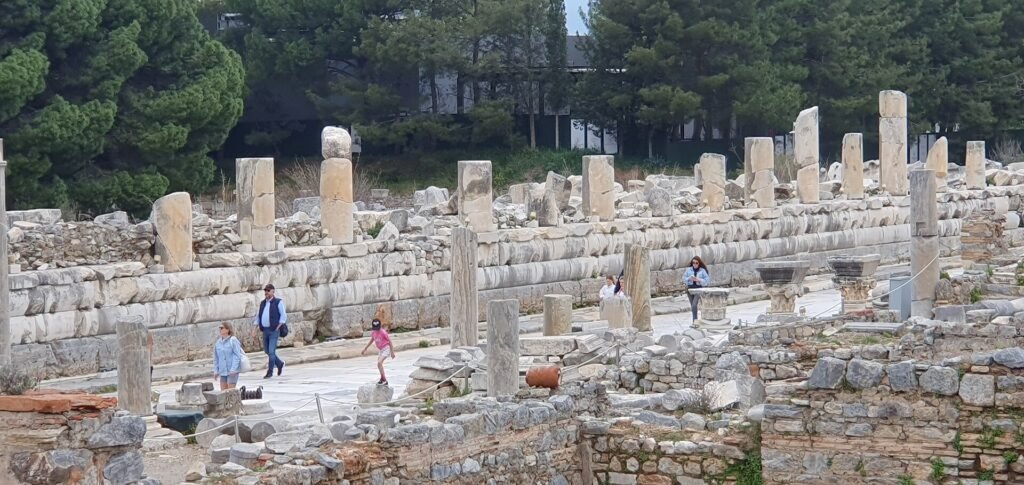
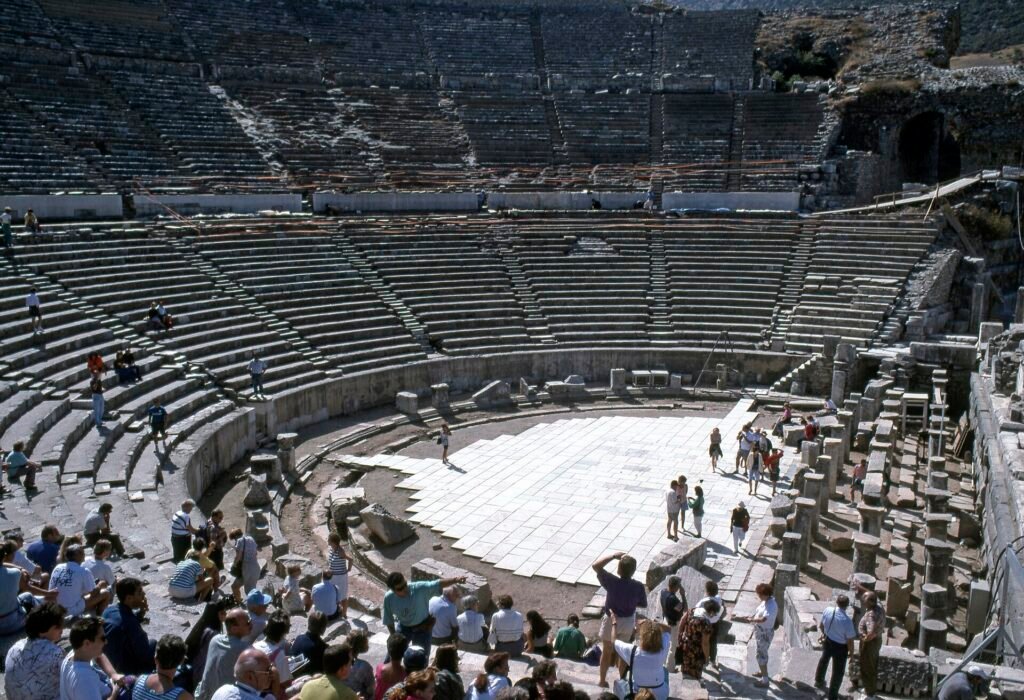
Look at the July and August rainfall: 4.2 mm and 6.4 mm. That is not a happy statistic. It means cloudless skies and unbroken sun over an excavated marble city with no mature tree cover on the main route. Curetes Street, the Library of Celsus and the Great Theatre are all fully exposed, and there are no drinking fountains inside the site. Bring at least 1.5 litres of water per person, more in high summer.
If you are stuck with July or August, the answer is the night session: 19:00 to 23:00, Wednesday to Saturday, lit and dramatically cooler. Note that night sessions are occasionally cancelled for concerts and private events, and that your museum pass will not get you in.
Six mistakes worth avoiding
Enter at the upper gate. Ephesus is built on a slope. Entering at the upper (South/Magnesia) gate means walking downhill through the entire city and meeting the Library and the Great Theatre in the sequence the Romans intended. Enter at the lower gate and you climb in full sun and see the city backwards. This needs a taxi or dolmuş to the top and a pickup at the bottom, which is exactly why so many independent visitors default to the wrong gate.
Be inside by 08:00. Coaches from the Kuşadası cruise port start arriving around 10:00. The first two hours are a different site entirely.
Take a guide here. We usually say the opposite, but Ephesus has very little interpretive signage relative to its complexity, and a licensed guide genuinely changes the visit.
Do not start with the Terrace Houses. They open at 09:00, an hour after the main site, so the cool early hour cannot be spent there.
Base yourself in Selçuk, not Kuşadası. Selçuk is 3 km from the gate and on the rail line. Kuşadası is a resort 20 km away that exists for cruise passengers.
Watch out for the Meryem Ana trap. Searching the Ministry’s museum site for “Meryem Ana” returns a free monastery on the Black Sea coast in Giresun — a completely different place. The House of the Virgin Mary near Selçuk is not free, and several English guides appear to have copied this confusion.
Where to go next
Selçuk works as a base for far more than Ephesus. Şirince, a hill village of Greek stone houses 8 km up the road, is free to walk around and sells a fruit wine of genuinely variable quality. Pamukkale is about three hours east and deserves its own trip rather than a rushed day. Bergama, ancient Pergamon, sits about two hours north and is the obvious second stop if you buy the Aegean pass.
A note on our numbers
Every price on this page was checked in August 2026. Where the figure comes from the Ministry’s own site we have said so; where it comes from commercial sources we have said that too, because the Ministry’s master tariff document was unreachable when we checked and we would rather show you our working than pretend to a certainty we do not have. Turkish prices move quickly and euro-denominated ministry prices are revised annually, so confirm at the gate.
Where Ephesus sits among the great Roman sites
For context, because “best-preserved” gets used loosely.
| Site | Why Ephesus compares |
|---|---|
| Pompeii | Pompeii preserves a whole town frozen; Ephesus preserves monumental public architecture at a scale Pompeii never had |
| Rome | Rome’s ancient city is fragments inside a modern capital; Ephesus is a continuous streetscape |
| Jerash, Jordan | Closest comparison, and a fair fight. Jerash is quieter; Ephesus has the Library and the Terrace Houses |
| Hierapolis, Türkiye | Larger site, far fewer standing buildings, and it comes with the travertines |
What Ephesus has that almost nowhere else does is a street you walk down — Curetes Street into the Library facade — rather than a set of monuments you visit individually.
Selçuk in half a day
The town most visitors treat as a bed rewards a slow afternoon.
The Basilica of St John on Ayasuluk hill was built by Justinian over what tradition holds is the apostle’s tomb. It was one of the largest churches in the world when it was built; what remains is the footprint, some reconstructed columns and a very good view over the plain toward Ephesus.
Ayasuluk Fortress, on the same hill, is Byzantine and Selçuk-era and mostly walls and cisterns. The interior keeps shorter hours than the site around it.
İsa Bey Mosque, at the foot of the hill, was built in 1375 and is a working mosque with a courtyard and reused Roman columns. Free, and quietly one of the best things in Selçuk. Cover shoulders and knees; women cover their hair.
The Temple of Artemis is a field with one reconstructed column and a stork’s nest on top. It was one of the Seven Wonders of the Ancient World. Fifteen minutes, free, and worth it precisely because of the contrast between what it was and what is left.
The Ephesus Museum holds the finds that were not left in situ, including the two statues of Artemis of Ephesus covered in what may be breasts, eggs or bull testicles depending on which archaeologist you ask.
Practical Turkish for the region
You will not need it, but a few words go a long way in Selçuk, where English is common in guesthouses and less so elsewhere.
| Turkish | Meaning |
|---|---|
| *Merhaba* | Hello |
| *Teşekkürler* | Thank you |
| *Ne kadar?* | How much? |
| *Su* | Water |
| *Otogar* | Bus station |
| *Dolmuş* | Shared minibus |
| *Ören yeri* | Archaeological site |
| *Giriş* | Entrance |
Money and payment
Ministry sites price foreign visitors in euro and take cards. Euro cash is generally not accepted despite the euro pricing, which catches people out.
Elsewhere, Türkiye is a card economy in cities and a cash economy in villages. Have lira for dolmuş fares, market stalls and small guesthouses. ATMs are plentiful in Selçuk and İzmir.
The lira has been weak and volatile, which means food, transport and accommodation are inexpensive for foreign visitors — but the euro-denominated Ministry ticket prices do not move with it. Budget those separately.
Safety and comfort
Türkiye’s Aegean coast is straightforward for visitors. The real risks here are heat and footing: 33 °C with no shade at Ephesus, and marble worn smooth by two thousand years of feet, which is genuinely slippery when wet.
Wear proper shoes, carry more water than you think you need between June and September, and if you are visiting in December or January take the wet marble seriously.
Before you book
Two things worth pricing before you commit. Flights into İzmir, which swing considerably between the shoulder months and August. And if independence appeals more than a coach timetable, a hire car for a day opens up Bergama and the peninsula without a schedule.