
In short
The original 13-metre Buddha in Nirvana is in the National Museum of Antiquities (50 somoni), not the National Museum, which displays a replica. The Rohat teahouse was demolished in March 2025 — go to Kokhi Nowruz instead. Hisor fortress is 25 km out, about 10 somoni, and only its 16th-century gatehouse is genuinely old. Dushanbe needs two days including Hisor.
Checked 26 August 2026 against dated 2025–26 reporting and visitor accounts; museum admission figures are visitor-reported where no official tariff is published.
On this page
Two things about Dushanbe that almost every guide gets wrong.
The famous thirteen-metre reclining Buddha is not in the National Museum. And the Rohat teahouse — the one in every article about the city — was demolished in March 2025.
Here is the current version.
The Buddha, and which museum actually has it
The Buddha in Nirvana was excavated in 1959 at Ajina Tepe in the Vakhsh valley, and it is thirteen metres long. It is the largest Buddha found in Central Asia. The Arab conquest in the seventh century broke the face and part of the chest; Hermitage specialists reassembled it from 43 recovered clay pieces between 2000 and 2001, funded by Japan and the United States, and it was unveiled for the independence anniversary in September 2001.
The original is in the National Museum of Antiquities. The National Museum of Tajikistan holds a replica — and, as more than one visitor has noted, gives it a dedicated room and dramatic lighting, while the original sits on a threadbare carpet in a dustier building down the road.
Go and see the original. But go knowing that only the lower part and the head survived; the middle of the body is restoration. You will also hear it called the largest clay Buddha in the world, which is a contested claim. The Central Asia version is safe.
National Museum of Antiquities — admission 50 somoni, agreed by three sources. Open Tuesday to Saturday from morning to late afternoon and Sunday mornings, closed Monday, though the weekend hours vary by source. Shoe covers are supplied and required. Photography is officially prohibited and enforcement is relaxed. Twelve halls, over 5,000 objects, and the Penjikent murals.
National Museum of Tajikistan — 22 halls over four floors, opened 2011, on the north side of Rudaki Park. Admission is the problem: older sources say 25 somoni, the most recent says 70 somoni with daily 08:00–18:00 opening. A rise over six years is entirely plausible, so budget 70 and verify on arrival. Be aware that many of its historical artefacts are copies, including the Oxus Treasure material.
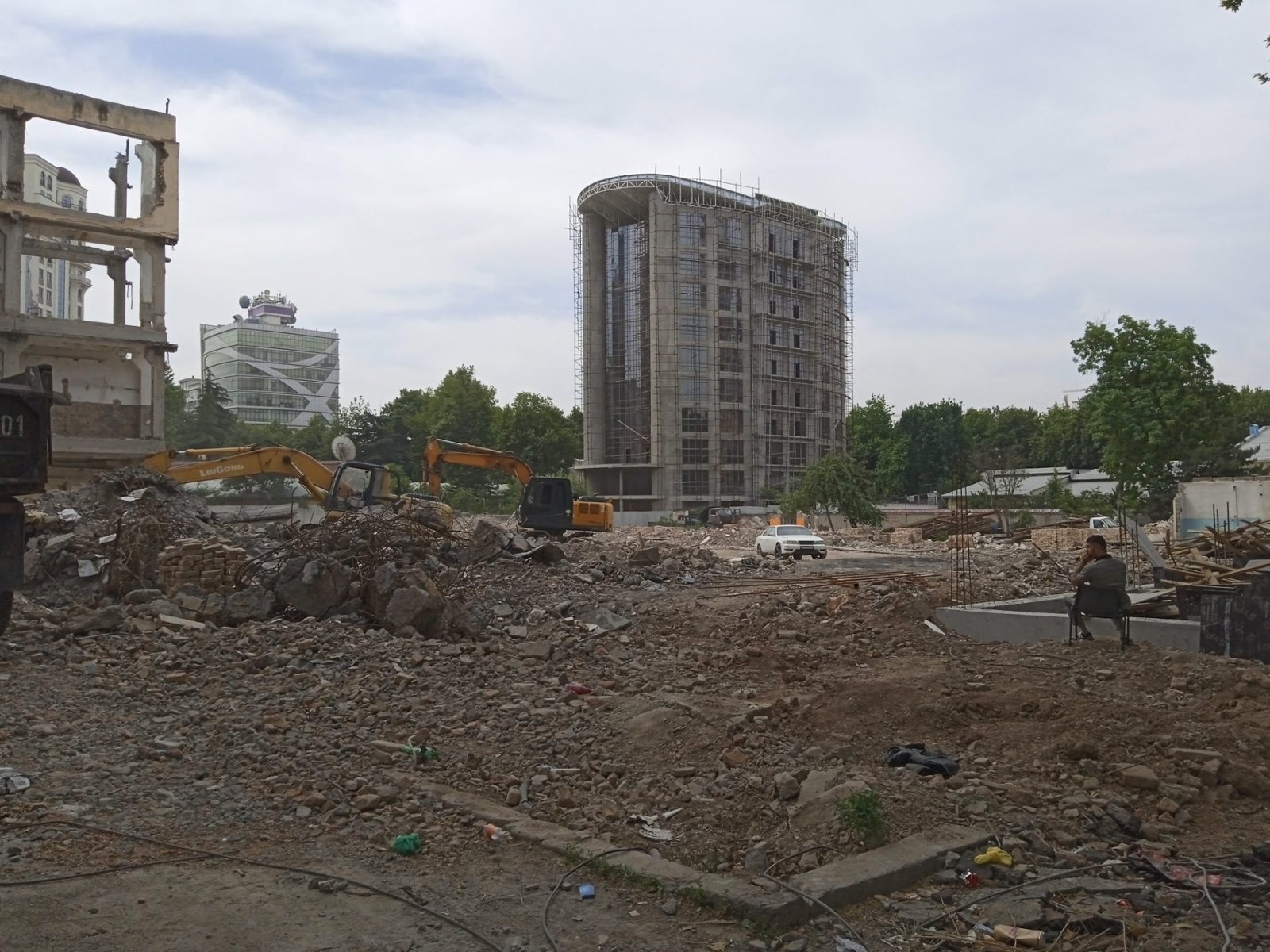
What Dushanbe is demolishing
This is the real story of the city right now, and it deserves more attention than the flagpole.
The Rohat teahouse, built in 1958 and once called the most original teahouse in the world, was demolished in March 2025. Hoardings went up on 1 March. It had hosted Ho Chi Minh and Chinghiz Aitmatov. A high-rise government building now stands on the site, and officials suggested a more beautiful replica while calling preservation of the original architecture impossible.
There are unconfirmed reports of a venue trading under the Rohat name on another street. We could not verify it. What is certain is that the building people came to see is gone.
It is not alone. The Mayakovsky Drama Theatre, the Kohi Tajikistan Theatre and the Jami Cinema all went in 2016; a Soviet stele in 2015; the Soviet-era presidential palace in 2020. Dushanbe is systematically erasing the thing a lot of travel writers come to photograph, and if that interests you, come sooner rather than later.
The surviving showpiece teahouse is Kokhi Nowruz on Ismoil Somoni Avenue by Komsomol Lake — palace-scale, cafeteria-style food, and genuinely remarkable ceilings. Use it in place of the Rohat.
The monuments
The Dushanbe Flagpole is 165 metres, completed in 2011, flying a flag 30 by 60 metres weighing 700 kilograms. It was the tallest in the world from 2011 until Jeddah overtook it in 2014, and is now about fifth. You will see it described as second tallest; that is wrong.
The Ismoil Somoni monument on Dusti Square went up in 1999 for the thousandth anniversary of the Samanid state. The figure is 13 metres and the whole structure with its arch reaches 43. The sceptre carries the seven stars of the national emblem, and two stone lions flank the arch.
Rudaki Park is free, pleasant, and bordered by the national library and the presidential palace.
Bazaars
Mehrgon Market opened in 2014 — a modern covered market that replaced traditional bazaars, and the most photogenic place in the city to buy spices and dried fruit. It is beautiful, and at least one thoughtful observer questions whether locals have warmly embraced it. Open daily, free.
The Green Bazaar (Shohmansur) exists and is the more workaday option. Given the demolition programme, check it is still standing before making a trip of it — we could not verify its current condition or hours.
How long the city needs
Two days, including Hisor. Three only if you add the Varzob valley or Nurek. Two museums, a park, a monument, a market and a fortress is an honest inventory, and Dushanbe is a base for the mountains rather than a destination in itself.
Hisor fortress, and what is actually old
Twenty-five kilometres south of Dushanbe, under an hour by road. Open daily 08:00–18:00, admission about 10 somoni covering the fortress and the old madrasah — agreed across three sources, and about a dollar.
Getting there cheaply: marshrutka #8 from central Dushanbe to Zarnisor Bazaar, then a shared taxi marked “Hisor” into the town, then another shared car about 5 km to the fortress. Total around 6.5 somoni — roughly sixty US cents. A private taxi is US$15–20.
Now the honest part. Essentially the only genuinely old thing standing is the sixteenth-century arched gatehouse with its two cylindrical towers. Everything else you will photograph — the walls, the ramparts, the impressive silhouette on the hill — is reconstruction from the 1980s onwards.
That does not make it a waste of a morning. The setting is fine, the madrasahs are worth the ticket, and the museum gives context. But if you arrive expecting an ancient fortress you will be looking at a modern idea of one, and it is better to know that going in.
Other days out
The Varzob valley north of the city, the Romit gorge, and the Nurek reservoir and dam — Nurek being one of the tallest dams in the world — are all within day-trip range. We could not verify current access, fees or transport for any of them well enough to publish figures, so treat them as leads rather than plans.
What we could not verify
Current admission for the National Museum of Tajikistan, where sources differ by a factor of nearly three. Whether the Ethnographic Museum, reported permanently closed, has reopened. Whether a successor Rohat exists. The Green Bazaar’s current status. And dated prices for Dushanbe hotels and restaurants, where the reliable named option we can offer is Kokhi Nowruz for the experience rather than a list we cannot stand behind.
For the rest of the country, see our Tajikistan travel guide; for where to go next, the Fann Mountains.
Photo: Dushanbe City Walk 02 by Шухрат Саъдиев, via Wikimedia Commons, CC BY-SA 4.0.