
In short
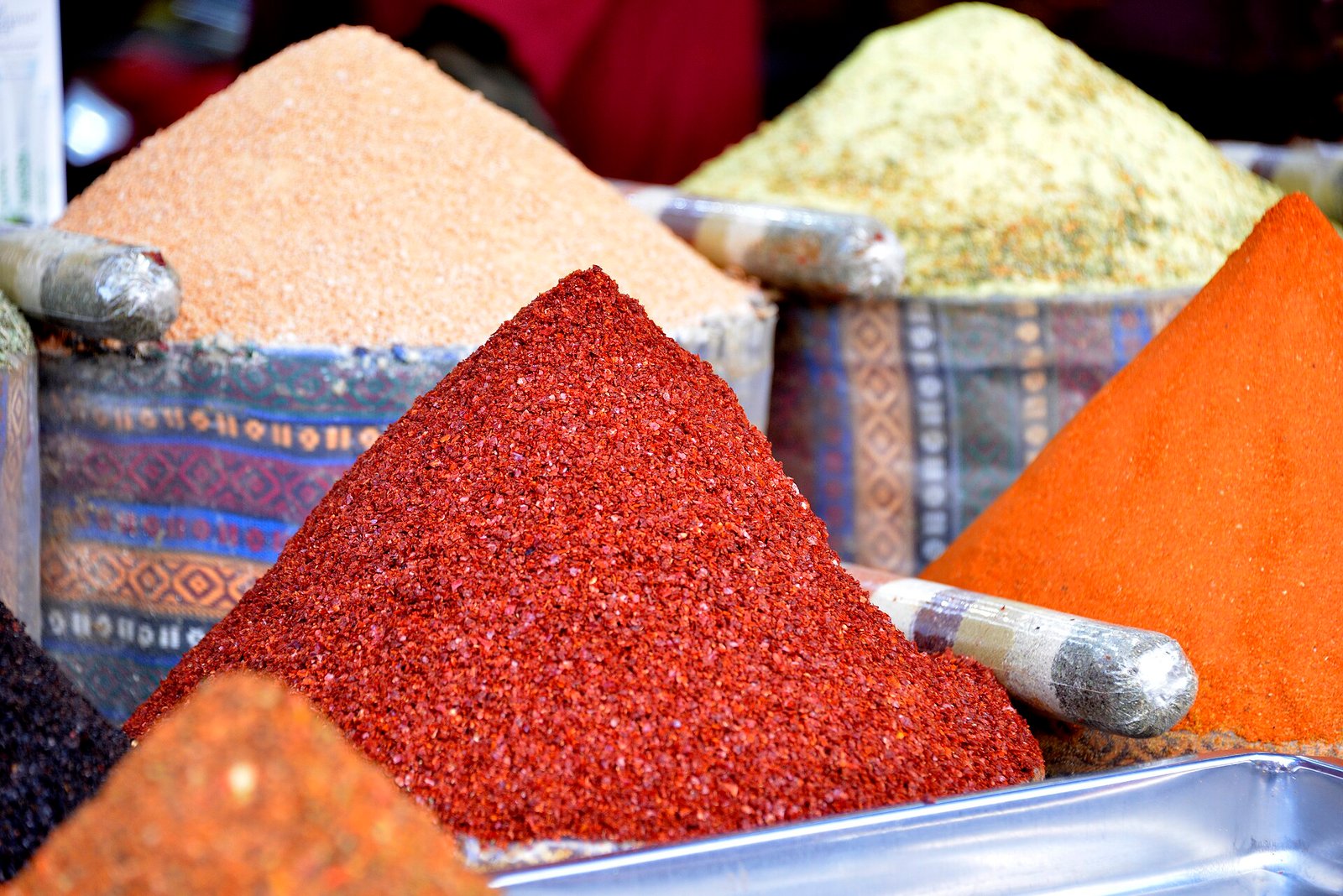
What Turkish food actually costs, with the everyday prices guides never print: simit ₺30–50 (£0.46–0.77), street çay ₺20–40, Turkish coffee ₺80–150, a döner sandwich ₺100–150. The rest of the guide is arranged by region, because the differences between the Aegean, the southeast and the Black Sea are bigger than most menus abroad suggest.
Prices checked August 2026.
Disclosure: some links in this guide are affiliate links. If you book through one, we earn a small commission and you pay exactly the same price. We only link to services we would use ourselves, no brand pays for placement or for a favourable write-up, and every price in this article was researched independently.
Turkish food has a marketing problem in English. Ask most British or American visitors what it is and you get “kebab”, which is roughly as useful as answering “sandwich” for Italy. The country’s cooking is regional to a degree that surprises people: the olive-oil vegetable dishes of the Aegean and the chilli-and-pistachio repertoire of Gaziantep are further apart than Naples and Copenhagen, and both are Turkish.
What is in this guide
- Breakfast is the meal to plan around
- The regions, and what each one actually does
- What it costs
- Alcohol: legal, available, and taxed to the ceiling
- Eating vegetarian, vegan and halal
- Ten things to eat, in order of how much we would rearrange a day for them
- Common questions
- Before you book
- A short glossary for reading menus
This guide is organised the way you will actually encounter the food — by region, then by meal, then by what it costs. Every price was checked in July or August 2026 and converted at the Turkish central bank’s rate of 18 August 2026: 55.47 TL to the euro, 64.93 to the pound, 47.92 to the dollar. At roughly 32 per cent annual inflation those lira figures will drift, which is why they are dated.
There is also one rule change from January 2026 that affects every restaurant bill in the country, and most guides have not caught up with it. It is in the money section below.
Editor’s note
On the prices: there is no official Turkish price series for restaurant meals, so the figures here come from a Sultanahmet-based commercial cost survey updated on 27 July 2026, cross-checked against retail and chamber-of-commerce reference points where those exist. We flag them as commercial rather than official. The service-charge ban, the alcohol excise figures and the tipping law are from the Ministry of Trade and the Official Gazette and are firm.
Breakfast is the meal to plan around
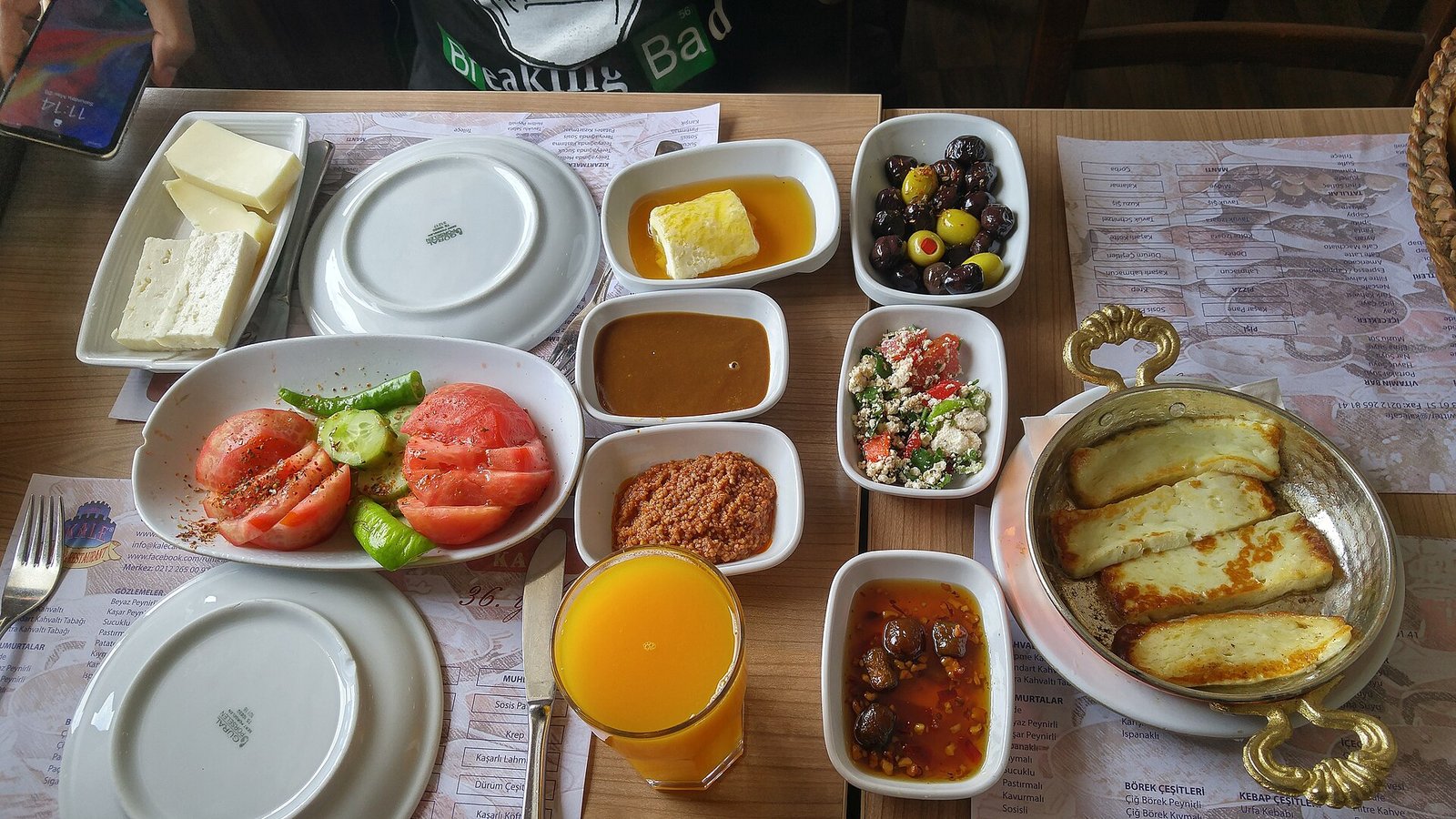
Turkish breakfast is not a category of food, it is an event with a duration. A serpme kahvaltı — literally a “scattered” breakfast — arrives as fifteen to twenty small plates: white cheese and aged kaşar, black and green olives, tomato and cucumber, several jams, honey served with clotted kaymak, butter, tahini and pekmez, sucuk, boiled eggs, and bread that keeps coming. It is designed to be eaten slowly by several people over two hours with endless tea.
The two cooked things you order alongside it are menemen, eggs scrambled with tomato, green pepper and sometimes cheese, cooked soft rather than set; and sucuklu yumurta, eggs fried with the garlicky beef sausage.
Where to have it: Beşiktaş and Kadıköy in Istanbul have whole streets of breakfast places; Van kahvaltı salonu is the genre name to look for, after the eastern city whose breakfast culture is the country’s most serious. Expect 600 to 1,200 TL per person for a full spread for two, and go hungry — this replaces lunch.
Simit, the sesame ring sold from red carts everywhere, costs 30 to 50 TL and is the breakfast for the other mornings. It is worth knowing that Istanbul’s chamber of commerce set the official simit tariff at 15 TL while vendors were charging 25 in late 2025 — the gap between the chamber tariff and the street price is itself a small lesson in reading Turkish price claims.
The regions, and what each one actually does
Istanbul is not a cuisine, it is an assembly of them. Anatolian migration built the city’s food, and what is genuinely of Istanbul is the water: balık ekmek, grilled mackerel in bread, at Eminönü for 150 to 200 TL; midye dolma, stuffed mussels eaten with lemon by the piece from a tray; kokoreç at two in the morning. The everyday backbone is the esnaf lokantası, the tradesman’s restaurant, where a steam table of stews is priced per portion and you order by pointing: kuru fasulye with rice, türlü, karnıyarık, whatever was cooked that morning. Two hundred and fifty to five hundred lira for a full lunch, and it is what working Istanbul eats.
The Aegean — İzmir, Çeşme, Alaçatı, Bodrum — cooks in olive oil and serves it cold. Zeytinyağlılar is the whole category: artichoke hearts, broad beans, stuffed vine leaves, wild greens like radika and şevketi bostan and deniz börülcesi that appear on menus as simply *ot*, “herb”. İzmir has its own street food in boyoz, a flaky pastry eaten with a boiled egg, and kumru, a sesame-bread sandwich. Grilled fish with rocket and raw onion. This is the easiest region in Türkiye for vegetarians by a wide margin.
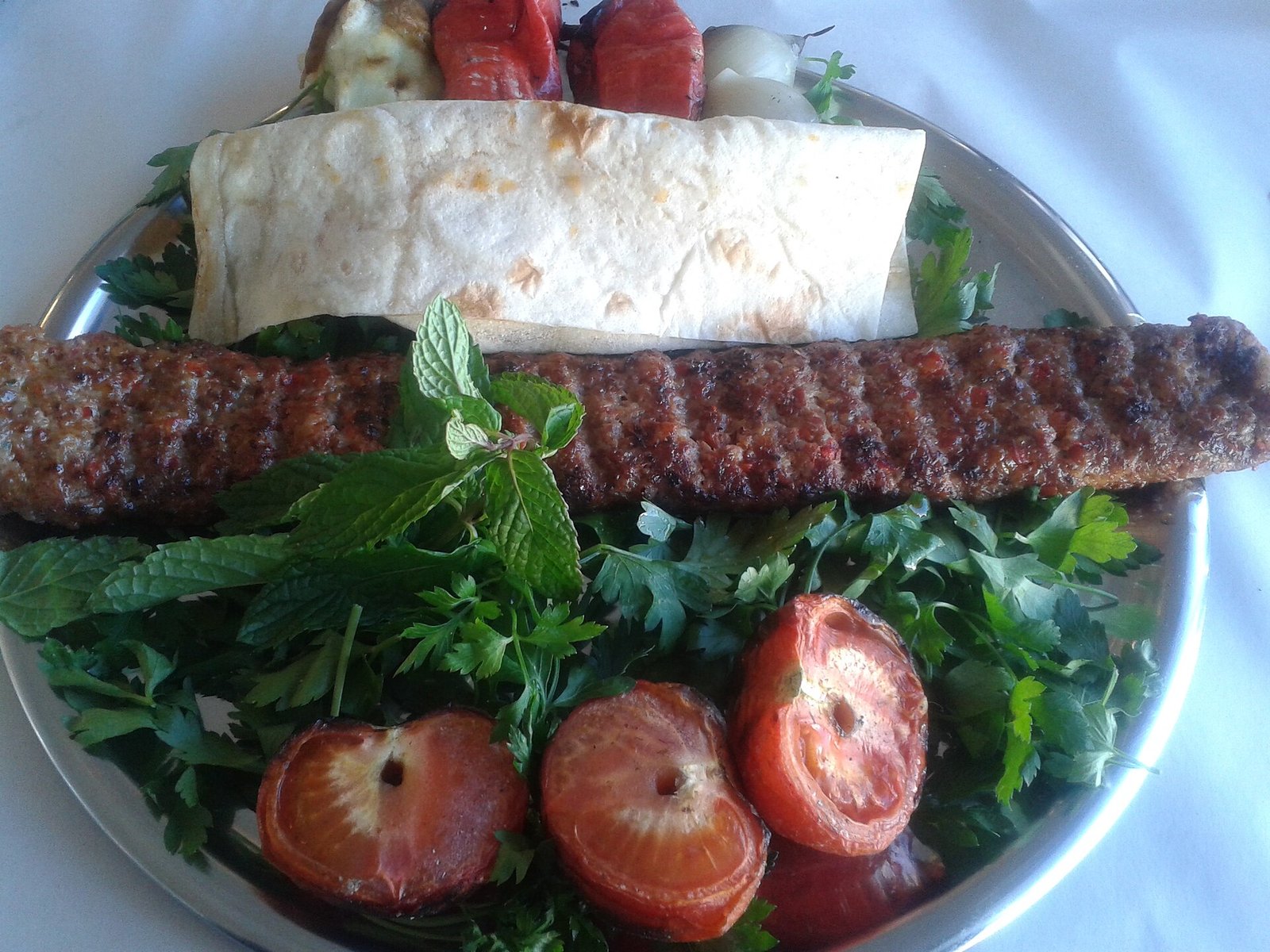
The Mediterranean coast starts with Antalya’s version of piyaz — the white bean salad, made here with tahini rather than the dressing used elsewhere — and slow-cooked tandır lamb. Move east into Hatay and the food becomes Levantine: künefe, the shredded-pastry cheese dessert eaten hot; humus served warm with pine nuts and butter; tepsi kebabı; zahter salad. Adana gives its name to the hand-minced chilli kebab; ask for it acılı if you want it as it is meant to be.
Cappadocia and central Anatolia has testi kebabı, the sealed clay pot cracked open at your table, which is touristy and also genuinely local. Mantı — tiny lamb dumplings under garlic yoghurt and chilli butter — is at its best in Kayseri, an hour away. And Cappadocia has vineyards: the indigenous Emir white and Kalecik Karası red are a real story that almost nobody writes about.
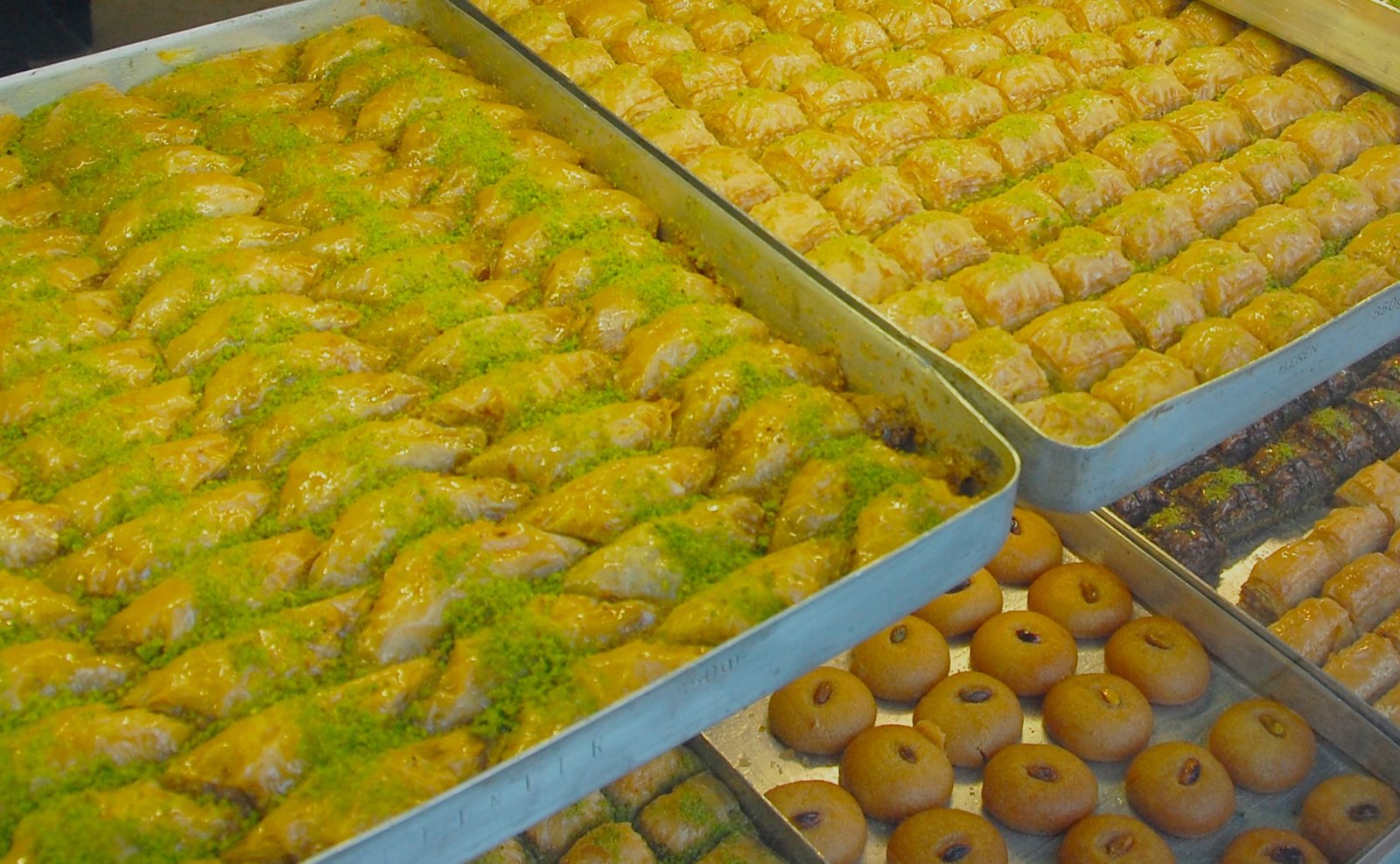
The southeast — Gaziantep, Şanlıurfa, Mardin, Diyarbakır — has the most serious cooking in the country. Gaziantep has been a UNESCO City of Gastronomy since 2015, and its baklava, made with local Antep pistachio, makes the Istanbul version taste approximate. Beyran soup for breakfast, lahmacun, ali nazik, içli köfte, and katmer, a paper-thin pastry with pistachio and kaymak that is worth planning a morning around. Şanlıurfa does çiğ köfte in its original form and liver kebab at breakfast.
What it costs
| Item | TL | ≈ GBP | ≈ USD |
|---|---|---|---|
| Simit | 30–50 | 0.46–0.77 | 0.63–1.04 |
| Çay, street vendor | 20–40 | 0.31–0.62 | 0.42–0.83 |
| Turkish coffee | 80–150 | 1.23–2.31 | 1.67–3.13 |
| Döner sandwich | 100–150 | 1.54–2.31 | 2.09–3.13 |
| Balık ekmek, Eminönü | 150–200 | 2.31–3.08 | 3.13–4.17 |
| Lokanta lunch, per person | 250–500 | 3.85–7.70 | 5.22–10.43 |
| Full serpme kahvaltı, per person | 600–1,200 | 9.24–18.48 | 12.52–25.04 |
| Tourist-district dinner, per person | 600–1,500 | 9.24–23.10 | 12.52–31.30 |
| 50 cl can of beer, retail | ≈125 | 1.93 | 2.61 |
| Bottled water, corner shop | 15–30 | 0.23–0.46 | 0.31–0.63 |
| Bottled water, at a major sight | 50–80 | 0.77–1.23 | 1.04–1.67 |
The rule change most guides have missed. Since 30 January 2026, when the Ministry of Trade amended the Price Label Regulation, restaurants, cafés, patisseries and similar food-and-drink businesses in Türkiye may not demand a mandatory service charge, table charge or cover charge under any name. Everything you can be billed for must appear on the displayed price list. If a *servis* or *kuver* line shows up on your bill, it is unlawful and you can decline it.
The nuance most coverage gets wrong is that the ban is on *compulsory* charges. Voluntary tipping remains entirely legal, and it matters more now than it did, because the ten per cent that used to be added automatically no longer is. The working norms:
- Lokanta or steam-table lunch: round up. Nothing expected.
- Sit-down restaurant or meyhane: 10 per cent, in cash on the table.
- Fine dining: 10 per cent, up to 15 for exceptional service.
- Café or tea: round up the coins.
- Taxi: round up to the next convenient note.
- Hotel porter or housekeeping: 50–100 TL.
Alcohol: legal, available, and taxed to the ceiling
Alcohol is legal and widely sold in cities, on the coasts and throughout tourist areas. Licensed shops — tekel bayi — and supermarkets stock it, though retail sale between 22:00 and 06:00 is prohibited, and conservative districts and small Anatolian towns may have no outlet at all. Coastal all-inclusive resorts serve freely.
It is expensive because a fixed per-litre excise duty sits under 20 per cent VAT, and the excise is re-indexed twice a year. A 50 cl can of beer carried a trade-association recommended retail price of about 125 TL from 13 July 2026 — a recommendation, not a state-set price, so shelf prices vary. In a bar, a beer can genuinely cost more than the meal it comes with.
That tax gap has a consequence worth stating bluntly, because both the British and American governments now warn about it: counterfeit and methanol-adulterated spirits have killed people in Türkiye, and the FCDO’s wording is that methanol is not possible to identify by taste or smell. Buy branded bottles from licensed shops and reputable bars. If the price looks too good, it is dangerous rather than a bargain.
The better answer is Turkish wine, which is domestically produced and therefore comparatively good value. Öküzgözü and Boğazkere from the east, Kalecik Karası from central Anatolia, Narince as a white, and the Cappadocian Emir. Rakı, the aniseed spirit, is drunk with water and ice alongside meze and fish rather than before or after a meal — ordering it as an aperitif marks you out immediately.
Eating vegetarian, vegan and halal
Halal is effectively the default. The overwhelming majority of meat sold and served in Türkiye is halal-slaughtered and no certificate-hunting is needed. Pork is rare and clearly labelled where it appears, mainly in international hotels and a few delicatessens. The live issues for observant travellers are alcohol served in the same establishment — common and unremarkable — and gelatine or rennet in imported processed foods.
Vegetarian is much easier than the kebab reputation suggests. Mercimek çorbası, the red lentil soup, is on every menu in the country and is almost always meat-free. A mezze table is largely vegetarian by construction. Add mücver, imam bayıldı, börek, gözleme with cheese or potato, pide with cheese and egg, and the entire breakfast repertoire.
Two traps, though, and they catch people:
- Soups, rice and bulgur pilafs are frequently made with meat or chicken stock even when they contain no visible meat. The question to ask is *”et suyu var mı?”* — is there meat stock in it?
- **The word *vejetaryen* is understood in cities and not reliably in small towns.** *”Et yemiyorum”* — I don’t eat meat — travels much better.
Vegan is genuinely hard. Yoghurt, butter and cheese are structural to Turkish cooking rather than optional. The zeytinyağlı vegetable dishes of the Aegean are the exception and they are a real one — an entire course of vegetables cooked in olive oil and served cold — which makes İzmir and its coast the part of the country where a vegan trip is comfortable rather than a negotiation.
Ten things to eat, in order of how much we would rearrange a day for them
- Katmer in Gaziantep, pistachio and kaymak in paper-thin pastry, eaten at breakfast.
- A full serpme kahvaltı, two hours, no plans afterwards.
- Mantı in Kayseri.
- Künefe in Hatay, hot, immediately after it comes off the heat.
- Balık ekmek at Eminönü with the ferries going past.
- Aegean zeytinyağlılar with a glass of white, İzmir or Alaçatı.
- Testi kebabı in Cappadocia, for the theatre as much as the lamb.
- Lahmacun anywhere in the southeast, rolled with parsley and lemon.
- Antep baklava, which is a different dessert from what is sold under that name elsewhere.
- A lokanta lunch chosen by pointing, wherever you happen to be at one o’clock.
Common questions
Is Turkish food spicy? Mostly not. The southeast uses chilli seriously — Adana kebab, Urfa’s çiğ köfte, the pepper pastes of Gaziantep — and the rest of the country is aromatic rather than hot. Asking for something *acılı* gets you the spiced version; the default is mild.
Can I drink the tap water? Use it for brushing teeth, washing food and cooking; drink bottled. That is what Turkish households do — they buy 19-litre bottles — and the US State Department’s own wording is that tap water is generally safe for cooking but people in cities do not drink it.
Is street food safe? Broadly yes, and it is some of the best eating in the country. Use the ordinary rules: high turnover, food cooked in front of you, a queue of locals. Midye dolma is the one item where we would want to see a busy vendor rather than a quiet one.
How do I order at a lokanta if I don’t speak Turkish? Point. This is the expected way to order at a steam table and nobody will think it odd. *Bu* means “this one”.
What is the tipping expectation now? Ten per cent in cash at a sit-down restaurant, rounding up elsewhere. The compulsory service charge that used to cover this has been illegal since January 2026, so the tip has become the whole of it.
Are food tours worth it? In Istanbul and Gaziantep, genuinely yes — both cities have far more going on than a visitor finds alone, and Kadıköy and Balat in particular reward a guide. WeGoTrip runs self-guided audio food walks if you would rather not join a group.
Is Türkiye good for fussy eaters or children? Very. Pide, börek, plain grilled meat, rice, yoghurt, bread and fruit are everywhere, and Turkish restaurants are unusually relaxed about children.
Before you book
Build one long breakfast into your itinerary and clear the morning around it. Put Gaziantep on the list if you have fourteen days rather than ten — it is the single biggest upgrade available to a food-led Türkiye trip. And if you are flying between regions to reach the food, compare carriers before fixing dates, because Turkish Airlines, AJet and Pegasus price the same domestic routes very differently.
A short glossary for reading menus
Turkish menus are usually organised by cooking method rather than by course, which is why they can look impenetrable even when translated. These are the words that unlock most of them.
- Çorba — soup. Mercimek is red lentil and is the safe default everywhere.
- Meze — the cold and hot small plates that open a meal. Often brought to the table on a tray so you can choose by sight.
- Zeytinyağlı — cooked in olive oil and served cold. Almost always vegetarian.
- Izgara — grilled. Fırın — baked. Tandır — slow-cooked in a pit oven. Güveç — a clay-pot stew.
- Sulu yemek — literally “watery food”, meaning the ladled stews on a lokanta’s steam table.
- Pide — boat-shaped flatbread with toppings. Lahmacun — thin, crisp, minced meat, rolled to eat.
- Dolma — stuffed. Sarma — wrapped, usually in vine leaves.
- Acılı — spicy. Az acılı — mildly spicy. Acısız — not spicy.
- Et suyu — meat stock. The phrase vegetarians need.
- Kaymak — clotted cream. Pekmez — grape molasses. Tahin — tahini. The three of them together are a breakfast in themselves.
One structural thing worth knowing: bread arrives automatically, is usually included, and is not a starter — it is a utensil. And çay arrives after almost every meal, often unasked and often unbilled. Accepting it is the polite move and refusing it is not rude, but the offer is meant sincerely.