
In short
The Antique Pool is a separate ₺600 ticket (about €10.80) on top of site admission: 36 °C water, constant year round, 0.5–2 m deep, with submerged ancient columns underfoot. Whether it is worth it depends entirely on the month — in April, October and winter, swimming in 36 °C water in cold air is the whole point; in July and August, when the air is already hot, it is much less so.
Fees and temperatures verified against the operator, August 2026.
Disclosure: some links in this guide are affiliate links. If you book through one, we earn a small commission and you pay exactly the same price. We only link to services we would use ourselves, no brand pays for placement or for a favourable write-up, and every price in this article was researched independently.
Pamukkale is usually sold as one thing — walk on the white terraces, swim in Cleopatra’s pool — and both halves of that sentence need correcting. What is actually here is a barefoot causeway up a calcite hillside, a large and underrated Roman city behind it, a thermal pool that reopened in May 2026 after sixteen months shut, and one of the best-value ancient sites in Türkiye twelve kilometres down the road that almost nobody visits.
What is in this guide
- 1. Walk up the travertines barefoot — at 08:00
- 2. The Hierapolis theatre
- 3. Cleopatra’s Antique Pool — but know the history
- 4. The Necropolis
- 5. The Plutonium, the Gate to Hell
- 6. The Archaeology Museum
- 7. Go at night
- 8. Laodikeia — the one nobody visits
- 9. Paragliding — and it is better regulated than you think
- What we would skip
- Common questions
- A note on our numbers
- A morning and an evening, rather than a middle
- The overtourism picture, honestly
- What to bring
- Accessibility
- A note on the paragliding, for the nervous
- Before you book
Verified: August 2026 · Exchange rate: €1 = ₺55.47 · $1 = ₺47.92 (TCMB, 18 Aug 2026)
Editor’s note
The honest version of the travertines: UNESCO’s own record states that access to the terraces is prohibited while also noting that designated bathing areas in the hot springs have been established, with visitors confined to designated paths. What you actually get is one barefoot causeway with the famous basins roped off either side. It is still worth the climb — but it is not the postcard.
1. Walk up the travertines barefoot — at 08:00
This is the thing, and the time matters as much as the thing.
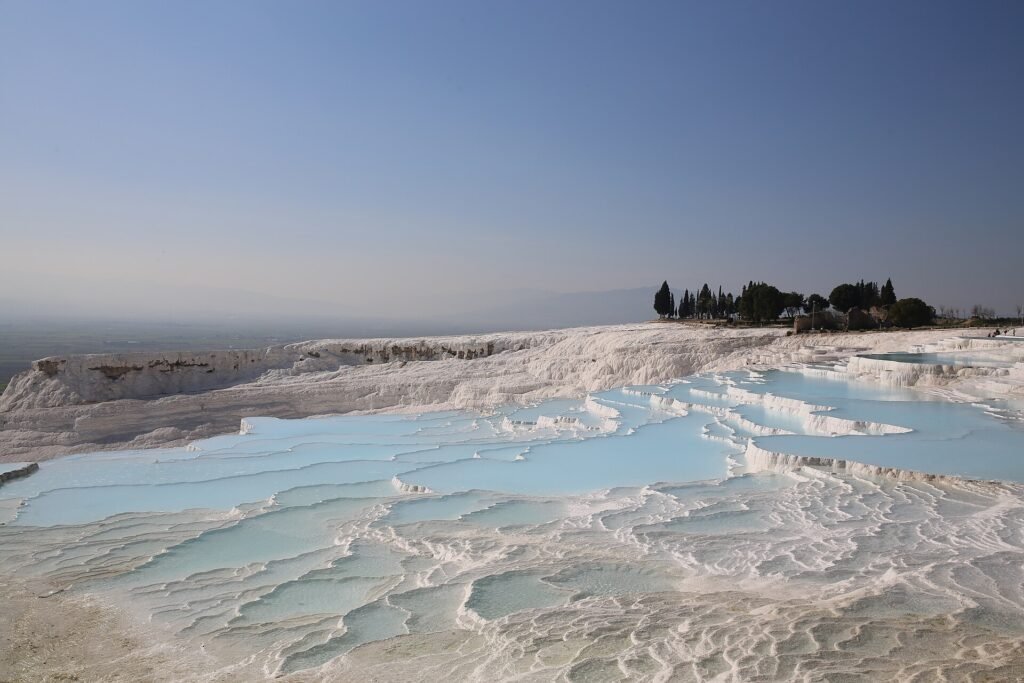
The designated path runs up the white face from the town gate. Shoes come off — sandals and water shoes count as shoes — and the surface is textured, warm, slippery in places and genuinely strange underfoot.
Be clear about what this is and is not. UNESCO’s own record states that visitor access to the terraces is prohibited and bathing in the pools was prohibited; access is confined to designated paths. So you walk one causeway with the famous basins roped off on either side. It is a wonderful twenty-minute climb. It is not a wander across the terraces and it is not a swim.
At 08:00 there is visibly more flowing water than at midday, the surface is cool underfoot, the light is low and warm, and the coaches have not arrived. By noon it is hot, glaring, crowded, and the white blows out in photographs.
How much water? Less than the pictures suggest. Source flow has fallen from 450 litres per second in 1993 to about 150 today. Sections are periodically drained and left to re-whiten, no schedule is published, and the IUCN recorded in October 2025 that the site has no water management plan at all. Nobody can tell you in advance which basins will have water.
2. The Hierapolis theatre
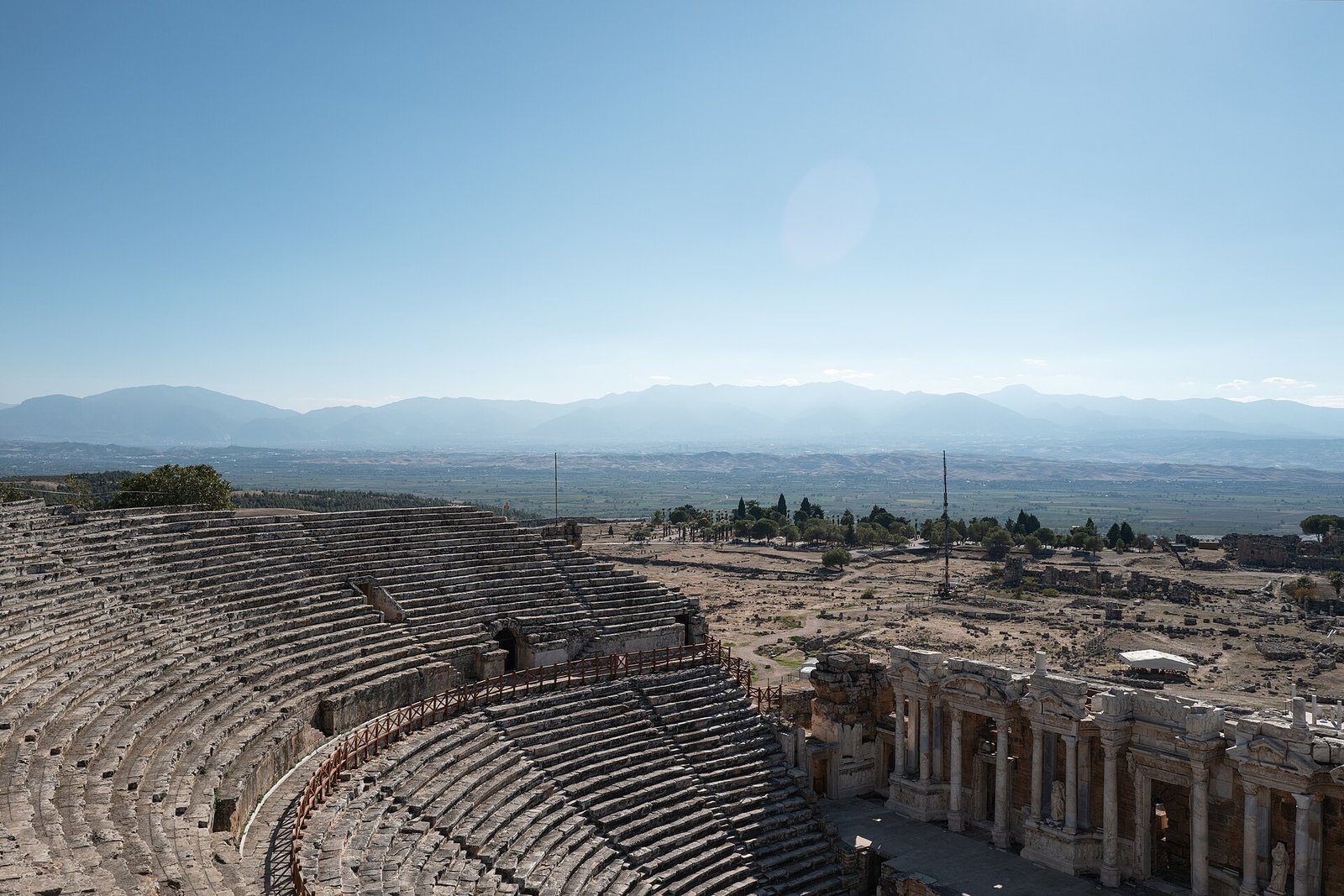
One of the best-preserved Roman theatres in Türkiye, seating somewhere between twelve and fifteen thousand, restored over decades from 1977. It is included in the main ticket and, mercifully, you put your shoes back on.
Whether you can climb the seating we could not confirm from an official source — only a commercial ticket seller says so. The marble steps are uneven and slippery.
Most day-trippers photograph the terraces and leave without walking up here. That is the mistake this list exists to correct.
3. Cleopatra’s Antique Pool — but know the history
Closed from January 2025 until 1 May 2026 — sixteen months — for a renovation delayed by contractor problems and technical faults. It now runs under a Ministry-owned operator with a new welcome centre alongside it: restaurant, changing rooms, showers.
| Foreign visitors | ₺600 (about €10.80) |
| Temperature | 36 °C, constant, year-round |
| Depth | 0.5–2 m, with submerged ancient columns underfoot |
Worth it? In April, October or winter, yes — swimming in 36 °C water in cold air is the point. In July and August, when the air is already 35 °C, it is much less compelling.
Three rules repeated everywhere online that we could not confirm from any primary source: a two-hour limit, a booking requirement, and a sunscreen ban. Check on arrival.
4. The Necropolis
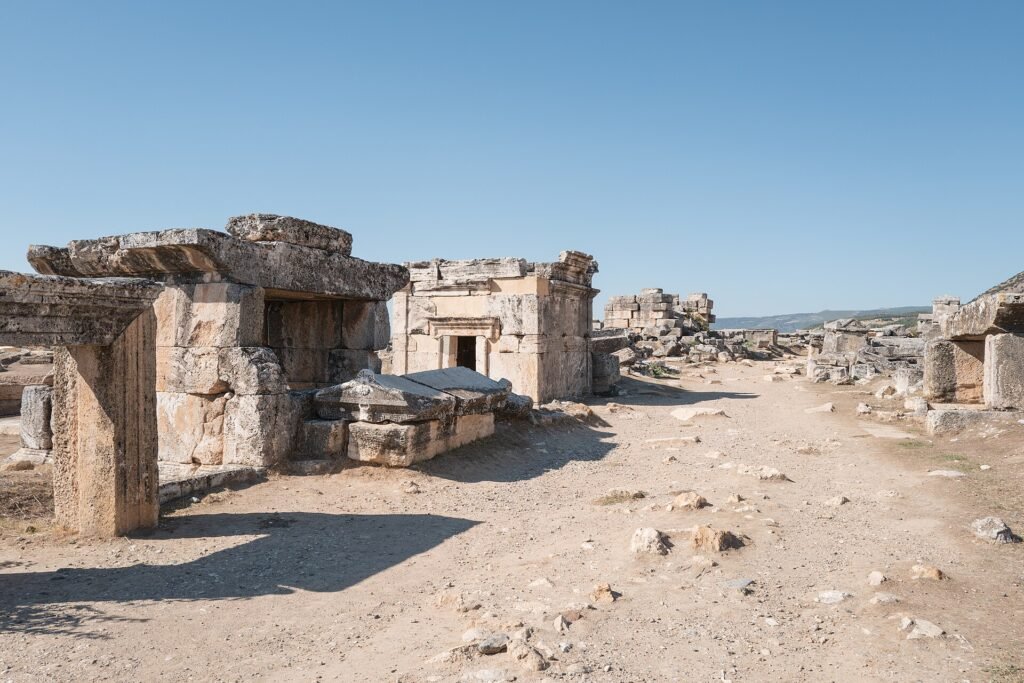
One of the largest cemeteries of the ancient world, lining the road to the North Gate — tumuli, house-tombs, sarcophagi, spread across a hillside. It is on the main route and included, and because it sits at the far end from the terraces it is usually almost empty.
Enter by the North Gate and you get this first, before the terraces, which is a better narrative order than most people experience.
5. The Plutonium, the Gate to Hell
A small opening beside the Temple of Apollo from which carbon dioxide still seeps — the reason ancient priests could lead animals in and watch them die while they themselves, standing taller, survived. Restored and opened to visitors in 2018 with a replica of Hades and Cerberus.
You view it from outside the cella. The gas is real.
6. The Archaeology Museum
Housed in the Roman baths, open every day 08:00–20:30, with finds from Hierapolis, Laodikeia and Tripolis. Secondary sources say it is included in the €30 site ticket; we could not confirm that officially.
Half an hour, and it is indoors, which in July matters.
7. Go at night
The site is open 19:00–23:00, every day, and has been since April 2024. The travertines, the theatre and the Plutonium are all part of it, floodlit and nearly empty, and the surface is cool underfoot.
Almost no English guide mentions this exists. It is free with the same ticket, and in practice only people staying in the village can use it — which is most of the argument for staying the night.
8. Laodikeia — the one nobody visits
€12, twelve kilometres away, and the best-value thing in the area.
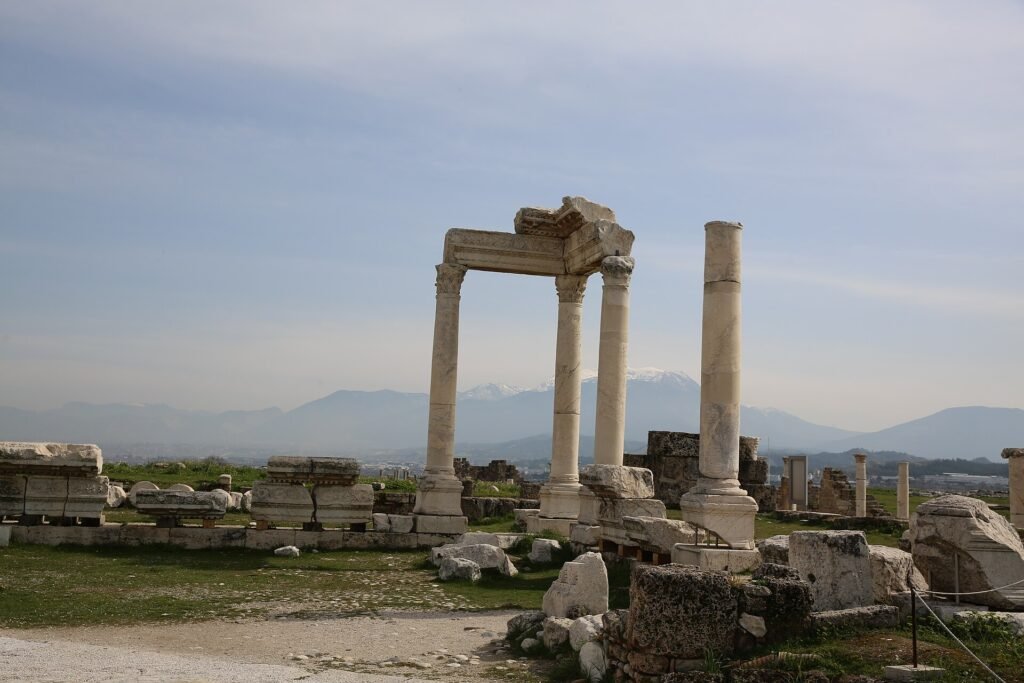
One of the Seven Churches of Revelation, with a monumental colonnaded street, two theatres and a very large stadium. It is open 08:00–21:00 in summer. And it is uncrowded, which Pamukkale is not.
If you have half a day and you have already done the terraces, this is where we would send you. Combine it with Denizli rather than squeezing it onto a Pamukkale day trip.
9. Paragliding — and it is better regulated than you think
Tandem flights launch from the ridge and fly over the travertine face. The reputation for lawlessness is not deserved: flying here is governed by a Denizli Governorship directive in force since October 2021 and last updated May 2024, which requires T2 certification for tandem pilots, annual or biennial medicals, mandatory personal accident and third-party liability insurance, an A-group licensed travel agency as operator, and a hard cap of ten flights per pilot per day. A weather flag system governs whether anyone flies at all.
The real-world weakness is enforcement, which is the same problem the IUCN flags for the site generally. Before you fly, confirm your operator is an A-group agency, your pilot holds a current T2, and third-party liability cover is in force.
We found no reliable 2026 price range, only operator marketing pages, so we are not going to quote one.
What we would skip
Karahayıt, the red springs twelve kilometres north, is a thermal-hotel resort town rather than a scenic attraction. The famous red formation is small and far less impressive than the photographs imply. Go if you want a thermal hotel as a base; skip it if you are expecting a second Pamukkale.
Any day trip from Fethiye by bus. Five and a half hours each way. Drive it, take a tour, or do not go.
Common questions
How long do I need at Pamukkale? Four to five hours for a proper half-day covering the travertines, theatre, Necropolis and Plutonium. Three hours is the coach-tour version and it means skipping Hierapolis almost entirely.
Can I swim in the travertine pools? UNESCO’s record states that terrace access and bathing in the pools are prohibited, with access confined to designated paths. In practice you walk one barefoot causeway where warm water runs ankle-deep. The Antique Pool is the place you actually swim, and it is a separate ticket.
Is the Antique Pool worth ₺600? In April, October and winter, yes — 36 °C water in cool air, among submerged Roman columns. In July and August, when the air is already 35 °C, much less so.
Do I have to go barefoot? On the travertine causeway, yes, and it is enforced. Sandals and water shoes count as shoes. Everywhere else in Hierapolis you keep them on.
Is it slippery? Yes, in places. The calcite is textured but wet sections are genuinely slick, and there are sharp patches. Take it slowly.
What if I cannot manage the barefoot climb? Enter at the South Gate, which puts you at the top of the terraces in ten to fifteen minutes on level ground, and use the buggy service introduced in May 2026. You lose the classic approach and keep the rest of the site.
Is there shade? Essentially none on the terraces. The museum, in the Roman baths, is the only indoor option.
Is the night visit real? Yes — 19:00 to 23:00, every day, since April 2024, covering the travertines, theatre and Plutonium. It is floodlit, cool and nearly empty, and almost no English guide mentions it.
Can I fly a drone? No. Drones over Turkish archaeological sites require written Ministry permission.
Is Karahayıt worth adding? Only if you want a thermal hotel. The red springs are a small formation, considerably less impressive than the photographs suggest.
What about Laodikeia? Yes. €12, twelve kilometres away, monumental, and almost empty. Per euro it is the best thing in the region.
A note on our numbers
Opening hours and museum listings come from the Turkish Ministry of Culture and Tourism’s museum portal, checked 19 August 2026. The paragliding rules come from the Pamukkale District Governorship’s published directive. Water-flow figures and the absence of a water management plan come from Turkish press reporting and the IUCN’s October 2025 World Heritage Outlook assessment.
The €30 and €12 admissions could not be confirmed against the Ministry’s master tariff, which was unreachable; they rest on independent sources that agree. Where we could not verify something we have said so.
A morning and an evening, rather than a middle
The single most useful thing on this list is not a place, it is a shape. Pamukkale rewards two short visits far more than one long one, and the ticket allows it.
Morning session, 08:00–11:00. Travertines, pool, museum. More water, cool underfoot, empty, and the light is low enough to photograph the white without it blowing out.
Afternoon off. The village, lunch, a rest. Between roughly 11:00 and 17:00 in summer the site is hot, glaring and full.
Evening session, 19:00–23:00. Theatre, Necropolis, Plutonium, and the travertines again under floodlight. Cool, nearly empty, and free with the same ticket.
Day-trippers cannot do this. It is the whole argument for the night in the village.
The overtourism picture, honestly
The site’s assessed carrying capacity is 1.4 million visitors a year, or 9,800 a day. Actual visitor numbers have run well above that — over 2.5 million in 2019 and around 2.3 million in 2025.
But the shape of the crowding has changed, and it has changed in your favour if you are a foreign visitor. Foreign and organised-tour arrivals fell 12.5 percent in early 2026, with tour-group numbers down 27.7 percent. Meanwhile the single-day record — 21,192 people — was set on 29 May 2026, the third day of Kurban Bayramı.
Practically: plan around the Turkish holiday calendar, not the European one. A weekday in October is quiet. A day in the middle of a religious holiday is the busiest the site has ever been.
The Denizli hoteliers’ association has been publicly lobbying for a quota and timed-entry system. Nothing has been adopted, but it is worth watching if you are planning far ahead.
What to bring
| Why | |
|---|---|
| A bag for your shoes | You carry them up the travertines |
| Swimwear and a towel | For the Antique Pool; towels are not provided |
| Sun hat and high-factor sunscreen | No shade anywhere on the terraces |
| Water | The site is large and mostly unshaded |
| A light layer for the evening | Denizli cools off sharply after dark, even in summer |
| Card | Ministry sites take cards; euro cash generally not accepted despite euro pricing |
Accessibility
This is worth saying plainly because most guides skip it. The travertine causeway is a barefoot climb on wet, uneven, slippery calcite, and it is not manageable for anyone with mobility difficulties.
However: the South Gate puts you at the top of the terraces in ten to fifteen minutes on level ground, and the buggy service introduced with the May 2026 welcome centres covers the main routes. Hierapolis itself is largely flat, and the theatre and museum are reachable without the climb.
If the barefoot ascent is not possible for you, enter at the South Gate, use the buggy, and see the site from the top down. You lose the classic approach and keep everything else.
A note on the paragliding, for the nervous
We have described the regulatory framework above and it is genuinely stricter than the reputation suggests — licensing, medicals, mandatory insurance, an agency requirement and a ten-flight daily cap per pilot.
What we cannot do is verify enforcement, and the IUCN’s assessment of the site notes that enforcement generally is weak. We found one reported non-fatal landing incident and no evidence of a fatality, suspension or ban in 2025–26, but the absence of evidence is not proof.
If you fly, the three things to confirm are that the operator is an A-group licensed travel agency, that your pilot holds a current T2 tandem certificate, and that third-party liability insurance is in force. An operator who is comfortable answering all three is probably fine.
Before you book
For the Roman city rather than the terraces, a self-guided audio tour is the cheap way to get context at Hierapolis, where the signage is thin and most visitors walk past the Necropolis without knowing what it is.