
In short
Göbekli Tepe is open, 08:30–19:00, €20 (the Canlandırma Merkezi is a separate €3 ticket). The Şanlıurfa Archaeology Museum and Haleplibahçe are open, 08:30–18:45, with a 19:00–21:00 night slot for a 200 TL supplement. Harran is closed after the earthquake, Şanlıurfa Castle is closed to roughly late 2027, and the Ministry lists Karahantepe as closed.
Verified against the Ministry of Culture and Tourism portal, 21 August 2026.
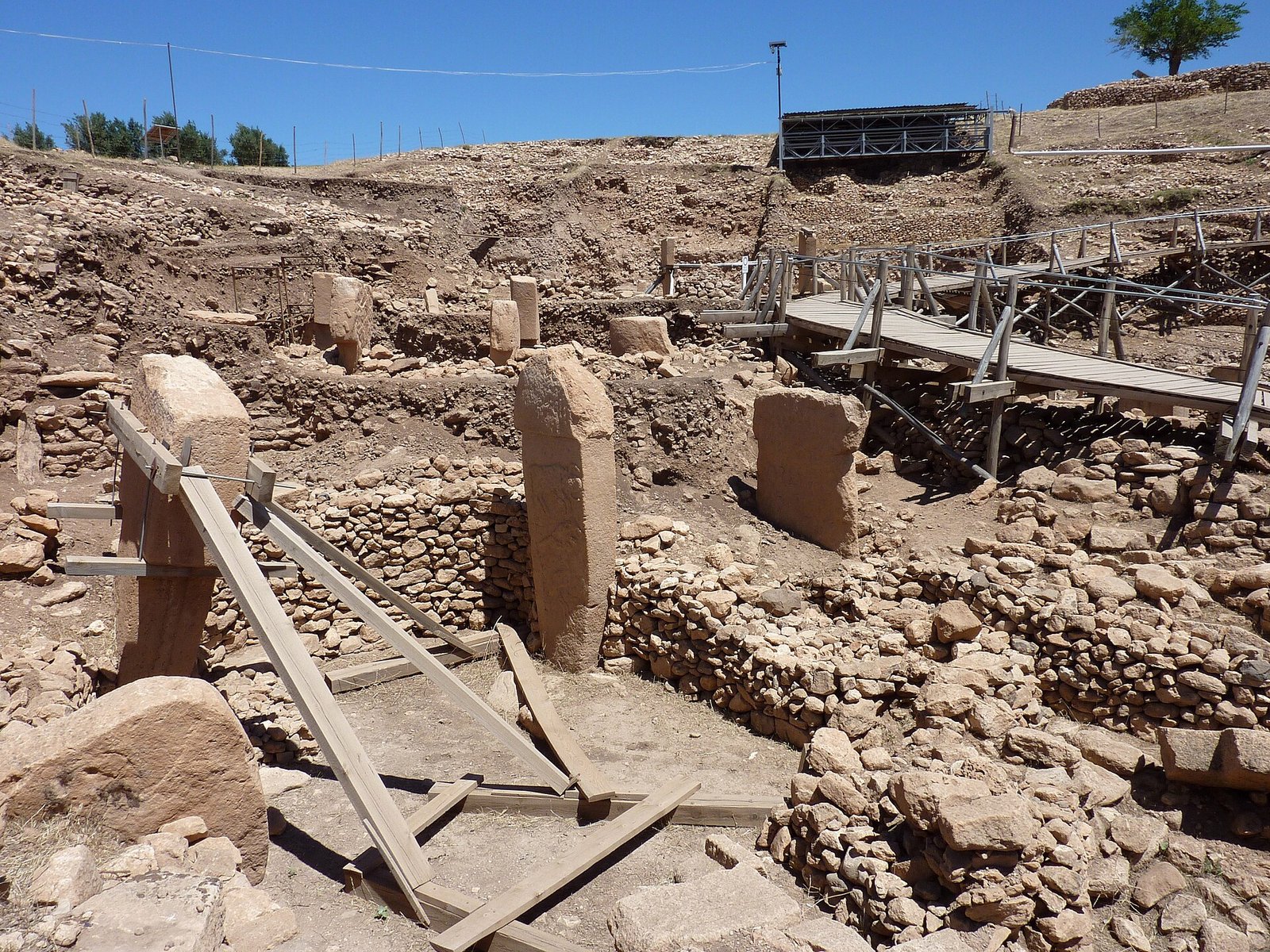
Şanlıurfa is where you go to stand in front of the oldest monumental architecture anyone has found. Göbekli Tepe is about 9,600 BC — some seven thousand years before Stonehenge — and it was built by people who had not yet invented pottery, metal or writing.
It is also a place where almost every practical detail in English is wrong. The closing time is wrong. Two museums that guides call earthquake-damaged are open. One site everybody puts on the itinerary is shut. And the bus that gets you to Göbekli Tepe runs twice a day, which nobody mentions.
What is in this guide
Everything below was checked against the ministry’s, the municipality’s or the governorship’s own page on 21 August 2026.
What is open, and what is not
This is the section to read before you plan anything. The situation is genuinely mixed and it does not match what most articles say.
| Site | Status | Hours | Admission |
|---|---|---|---|
| Göbekli Tepe | Open daily | 08:30–19:00, ticket office closes 18:30 | €20 |
| Göbeklitepe Canlandırma Merkezi | Operating | Not published | €3, separate ticket |
| Şanlıurfa Archaeology Museum | Open daily | 08:30–18:45, plus a night slot 19:00–21:00 | €10 area rate |
| Haleplibahçe Mosaic Museum | Open daily | 08:30–18:45, plus 19:00–21:00 | €10 |
| Harran | CLOSED — earthquake damage | — | Free when open |
| Şanlıurfa Castle | CLOSED until roughly late 2027 | — | €3 when open |
| Karahantepe | Ministry lists it as closed | 08:30–17:30 when open | Free |
Göbekli Tepe closes at 19:00, not 17:00. The earlier time circulates widely in English and it costs people an afternoon.
The two Şanlıurfa museums are open. Guides describing them as closed since the 2023 earthquakes are wrong — the ministry’s own status line reads “Ziyarete açıktır.” They share a campus and a combined ticket, and both run an evening night-museum slot from 19:00 to 21:00 with a 200 TL supplement on top of normal admission.
Harran is closed, and this is the one that will disrupt an itinerary. The ministry’s status reads “Deprem Sebebi ile Ziyarete Kapalı” — closed because of the earthquake. No reopening date has been announced. Note the conical mud-brick “beehive” houses in Harran village are private property rather than part of the ministry site, so their accessibility is a separate question we could not verify.
There is a live contradiction inside the Turkish state here worth knowing about: the Şanlıurfa Governorship’s own Harran page still markets the site as receiving thousands of visitors, while the ministry lists it as closed. Trust the ministry’s ticketing portal.
Şanlıurfa Castle will be shut for a long time. Governor Hasan Şıldak was reported on 9 August 2026 saying phase two of the restoration starts in September 2026 and will take about a year, with reopening only after that.
Karahantepe — the sister site to Göbekli Tepe, and genuinely exciting archaeology — is listed by the ministry as closed, and major visitor infrastructure (a protective roof, a 2,000 m² excavation building, a reception centre) was still under construction through 2026. It was also closed for weather and safety reasons in February 2026. Do not build an itinerary around it. Check on the day.
A caution about the ministry’s status flags. They lag reality in both directions. The Gaziantep Archaeology Museum reopened on 14 August 2026 and the portal still said “closed” a week later; the Mardin Museum page still carried a New Year’s Eve 2025 notice in August 2026. Use the portal for hours and prices, and corroborate “closed” claims before you cancel a plan.
Admission, and how the pricing actually works
Ministry sites price in euro and charge in lira, converted at the previous day’s Central Bank effective selling rate. So the lira you pay moves daily and the euro figure is the stable one.
- Göbekli Tepe: €20. The Canlandırma Merkezi (the animation and interpretation centre) is a separate €3 ticket, and a combined ticket exists at the gate.
- Haleplibahçe Mosaic Museum: €10.
- Karahantepe: free, when open.
- Harran: free, when open.
One expensive trap: the MuseumPass The Aegean at €95 does not cover Şanlıurfa. Its official inclusion list is İzmir, Aydın, Muğla and Denizli only. Nothing in this article is on it.
Getting there
Şanlıurfa GAP Airport (GNY) is 35 km from the city — a long way out, and this shapes your arrival.
The municipal airport bus runs three times a day in each direction: departures at 08:00, 12:00 and 16:00, returns at 09:00, 13:00 and 17:00. That is it. Miss one and you are waiting four hours or paying for a taxi. A HAVAŞ shuttle also runs, and Pegasus says its buses leave from Piazza AVM two hours before departures.
We could not verify any fares — neither DHMİ nor HAVAŞ publishes them on the pages we could reach.
Flights: Turkish Airlines sells Istanbul to Şanlıurfa, AJet sells Şanlıurfa to Ankara, and Pegasus serves the airport. We could not verify flight durations — none of the three carriers publishes a block time, so we are not printing one.
Getting to Göbekli Tepe from the city
This is the practical detail that changes a day, and it is almost never reported.
Şanlıurfa Metropolitan Municipality runs bus line 100 to Göbeklitepe: outbound at 10:00 and 16:00, returning at 12:00 and 18:00, every day.
Read that timetable carefully. The 10:00 out and 12:00 back gives you roughly an hour and a half on site, which is enough but not generous. The 16:00 out and 18:00 back is the same. There is no service that lets you take a long, slow morning. If you want that, take a taxi one way.
On fares: in February 2025 the municipality removed the surcharge that had applied to the Göbeklitepe route — it had been charged at roughly double the in-city rate — so the journey is now billed at the standard city tariff. We could not verify the current figure in lira; the municipality’s own page still shows 2018 prices, which are certainly obsolete, and the Urfakart sites were unreachable.
No municipal service to Karahantepe was found on any municipality page.
Between cities
We could not verify intercity bus times or fares from any operator’s own site. The main regional operator publishes its timetable inside an iframe that blocks automated access, and the highways authority’s distance tables are only available as downloadable files. We are not going to repeat aggregator journey times as fact.
On trains: there is no verified passenger rail service to Şanlıurfa or Mardin. We say “no verified service” rather than “no service” because the state railway’s site renders entirely in JavaScript and returned nothing readable. The one signal we did get is that the Toros Ekspresi terminates at Adana rather than running through to Gaziantep.
What to actually do, in order
Göbekli Tepe first, early or late. The site is a covered excavation on an exposed hilltop — there is no shade to speak of and the walkways are open. The 08:30 opening and the 19:00 close both exist for good reason. Our guide to what the excavators actually say about Göbekli Tepe covers the archaeology, and why several of the most repeated stories about it are rejected by the dig team itself.
Then the two museums, together. The Şanlıurfa Archaeology Museum and the Haleplibahçe Mosaic Museum share a campus, and the archaeology museum is where the Göbekli Tepe finds actually are — including the Urfa Man statue. Doing the site first and the museum second is the right order: the site is hard to read without the objects.
The night slot is worth using. Both museums open 19:00 to 21:00 for a 200 TL supplement. In a city where summer afternoons are punishing, an evening museum visit is not a gimmick.
Do not plan on Harran or Karahantepe until you have checked their status on the day.
When to go
We are going to be straight about a gap here. We could not obtain the Turkish State Meteorological Service’s climate normals for Şanlıurfa. Their site blocked every attempt we made, and we will not substitute figures from a commercial weather site, because those are usually reanalysis products rather than station normals.
What we can tell you without inventing numbers: Şanlıurfa sits on the northern edge of the Syrian plain and its summers are severe. The practical evidence is in the opening hours themselves — the ministry runs evening museum slots here, and the Göbekli Tepe ticket office stays open until 18:30. Those exist because the middle of the day in July and August is not usable for walking an unshaded excavation.
Spring and autumn are the answer. For Nemrut, which many visitors combine with this trip, the Adıyaman Governorship describes a season running mid-March to mid-November, weather-dependent — a reasonable proxy for the wider region.
Costs and the tax
Türkiye’s accommodation tax is currently 1%, not the 2% almost every English guide prints. Presidential Decision 11263, published in the Official Gazette on 1 May 2026, cut the statutory 2% rate to 1% until 31 December 2026 inclusive. Unless it is extended, it returns to 2% on 1 January 2027. It is applied to the room rate before VAT and must appear as a separate line on your bill.
Admissions for a full Şanlıurfa day, at the euro rates: Göbekli Tepe €20 + Canlandırma Merkezi €3 + Haleplibahçe €10 = €33, plus the 200 TL night supplement if you use the evening slot.
What we could not verify
- MGM climate normals for Şanlıurfa, Mardin or Gaziantep. The meteorological service’s host blocked eight documented attempts.
- Airport bus and HAVAŞ fares, and the current city-bus fare to Göbekli Tepe.
- Flight durations from Istanbul or Ankara.
- Intercity bus times and fares, and official road distances.
- Rail services to the region — the state railway’s pages returned nothing readable.
- The Canlandırma Merkezi’s opening hours.
- Whether Harran village’s beehive houses are accessible while the örenyeri is closed.
- Australia’s current travel advice, which we could not retrieve.
Frequently asked questions
Is Göbekli Tepe worth visiting?
Yes, with a caveat about expectations. It is a roofed excavation of stone enclosures, not a standing monument — the drama is in the age and the carvings, not the scale. Do the archaeology museum on the same trip and the site becomes far more legible.
What time does Göbekli Tepe close?
19:00, with the ticket office closing at 18:30. The 17:00 figure that circulates in English guides is wrong on the current schedule.
Is Harran open?
No. The ministry lists it as closed because of earthquake damage, with no announced reopening date.
Can you visit Karahantepe?
Treat it as closed. The ministry lists it that way, and visitor infrastructure was still being built through 2026. Check on the day rather than planning around it.
How do you get to Göbekli Tepe without a car?
Municipal bus line 100, out at 10:00 and 16:00, back at 12:00 and 18:00, daily. Two round trips a day, roughly ninety minutes on site either way. A taxi is the alternative if you want longer.
Is southeastern Türkiye safe to visit?
That deserves a proper answer rather than a line here — the four governments whose advice most readers follow say materially different things, and most English writing gets the American position wrong. See our guide to what the advisories actually say.
Photo: Göbekli Tepe site (2) by Zhengan, via Wikimedia Commons, CC BY-SA 4.0.