

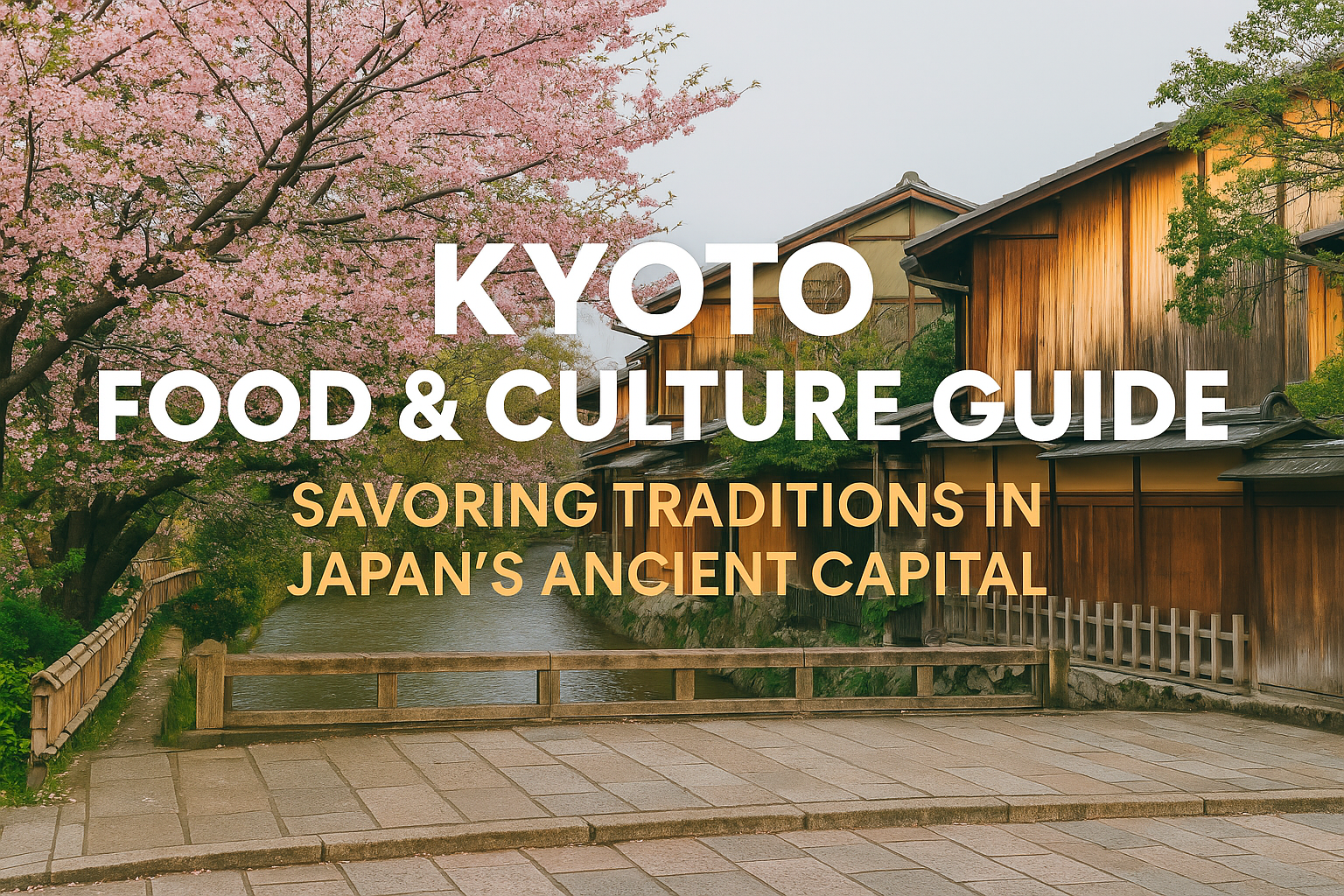
Welcome to Kyoto—Japan’s eternal city where time moves gently, flavors are rich with history, and every corner whispers stories from the past. If you’re hungry for more than just sushi and ramen, you’re in for a treat! This is your ultimate guide to Kyoto’s food scene and cultural delights—whether you’re a first-timer or a seasoned Japan traveler, there’s plenty here to surprise you. 🍵✨
Why Kyoto? A Bite-Sized Introduction
Let’s start with a confession: Kyoto changed the way I think about Japanese cuisine. It’s not just a place; it’s an experience—a living museum of ancient recipes, refined rituals, and unhurried meals. Here, food isn’t just sustenance; it’s a form of art, meditation, and celebration. You’ll find yourself falling in love with matcha, swooning over kaiseki, and wandering into centuries-old teahouses without even planning it. 🎐
Kyoto’s Culinary Heritage: More Than Sushi and Ramen
While Tokyo is the city of culinary innovation, Kyoto is where you taste Japan’s culinary soul. Here’s what makes Kyoto’s food scene so unique:
1. Kaiseki: The Pinnacle of Japanese Haute Cuisine
Think of kaiseki as a symphony played in courses—a seasonal tasting menu that feels like edible poetry. The origins trace back to Zen Buddhist tea ceremonies, where mindfulness and harmony are key. Expect tiny, beautifully arranged plates featuring local, seasonal ingredients: yuba (tofu skin), bamboo shoots, delicate sashimi, and more.
- Where to try: Gion Nanba, Kikunoi, or even a less formal ryokan for a budget-friendly intro!
- Pro Tip: Book at least a month ahead for top places. Vegetarian or vegan? Kyoto kaiseki shines with its plant-based options. 🌱
2. Obanzai: Kyoto’s Homestyle Comfort Food
Obanzai is like the warm hug of Kyoto cuisine—simple, home-cooked dishes using local veggies and tofu. You might taste simmered pumpkin, eggplant in miso, or seasonal greens dressed with sesame.
- Where to try: Small, family-run restaurants (many tucked away in Nishiki Market or Pontocho).
- Personal story: My best meal was at a counter-seat-only spot, where an obaachan (grandma) chatted with me as she cooked. She insisted I try her pickled eggplant, and wow—it tasted like a secret family recipe passed down for centuries. 😋
3. Shojin Ryori: The Art of Zen Buddhist Cuisine
For something truly unique, try a shojin ryori meal at a temple. This Buddhist vegetarian cuisine focuses on balance, simplicity, and mindfulness.
- Where to try: Shigetsu at Tenryu-ji Temple, or the peaceful Nanzen-ji.
- What to expect: Dishes like goma-dofu (sesame tofu), stewed root vegetables, and delicately seasoned soups—deeply satisfying without any meat or fish.
4. Matcha Magic: Kyoto’s Green Heartbeat
Matcha is more than a drink in Kyoto; it’s a ritual. Visit a centuries-old teahouse in Uji (the matcha capital) or sample creative matcha sweets—think matcha parfaits, ice cream, pancakes, even soba noodles.
- Don’t miss: Tsujiri (for classic matcha desserts), Saryo Tsujiri (for a modern twist), and Uji Byodoin Omotesando for immersive tea experiences.
- Fun fact: Kyoto’s “thick” matcha (koicha) is the highlight of traditional tea ceremonies—intense, earthy, and unforgettable.
5. Street Food & Markets: Nishiki Market’s Flavor Parade
Nicknamed “Kyoto’s Kitchen,” Nishiki Market is a sensory overload—in the best way. Wander through 400 years of culinary history: skewered octopus, tamagoyaki (Japanese omelet), pickles, yatsuhashi (cinnamon sweets), and fresh tofu.
- Pro Tip: Go in the morning to avoid crowds and sample the freshest bites.
- My favorite snack: Yuba (tofu skin) skewers—so silky and surprisingly addictive! 🥢
Kyoto’s Cultural Tapestry: Experiences Beyond the Plate
Kyoto is as much about how you eat as what you eat. Here’s how food and culture intertwine in this magical city:
1. The Ritual of Tea Ceremony
Participating in a tea ceremony (sado) is like stepping into a Zen painting. Every gesture is meaningful—an art of hospitality, harmony, and mindfulness. You’ll sit on tatami, savor thick matcha, and experience the heart of Japanese omotenashi (hospitality).
- Where to join: Camellia Tea Ceremony (English-friendly), En (in Gion), or try a short experience at Kiyomizudera.
2. Seasonal Festivals & Food
Kyoto’s calendar is dotted with festivals, each with its own food traditions. In spring, try sakura mochi under cherry blossoms. In summer, cool down with shaved ice (kakigori) during Gion Matsuri. In autumn, savor roasted chestnuts and wagashi sweets shaped like maple leaves.
- Tip: Festivals are the best times to taste rare, seasonal snacks and mingle with locals.
3. Dining With a View: Kawayuka on the River
In summer, restaurants along the Kamo River set up wooden decks (“kawayuka”) above the flowing water. Dining here at sunset, with lanterns twinkling and a cool breeze, is pure Kyoto magic.
- Try: Kawayuka in Pontocho or Kibune—a little pricier, but totally worth it for the atmosphere. 🏮
4. Geisha & Maiko Experiences
For a true brush with tradition, join a dinner or tea event where maiko (apprentice geisha) perform dances and games. Even if you just spot one in Gion, it’s like seeing living history stroll by.
Must-Try Kyoto Food Experiences (With a Personal Twist!)
Here’s my hand-picked shortlist for foodies:
- Try breakfast at a machiya (traditional townhouse) café—the tamagoyaki sandwiches are next-level!
- Sample fresh yudofu (hot tofu) at Nanzen-ji—surprisingly hearty and delicate at the same time.
- Treat yourself to a matcha parfait at Uji—don’t worry about the calories; you’ll walk them off exploring temples!
- Brave the pickled vegetables at Nishiki Market—some are intense, but they’re pure Kyoto flavor.
- Order a seasonal kaiseki dinner once—it’s a splurge, but you’ll remember it for life.
And don’t forget: be curious! Try things that look mysterious—you’ll find the best surprises when you wander off the beaten path. 😊
Practical Food Tips for Kyoto Visitors
- Dietary needs? Kyoto is one of Japan’s best cities for vegetarians and vegans, thanks to Buddhist cuisine and creative local chefs. Many places display English menus or picture menus.
- Cash is still king in many small restaurants, so carry yen (but credit cards are accepted at most big places).
- Book in advance for popular or Michelin-starred spots, especially during cherry blossom or autumn foliage season.
- Explore by neighborhood: Gion for kaiseki and maiko sightings, Pontocho for romantic riverside dining, Uji for matcha, and Arashiyama for temple food and sweets.
- Embrace seasonality—the same restaurant can have a totally different menu in spring, summer, autumn, and winter!
Kyoto Culture Beyond Food: The Senses of the City
Kyoto is a place where every meal feels sacred, but culture is everywhere—in the way locals walk, the sound of bamboo groves, the scent of incense drifting from temples, and the sight of lanterns lighting up old alleyways. If you come for the food, you’ll stay for the atmosphere. Trust me: wander, taste, and soak it all in.
Conclusion: My Kyoto Food & Culture Takeaways
If I could sum up Kyoto in a single word, it would be harmony. Here, every meal tells a story, every ritual has a purpose, and every flavor is a bridge between past and present. Whether you’re sipping matcha under cherry blossoms, savoring tofu in a Zen temple, or chatting with a chef in a cozy market stall, you’ll find yourself woven into Kyoto’s living tapestry.
So go ahead—take that bite, say “itadakimasu,” and let Kyoto’s food and culture fill your soul. 💚