

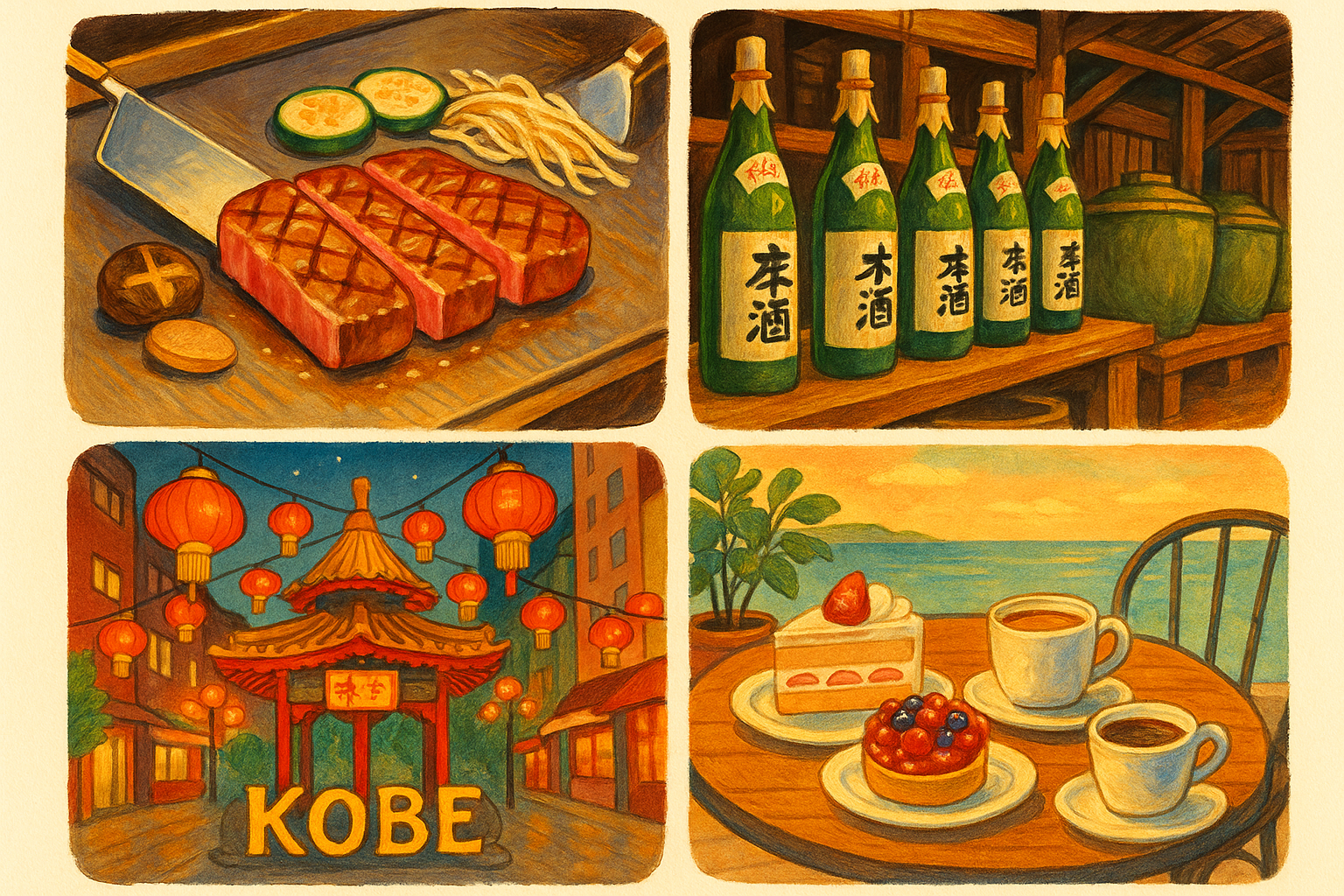
When someone says Kobe, what’s the first thing that pops into your mind? If it’s Kobe beef, you’re not alone — and you’re not wrong either 😋. But what if I told you that this refined port city on Japan’s southern coast has so much more to offer beyond melt-in-your-mouth steak?
Kobe is where East meets West, where elegant Japanese traditions dance with cosmopolitan flair — and that magical mix spills over generously into its food scene. From centuries-old sake breweries to bustling Chinatown alleys, from traditional ryotei (Japanese restaurants) to Western-style cafés with a view of the sea, Kobe is a sensory feast waiting to be devoured.
Let’s take a delicious deep dive into what makes Kobe’s food culture so unique and unforgettable. 🎌
🌍 A Port City with a Global Palate
First, some context.
Kobe has been a gateway to the world for centuries. When Japan ended its policy of isolation in the 19th century, Kobe quickly became one of the few cities open to foreign trade. This global exposure influenced the city’s architecture, fashion, and food. Western bakeries popped up, Chinese immigrants built Nankinmachi (Kobe’s Chinatown), and French-style cafes and patisseries began serving pastries alongside matcha.
You’ll feel it in every corner — a layered cultural blend, yet undeniably Japanese at heart. 💛
🥩 Kobe Beef: Worth the Hype?
Let’s get this out of the way — yes, it’s worth it. If you’re a meat lover, trying Kobe beef in Kobe is one of life’s bucket list experiences.
But here’s what many don’t realize: not every restaurant offering “Kobe beef” is serving the real deal. True Kobe beef comes from Tajima-gyu cattle raised in Hyogo Prefecture under strict certification standards. It’s rare, and it’s regulated.
Where to Eat Authentic Kobe Beef:
- Mouriya Honten – A classy spot where chefs prepare the beef right in front of you. Expect buttery tenderness and a price tag to match.
- Steakland Kobe – More budget-friendly and very popular with tourists. The flavor holds up!
- Wakkoqu – A refined, quiet teppanyaki experience where the beef does all the talking.
💡 Tip: Lunch menus are significantly cheaper than dinner. You get the same Kobe beef, just with daylight!
🍶 Nada Sake District: Sip Like a Local
Kobe isn’t just about beef — it’s also home to Japan’s top sake-producing region, Nada Gogo. Thanks to its pure water from Mt. Rokko and ideal climate conditions, Nada’s sake is crisp, clean, and celebrated across the country.
Where to Go:
- Hakutsuru Sake Brewery Museum – Learn the brewing process, taste different varieties, and pick up souvenirs.
- Kobe Shu-shin-kan Brewery (Fukuju) – An elegant tasting spot, often serving sake that’s been poured at Nobel Prize banquets. 🌟
Even if you’re not a big drinker, it’s a fascinating cultural experience — and you’ll walk away with a new appreciation for sake’s complexity.
🥟 Chinatown Vibes in Nankinmachi
You’ve likely visited a Chinatown before, but Kobe’s Nankinmachi is different — small, compact, and bursting with local flavor. It’s perfect for snacking as you stroll.
What to try:
- Nikuman (steamed pork buns) from Roushouki – Always a line, always worth it.
- Gyoza (pan-fried dumplings) from Gyoza Daigaku – Slightly crispy, always juicy.
- Peking duck wraps, tapioca milk teas, and sweet sesame balls — street food heaven!
🔥 Don’t miss the lion dances and lanterns during Chinese New Year — the whole district comes alive.
🍰 East-Meets-West Desserts: Kobe’s Hidden Sweet Spot
Kobe is known for its elegant sweets and patisserie culture — again, thanks to Western influences. But there’s always a Japanese twist.
Must-try dessert spots:
- Gâteaux de Voyage – Their cheesecake and baumkuchen are divine.
- Morozoff – A Kobe-born dessert empire famous for custards and cookies.
- Isuzu Coffee & Sweets – Local roastery with killer pour-over and delicate desserts.
For those with a sweet tooth, Kobe might surprise you even more than Kyoto or Tokyo. 🍓🍰
🧋 Café Culture by the Sea
You know how Kyoto has its tea houses and Tokyo its fast-paced coffee shops? Well, Kobe has chill seafront cafés with a touch of sophistication.
Sip an iced matcha latte while gazing at the ships docked in Kobe Harborland, or enjoy pastries on the terrace of a café overlooking Meriken Park.
You might just find your favorite café here — one that blends the comfort of home with a postcard view of Japan. ☕
👘 Food Is Culture: Other Experiences to Savor
Food in Kobe isn’t just about eating — it’s about experiencing.
✅ Join a wagashi (traditional Japanese sweets) workshop
✅ Take a guided sake tasting session with a local brewer
✅ Book a home-cooking experience where locals teach you how to prepare everyday dishes like miso soup, tempura, or okonomiyaki.
These activities add layers of meaning to every bite you’ll take.
🛍️ What to Bring Back?
Bring home the taste of Kobe!
🛍️ Packaged Kobe beef curry – Found in department stores like Sannomiya’s Daimaru
🛍️ Handmade wagashi gift boxes
🛍️ Nada sake – In sleek, beautifully labeled bottles
🛍️ Chinatown treats like almond cookies or spicy senbei crackers
Tip: Don’t forget to declare meat products at customs if you’re traveling internationally.
🧳 Final Thoughts: Come for the Beef, Stay for the Culture
Kobe might be famous for its namesake beef, but the true beauty of the city lies in its culinary diversity, global heritage, and refined yet warm spirit. It’s not just a place to eat — it’s a place to savor.
Whether you’re a foodie traveler or someone looking to connect deeper with Japanese culture, Kobe is a delicious, enriching, and beautiful destination. ✨