
Quick answer: May, June, and September are the strongest months across Serbia, Montenegro, and Bosnia and Herzegovina — warm enough for the Montenegro coast, comfortable for Sarajevo and Belgrade, and ahead of or past the July-August heat and crowds. This region splits into three distinct climate zones rather than one: the Montenegro coast runs warm Mediterranean, Sarajevo and inland Bosnia run continental with real winters, and Mostar and Herzegovina run hot and dry enough in summer to rival the coast for heat without the sea breeze.
Contents
The Montenegro Coast
| Month | Air temp | Sea temp | Crowds |
|---|---|---|---|
| May | 20-25°C | 19-21°C | Medium |
| Jun | 25-29°C | 22-24°C | Medium-high |
| Jul-Aug | 30-34°C | 25-27°C | Very high |
| Sep | 25-29°C | 24-26°C | Medium |
| Oct | 20-24°C | 21-23°C | Low (many beach businesses close) |
June is often called the single best overall month for Kotor and Budva — warm sea, consistent sunshine, and crowds that are busy but not yet at peak. Late May and September are close alternatives, with September usually the pick for a quieter trip at a similar temperature.
Durmitor and the Mountains
Durmitor’s hiking season runs June through September, with trails at altitude sometimes holding snow into May in heavier years. Summer temperatures here stay notably cooler than the coast — typically 20-25°C even in peak summer, running 8-12°C below Montenegro’s beaches at the same time. Skiing and snowshoeing take over roughly December through March. Unlike the coast, Durmitor stays uncrowded even at the height of summer.
Sarajevo and Belgrade
| Month | Sarajevo | Notes |
|---|---|---|
| Jan-Feb | Around -4°C average low, often snow | Coldest period; mountains stay cool-to-cold |
| Apr-May | 12-26°C | Comfortable, strong all-round months |
| Jun | 22-30°C | Heat builds through the month |
| Jul-Aug | 22-30°C | Warmest, though mountains around Sarajevo stay cooler |
| Sep-Oct | 14-23°C | Pleasant, first mountain frosts late October |
| Nov-Dec | Grey to sub-zero | Snow on the cobblestones by December |
Belgrade follows a broadly similar continental pattern to Sarajevo, though at a slightly lower elevation it runs a touch warmer in summer and less harshly cold in winter. One source’s own figures for Sarajevo were internally inconsistent — one table gave summer as 22-30°C, another as 26-30°C — so treat these as a reliable range rather than precise averages, and check a dedicated weather service close to your travel date for exact planning.
Mostar and Herzegovina’s Heat
Herzegovina runs hotter and drier than Sarajevo’s mountain climate — summer temperatures regularly reach 35-38°C in July and August, occasionally touching 40°C, intense enough that outdoor sightseeing is genuinely uncomfortable at midday. Winters here are correspondingly milder than Sarajevo’s, generally 10-15°C rather than the capital’s sub-zero nights. May, June’s first three weeks, and September are the strongest windows for Mostar specifically, avoiding both the harshest heat and any winter cold.
Best Overall Months
If you’re covering all three countries and climate zones on one trip, May, June, and September are the months that work best everywhere at once: warm enough for the coast, comfortable for Sarajevo and Belgrade, and short of Herzegovina’s harshest heat. July and August work fine for the coast specifically but push Mostar into genuinely uncomfortable midday heat, while winter (November-March) closes Durmitor’s high trails and brings real cold to Sarajevo and Belgrade, even though it’s a reasonable season for city-focused travel in Belgrade or Sarajevo alone.
FAQ
What is the single best month to cover this whole region?
June, for the best balance of warm coastal swimming, comfortable city weather, and open mountain trails before the harshest Herzegovina heat sets in.
Is winter worth visiting for Belgrade or Sarajevo alone?
Yes, if you’re not planning on Durmitor or the Montenegro coast — both cities function well as winter city breaks, just pack for real cold.
Is Mostar hotter than the Montenegro coast in summer?
Often yes, in peak midday heat, since Herzegovina lacks the coast’s moderating sea breeze even though average air temperatures are similar.
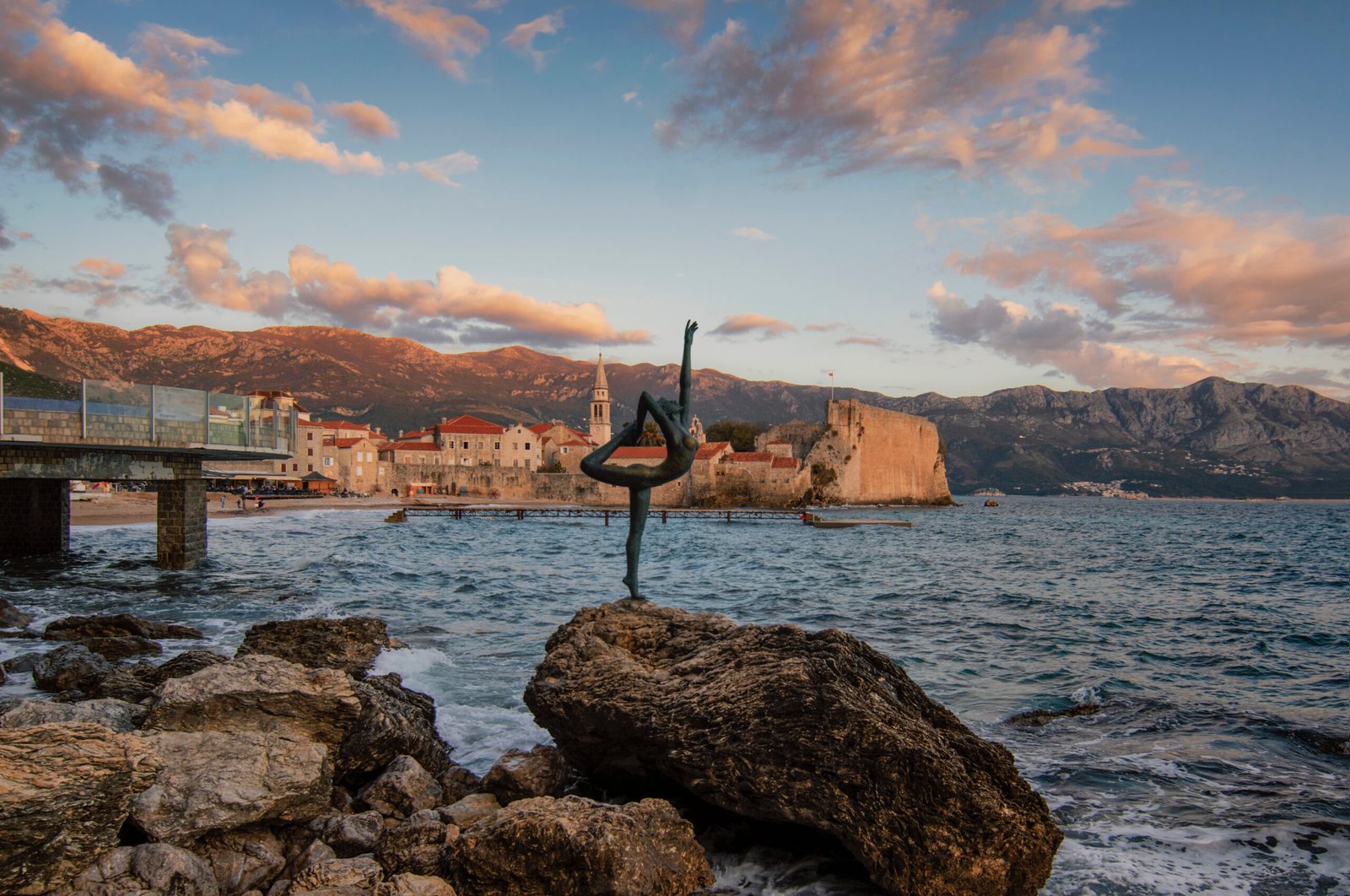
Photo: otrow_photography, CC0, via Wikimedia Commons — Budva Old Town on the Montenegrin coast.