
In short
A month-by-month table of mean maximum temperature and rainfall for Istanbul, Cappadocia, İzmir, Antalya and Pamukkale, from official climate normals rather than from feel. It shows the thing most “best time to visit” pages hide: Antalya’s wettest month is January at 225.5 mm, and Cappadocia sits close to freezing in January at 4.0 °C while the coast is still in double figures.
Climate normals from official records; checked August 2026.
Disclosure: some links in this guide are affiliate links. If you book through one, we earn a small commission and you pay exactly the same price. We only link to services we would use ourselves, no brand pays for placement or for a favourable write-up, and every price in this article was researched independently.
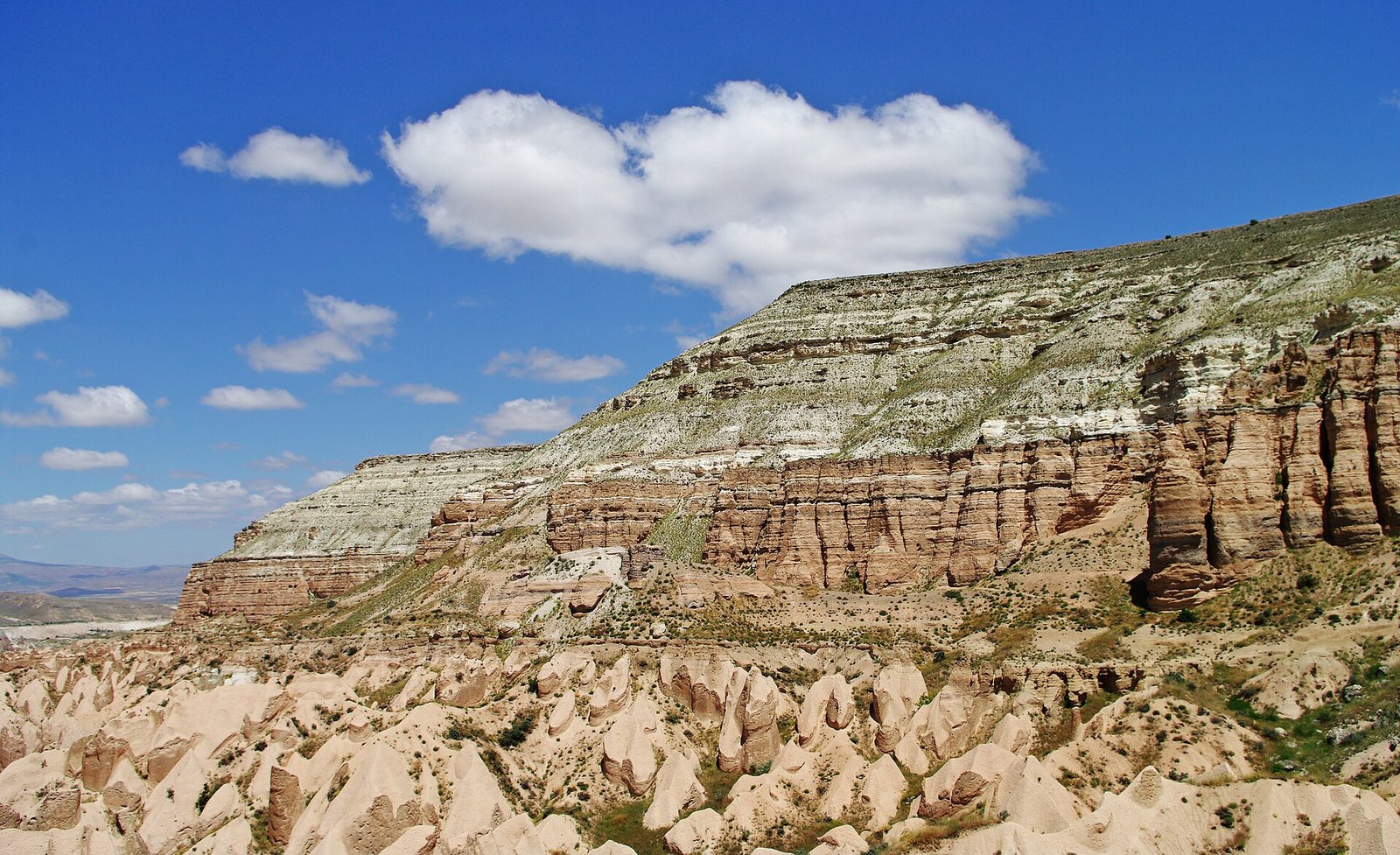
There is no best time to visit Türkiye, and any guide that gives you one month is describing a country it has not looked at properly. Türkiye spans six climate zones. In January, Antalya’s mean daily maximum is 15.0 °C and Nevşehir’s is 4.0 °C with mean minimums below freezing. Those are the same country, four hundred kilometres apart.
What is in this guide
What follows is month by month, built on official normals from the Turkish State Meteorological Service rather than on impressions. For each month we give you what the weather actually does, what it is good for, and what it rules out.
The two-line summary, if that is all you need: late April to early June and mid-September to late October are the windows that work everywhere at once. July and August work on the coast and punish you inland. Winter is genuinely rewarding in Istanbul and genuinely cold in Cappadocia, which is a different pleasure rather than a lesser one.
Editor’s note
All temperature and rainfall figures on this page are Meteoroloji Genel Müdürlüğü official normals, checked on 19 August 2026: Istanbul 1950–2025, Antalya 1930–2025, Nevşehir 1959–2025, İzmir 1938–2025, Denizli 1957–2025. Temperature is the mean daily maximum, rainfall the mean monthly total. We use Nevşehir for Cappadocia because Göreme, Ürgüp, Uçhisar and Avanos are all in Nevşehir province — Kayseri is a different, lower basin. We could not obtain MGM normals for Trabzon or the Black Sea coast during the research window, so this guide does not cover that region month by month rather than guessing at it.
The numbers, in one place
Mean daily maximum °C, and mean monthly rainfall in mm.
| Month | Istanbul | Cappadocia | İzmir | Antalya | Pamukkale |
|---|---|---|---|---|---|
| January | 9.6 / 88.8 | 4.0 / 45.4 | 12.5 / 134.5 | 15.0 / 225.5 | 10.7 / 89.8 |
| February | 10.2 / 70.7 | 5.5 / 41.1 | 13.7 / 100.9 | 15.6 / 148.1 | 12.4 / 68.9 |
| March | 12.4 / 62.3 | 10.3 / 48.1 | 16.4 / 74.2 | 18.0 / 90.8 | 16.1 / 62.6 |
| April | 17.4 / 47.8 | 16.0 / 50.2 | 21.0 / 45.9 | 21.4 / 48.5 | 21.1 / 51.6 |
| May | 22.3 / 32.9 | 20.6 / 57.9 | 26.2 / 30.9 | 25.7 / 33.3 | 26.5 / 44.2 |
| June | 27.1 / 27.6 | 24.9 / 37.5 | 30.8 / 12.8 | 30.8 / 10.7 | 31.5 / 28.8 |
| July | 29.7 / 22.1 | 28.5 / 9.4 | 33.3 / 4.2 | 34.2 / 4.7 | 34.8 / 14.7 |
| August | 29.7 / 23.9 | 28.7 / 8.4 | 33.0 / 6.4 | 34.1 / 4.3 | 34.7 / 11.2 |
| September | 25.9 / 39.7 | 24.5 / 14.3 | 29.3 / 15.5 | 31.2 / 16.7 | 30.3 / 15.9 |
| October | 20.6 / 66.3 | 18.3 / 28.0 | 24.1 / 44.0 | 26.6 / 70.6 | 24.0 / 34.9 |
| November | 16.1 / 78.1 | 11.8 / 34.3 | 18.7 / 92.3 | 21.4 / 127.7 | 17.6 / 54.7 |
| December | 11.8 / 99.2 | 6.2 / 48.4 | 14.2 / 145.8 | 16.7 / 250.9 | 12.4 / 89.0 |
Three things jump out of that table that most guides never mention.
Antalya’s December is wetter than Manchester’s, at 250.9 mm. The Mediterranean framing holds from May to October and not outside it.
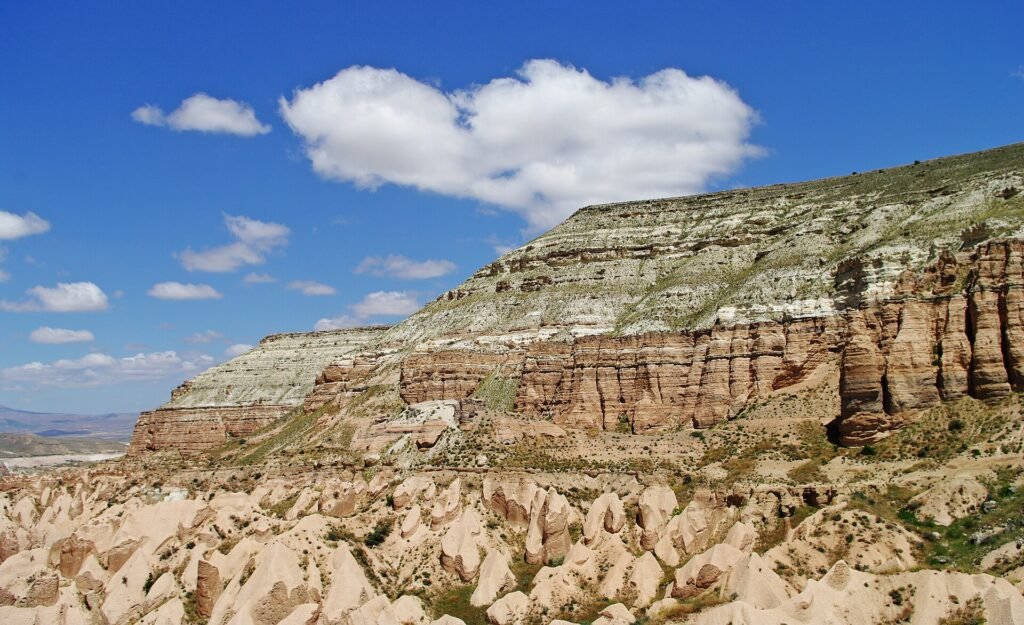
Cappadocia’s mean minimum is below freezing from November to February, and only 5.1 °C in April. If you are standing at a valley viewpoint at 5 a.m. waiting for balloons in spring, dress for winter.
Pamukkale is the hottest place on the list in high summer — Denizli averages 34.8 °C in July — and the travertines are unshaded and walked barefoot on white stone that reflects the sun straight back at you.
January
Istanbul at 9.6 °C and 88.8 mm of rain, Cappadocia at 4.0 °C with nights below zero, the coast at 15.0 °C and very wet.
Good for: Istanbul without queues. This is when the historic peninsula is walkable at a normal pace, when hamams feel like a necessity rather than a novelty, and when hotel rates are at their lowest outside New Year. Cappadocia under snow is one of the genuinely great sights in Türkiye, and cave hotels are built to be warm.
Bad for: the coast. Antalya’s 15 °C sounds acceptable until you see 225.5 mm of rain against it. Many coastal hotels and restaurants close entirely from November to March.
Balloon note: Cappadocia flights are grounded more often in winter, and the operators cancel for wind rather than for cold. If a balloon is the point of the trip, do not book a single spare morning in January.
February
Marginally milder than January everywhere and slightly drier. Istanbul 10.2 °C, Cappadocia 5.5 °C, İzmir 13.7 °C.
Good for: the same things January is good for, at the same prices, with a little more daylight. Late February sometimes gives Istanbul a run of clear cold days that are the best light of the year over the Bosphorus.
Bad for: anything that depends on being outdoors for a full day inland.
March
The turn. Cappadocia jumps from 5.5 °C to 10.3 °C, İzmir to 16.4 °C, Antalya to 18.0 °C and the coastal rainfall halves.
Good for: the Aegean. Ephesus in March is warm enough to walk all day and empty enough to hear yourself think, which is not true of it in July. Istanbul is starting to sit outside.
Bad for: swimming, and for anyone expecting reliable spring weather — March is the most changeable month of the Turkish year.
Watch the calendar: in 2027, Ramazan Bayramı falls on 9–11 March, with the half-day arife on 8 March. Domestic travel peaks, coach and train seats sell out, and small businesses close. Museums and major sights stay open.
April
The month most people should book. Istanbul 17.4 °C, Cappadocia 16.0 °C, İzmir and Antalya both 21 °C, and rainfall down to 45–50 mm everywhere.
Good for: everything at once, which is rare. Istanbul’s tulip season, the Aegean sites at their best, Cappadocia green rather than brown, Pamukkale at 21.1 °C, which is exactly right for barefoot walking on the travertines.
Bad for: sea swimming, still. And Cappadocia’s mean minimum is 5.1 °C — the days are lovely and the pre-dawn balloon call is cold.
One date: 23 April is a national holiday, which fills domestic destinations for a long weekend.
May
Arguably the single best month. Istanbul 22.3 °C, İzmir 26.2 °C, Antalya 25.7 °C, Pamukkale 26.5 °C, and rainfall at its lowest so far.
Good for: the whole country. The sea is becoming swimmable on the Mediterranean towards the end of the month. Cappadocia at 20.6 °C is ideal for the valley walks that are miserable in August.
Bad for: nothing, really, except your budget — May is no longer a secret and prices reflect that.
Watch the calendar: 19 May is a national holiday, and in 2027 Kurban Bayramı runs 16–19 May straight into it. Expect an extended domestic shutdown and heavy internal travel that year.
June
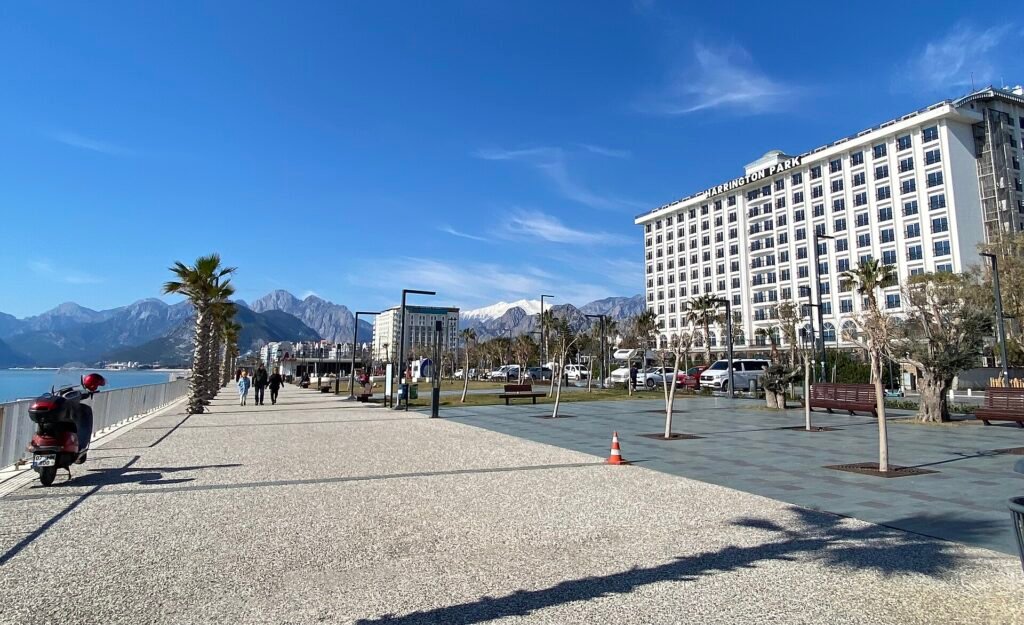
Summer proper on the coast: İzmir and Antalya both 30.8 °C, Pamukkale 31.5 °C, Istanbul a comfortable 27.1 °C. Rainfall collapses — Antalya gets 10.7 mm for the whole month.
Good for: the coast, obviously. Also Istanbul, which is warm rather than hot and stays that way into July. Long daylight makes a Cappadocia sunrise-and-sunset day genuinely feasible.
Bad for: midday sightseeing at Ephesus, Pamukkale or Aspendos. Start at opening or leave it until four.
July
The hottest and driest month. Antalya 34.2 °C, Pamukkale 34.8 °C, İzmir 33.3 °C, Cappadocia 28.5 °C, Istanbul 29.7 °C. Four to five millimetres of rain on the coast.
Good for: beaches and boats, and nothing else without planning around the heat. The Lycian coast in July is what people are picturing when they picture Türkiye.
Bad for: archaeological sites, which are unshaded; Pamukkale in particular, where white travertine reflects heat upwards; and Cappadocia’s valley hikes.
Watch the calendar: 15 July is a national holiday.
August
Statistically identical to July, half a degree cooler in most places, and busier. Istanbul 29.7 °C, Antalya 34.1 °C.
Good for: the same as July. Sea temperatures are at their peak — a snapshot on 19 August 2026 put the Antalya gulf at 30.4 °C and İzmir at 27–28 °C.
Bad for: the same as July, plus crowds. This is European holiday season and the coast is full.
Watch the calendar: 30 August is Zafer Bayramı, a national holiday.
September
The other great month, and the better half of the shoulder season if you want warm water. Istanbul 25.9 °C, İzmir 29.3 °C, Antalya 31.2 °C, Cappadocia 24.5 °C, and rainfall still low almost everywhere.
Good for: everything, with the sea still warm from summer and the crowds thinning after the first week. Cappadocia at 24.5 °C is close to perfect for walking, and the balloon-flight cancellation rate is at its annual low in the settled early-autumn weather.
Bad for: very little. If we had to pick one month for a first visit to Türkiye, it would be late September.
October
Still good, and quieter again. Istanbul 20.6 °C, İzmir 24.1 °C, Antalya 26.6 °C, Cappadocia 18.3 °C. Rain begins returning to Istanbul and the Mediterranean, but Cappadocia stays dry at 28 mm.
Good for: the Aegean and Cappadocia, which are both at their most comfortable. Istanbul in October is the version of the city that residents like. Sea swimming on the Mediterranean is still realistic in the first half of the month.
Bad for: the second half, if your plans depend on a beach. And 29 October is Cumhuriyet Bayramı, which fills Istanbul with domestic visitors from midday on the 28th.
November
The shoulder ends. Istanbul 16.1 °C and 78.1 mm, Antalya 21.4 °C but 127.7 mm, Cappadocia 11.8 °C with mean minimums back to 2.5 °C.
Good for: Istanbul, cheaply. Cappadocia in late autumn colour, with the caveat that mornings are cold.
Bad for: the coast, which is now in its wet season and beginning to shut for winter.
December
Istanbul 11.8 °C and 99.2 mm — its wettest month. Antalya 16.7 °C and 250.9 mm, the wettest figure on the entire table. Cappadocia 6.2 °C with freezing nights.
Good for: Istanbul at its most atmospheric and least crowded, and Cappadocia in snow if you are prepared for it. Prices are at their annual floor except over New Year.
Bad for: any itinerary that assumes the Mediterranean is reliably sunny in winter. It is not.
Best month by what you actually want
| If your priority is… | Go in | Avoid |
|---|---|---|
| Istanbul, comfortably | April–May, late September–October | July–August humidity, December rain |
| Cappadocia balloons | September–October, then April–May | Winter, for the cancellation rate |
| Cappadocia hiking | April–May, October | July–August |
| Ephesus and the Aegean sites | March–May, October | July–August |
| Pamukkale travertines | April–May, October | July–August, when the stone is punishing |
| Beach and sea | Late June–September | November–March |
| Lowest prices | November–March | Bayram holidays, New Year in Istanbul |
| Fewest other visitors | November–March, or early March on the Aegean | August |
Holidays to plan around
Turkish religious holidays are fixed astronomically years ahead, so these dates are reliable — but the government frequently *extends* a bayram by decree at a few weeks’ notice, bridging it to an adjacent weekend.
2026 (both bayrams have already passed): Ramazan Bayramı 20–22 March; Kurban Bayramı 27–30 May; 15 July; 30 August; 29 October, effectively from midday on the 28th.
2027: Ramazan Bayramı 9–11 March, arife 8 March. Kurban Bayramı 16–19 May, arife 15 May — running straight into the 19 May national holiday, which will produce an unusually long shutdown.
During both bayrams, domestic travel peaks and coach and high-speed rail seats sell out weeks ahead. Coastal and Cappadocian hotels fill and raise rates. Istanbul empties of residents while its sights fill with domestic tourists — which is a genuinely different city, not necessarily a worse one. Museums and major sights stay open; banks, government offices and many small businesses close. Kurban Bayramı is the more disruptive of the two.
Is 2026 a crowded year?
Slightly less than 2025. Foreign arrivals in the first half of 2026 were 20,767,048, down 2.96 per cent year on year, with Russia, Germany and the UK the top three markets. That is a softening, not a collapse, and it does not change the practical advice: go early in the day, go midweek, and go in the shoulder season if you can.
Common questions
What is the single best month to visit Türkiye? Late September, if you want one answer. Warm sea, thinning crowds, settled weather for balloons, and every region comfortable at once. May is its close rival and is better for wildflowers and worse for swimming.
Can I visit Türkiye in winter? Yes, and Istanbul is genuinely good in it. Cappadocia under snow is spectacular if you accept sub-zero mornings. The Mediterranean coast is the part to avoid — Antalya’s December rainfall is the highest figure in this entire guide.
When can I swim? Realistically late June to early October on the Mediterranean, and a shorter window on the Aegean. Sea temperatures peak in August — the Antalya gulf read 30.4 °C on 19 August 2026, İzmir 27–28 °C. Note that there are no official monthly sea-temperature normals published for Türkiye, only instantaneous readings, so treat any month-by-month sea table you find elsewhere with suspicion.
When are Cappadocia’s balloons most likely to fly? The settled weather of September and October gives the lowest cancellation rate, with April and May close behind. Flights are cancelled for wind, not cold, and winter has the most cancellations. Build a spare morning into any itinerary where the balloon is the point.
Is Ramadan a bad time to visit? No. Restaurants in tourist areas operate normally, and iftar in Istanbul is one of the more memorable things you can experience there. The disruption is concentrated in the three-day bayram at the end, not the month itself. In 2027 that bayram is 9–11 March.
How far ahead should I book? For April–May and September–October, two to three months for hotels in Cappadocia specifically, where the good cave hotels are small and sell out. Elsewhere, six weeks is usually enough. For bayram weeks, treat domestic transport as sold out unless you booked a month ahead.
Before you book
Pick the region first and the month second, not the other way round — the right month for Antalya and the right month for Cappadocia genuinely are not the same. Check the bayram dates against your travel window if you are travelling in March or May of 2027. And once your dates are fixed, compare flights across carriers, because Turkish fares vary enormously between shoulder and peak season.