

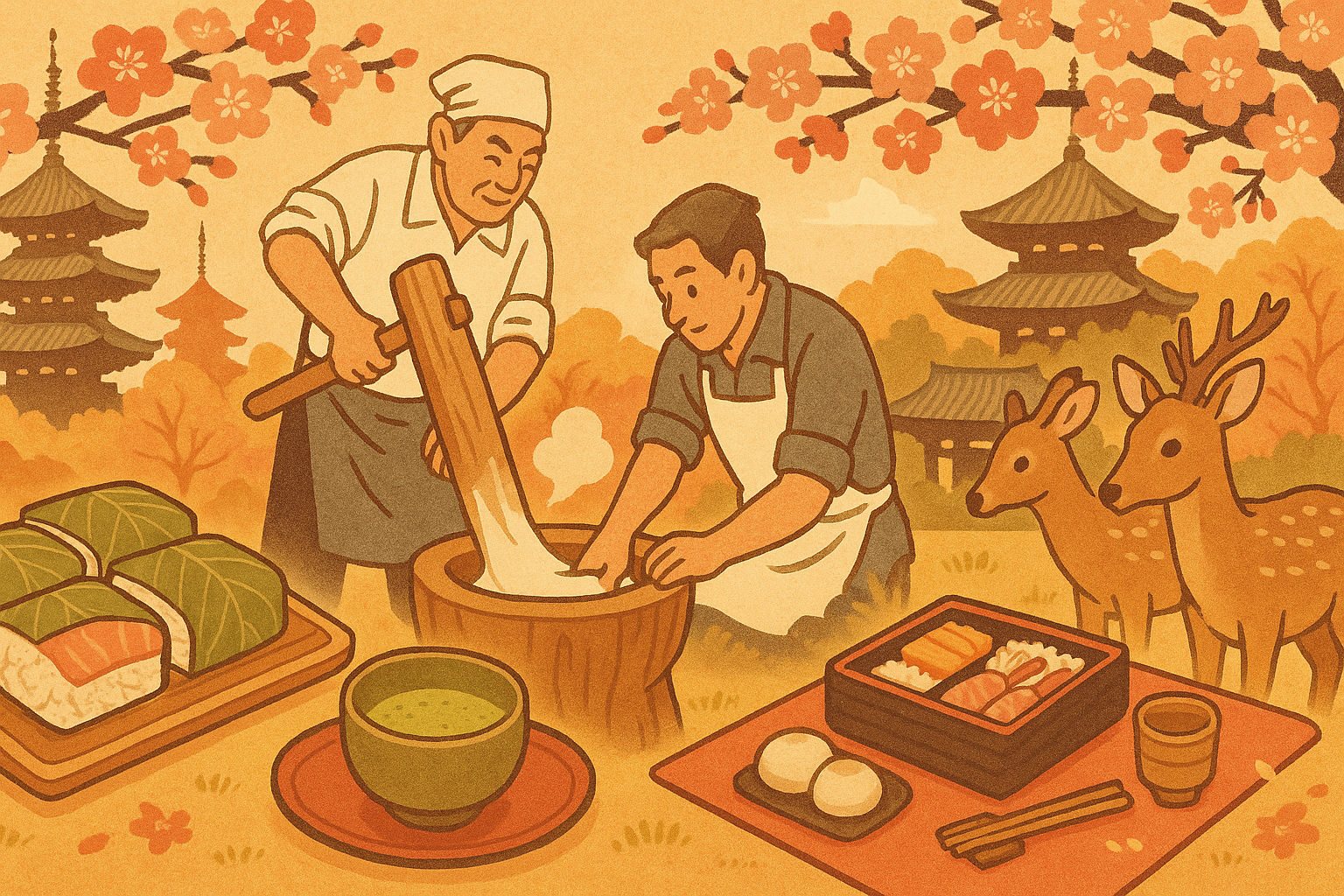
From street snacks to sacred traditions, Nara is a feast not just for the eyes, but also for your soul (and stomach)! Let’s explore Nara through its delicious flavors and timeless culture. 🦌🍵
🏯 Why Nara Is More Than Just Deer and Temples
If you’ve ever seen those iconic photos of bowing deer in Japan, chances are, they were taken in Nara Park. But Nara is so much more than its friendly sika deer and UNESCO-listed temples. As Japan’s first permanent capital, Nara is the birthplace of Japanese culture, and its culinary traditions are deeply rooted in Buddhism, local ingredients, and imperial history.
In this post, I’ll take you through a rich cultural journey of food in Nara—traditional dishes, must-visit spots, and the stories behind every bite. So, come hungry! 😋
🍱 1. Nara’s Ancient Taste: A Glimpse Into Buddhist Cuisine (Shojin Ryori)
Let’s start with something unique: Shojin Ryori, or Buddhist vegetarian cuisine.
Developed in temples centuries ago, Shojin Ryori avoids meat, fish, and pungent vegetables like garlic. But don’t let that fool you—it’s incredibly flavorful, colorful, and satisfying. Dishes are beautifully plated and thoughtfully balanced in color, taste, and nutrition.
Where to try it:
- Kōfuku-ji Temple’s nearby restaurants often serve Shojin Ryori with stunning views of the pagoda.
- Mizuya Chaya, a peaceful tea house near Nigatsudo Hall, offers a simpler, meditative meal experience.
👉 Travel tip: It’s best to make a reservation and arrive with an open mind (and empty stomach). Expect small dishes like sesame tofu (goma-dofu), pickled mountain vegetables, and miso soup.
🥢 2. Kakinoha-zushi: Sushi Wrapped in Persimmon Leaves
This isn’t your typical sushi!
Kakinoha-zushi is a Nara specialty: pressed sushi wrapped in fragrant persimmon leaves (which have antibacterial properties). This sushi was originally developed as a way to preserve fish in hot summers—how clever is that?
You’ll find varieties with mackerel, salmon, or shrimp, slightly vinegared and beautifully presented.
Where to try it:
- Hiraso Nara Honten (near JR Nara Station) is the go-to place for a traditional experience.
- Department stores like Kintetsu Nara have take-out boxes if you want to enjoy it picnic-style.
🧡 Pro tip: It pairs perfectly with green tea on a bench in Nara Park while deer curiously peek at your meal!
🍵 3. Matcha Culture: A Ritual, Not Just a Drink
You can’t talk about food and culture in Japan without mentioning matcha (powdered green tea). Nara has a long history with tea ceremonies, especially connected to Kasuga Taisha Shrine and Todaiji Temple, both of which have ties to ancient tea rituals.
But you don’t have to go full Zen to enjoy matcha—modern cafes in Nara serve it in delightful ways:
Must-try matcha experiences:
- Nakatanidou: Famous for mochi pounding and chewy matcha mochi (yes, it’s a show AND a snack!) 🍵✨
- Saho Garden Café: Elegant, serene atmosphere, ideal for a quiet matcha moment.
- Matcha soft cream from street stalls is a lifesaver on hot days.
🍢 4. Mochi Madness: The Art of Rice Cake Pounding
If you’re into food and performance, don’t miss the mochi-making spectacle at Nakatanidou. They pound mochi (glutinous rice cake) at lightning speed—it’s loud, fast, rhythmic, and fun!
Their yomogi mochi (mugwort-flavored) is chewy, slightly sweet, and filled with red bean paste. It’s a local favorite for a reason!
⏰ Best time to go: They usually demonstrate mochi-pounding multiple times a day, but weekends are especially fun with bigger crowds and more energy.
🥬 5. Nara-zuke: Pickles with a Punch
Let’s be honest—pickles don’t get enough love, but Nara-zuke will surprise you.
These sake lees-pickled vegetables (think cucumbers, melons, and eggplants) have a deep, slightly boozy flavor and are served in small portions as side dishes in many local meals.
You’ll either love it or… develop a taste for it. 😄
Where to find it:
- Naramachi, the old merchant district, has family-run shops offering samples.
- Naramachi Koshi-no-Ie also offers cultural workshops where you can learn about pickling traditions.
🏘️ 6. Naramachi: Eat, Sip, and Soak in Culture
Naramachi, the old town area of Nara, is like walking through a living museum. Wooden lattice houses, quiet alleyways, and artisan shops make it the perfect place to combine food and culture.
🛍️ What to explore:
- Cafés in restored machiya houses serve seasonal Japanese sweets (wagashi) and teas.
- Traditional sweets like kuzumochi (arrowroot jelly) are must-tries for adventurous palates.
- Pottery and pickling workshops connect you with the cultural roots of what you’re eating.
👪 7. What About the Kids? Family-Friendly Food Experiences
Traveling with children? No worries—Nara is super family-friendly.
🦌 Buy some shika senbei (deer crackers) to feed the deer together—it’s food and fun in one!
🍡 Try mitarashi dango (grilled rice balls with sweet soy glaze) for an easy kid-pleaser.
🥢 Many restaurants offer kid-friendly udon noodles, bento boxes, or even cute animal-themed sweets!
🗓️ When Is the Best Time to Enjoy Food in Nara?
Each season brings something new:
🌸 Spring: Cherry blossom bentos and wagashi shaped like flowers
🌞 Summer: Cold soba and refreshing shaved ice (kakigori)
🍁 Autumn: Roasted chestnuts and sweet potatoes
❄️ Winter: Hearty nabe (hot pots) and warm matcha lattes
So yes—Nara’s food calendar is as rich as its cultural one!
🎒 Final Tips Before You Go
- 💸 Bring some cash—many small shops still don’t accept cards.
- 🍱 Try at least one meal in a traditional setting (like tatami seating).
- 📍 Book ahead if you’re planning a cultural food workshop or Shojin Ryori meal.
- 🎁 Don’t forget to bring back some Nara-zuke or Kakinoha-zushi as edible souvenirs!
❤️ Wrapping Up: Nourishment for Body and Spirit
Eating in Nara is more than just tasting delicious food—it’s a window into centuries-old traditions, spiritual practices, and community life. Whether it’s a simple mochi snack or an elegant vegetarian meal, you’ll feel the rhythm of history in every bite.
Ready to book your trip? Or just hungry now? 😅 Let us know your favorite cultural foodie experiences in the comments below!