
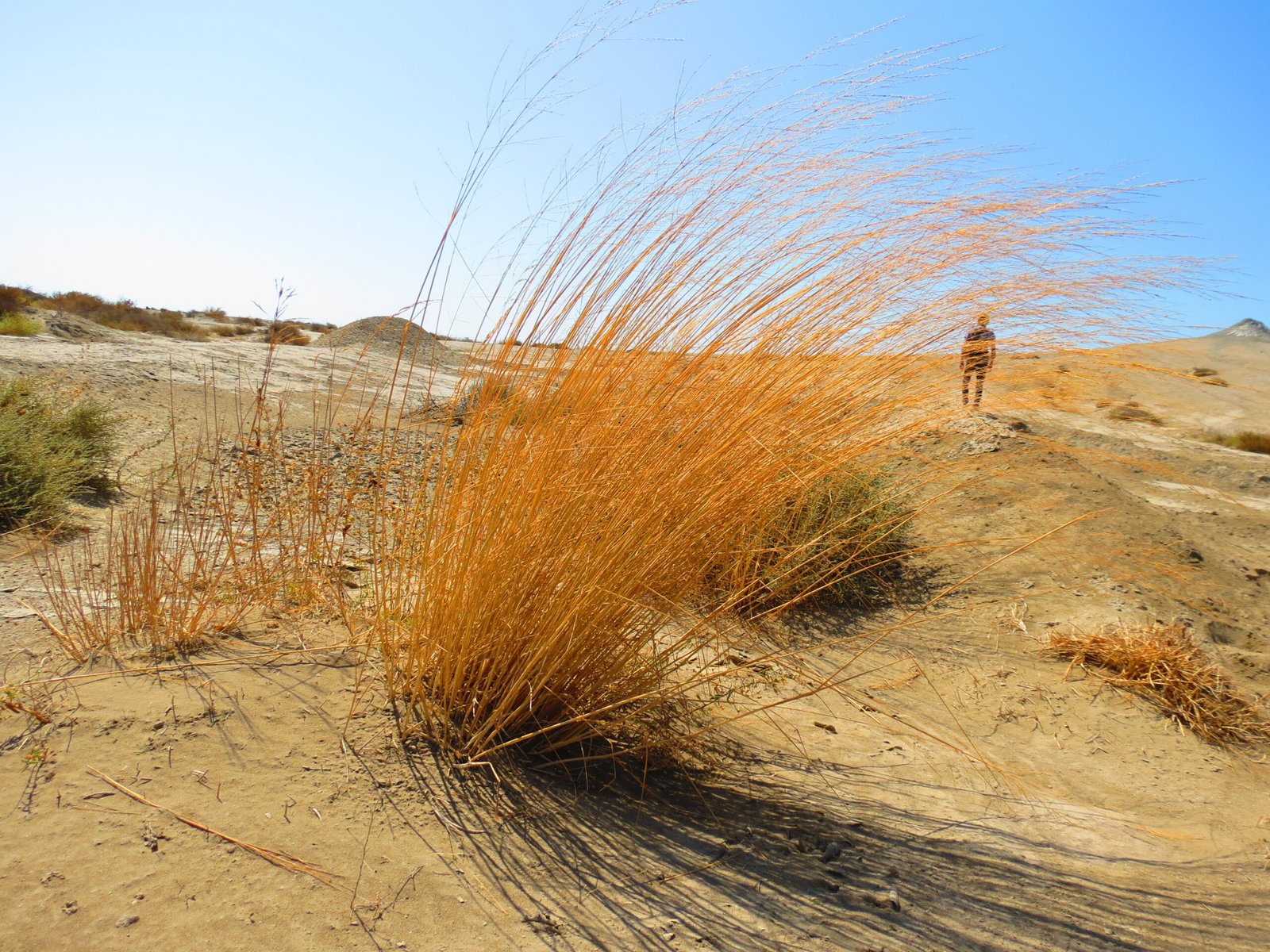
Gobustan, about 67km (roughly 1 hour) south of Baku, combines a UNESCO-listed rock art reserve with one of the world’s largest concentrations of mud volcanoes — genuinely bizarre, slow-bubbling mud cones scattered across an otherwise barren landscape. It’s an easy half-day trip from Baku and one of the more unusual sights in the Caucasus.
Gobustan rock art reserve
Gobustan National Park protects thousands of ancient petroglyphs carved into the rock, along with a modern visitor museum. Entry costs about 10 AZN and includes a guide to walk you through the reserve’s carved rock panels — some depicting hunting scenes and figures thought to be many thousands of years old. The site is about 67km, roughly an hour’s drive, from central Baku.
Reaching the mud volcanoes
The mud volcano fields are a further, rougher drive beyond the main Gobustan reserve, and most visitors don’t attempt them independently by regular car. Two practical options:
- Local taxi from the Gobustan reserve: roughly 12 AZN to be driven out to the volcanoes and back — the cheapest option if you’re already visiting the rock art site.
- Organized tour from Baku: typically $54-82 USD, usually bundling both Gobustan and the mud volcanoes in a 4×4 in a single half-day trip — the more comfortable, hassle-free option, since the volcano access roads are unpaved and rutted.
At the volcanoes themselves, expect slow-bubbling grey mud, a faint sulfurous smell, and a genuinely otherworldly, almost lunar landscape. Wear shoes you don’t mind getting muddy.
FAQ
Can I visit Gobustan as a day trip from Baku?
Yes — it’s about an hour’s drive each way, easily done as a half-day trip combining the rock art reserve and the mud volcanoes.
Do I need a 4×4 for the mud volcanoes?
The access roads are unpaved and rough, so a 4×4 taxi or organized tour vehicle is the practical way to get there rather than a standard rental sedan.
How much does Gobustan cost to visit?
Around 10 AZN for the rock art reserve entry; getting to the mud volcanoes costs extra, roughly 12 AZN by local taxi from the reserve, or $54-82 as part of a bundled tour from Baku.
Photo: Uzeyir Mikayilov, CC BY-SA 4.0, via Wikimedia Commons