
Croatia joined the Schengen Area and switched its currency to the euro on January 1, 2023, replacing the kuna. For US, UK, and EU travelers, this means the standard Schengen 90-days-in-any-180-day rule applies, there’s no passport stamp when arriving by land from Slovenia, Italy, Austria, or Hungary, and prices are now quoted in euros everywhere. Checks still happen at Croatia’s external borders with Bosnia and Herzegovina and Montenegro, since neither is in Schengen.
Contents
Entry rules and the euro switch
Before 2023, Croatia used the kuna and sat outside Schengen, meaning a passport stamp at every border and a separate currency to budget for. Both of those changed at once. US, UK, Canadian, and Australian citizens still get 90 days visa-free within any 180-day period across the whole Schengen zone — Croatia doesn’t add a separate allowance on top of that, it shares the same clock as Italy, France, or Greece.
One detail that trips people up: Croatia’s land borders with Bosnia and Herzegovina and Montenegro are external Schengen borders, since neither country is in the zone. That means passport checks, possible queues, and — as of the EU’s Entry/Exit System going fully live on April 10, 2026 — a digital registration (facial image and fingerprints) for non-EU passport holders crossing there, replacing the old ink stamp. EU/EEA/Swiss citizens are exempt from EES. If your trip stays entirely inside Croatia, Slovenia, Italy, Austria, or Hungary, you won’t see any of this.
Regions at a glance
| Region | Highlight | Best base |
|---|---|---|
| Capital / inland | Zagreb’s cafes, museums, day-trip hub | Zagreb |
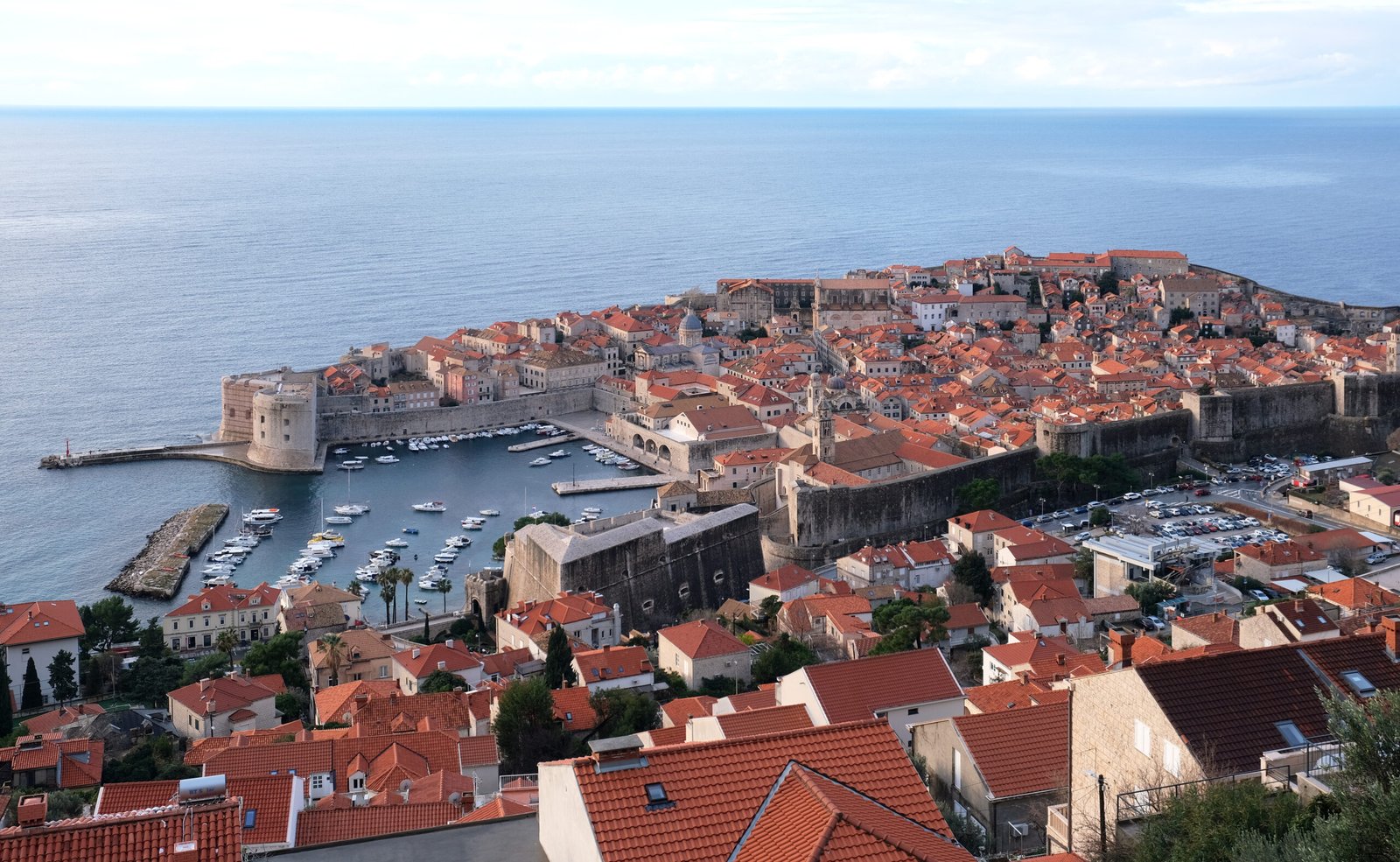
| Southern Dalmatian coast | Dubrovnik’s walled Old Town | Dubrovnik |
| Central Dalmatian coast | Diocletian’s Palace, ferry hub to the islands | Split |
| Inland karst | Plitvice Lakes’ terraced waterfalls | Zagreb or Zadar day trip |
| Islands | Hvar’s nightlife, Korčula’s old town | Split-based ferries |
| Istria peninsula | Pula’s Roman arena, Rovinj’s old town | Pula or Rovinj |
Where to go
Each of these has its own full guide: Zagreb, Dubrovnik, Split, Plitvice Lakes, Hvar and Korčula, and Istria (Rovinj and Pula).
Money and costs
Everything is priced in euros. Card payment is nearly universal in cities and the coast, though small inland konobas (taverns) and some island kiosks still prefer cash. A sit-down coastal dinner runs roughly €15-€30 per person; Zagreb is noticeably cheaper than Dubrovnik or Hvar in peak summer. Dubrovnik’s city walls (€40 adult, per the official vendor’s 2026 listing) and Plitvice’s entrance fee (roughly €45-€50 in July-August, dropping to €10-€15 in winter, per third-party cost guides — confirm current tiers on the park’s own site before you go) are the two biggest single-attraction costs on a Croatia itinerary.
Best time to visit
May-June and September are the sweet spot: warm sea, thinner cruise-ship crowds in Dubrovnik, and Plitvice at its least congested without losing the waterfalls’ flow. July-August is swimming-pool warm but also when Dubrovnik’s Old Town and Hvar’s harbor are at their most packed. Winter closes most island ferries down to skeleton schedules and many coastal restaurants shut entirely.
Getting around
Zagreb connects to Ljubljana by train (about 2.5 hours) or bus, and to Split/Dubrovnik mostly by bus or budget flight — there’s no fast rail down the coast. Getting between coastal cities and the islands means ferries; see our dedicated island ferry guide and regional transport guide for the full breakdown.
FAQ
Do I need a visa for Croatia?
No, if you’re a US, UK, Canadian, Australian, or EU passport holder — Croatia follows the standard Schengen 90/180 rule.
Does Croatia use the euro now?
Yes, since January 1, 2023. The kuna was phased out; kuna coins stopped being exchangeable at the end of 2025, though banknotes remain exchangeable at the Croatian National Bank for longer.
Will I get a passport stamp entering Croatia?
Not if you arrive from another Schengen country. You will get checked (and, since April 2026, digitally registered under EES if you’re a non-EU citizen) if you cross overland from Bosnia and Herzegovina or Montenegro.
Photo: Dubrovnik’s Old Town and medieval city walls, by kallerna, CC BY-SA 4.0, via Wikimedia Commons.