
Quick answer: US, UK, and EU citizens can visit Montenegro visa-free for up to 90 days within any 180-day period — nothing changes for most Western readers. But there’s genuinely big, dated visa news here: starting 1 November 2026, Montenegro requires visas from citizens of Russia, Türkiye, China, Belarus, and Saudi Arabia for the first time, as part of its EU accession alignment under negotiating Chapter 24. The currency is the euro — Montenegro adopted it unilaterally in 2002, the same arrangement Kosovo uses, despite not being an EU or eurozone member.
Contents
The 1 November 2026 Visa Change, Explained
Montenegro’s government adopted a decree on 23 July 2026, published in the Official Gazette (Službeni list CG 108/2026) on 24 July and in force from 25 July, ending visa-free entry for citizens of Russia, Türkiye, China, Belarus, and Saudi Arabia as of 1 November 2026. The Ministry of Foreign Affairs gave the reason as aligning Montenegro’s visa policy with the EU’s under accession negotiating Chapter 24 — Montenegro has been one of the more advanced Balkan candidates in EU accession talks, and this kind of alignment is a direct, concrete step in that process rather than a symbolic gesture.
For context on scale: Turkish citizens previously got 30 days visa-free, and Chinese citizens could only enter visa-free as part of an organized tour group or on a business passport with an invitation letter — so this isn’t a minor paperwork tweak for those nationalities, it’s the end of visa-free access entirely. One exception survives regardless of nationality: holders of a valid Schengen visa or residence permit, or a valid visa or residence permit from Australia, Japan, Canada, New Zealand, Ireland, the US, or the UK, can still enter for up to 30 days under Article 7 of the decree — though the decree’s own text notes this doesn’t guarantee admission, since Montenegro’s general immigration law still applies at the border. If you’re a dual national or hold a passport from one of the five newly-affected countries, confirm your specific situation with a Montenegrin embassy or VFS Global center before booking.
Standard Visa Rules for US/UK/EU Travelers
None of this affects the readers most likely to be planning a Montenegro trip from this guide: US, UK, Canadian, and EU citizens remain visa-free for up to 90 days within a rolling 180-day period, exactly as before. Montenegro is not in the Schengen Area, so these 90 days are tracked separately from any Schengen-zone days used elsewhere on the same trip.
Currency: The Euro, Unilaterally
Montenegro uses the euro, but not as an EU or eurozone member — it adopted the German mark and later the euro unilaterally, the same arrangement Kosovo uses today, without a seat at the European Central Bank or any say in eurozone monetary policy. In practice this is the simplest currency situation anywhere in this cluster of countries: no exchange math, no informal-acceptance guesswork, just euros. ATMs are widely available in Kotor, Budva, and Podgorica; card acceptance is good in tourist areas and patchier in rural Durmitor.
Where to Go in Montenegro
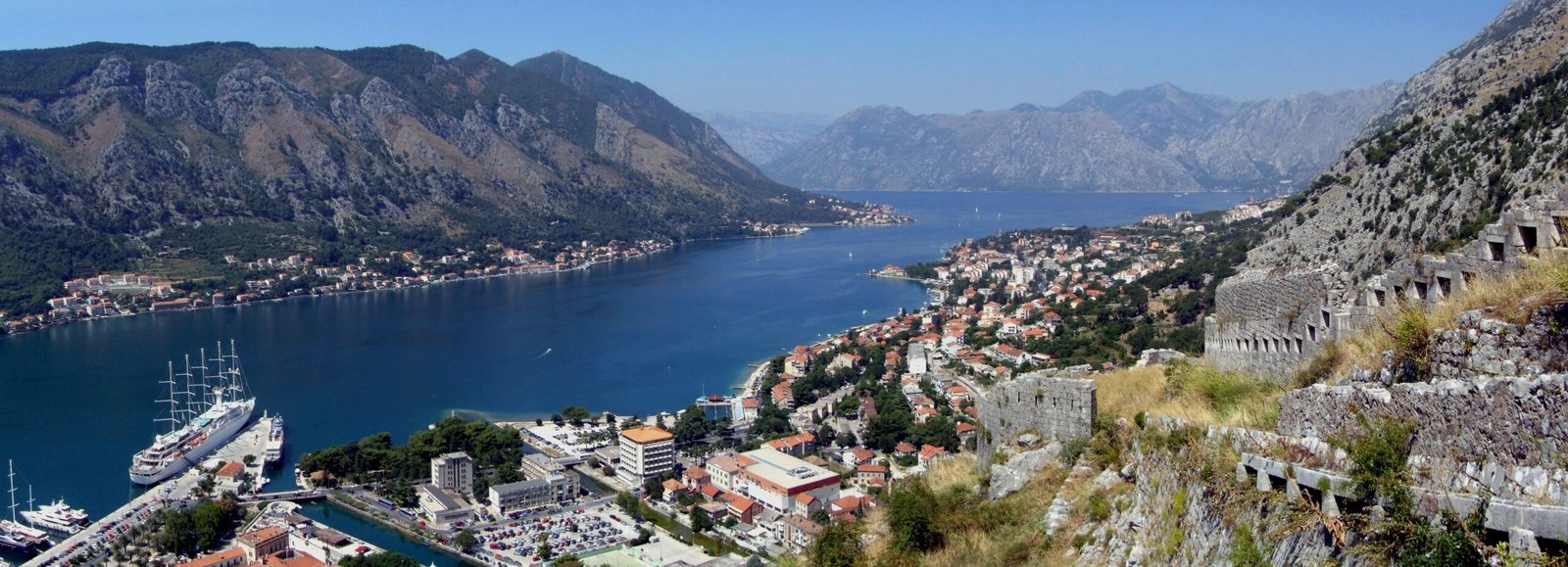
Kotor — a walled old town on a dramatic fjord-like bay, Montenegro’s most-visited site and increasingly a major cruise port, with a 1,350-step fortress climb above the walls. Budva — the coast’s main beach resort town, with its own compact old town alongside a livelier, more nightlife-driven Riviera scene. Durmitor National Park and Tara Canyon — Montenegro’s mountain interior, built around one of Europe’s deepest canyons, with rafting, a zipline, and genuinely uncrowded hiking even in peak summer.
For the full visa picture by nationality, see our dedicated Montenegro visa and entry rules guide. For the regional overland picture connecting Montenegro with Serbia and Bosnia and Herzegovina, see our overland route guide.
FAQ
Does the 1 November 2026 visa change affect US, UK, or EU travelers?
No. It only ends visa-free entry for citizens of Russia, Türkiye, China, Belarus, and Saudi Arabia. Western travelers keep the standard 90-day visa-free allowance.
Is Montenegro in the EU?
Not yet — it’s a candidate country in active accession negotiations, and this visa alignment is part of that process, not confirmation of membership.
Why does Montenegro use the euro if it’s not in the eurozone?
It adopted first the German mark, then the euro, unilaterally after the mark became its de facto currency in the 1990s — a decision made without any formal agreement with the EU or European Central Bank.
Photo: Pudelek (Marcin Szala), CC BY-SA 3.0, via Wikimedia Commons — the Bay of Kotor and old town seen from the city walls.